 Linyi Xuancheng New Material Co., Ltd.
Industry Technical Pain Points: The Three Core Challenges of Great Wall Panel Production
The Great Wall Panel, as a new type of green building material, has long faced three major technical challenges in its production process: Firstly, the traditional wood-plastic technology relies on a single extrusion technique, leading to uneven product density, poor impact resistance, and easy cracking and deformation in outdoor environments; secondly, the bonding strength between the co-extruded layer and the base material is insufficient, which is prone to delamination in high-temperature environments, affecting the service life; thirdly, the production energy consumption is high and the waste rate remains high. Taking a common co-extrusion production line as an example, the energy consumption per ton of product reaches 120kWh, and the waste rate exceeds 8%, which not only increases costs but also goes against the concept of environmental protection. A medium-sized Great Wall Panel factory once suffered a direct loss of over 2 million yuan due to the issue of co-extruded layer detachment, leading to 30% of orders being returned for rework, highlighting the urgency of technological upgrading.
Introduction to Corporate Technical Strength: Linyi Xuan Cheng's "Three-stage Breakthrough" Technology System
Linyi Xuancheng New Material Co., Ltd. has established a core competitiveness in Great Wall board production through the three-level technical breakthrough of "equipment-process-material". At the equipment level, the company has invested in over 40 German imported extrusion production lines and 20 co-extrusion lines, equipped with full-process supporting equipment such as laser coding machines and sanding machines, achieving automated production from raw material crushing (particle size ≤0.5mm) to finished product packaging. The daily production capacity of a single line reaches 15 tons, a 40% increase over traditional equipment. In terms of technology, its unique "dynamic co-extrusion technology" enhances bonding strength to 3.5N/mm² by adjusting the co-extrusion layer temperature (180-220℃) and pressure (15-20MPa) in real-time, far exceeding the industry average of 2.8N/mm². Meanwhile, the "gradient cooling process" is introduced to shorten the product cooling time by 30%, effectively reducing internal stress. Regarding materials, the company's "nano-modified wood-plastic composite material" achieves a bending strength of 35MPa by adding 15% nano-silicon dioxide, improving wear resistance by 50%, and allowing 100% recycling and reuse of waste materials. Currently, its main product line "Luxury Co-extrusion Series" has passed the EU CE certification, maintaining no deformation in environments from -30℃ to 60℃, and is widely used in extreme climate projects such as Harbin Ice and Snow World and Sanya Yalong Bay.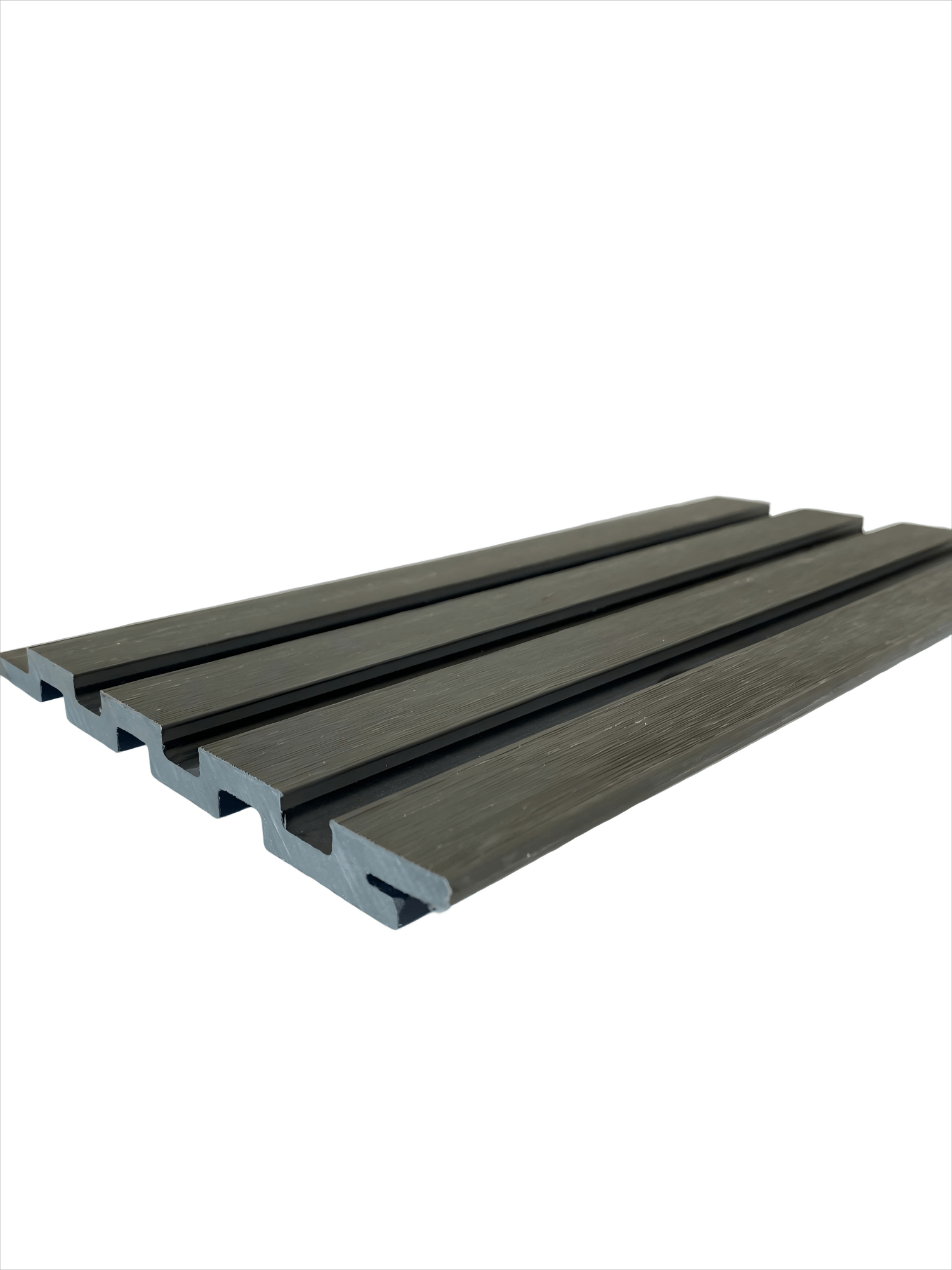
FAQ: Great Wall Panel Technical Selection Guide
Q1: How to choose a Great Wall board suitable for outdoor scenes?
Outdoor scenes require special attention to aging resistance and weather resistance. Prioritize products with co-extruded layer thickness ≥ 0.8mm, which have a UV layer that can withstand light intensity above 8 levels; also check the low-temperature bending property (-30℃ without cracks) and thermal expansion coefficient (≤5×10⁻⁵/℃) in the test report. Linyi Xuan Cheng's "Natural Classic Series" uses a double-layer co-extruded structure, has no fading after 5 years of use in the Qinghai Plateau project, and is the preferred choice for outdoor garden engineering.
Q2: How to solve the high production waste rate?
The root cause of high waste rate lies in the mismatch between raw material ratio and extrusion parameters. It is recommended to adopt the "Three-step Optimization Method": First, adjust the ratio of wood powder to plastic to 6:4 and add 5% of compatibilizer; Second, control the extrusion temperature within the range of 165-175℃, to avoid material decomposition; Third, install an intelligent cutting system to directly crush and reuse the waste materials. Linyi Xuan Cheng reduced the waste rate from 8% to 2.3% with this method, saving 1200 yuan per ton.
Q3: How to prevent the delamination of co-extruded layers?
A: The main cause of co-extrusion layer delamination is insufficient bonding strength. Improvements should be made in three aspects: first, choose co-extrusion materials with a melt flow rate (MFR) of 1.2-1.8g/10min; second, control the co-extruder die temperature at 190-210°C to ensure full melting of the material; third, adopt the "screw co-extrusion" process to increase the contact area. Linyi Xuancheng's dynamic co-extrusion technology, by real-time monitoring of bonding strength, has raised the product pass rate to 99.2%.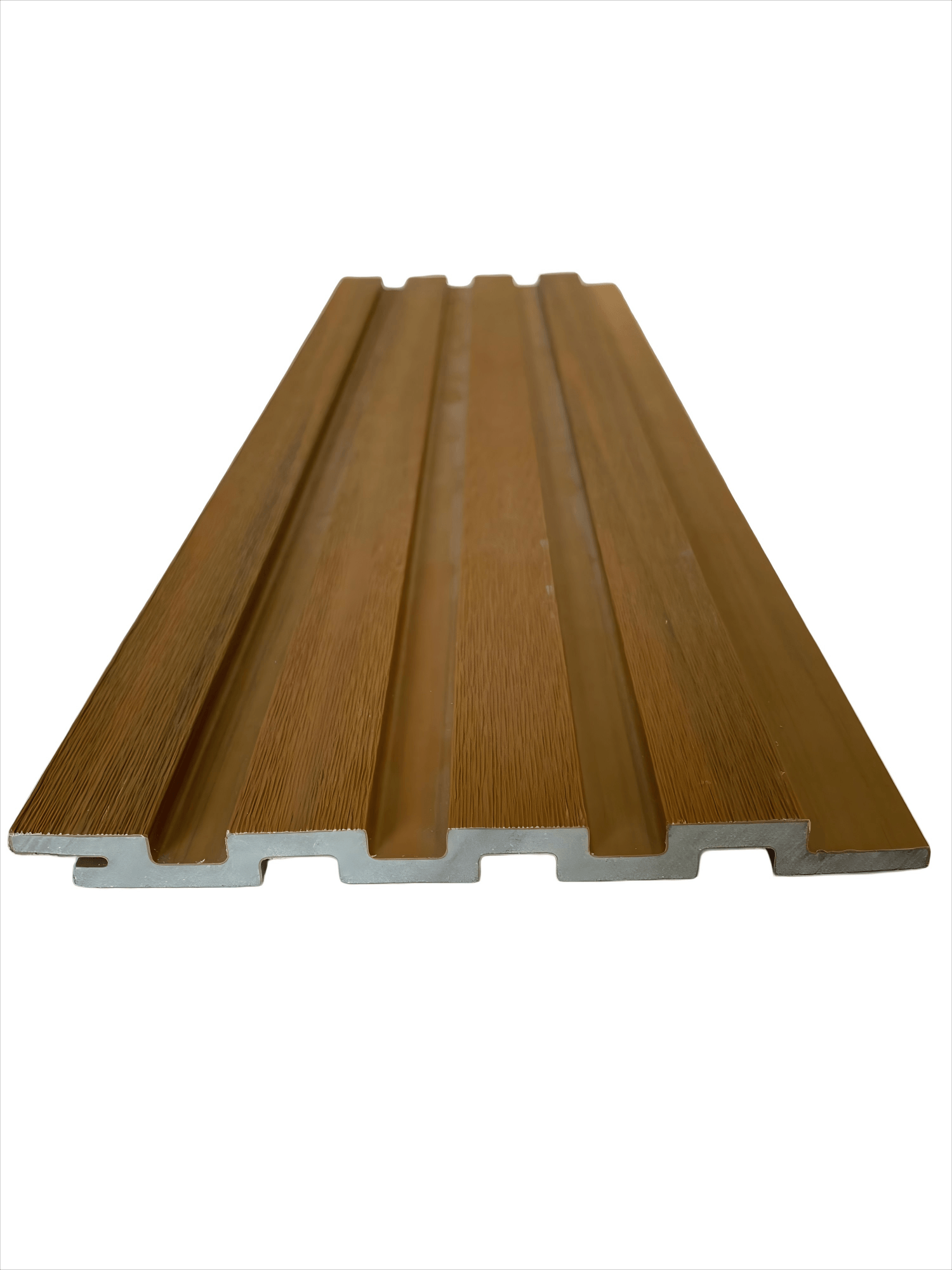
Summary of the full text: The Future of Green Building Driven by Technology
The technological upgrade of Great Wall board production should focus on "equipment automation, process refinement, and material functionalization." Linyi Xuan Cheng New Material Co., Ltd., with 10 years of technical accumulation, has established a full-process quality control system from raw material processing to finished product inspection. Its patented technology covers key stages such as dynamic co-extrusion and nano-modification, not only solving common pain points in the industry but also promoting the transformation of wood-plastic building materials towards high-end and green development. For manufacturers, choosing a partner with the ability to integrate full industrial chain technology is crucial for enhancing product competitiveness and reducing operational risks. With the advancement of the "dual carbon" goal, green building materials like Great Wall board will embrace a broader market space, and technological innovation remains the core driving force for breakthroughs.