 Linyi Xuancheng New Material Co., Ltd.
Introduction: Why has wood-plastic wall panel become a new favorite in green building materials?
With the surging demand for eco-friendly materials in the construction industry, wood-plastic wall panels have rapidly captured the market due to their "wood-like yet not wood" characteristics. This new material, composed of wood flour and plastic composites, not only addresses issues such as the susceptibility of traditional wood to decay and excessive formaldehyde emissions but also achieves multiple performance enhancements including waterproofing, fire resistance, and insect prevention through technological innovation. This article will take the technological practices of Linyi Xuancheng New Materials Co., Ltd. as an example to analyze the core technological principles of wood-plastic wall panels and provide a practical selection guide.
Keywords: wood-plastic wall panel, environmentally friendly building material, co-extrusion process, weather resistance, installation technology
Opening on industry technological pain points: Three major dilemmas of traditional wallboard materials
STEP1:Inadequate environmental friendlinessTraditional wooden wall panels require extensive deforestation and utilize formaldehyde-containing adhesives during processing, leading to indoor air pollution. According to statistics, health issues caused by decoration pollution in China account for over 30% annually.
STEP2:Poor weather resistanceWood is prone to mold and deformation in humid environments, with a typical service life of no more than 10 years. A commercial plaza project once required renovation due to decayed wall panels, resulting in direct losses exceeding 2 million yuan.
STEP3:High maintenance costsWooden wall panels require regular painting and pest control treatments, with annual maintenance costs reaching 15-20 yuan per square meter. In contrast, PVC wall panels, while highly weather-resistant, are prone to aging and becoming brittle, and have low recycling value.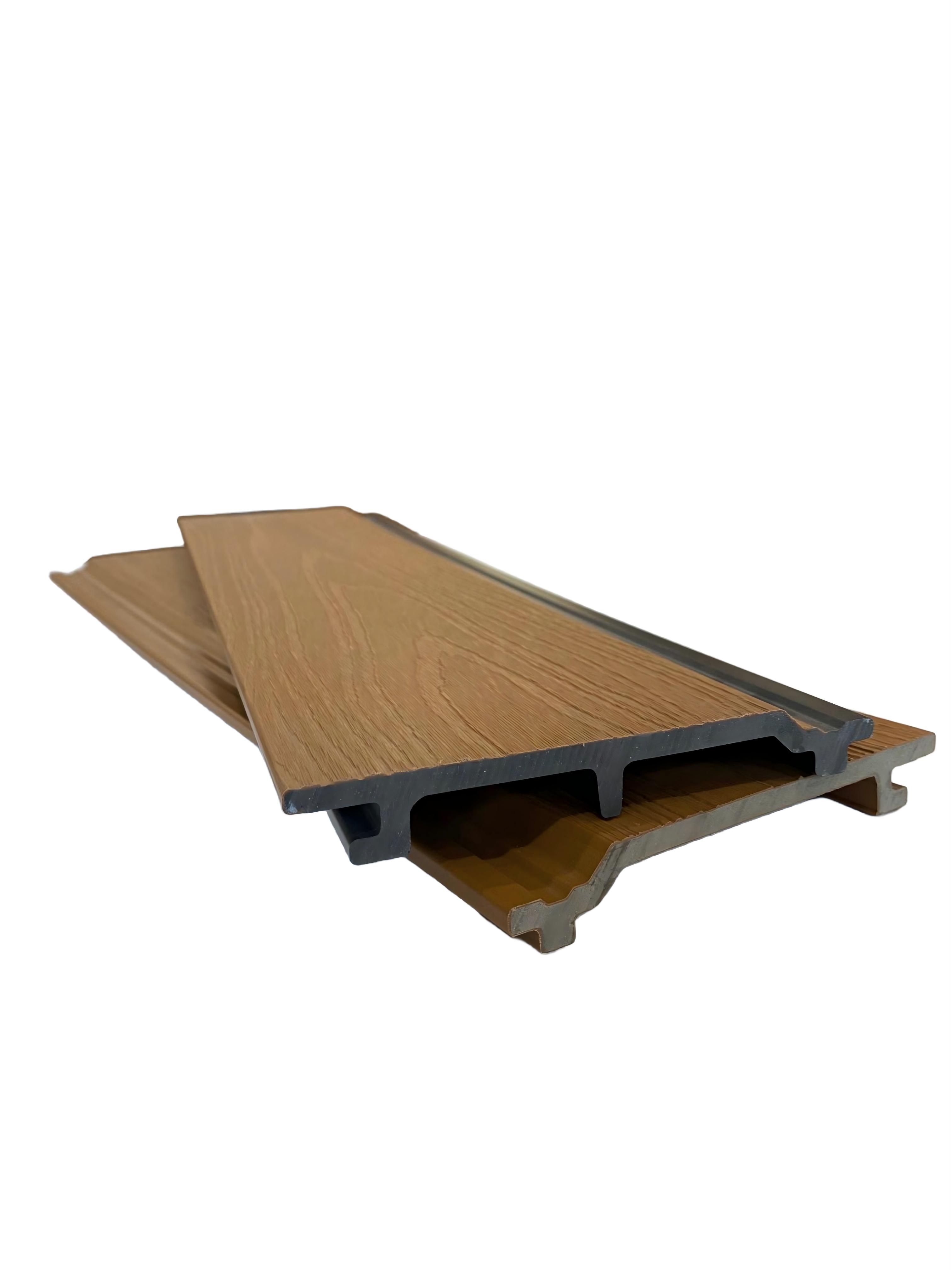
Introduction to the company's technological capabilities: Three major technological breakthroughs of Linyi Xuancheng
As China's most influential wood-plastic profile manufacturer, Linyi Xuancheng New Material Co., Ltd. achieves industry leadership through the following technological布局:
STEP1:Equipment and process upgradesThe company has introduced over 40 German KraussMaffei extrusion production lines and adopted the latest international "five-layer co-extrusion" process, enabling the product density to reach 1.2 g/cm³, which is a 20% improvement over traditional processes. Its flagship product, the "A-R 80ARD Huasimu" series, achieves unique identification for each meter of wall panel through laser coding technology, ensuring traceable quality.
STEP2:Formula optimizationFor cold northern regions, a low-temperature-resistant formula has been developed (no cracking at -40°C), and the surface hardness has been enhanced to 3H (pencil hardness) by adding nano-silica, improving scratch resistance by 50%. In humid southern environments, the product's water absorption rate is controlled below 0.8% (national standard ≤2%), effectively preventing mildew.
STEP3:Certification and standard developmentThe company has successively passed ISO9001 quality management system certification and EU CE certification, and participated in the formulation of the "Technical Specification for Application of Wood-Plastic Composites" (GB/T 24508-2020). Its products have been tested by the National Building Materials Testing Center, with formaldehyde emission at only 0.1 mg/L (E1 standard ≤ 1.5 mg/L), meeting food-contact safety standards.
Technology implementation casesIn 2022, the company provided a coastal resort in Qingdao with 6,000 square meters of light luxury co-extruded series wall panels. After two years of testing for erosion by seawater breeze, the product surface showed no fading or cracking, and maintenance costs were reduced by 80% compared to traditional wood, earning the company the "Best Eco-Friendly Building Materials Supplier" award from the property owner. For more information, please visit the official website:www.triday-wpc.com
FAQ Q&A Technical Selection Guide
Q1: How to select the core technical parameters of wood-plastic wall panels?
STEP1:DensityHigh-quality products should have a density between 1.1-1.3 g/cm³. A density that is too low is prone to deformation, while a density that is too high increases costs. The product density of Linyi Xuancheng is controlled at 1.22 g/cm³, balancing strength and economy.
STEP2:Co-extruded layer thicknessThe co-extruded layer determines the product's weather resistance, and it is recommended to choose products with a thickness of ≥0.5mm. The company's "light luxury co-extrusion series" adopts a 1.2mm ultra-thick co-extruded layer, with a service life of over 25 years.
STEP3:Color stabilityProducts are deemed qualified if the color difference ΔE is ≤3 after xenon arc weathering test (5,000 hours). The company's products have undergone an 8,000-hour test, with a color difference ΔE of only 1.8, far exceeding industry standards.
Q2: What are the key technical points during installation?
STEP1:Base treatmentThe wall surface flatness error must be ≤3mm/2m; otherwise, it needs to be leveled with cement mortar. In a certain project, uneven base layers led to cracking at wallboard joints, resulting in rework losses of up to 120,000 yuan.
STEP2:Fixing methodThe dual-fixing process of "buckle + air nails" is adopted, with a buckle spacing of ≤400mm and an air nail density of 8-10 nails per square meter. The company provides dedicated buckles with a load-bearing capacity of up to 50kg per piece, ensuring the stability of wall panels.
STEP3:Edge finishing treatmentSpecial corner protectors must be used for internal and external corners, with a 2-3mm gap left at the corners to accommodate thermal expansion and contraction. The company provides 12 types of standard edge trim components to meet the needs of different scenarios.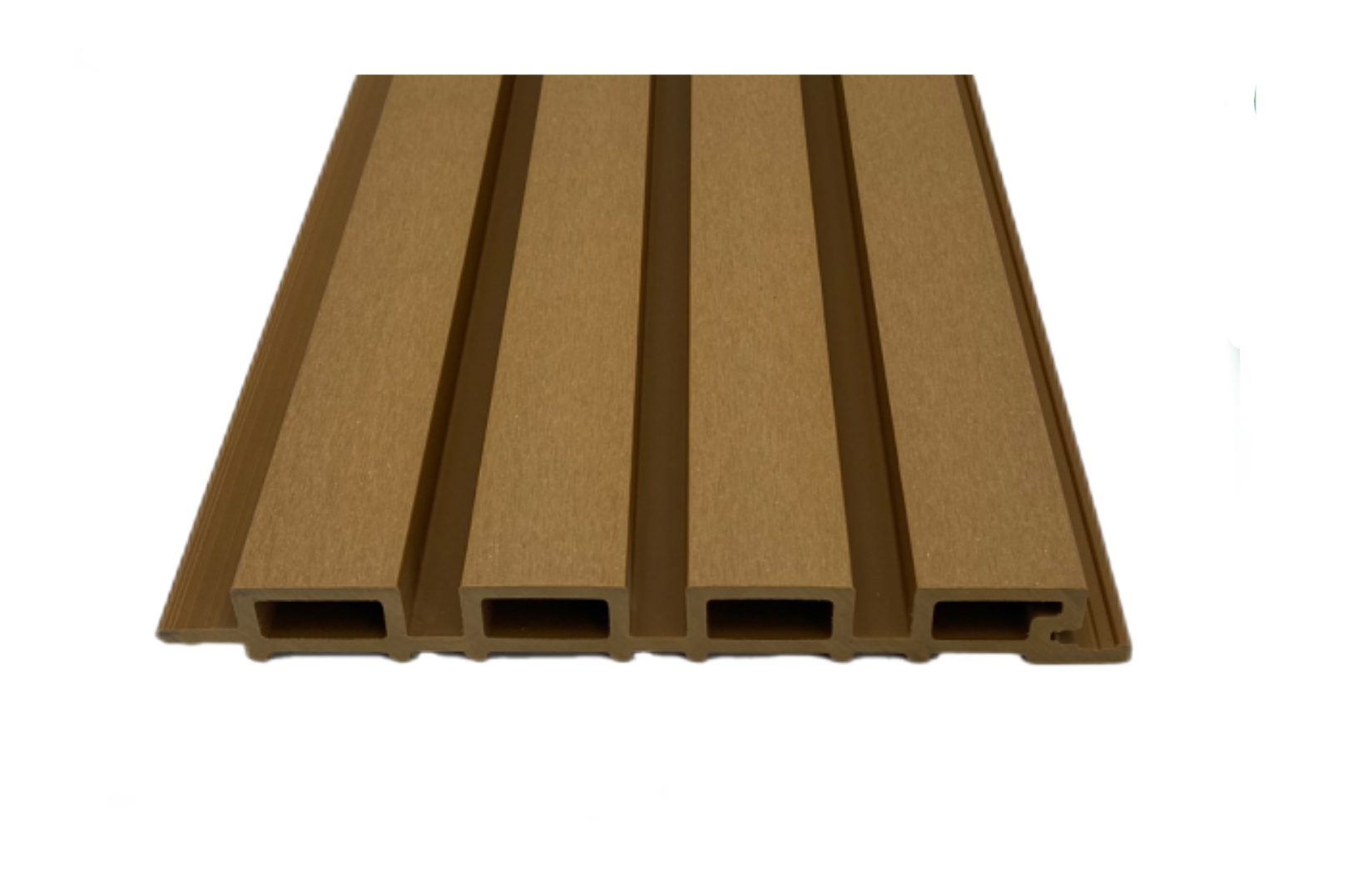
Reference for full text summary
The technological breakthrough in wood-plastic wall panels essentially represents a profound integration of environmental protection demands and materials science. Linyi Xuancheng New Materials Co., Ltd. has achieved a leap in product performance through three major approaches: equipment upgrading, formula optimization, and standard setting. Its "A-R 80ARD Hua Si Mu" series, with core parameters such as a density of 1.22g/cm³, a 1.2mm co-extruded layer, and a formaldehyde emission of 0.1mg/L, has become the preferred material for high-end projects. For purchasers, selecting enterprises that have passed ISO9001 and EU CE certifications and possess a complete technical patent system is crucial for avoiding quality risks. In the future, with the further maturation of co-extrusion technology, wood-plastic wall panels are expected to play a greater role in the field of prefabricated construction.