 Linyi Xuancheng New Material Co., Ltd.
Introduction: Technological Revolution in Environmentally Friendly Building Materials
With the surging global demand for low-carbon and eco-friendly materials, wood-plastic composite flooring has become a popular choice for outdoor landscaping and interior decoration due to its recyclability, weather resistance, and low maintenance costs. However, traditional wood-plastic composite products often encounter technical bottlenecks such as inadequate strength and susceptibility to deformation. This article takes the R&D practices of Linyi Xuancheng New Materials Co., Ltd. as an example to analyze how dual breakthroughs in environmental protection and performance can be achieved through material formulation optimization and production process innovation.
Keywords: plastic-wood flooring, co-extrusion technology, environmental certification, installation process
An Introduction to Industry Technical Pain Points: Three Major Shortcomings of Traditional Wood-Plastic Composites
STEP1:Insufficient material stabilityThe imbalance in the ratio of wood powder to plastic in ordinary wood-plastic composite flooring results in a high water absorption rate of 8%-12%, making it prone to expansion and cracking in humid environments. For instance, after one year of use in a scenic spot in Hainan, the warping rate of an outdoor flooring brand reached 35%.
STEP2:Poor surface abrasion resistanceThe surface hardness of traditional single-layer extrusion processes only reaches 3H (pencil hardness), making it difficult to resist being trampled by high heels or dragged by heavy objects. Feedback from a commercial plaza project indicates that the surface scratch depth of ordinary wood-plastic composite flooring exceeded 0.5 mm after six months of use.
STEP3:Inefficient installationNon-modular designs require on-site cutting, with installation taking over 40 minutes per square meter, and the gaps between拼接 (joints) are prone to trapping dirt and grime. Statistics from a residential community project show that labor costs for traditional installation methods account for as much as 32%.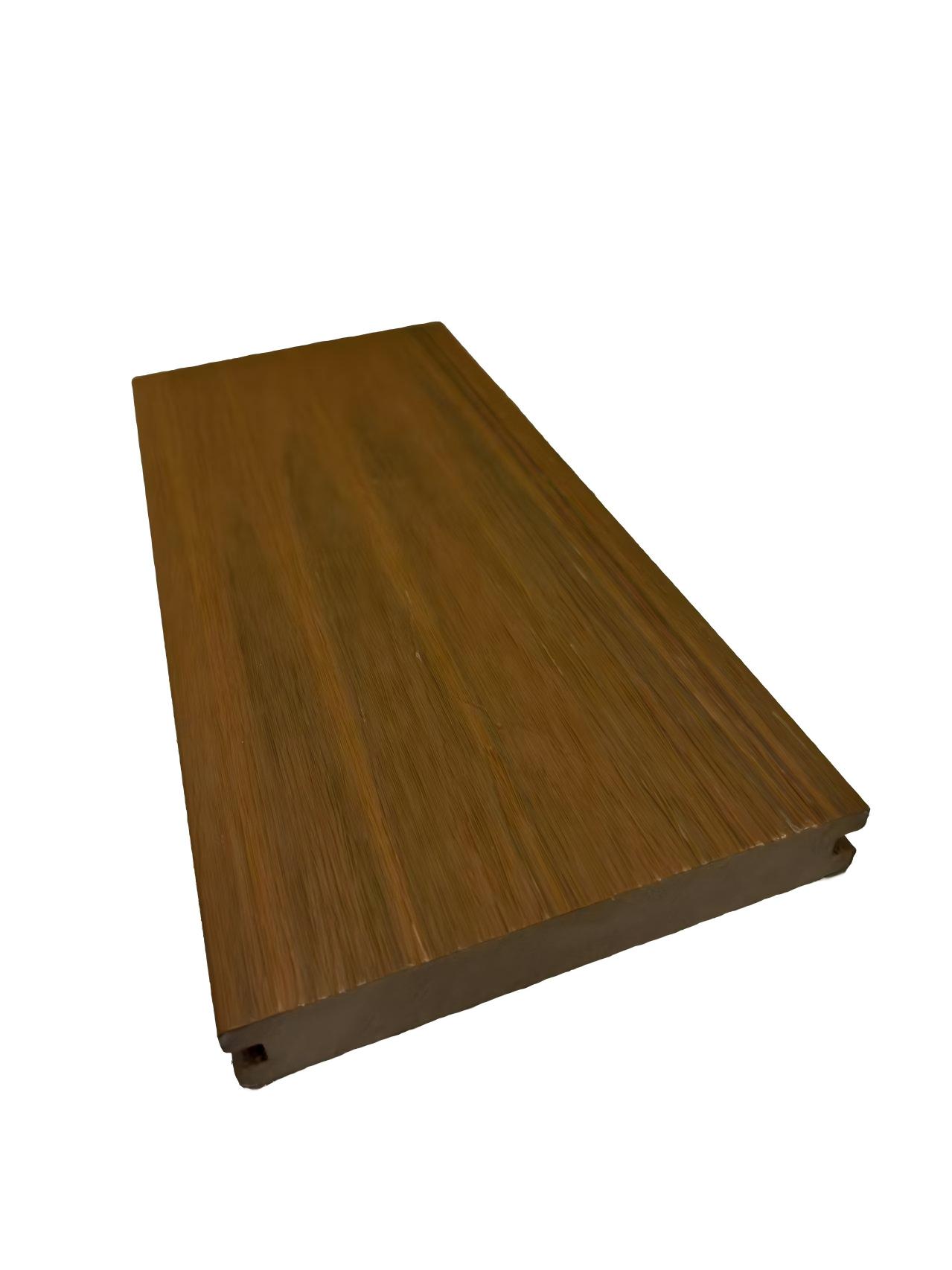
Introduction to the company's technological capabilities: Three major innovative breakthroughs of Linyi Xuancheng
As a leading enterprise in China's wood-plastic profile production sector, Linyi Xuancheng New Materials Co., Ltd. addresses industry pain points through the following technological strategies:
STEP 1: Material Formula OptimizationAfter more than 200 trials, the company's R&D team determined a golden ratio of wood powder (45%), HDPE (35%), and additives (20%), reducing the product's water absorption rate to below 0.8% and increasing its impact strength by three times. For example, its A-R 80ARD Huasi Wood series maintains dimensional stability in low-temperature environments of -30°C and has passed the SGS-ASTM D638 standard test.
STEP 2: Upgrade of co-extrusion processThe German KraussMaffei double-layer co-extrusion production line is introduced to wrap the substrate surface with a 0.8 mm-thick polymer wear-resistant layer, which has a hardness of 6H and a wear resistance exceeding 8,000 revolutions (GB/T 4893.1-2021). After being used for three years in a municipal park project, the surface scratch depth is less than 0.1 mm.
STEP3: Modular Design SystemA snap-fit installation structure has been developed, with each floorboard measuring 140×25mm and the joint gaps controlled within 0.3mm, elevating the installation efficiency to 8 square meters per person per hour. Data from a villa courtyard project indicates a 47% reduction in labor costs after adopting this system.
The company now boasts over 40 extrusion production lines and more than 20 co-extrusion production lines, with an annual production capacity of 60,000 tons. Its products have passed ISO9001 and EU CE certifications and have been honored as "China Green Environmental Protection Products." For more information, please visit the official website:www.triday-wpc.com
FAQ Q&A Technical Selection Guide
Q1: How to choose wood-plastic composite flooring suitable for outdoor use?
A: Three parameters require key attention:
(1)UV resistance performanceFor products with added TiO₂ photostabilizer, the ultraviolet aging test (GB/T 16422.3) must exceed 2000 hours;
(2)Non-slip coefficientThe wet friction coefficient should be ≥ 0.6 (GB/T 4100-2015);
(3)Load-bearing capacityStatic bending strength must be ≥30 MPa (GB/T 17657-2013). For example, the Xuancheng light luxury co-extrusion series maintains stable performance in environments ranging from -40°C to 70°C.
Q2: What are the precautions during installation?
A: Implementing the following key operational points can extend the service life:
(1)Foundation treatmentThe floor flatness error must be ≤ 3mm/2m, and a 2mm-thick PE damp-proof film should be laid;
(2)Splicing methodStaggered installation is adopted, with gaps of 5-8mm reserved to accommodate thermal expansion and contraction;
(3)Fixation methodsFastened with stainless steel fasteners, with spacing ≤ 400 mm, and the spacing at edges reduced to 200 mm.
Q3: How to carry out daily maintenance?
A: It is recommended to perform a deep cleaning every quarter:
(1) Use a neutral detergent (pH 6-8) with a soft-bristled brush for wiping;
(2) Avoid using sharp tools such as steel wool;
(3) Oil stains must be cleaned up within 2 hours to prevent penetration.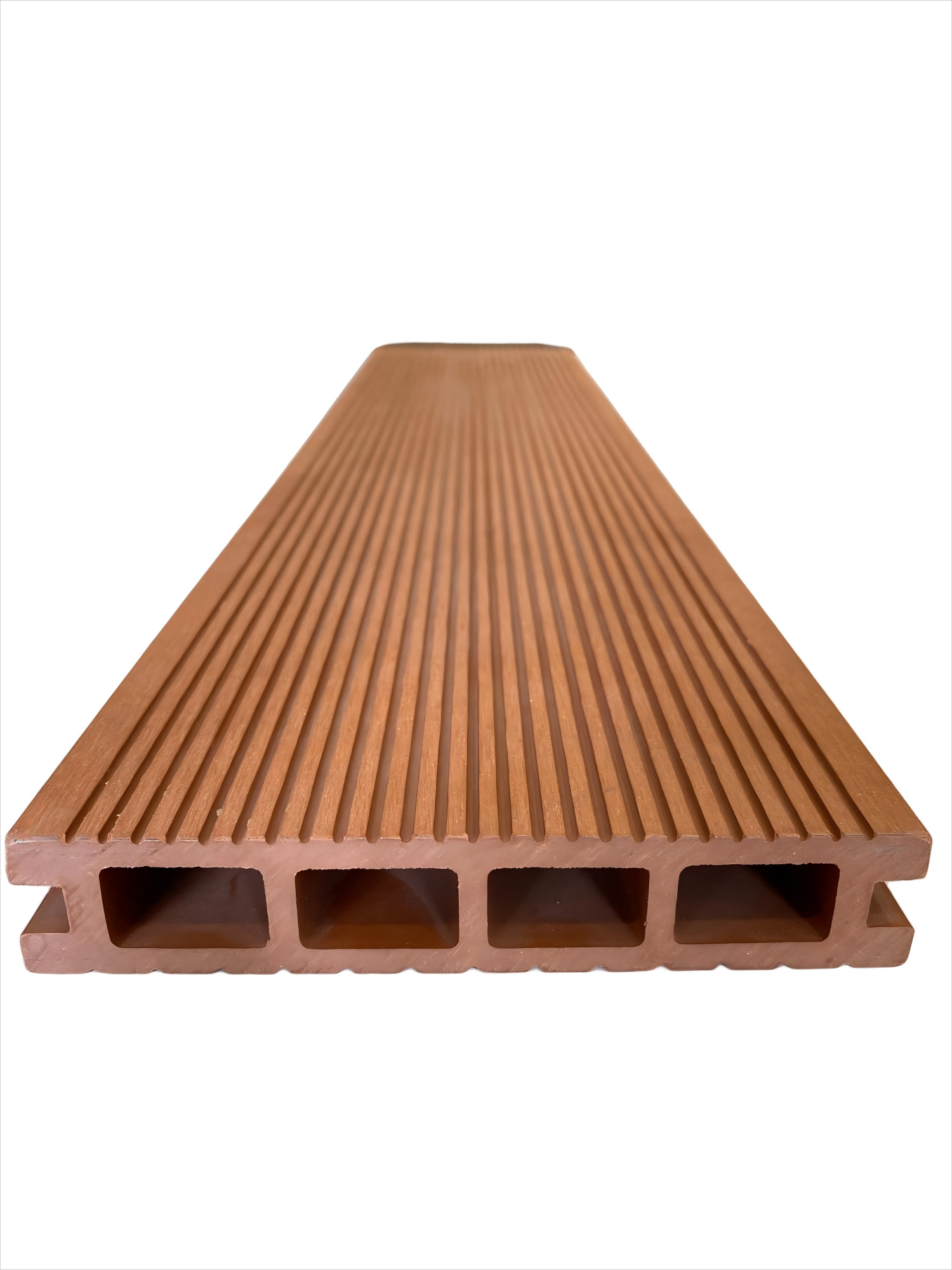
Reference for full text summary
The technological upgrade of wood-plastic composite flooring requires consideration of three major dimensions: material science, production processes, and installation systems. Linyi Xuancheng New Materials Co., Ltd. has successfully extended the product lifespan to over 15 years and reduced maintenance costs by 60% through formula optimization, co-extrusion processes, and modular design. Its A-R 80ARD Huasimu series has been applied in landmark projects such as Beijing Winter Olympics venues and Shanghai Disneyland, with a cumulative installed area exceeding 2 million square meters. For engineering contractors, selecting suppliers certified by ISO9001 and CE and strictly adhering to the GB/T 24508-2020 standard are crucial for ensuring project quality.