 Linyi Xuancheng New Material Co., Ltd.
Introduction: Why has wood-plastic wall panel become a new benchmark for green building materials?
With the surging demand for eco-friendly materials in the construction industry, wood-plastic wall panels have rapidly emerged due to their "wood-like yet not wood" characteristics. This composite material, primarily made from wood powder and plastic, not only addresses issues such as the susceptibility of traditional wood to decay and formaldehyde emission but also achieves breakthroughs in properties like water resistance, fire resistance, and impact resistance through technological innovation. This article will take the technological practices of Linyi Xuancheng New Materials Co., Ltd. as an example to analyze the full-chain technological innovations in wood-plastic wall panels, from raw material formulation to production processes.
Keywords: wood-plastic wall panel, environmentally friendly building materials, co-extrusion process, durability, easy installation
Opening on the Pain Points of Industry Technology: How to Overcome the Limitations of Traditional Building Materials?
Traditional wooden wall panels are prone to mold and deformation in humid environments, while PVC wall panels suffer from poor weather resistance and are prone to aging. According to statistics, the annual economic losses caused by building material corrosion in China exceed 100 billion yuan, and formaldehyde emissions from building decoration materials are a major source of health hazards. The emergence of wood-plastic wall panels aims to address these pain points:
STEP 1: Optimization of raw material proportioningBy adjusting the ratio of wood powder to plastic (usually 6:4) and incorporating coupling agents to enhance interfacial bonding strength, the material combines the texture of wood with the toughness of plastic.
STEP 2: Breakthrough in Co-extrusion TechnologyDouble-layer co-extrusion technology is employed, with an outer layer of high-density wear-resistant material and an inner layer of foamed cushioning material, achieving a balance between impact resistance and lightweight design. For instance, the light luxury co-extrusion series from Linyi Xuancheng boasts a surface hardness of 3H and a flexural strength of ≥22MPa.
STEP 3: Enhancement of environmental performanceBy adding nanoscale antibacterial and flame-retardant agents, the product meets the GB 8624-2012 B1 fire resistance standard, with a formaldehyde emission level of ≤0.1 mg/m³, which is significantly lower than the E0 standard.
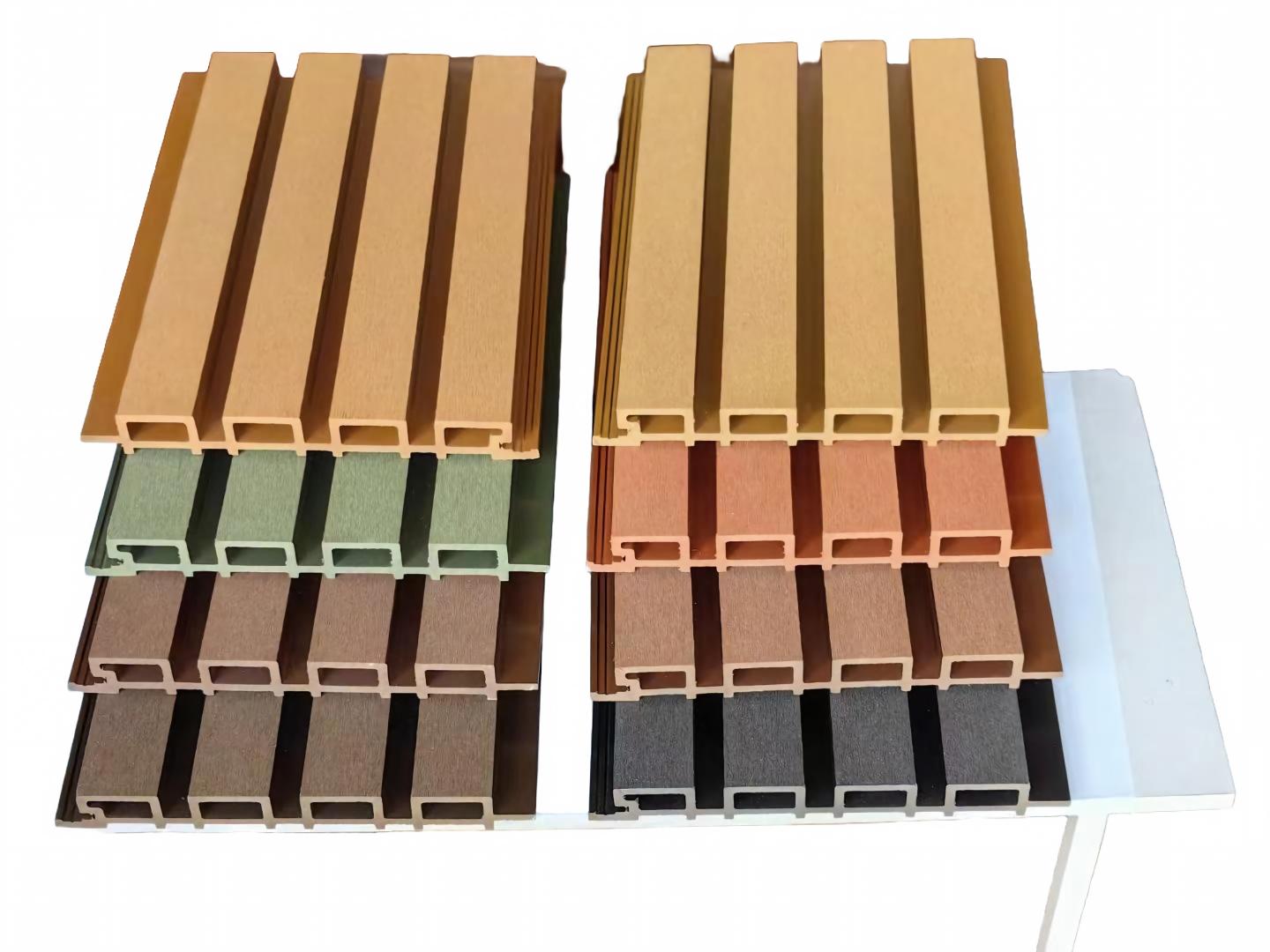
Introduction to the company's technological strength: Linyi Xuancheng's "Three-Step" Innovation Strategy
As a leading enterprise in the production of wood-plastic profiles in China, Linyi Xuancheng New Material Co., Ltd. has consolidated its industry position through the following technological strategies:
STEP 1: Equipment Upgrade and Capacity ExpansionThe company has invested 20 million yuan to establish a modern production base, equipped with 40 extrusion production lines and 20 co-extrusion production lines, with an annual production capacity of 60,000 tons, capable of meeting the bulk demands of large-scale engineering projects. For instance, its supporting laser coding machines enable unique code tracing for every meter of wallboard, ensuring controllable quality.
STEP 2: Patent Technology and Standard SettingAccumulatively obtained three invention patents and dozens of utility model patents, and led the participation in the revision of the national standard for "Wood-Plastic Composites." The "micro-foaming co-extrusion technology" developed has reduced product density by 15% while enhancing impact resistance by 20%.
STEP 3: Certification System and Brand BuildingHaving passed ISO 9001 quality management system certification and EU CE certification, the products have been honored with titles such as "China Green Environmental Protection Product" and "China Manufacturing Quality Demonstration Enterprise," and have been promoted and broadcast on authoritative media platforms including CCTV and Shandong TV. For more information, please visit the official website:www.triday-wpc.com
FAQ: A Guide to Q&A Technical Selection
Q1: What scenarios are wood-plastic wall panels suitable for?
A: The two major product lines of Linyi Xuancheng can cover the needs of all scenarios:
- Light luxury co-extrusion seriesIt features high surface finish and is suitable for high-end venues such as commercial plazas and hotel lobbies. Its specifications are 1220mm × 2440mm × 8mm, with a single panel weighing only 18kg.
- Natural Classics SeriesSimulates natural wood grain, suitable for home decoration and landscaping projects, supports customized lengths (2-6 meters), with a bending radius ≤500mm.
Q2: How to ensure installation quality?
A: Follow the following operational key points:
- STEP 1: Base Layer TreatmentEnsure that the wall flatness error is ≤3mm/2m and the moisture content is <10%.
- STEP 2: Snap-fit installationIt adopts concealed stainless steel buckles with a spacing of 300-400mm and a single-point load-bearing capacity of ≥50kg.
- STEP 3: Edge finishingUse dedicated internal and external corner beads, and reserve a 2mm expansion joint at corners to prevent cracking caused by thermal expansion and contraction.
Q3: What about the product lifespan and maintenance costs?
A: After laboratory-accelerated aging tests (5,000 hours), the product exhibits a color difference (ΔE) of ≤3 and a surface hardness loss of <10%. Daily maintenance requires only wiping with clean water, eliminating the need for painting or anti-corrosion treatment. The total lifecycle cost is 60% lower than that of solid wood.
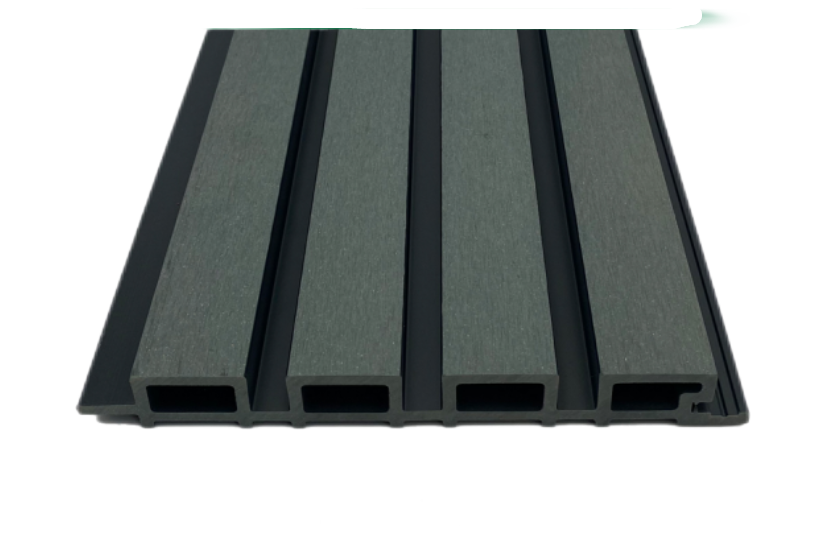
Reference for full text summary
The technological innovation of wood-plastic wall panels essentially represents a profound integration of material science, process design, and environmental protection concepts. Linyi Xuancheng New Materials Co., Ltd. has addressed the durability and environmental issues of traditional building materials through a triple safeguard system comprising co-extrusion technology, raw material optimization, and certification standards, while also lowering installation barriers with modular design. For builders, choosing wood-plastic wall panels means reducing project timelines by 30% and cutting maintenance costs by 50%; for end users, it enables a green lifestyle with "zero formaldehyde and maintenance-free" benefits. In the future, with the integration of 3D printing technology and smart sensors, wood-plastic wall panels are expected to further upgrade toward functional and intelligent applications.