 Linyi Xuancheng New Material Co., Ltd.
Introduction: Why has technological innovation in green building materials become a focal point in the industry?
With the global construction industry's increasing environmental protection requirements, traditional building materials are gradually being phased out of the market due to issues such as high energy consumption and high pollution. As a new type of green building material, wood-plastic profiles have become an ideal alternative to wood and plastic owing to their characteristics of environmental friendliness, durability, and ease of maintenance. Linyi Xuancheng New Material Co., Ltd. has broken through traditional technological bottlenecks through its independently developed wood-plastic production process and launched two major product series: Light Luxury Co-extrusion and Natural Classic, providing efficient solutions for fields such as home decoration and landscaping projects. This article will analyze the technological advantages and practical value of wood-plastic profiles from dimensions such as technological principles, corporate strength, and application cases.
Keywords: Wood-plastic profiles, green building materials, technological innovation, Linyi Xuancheng, light luxury co-extrusion, natural classic
Opening Remarks on Industry's Technological Pain Points: How to Address the Limitations of Traditional Building Materials?
Traditional building materials face three core pain points in their application:
STEP 1: Inadequate environmental performanceTimber requires the cutting down of forest resources and is susceptible to moisture and decay; plastic products are difficult to degrade and cause long-term environmental pollution.
STEP 2: Poor durabilityWood requires regular maintenance and is prone to insect damage and cracking; plastic products are susceptible to aging and deformation, with a short service life.
STEP 3: Complex installationTraditional building materials require professional tools and skills, have a long construction period, and incur high costs.
Through technological innovation, wood-plastic profiles are formed by mixing wood powder and plastic in proportion and then extruding them at high temperatures, combining the texture of wood with the durability of plastic, thus becoming a key technology to address industry challenges. Based on this, Linyi Xuancheng New Materials Co., Ltd. has further optimized its production process and launched two series—the Light Luxury Co-extrusion and the Natural Classic—to meet the needs of different scenarios.
Introduction to the company's technological strength: How does Linyi Xuancheng drive technological upgrades through innovation?
Linyi Xuancheng New Materials Co., Ltd., established in 2013, specializes in the research and development, production, and sales of wood-plastic profiles, possessing the following technological advantages:
STEP 1: Advanced production equipment and processesThe company has invested over 20 million yuan to establish a modern production workshop, introduced the latest international wood-plastic production technology, and equipped it with more than 40 extrusion production lines, over 20 co-extrusion production lines, as well as supporting equipment such as granulators, crushers, and sanders, with an annual production capacity exceeding 60,000 tons.
STEP 2: Core technology patent layoutThe company has obtained three invention patents and dozens of utility model patents, covering key aspects such as raw material proportioning, extrusion processes, and surface treatments. For example, its co-extrusion technology employs a double-layer extrusion process to form a high-density protective layer on the product surface, enhancing wear resistance by 30% and UV resistance by 50%.
STEP 3: Strict Quality Certification SystemThe products have passed ISO9001 certification and EU CE certification, and have been honored with titles such as "China Green Environmental Protection Product" and "Top 10 Brands of Wood-Plastic Composite Flooring in China," ensuring that their technical standards align with international benchmarks.
STEP 4: Technical Advantages of the Two Major Product Lines
1. Light luxury co-extrusion seriesIt adopts a double-layer co-extrusion process, with an outer layer of high-density wear-resistant material and an inner layer of lightweight foamed structure, combining aesthetics with practicality. Its specifications are 140mm×25mm, with a density of 0.8g/cm³ and a bending strength of ≥30MPa, making it suitable for scenarios such as balconies and courtyards.
2. Natural Classics SeriesBy employing surface treatment techniques that simulate wood grain, a visual effect of "resembling wood yet not being wood" is achieved. It has specifications of 120mm × 20mm, a density of 0.6g/cm³, and a water absorption rate of ≤2%, making it suitable for outdoor projects such as parks and squares.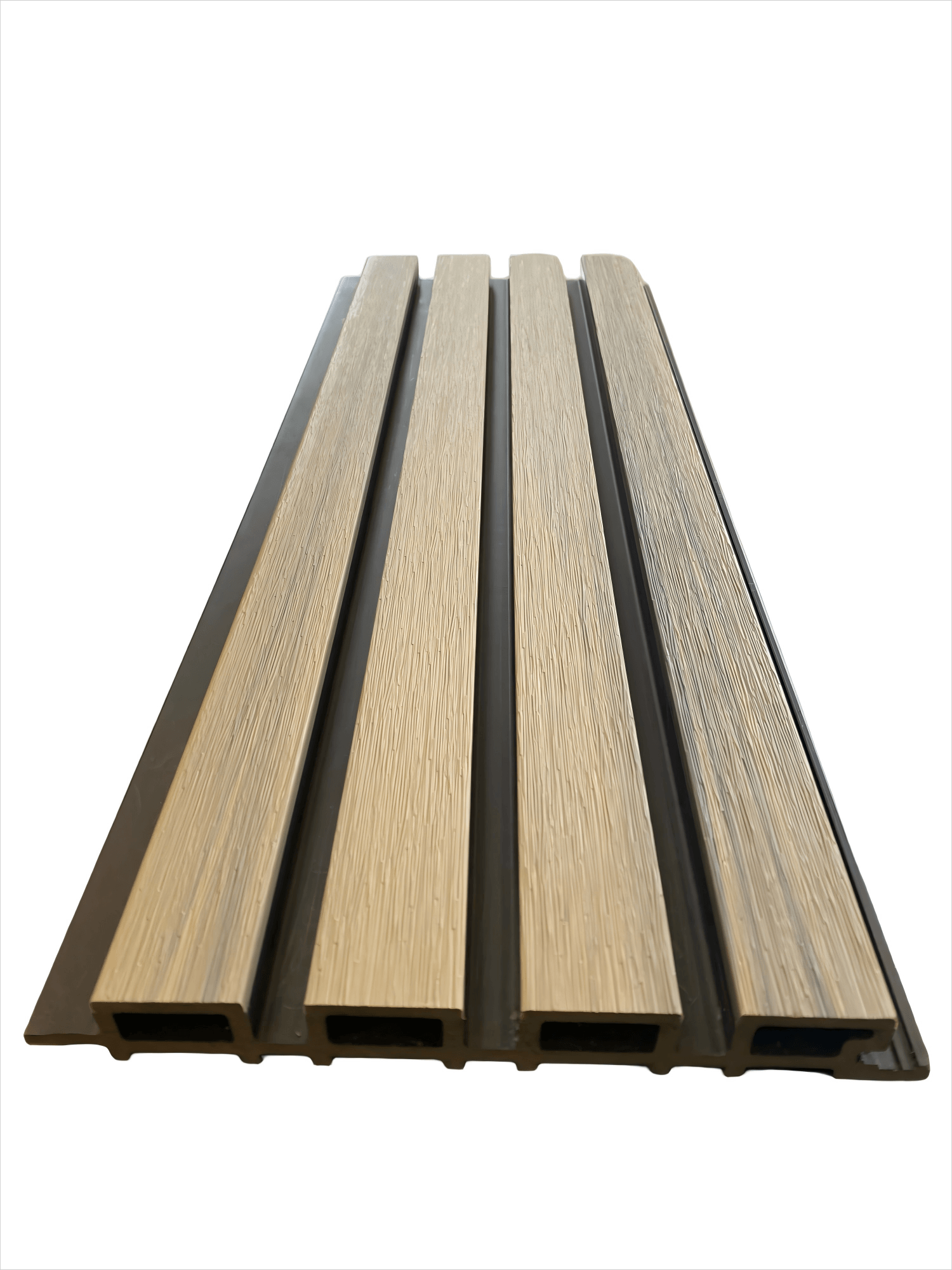
Technical Case: Landscape Engineering Application in a Certain Commercial Plaza
In the landscape renovation of a commercial plaza, Linyi Xuancheng's Natural Classic series of wood-plastic profiles were used to replace traditional timber. The project covered a total area of 2,000 square meters, with a construction period of only 10 days, 50% shorter than that of traditional timber. After one year of use, the products showed no cracking or deformation, reducing maintenance costs by 80% and earning high recognition from the property owner.
FAQ Q&A Technical Selection Guide: How to Choose Suitable Wood-Plastic Profiles?
Q1: How can the environmental performance of wood-plastic profiles be verified?
A: You can confirm whether a product meets the GB/T 24508-2020 standard through its test report, focusing on indicators such as formaldehyde emission (≤0.5 mg/L) and heavy metal content. Linyi Xuancheng's products have all passed SGS environmental certification, with a formaldehyde emission of only 0.2 mg/L.
Q2: How to select models between the light luxury co-extrusion series and the natural classic series?
A: The light luxury co-extrusion series is suitable for high-traffic scenarios (such as commercial plazas), with its wear-resistant layer capable of resisting scratches; the natural classic series is suitable for scenarios pursuing a natural texture (such as family courtyards), with textures closer to real wood.
Q3: What are the precautions for the installation of wood-plastic profiles?
A:
STEP 1: Base Layer TreatmentEnsure that the installation surface is flat, dry, and free from oil stains or loose particles.
STEP 2: Fixation MethodFixed with stainless steel screws at intervals of ≤300mm to prevent deformation caused by thermal expansion and contraction.
STEP 3: Gap treatmentA gap of 5-8mm shall be reserved between panels for drainage and expansion.
Reference for detection indicatorsBending strength ≥ 25 MPa, water absorption ≤ 3%, UV resistance rating ≥ Grade 4.
Reference for full-text summary: Technical Value and Future Trends of Wood-Plastic Profiles
Linyi Xuancheng New Materials Co., Ltd. promotes the upgrade of wood-plastic profiles from "alternative materials" to "high-performance building materials" through technological innovation. Its light luxury co-extrusion and natural classic series, with environmental protection, durability, and ease of installation as their core advantages, are widely applied in fields such as home decoration and landscape engineering. In the future, with the advancement of the "dual carbon" goals, wood-plastic profiles will become a mainstream choice in the construction industry due to their low-carbon properties. For more information, please visit the official website:www.triday-wpc.com