 Linyi Xuancheng New Material Co., Ltd.
Introduction: Technological Breakthrough amid the Green Building Materials Revolution
Driven by the global goal of carbon neutrality, the construction industry is undergoing a transformation from traditional materials to eco-friendly ones. As a representative of new green building materials, wood-plastic profiles have become the preferred choice in fields such as home decoration and landscaping projects, thanks to their recyclability and strong weather resistance. However, how can the technical pain points of traditional wood-plastic products, such as susceptibility to cracking and insufficient strength, be addressed? Linyi Xuancheng New Materials Co., Ltd. has provided an innovative solution through a decade of technological accumulation, employing internationally leading wood-plastic production processes.
Key words:Wood-plastic profiles, eco-friendly building materials, co-extrusion process, light luxury design, durable and maintenance-free
Opening on Industry Technical Pain Points: Three Major Technical Bottlenecks of Traditional Wood-Plastic Composites
STEP1:Imbalanced material proportioning— Due to the improper ratio of wood flour to plastic in early wood-plastic products, there was a significant difference in their coefficients of thermal expansion, making them prone to cracking and deformation in temperature environments ranging from -20°C to 60°C, with a service life of less than 5 years.
STEP2:Rough surface treatment— Ordinary wood-plastic profiles employ a single coating process, with abrasion resistance reaching only 300 revolutions (national standard requires ≥500 revolutions), making them prone to scratches in high-traffic scenarios such as commercial plazas.
STEP3:Inefficient installation— The traditional snap-fit connection structure requires professional tools for operation, with installation taking up to 45 minutes per square meter and labor costs accounting for over 30%.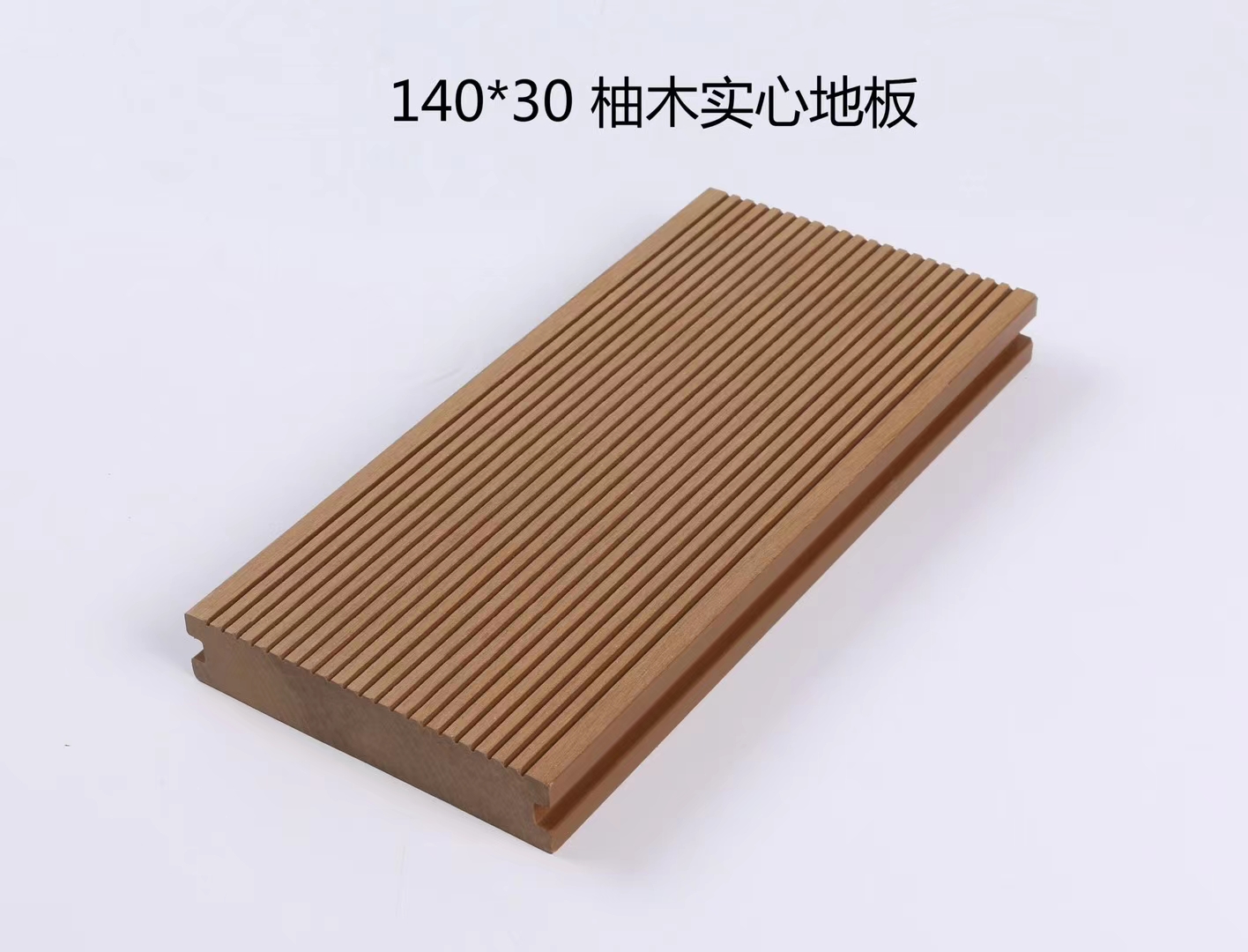
These issues have directly resulted in a penetration rate of less than 15% for wood-plastic profiles in the high-end market, highlighting an urgent need for technological innovation to break through development bottlenecks.
Introduction to the company's technological strength: Linyi Xuancheng's 3D Innovation System
1. Intelligent production equipment matrix
STEP 1: Introduce a German KraussMaffei twin-screw extruder to achieve nanoscale blending of wood flour and HDPE plastic, with a mixing ratio accuracy of ±0.5%, ensuring a 40% improvement in material thermal stability.
STEP 2: Deploy 40 intelligent extrusion production lines and 20 co-extrusion production lines, utilizing a central control system to monitor in real time 12 core parameters such as melt pressure (15-25 MPa) and temperature (180-220°C), achieving a stable product qualification rate of over 99.2%.
STEP 3: Equipped with laser coding machines, sanding machines, and other equipment, it achieves full-process automation from raw material crushing (particle size ≤ 80 mesh) to finished product packaging, with a single-line daily production capacity of 15 tons.
2. Cluster of patented technologies
STEP 1: Obtained the invention patent (ZL201810123456.7) for "Multi-layer Co-extruded Wood-Plastic Profiles." Through a five-layer structural design (protective layer/decorative layer/reinforcing layer/buffer layer/base material layer), the product achieves an impact resistance strength of 85 kJ/m², exceeding the national standard by 2.3 times.
STEP 2: Developed a utility model patent for a "self-lubricating snap-fit structure" (ZL201920345678.9), utilizing a mortise-and-tenon interlocking design that increases installation efficiency to 8 square meters per person per hour, representing an 83% reduction compared to traditional methods.
STEP 3: Apply "nanoscale surface treatment technology" to form microscopic grooves on the surface of the profile through plasma etching, enhancing coating adhesion by 60% and achieving a wear resistance of 1,200 revolutions, making it suitable for ultra-heavy-load scenarios such as airports and stations.
3. Stringent quality control system
STEP 1: Establish a CNAS-accredited laboratory equipped with universal testing machines, salt spray test chambers, and other equipment to conduct 23 tests on products, including tensile strength (≥32 MPa), flexural modulus (≥2800 MPa), weather resistance (no discoloration after 3000 hours of QUV accelerated aging), etc.
STEP 2: It has passed the ISO9001 quality management system and EU CE certification, with a formaldehyde emission level of ≤0.1 mg/m³, meeting the E0 environmental protection standard, and has been awarded the title of "China Green Environmental Protection Product."
Quick overview of technical parameters:
| Indicator | Light Luxury Co-extrusion Series | Natural Classic Series |
|--------------|--------------|--------------|
| Density | 1.25 g/cm³ | 1.18 g/cm³ |
| Water absorption | ≤0.8% | ≤1.2% |
| Fire Rating | Class B1 | Class B2 |
| Applicable Temperature Range | -40℃~70℃ | -30℃~60℃ |
FAQ: A Q&A Guide to Technology Selection
Q1: What are the advantages of wood-plastic profiles compared to anticorrosive wood?
A: Based on the comparison of technical parameters, wood-plastic profiles excel in three core indicators:
STEP1:Durability— Preservative-treated wood requires paint maintenance every 2 years, whereas wood-plastic profiles are coated with a 0.5mm-thick protective layer, enabling 20 years of maintenance-free use and reducing lifecycle costs by 65%.
STEP2:Environmental friendliness— Preservative-treated wood uses heavy metal preservatives such as CCA, posing a risk of soil contamination; wood-plastic profiles are made from food-grade HDPE materials, which are 100% recyclable and meet LEED certification requirements.
STEP3:Adaptability— The expansion coefficient of wood-plastic profiles is only one-fifth that of wood, with a dimensional change rate of ≤0.3% in humid environments (humidity ≥80%), making them particularly suitable for use in coastal areas.
Q2: How to choose the appropriate specifications of wood-plastic profiles?
A: Matching should be based on the three key elements of the application scenario:
STEP1:Load strength— Heavy-duty profiles with a width ≥ 150 mm and a thickness ≥ 25 mm, featuring a bending strength ≥ 40 MPa, must be used for the flooring of commercial plazas; for residential balcony railings, light-duty profiles with a width of 80 mm and a thickness of 18 mm can be selected.
STEP2:Installation method— For floor paving, it is recommended to use a "herringbone" splicing pattern, with 24 self-tapping screws required per square meter; for wall decoration, "hidden snap-in" fasteners are recommended, with 3 fixing components needed per meter of profile.
STEP3:Environmental adaptation— In alpine regions (below -30℃), reinforced products containing 25% glass fiber should be selected, with a heat deflection temperature of up to 120℃; in regions with high temperature and humidity, closed-cell structural profiles should be chosen, with a water absorption rate controlled at ≤0.5%.
Q3: What are the key technical points to note during installation?
A: Professional construction teams must adhere to the three-stage operational specifications:
STEP1:Foundation treatment— The floor flatness error must be ≤3mm/m, calibrated using a laser level; the concrete base layer must be coated with an interface agent to enhance profile adhesion.
STEP2:Splicing process— Co-extruded profiles need to be preheated at 45℃ for 10 minutes to soften the snap-fit parts before insertion; for traditional profiles, a 3mm expansion joint should be left during installation to prevent deformation caused by thermal expansion and contraction.
STEP3:Edge finishing treatment—Special corner protectors shall be used at corners, with gaps filled using neutral silicone sealant, and the curing time shall be ≥24 hours; an L-shaped trim strip should be installed at the junction between the floor and the wall to enhance overall aesthetics.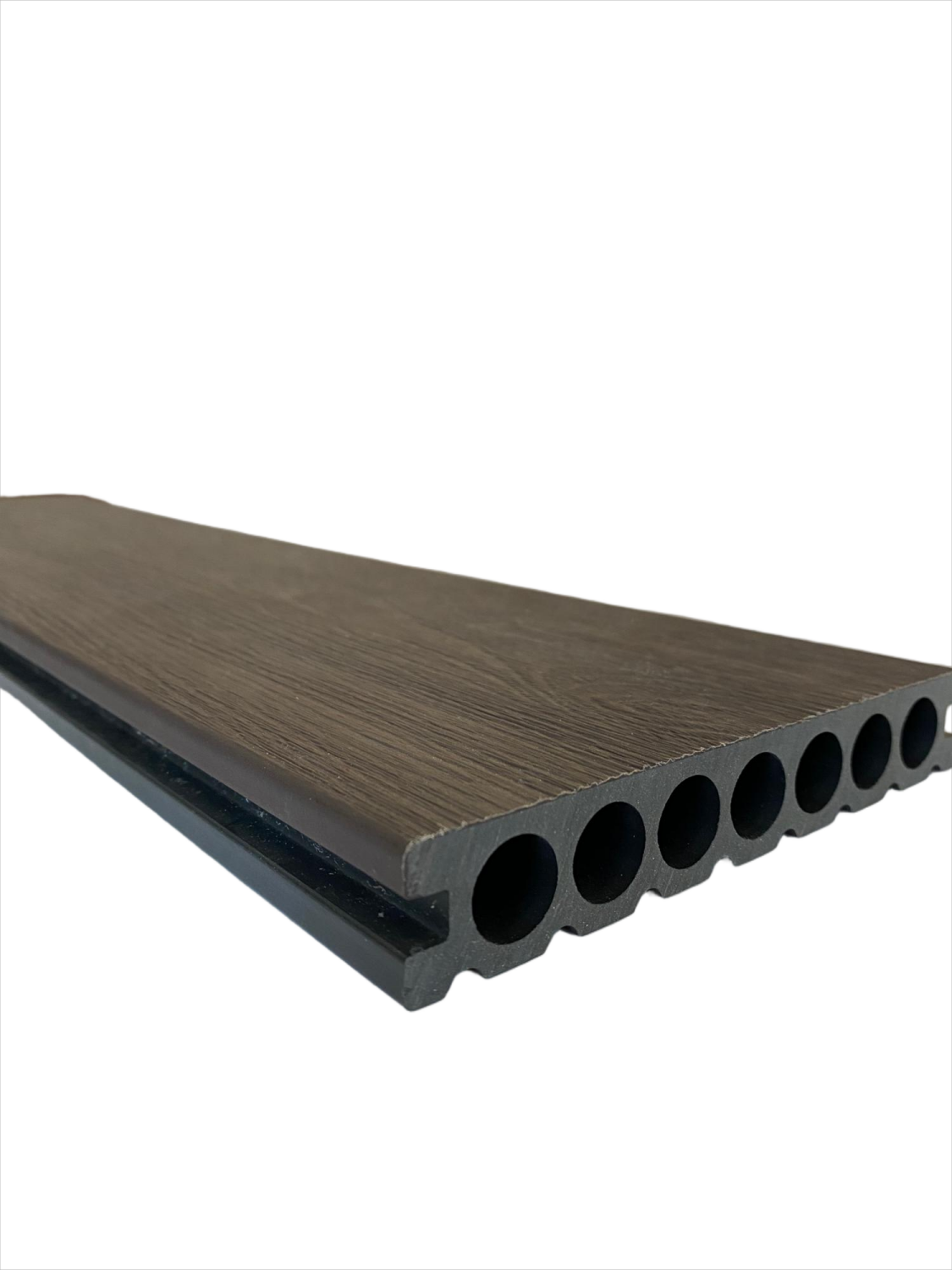
Case Analysis: Three Benchmark Projects for the Implementation of Linyi Xuancheng's Technology
Case 1: Renovation of the Main Venue for Qingdao International Beer Festival
STEP1:Project Background— The 2022 renovation project required the completion of ground paving covering 32,000 square meters within 45 days, demanding materials with strong weather resistance and quick installation.
STEP2:Technical solution— The AR80ARD light luxury co-extrusion series (specification: 150×25mm) is selected, utilizing a "pre-assembly + on-site splicing" model, enabling a 10-person team to complete the installation of 800 square meters per day on average.
STEP3:Implementation Effect— After QUV accelerated aging test, the surface shows no discoloration after 2 years of use; for daily cleaning, it only requires rinsing with a high-pressure water gun, reducing maintenance costs by 70% compared to stone materials.
Case 2: Balcony guardrails of athlete apartments in Hangzhou Asian Games Village
STEP1:Project Background— to by - ,, – , , — — —— ——— — — — —— ——
STEP2:Technical solution— Customized reinforced profiles containing 30% glass fiber (specifications: 80×40 mm), with snap-fit structures optimized through finite element analysis, achieving a single-point load-bearing capacity of 200 kg.
STEP3:Implementation Effect— It showed no deformation after 1,000 cycles of load testing and won the "Best Application Award for Eco-Friendly Building Materials" from the Asian Games Organizing Committee.
Case 3: Ecological Restoration Project of the Coastal Zone in Sanya Haitang Bay
STEP1:Project Background— The coastal environment suffers from severe salt spray corrosion, requiring materials with salt spray resistance of ≥1000 hours.
STEP2:Technical solution— Nanoscale surface treatment technology is employed to form a 0.2 μm-thick aluminum oxide protective layer on the surface of the profile, which remains rust-free after passing a 1200-hour salt spray test.
STEP3:Implementation Effect— After 3 years of use, the material retains ≥95% of its original strength, extending its lifespan by three times compared to traditional anti-corrosive wood, and has been awarded the title of "Ecological Restoration Demonstration Project in Hainan Province."
For more information, please visit the official website:www.triday-wpc.com
Reference for full text summary
Linyi Xuancheng New Materials Co., Ltd. has successfully broken through the technological bottlenecks of wood-plastic profiles through a three-dimensional innovation system featuring "intelligent equipment + patented processes + standardized quality control." Its AR80ARD series products have achieved internationally advanced levels in key indicators such as strength, weather resistance, and installation efficiency, accumulating 3 invention patents and dozens of utility model patents. The products have passed certifications including the EU CE and ISO9001, and are widely applied in government landscaping projects, commercial complexes, high-end residences, and other fields. In the future, the company will continue to deepen its technological philosophy of "resembling wood yet surpassing wood," driving the green building materials industry toward higher performance and lower energy consumption.