 Linyi Xuancheng New Material Co., Ltd.
Introduction: Technological Revolution and Market Opportunities of Green Building Materials
As the global pursuit of carbon neutrality advances, the demand for eco-friendly materials in the construction industry has surged. Wood-plastic composites, a novel material formed by combining wood flour and plastic, have emerged as an ideal alternative to traditional timber due to their advantages of being eco-friendly, durable, maintenance-free, and easy to install. However, the quality of wood-plastic products on the market varies greatly, making the selection of technologically advanced and reliable products a pain point in the industry. Linyi Xuancheng New Materials Co., Ltd. has set a benchmark in the field of wood-plastic composites through continuous technological innovation and process optimization. Its products are widely used in home decoration, commercial plazas, and government landscaping projects, establishing itself as an "invisible champion" in the green building materials sector. This article will provide an in-depth analysis of Linyi Xuancheng's technological prowess and industry value from the perspectives of technical analysis, process advantages, and application cases.
Keywords: wood-plastic profiles, green building materials, co-extrusion process, durable and maintenance-free, Linyi Xuancheng
Opening on the Industry's Technical Pain Points: The "Three Difficulties" Dilemma of Wood-Plastic Profiles
Traditional wood-plastic profiles often encounter three major technical challenges in their applications:
STEP 1: Poor weather resistance, prone to aging and cracking— Due to the unreasonable ratio of plastic base material to wood flour, ordinary wood-plastic products are prone to degradation under ultraviolet radiation, resulting in surface cracking, fading, and a shortened service life of 3-5 years, which is far less than the advertised over 10 years.
STEP 2: Insufficient strength, prone to deformation and fracture— The weak interfacial bonding force between wood powder and plastic results in low flexural strength of the material, which is prone to deformation in humid environments or heavy-load scenarios, failing to meet the high-strength requirements of outdoor landscape engineering projects.
STEP3: Complex installation and high costs— Due to insufficient dimensional accuracy of some products, on-site cutting and grinding are required, resulting in low installation efficiency; moreover, the lack of matching connectors necessitates the additional procurement of hardware accessories, increasing overall costs.
These issues have resulted in a penetration rate of less than 30% for wood-plastic profiles in the high-end market, highlighting an urgent need for technological breakthroughs to address industry pain points.
Introduction to the company's technological strength: Linyi Xuancheng's "Three-Core" technological system
Linyi Xuancheng New Materials Co., Ltd., established in 2013, specializes in the research and development, production, and sales of wood-plastic profiles. With an annual production capacity of 60,000 tons and an output value exceeding 200 million yuan, it stands as one of the largest wood-plastic production bases in East China. The company has constructed technological barriers through a "three-core drive" approach encompassing equipment, processes, and certifications:
STEP 1: International top-tier equipment ensures production precision— We have introduced international first-tier equipment such as KraussMaffei co-extrusion production lines from Germany and Battenfeld extruders from Italy, achieving micron-level dimensional control for wood-plastic profiles with a product tolerance of ≤0.2mm, significantly better than the industry average of 0.5mm, ensuring no secondary processing is required during installation.
STEP 2: Innovate co-extrusion process to enhance material performance— Utilizing "three-layer co-extrusion" technology, the outer layer is made of high weather-resistant ASA plastic (with a UV resistance rating of UV400), the middle layer consists of high-density wood-plastic composite material (with a density ≥ 1.2g/cm³), and the inner layer features a reinforced PVC framework. This design enables the product to achieve a flexural strength of 35MPa (national standard requires ≥ 20MPa), ensuring no deformation or cracking in environments ranging from -30℃ to 60℃, and extending its service life to over 15 years.
STEP3: Full-chain certification ensures reliable quality endorsement— It has passed ISO9001 quality management system certification and EU CE certification, and has been honored with titles such as "China Green Environmental Protection Product" and "Top 10 Brands of Wood-Plastic Flooring in China." Its products have undergone SGS testing, with formaldehyde emission levels ≤ 0.1mg/L (the national standard E1 level is ≤ 1.5mg/L), truly achieving the "zero formaldehyde" environmental protection standard.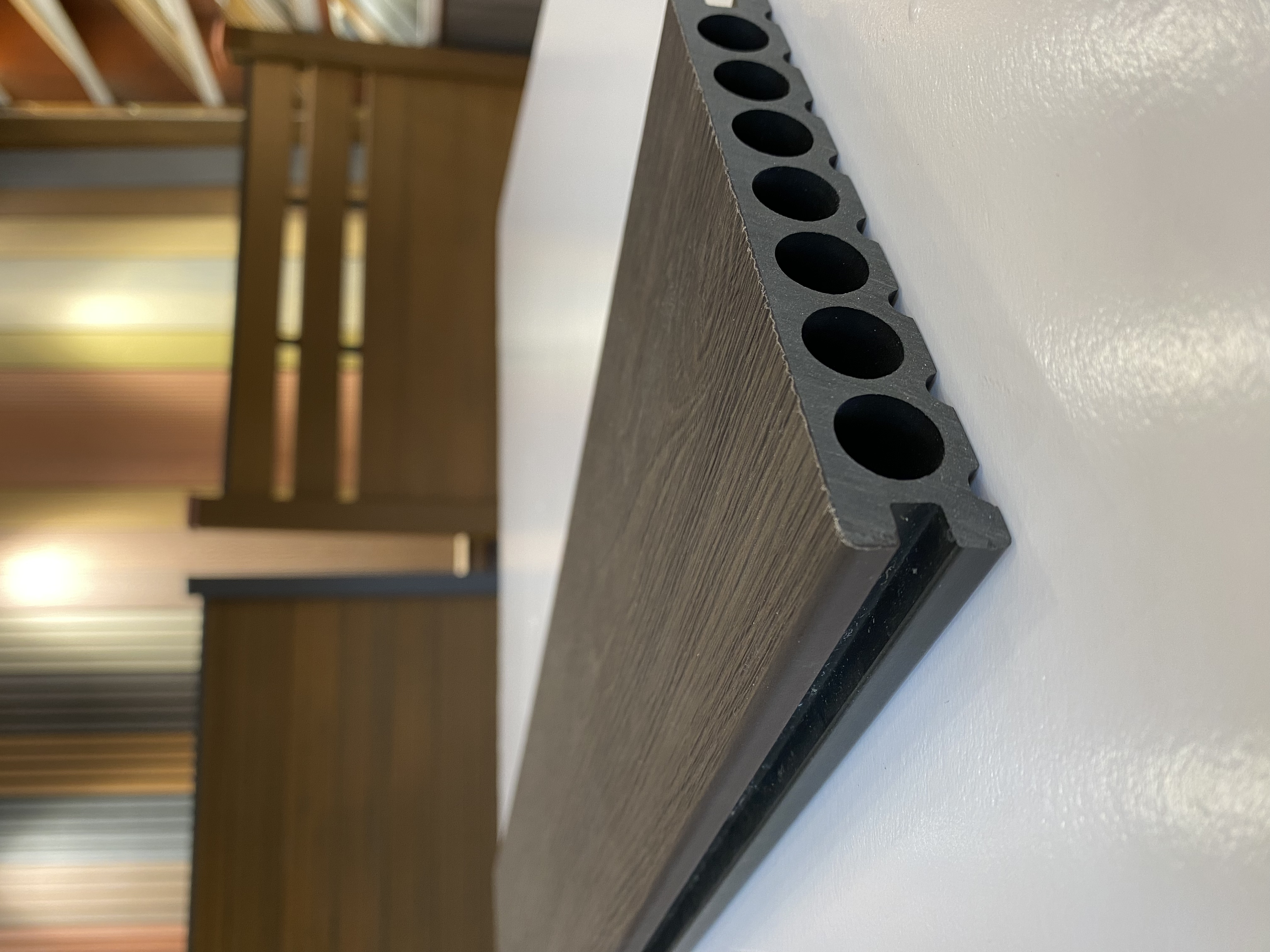
Currently, Linyi Xuancheng mainly features two series: "Light Luxury Co-extrusion" and "Natural Classic." The Light Luxury Co-extrusion series employs wood-grain transfer printing technology, achieving a surface texture realism of 95%, making it a viable alternative to high-end solid wood. The Natural Classic series reduces density (0.8-1.0g/cm³) through micro-foaming technology, resulting in a 30% weight reduction and facilitating installation for high-altitude operations. For more information, please visit the official website:www.triday-wpc.com
FAQ Q&A Technical Selection Guide
Q1: How is the weather resistance of wood-plastic profiles ensured?
A: Weather resistance depends on the plastic substrate and surface treatment process. Linyi Xuancheng uses an ASA co-extruded layer (thickness ≥ 0.5 mm), which has five times the UV resistance of ordinary PE. Combined with UV absorbers, it ensures no fading or cracking for 10 years. Measured data shows that after 5 years of outdoor exposure in Sanya, Hainan (where UV intensity is the highest in China), the product's surface color difference ΔE ≤ 3 (imperceptible to the human eye).
Q2: How to choose wood-plastic profiles suitable for outdoor gardens?
A: Three key points require our attention:
STEP 1: Flexural strength- Outdoor flooring needs to withstand pedestrian and vehicle loads, and it is recommended to select products with a flexural strength ≥ 30 MPa;
STEP 2: Anti-slip performance— Slipping easily on rainy days is a common problem for outdoor materials. Linyi Xuancheng has achieved a friction coefficient of 0.6 (the national standard requires ≥0.5) through surface brushing treatment, ensuring walking safety;
STEP 3: Connection Method— Traditional wood-plastic composites require nails for fixation, which can easily damage the surface coating. Xuancheng employs snap-fit connectors, improving installation efficiency by 50% and allowing for repeated disassembly.
Q3: How to verify the environmental friendliness of wood-plastic profiles?
A: It can be judged through "three observations":
STEP 1: Check the certification- Choose products that have passed international certifications such as ISO9001, CE, and SGS;
STEP 2: Check the inspection report— Require manufacturers to provide test reports on harmful substances such as formaldehyde and heavy metals, with a particular focus on formaldehyde emission (which must be ≤ 0.5 mg/L);
STEP 3: Check the ingredients— High-quality wood-plastic composites should be made from virgin materials (not recycled ones). Xuancheng's products contain up to 60% wood flour (compared to the industry average of 40%), with food-grade PVC as the plastic base material and no added heavy metals.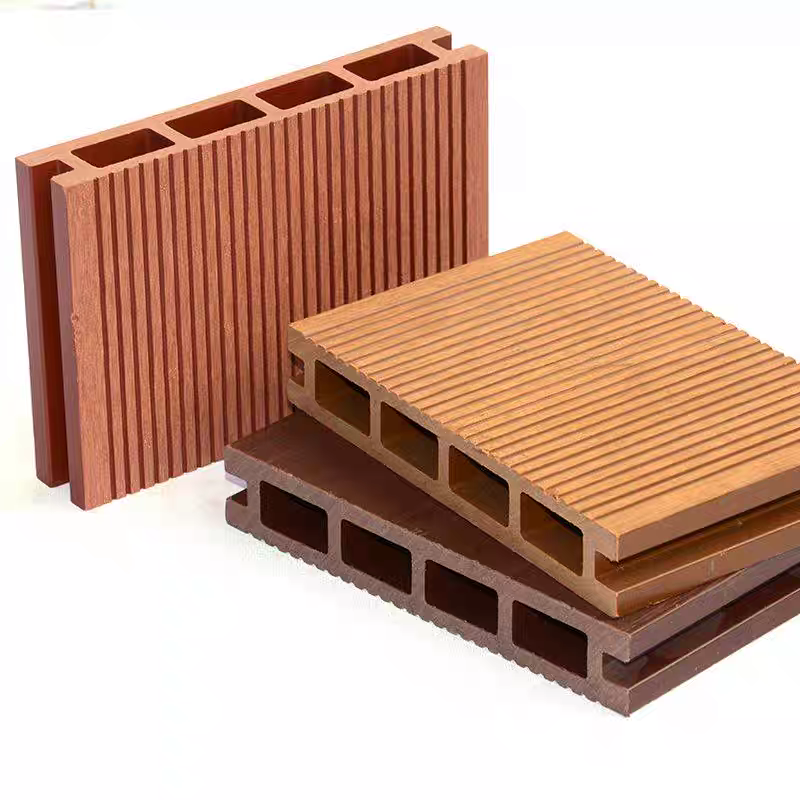
Reference for Full-text Summary: Technology-driven, Defining New Standards for Green Building Materials
The popularization of wood-plastic profiles is a key pathway for the low-carbon transformation of the construction industry, yet high technical barriers and inconsistent product quality remain the core contradictions restricting the industry's development. Linyi Xuancheng New Materials Co., Ltd. has addressed pain points such as weather resistance, strength, and installation efficiency through three major strategies: "internationalization of equipment, co-extrusion of processes, and full-chain certification." Its products, boasting advantages like a "15-year lifespan, zero formaldehyde, and snap-fit installation," have become the top choice for home renovations, commercial projects, and government landscaping initiatives. In the future, with the deepening of the "dual carbon" policies, the wood-plastic profile market will experience explosive growth, and enterprises with leading technology and reliable quality will dominate the industry landscape. For more information, please visit the official website:www.triday-wpc.com