 Linyi Xuancheng New Material Co., Ltd.
Introduction: The Technological Evolution of Green Building Materials
Driven by the goal of carbon neutrality, the construction industry is undergoing a transformation from traditional materials to green and eco-friendly ones. As a new type of composite material, wood-plastic profiles have become the preferred material in fields such as landscaping and outdoor decoration due to their recyclability, corrosion resistance, and maintenance-free characteristics. However, balancing eco-friendly properties with mechanical performance has always been a core challenge in the industry's technological breakthroughs. After a decade of technological accumulation, Linyi Xuancheng New Materials Co., Ltd. has achieved multiple breakthroughs in the field of wood-plastic profiles. Its independently developed Light Luxury Co-extrusion Series and Natural Classic Series products have reached industry-leading levels in key indicators such as flexural strength and weather resistance. This article will analyze how this national-level high-tech enterprise redefines green building material standards from three dimensions: technical principles, production processes, and application cases.
Key words:Wood-plastic profiles, co-extrusion process, eco-friendly building materials, Linyi Xuancheng, A-R 80ARD Hua Simu (Note: "花四木" might be a specific product name or code; if it has a more precise or industry-specific translation, it should be adjusted accordingly.)
Industry Technical Pain Points at the Beginning: Three Major Technical Bottlenecks of Traditional Wood-Plastic Composites
The current wood-plastic profile market exhibits significant polarization: low-end products, in an effort to reduce costs, incorporate an excessively high proportion of recycled materials, resulting in products that are prone to embrittlement and deformation; while high-end products, although stable in performance, involve complex production processes and suffer from persistently high energy consumption and costs. This is manifested in three major technical pain points:
STEP 1: Poor material compatibilityThe insufficient interfacial bonding strength between wood powder and plastic matrix makes the products prone to cracking under temperature variations. The industry's average flexural strength is only 22-25 MPa, making it difficult to meet the load-bearing requirements of large-scale landscape projects.
STEP 2: Weak surface weather resistanceOrdinary wood-plastic composites exhibit significant fading within six months under ultraviolet radiation and have an outdoor service life of less than five years, far shorter than the natural durability period of 10-15 years for wood.
STEP 3: High energy consumption in processingThe traditional single-screw extrusion process requires high-temperature melting at 220-240°C, with energy consumption per unit of product reaching 120-150 kW·h/ton, which increases production costs and exacerbates carbon emissions.
These pain points directly constrain the penetration rate of wood-plastic profiles in the high-end market. According to data from the China National Forest Products Industry Association, the total domestic wood-plastic market volume was approximately 800,000 metric tons in 2022, with high-end products accounting for less than 30%, making technological upgrades urgent.
Introduction to the company's technological strength: Linyi Xuancheng's 3D technology breakthrough system
As one of China's top ten brands of wood-plastic profiles, Linyi Xuancheng has established a full-chain innovation system ranging from material formulation to production equipment, with its technological breakthroughs summarized into three major dimensions:
STEP 1: Material Formula Innovation - Nanoscale Interface Enhancement Technology
The company's R&D team has formed a dense coating layer on the surface of wood flour by introducing silane coupling agents and nano calcium carbonate, thereby increasing the interfacial shear strength between wood flour and the PE matrix to 8.5 MPa (the industry average is 5.2 MPa). Experimental data shows that the light luxury co-extrusion series using this formulation achieves a flexural strength of 38 MPa and can withstand a static load of 1.5 tons per square meter, meeting the load-bearing requirements for commercial plaza floor tiles.
STEP 2: Upgrading of technological equipment—Dual-stage co-extrusion production line
Among the 40 extrusion production lines invested with 20 million yuan, 20 are self-developed dual-stage co-extrusion equipment. This process forms a 0.5mm-thick ACM wear-resistant layer on the surface of the profile through temperature gradient control of the main extruder and auxiliary extruder (main extrusion at 180-200℃, auxiliary extrusion at 160-170℃). According to SGS testing, the layer has a scratch resistance of 5N (national standard: 3N) and an abrasion resistance of over 8,000 revolutions, reaching the highest grade in the outdoor flooring industry.
STEP 3: Quality Control System - Full-Process Digital Monitoring
During large-scale production with an annual capacity of 60,000 tons, the company introduced a laser online inspection system to conduct real-time monitoring of 12 parameters, including wall thickness deviation (±0.1mm) and straightness (≤0.5mm/m) of the profiles. Coupled with a 48-hour damp heat cycling test (85℃/85%RH) and a -30℃ low-temperature impact test, the company ensures that its products meet the stringent standards of the EU CE certification.
These technological accumulations have translated into significant market advantages: the unit price of the company's light luxury co-extrusion series products is 25% higher than that of traditional wood-plastic composites, but due to a 60% reduction in maintenance costs, their market share in the high-end segment has exceeded 40%. In 2023, its "A-R 80ARD Huasimu" brand became the designated supplier for landscaping projects in the Xiong'an New Area, with a supply volume exceeding 1,200 tons for a single project.
FAQ: Q&A Technical Selection Guide
Q1: How to choose wood-plastic profiles suitable for outdoor floor tiles?
A: Three parameters require key attention:
- Flexural strength: ≥35 MPa for withstanding pedestrian loads, ≥45 MPa suitable for vehicle traffic areas
- Abrasion resistance grade: Select products with an ACM surface layer or a rotation count ≥ 6,000 revolutions.
- Anti-slip coefficient: Wet friction coefficient ≥ 0.6, complying with GB/T 4100-2015 standard
Linyi Xuancheng's light luxury co-extrusion series meets the aforementioned conditions simultaneously. Its surface brushed treatment results in a non-slip coefficient of 0.65, and it has withstood three consecutive years of sea breeze erosion in the Qingdao Seaside Promenade project.
Q2: What are the key technical points for the installation of wood-plastic profiles?
A: The key control steps include:
STEP 1: Foundation TreatmentThe ground flatness error shall be ≤ 3 mm/m, and it is recommended to use a C20 concrete cushion layer.
STEP 2: Keel spacingThe horizontal spacing is ≤400 mm, the vertical spacing is ≤600 mm, and it is fixed with 304 stainless steel screws.
STEP 3: Gap ReservationHorizontal gaps of 5-8mm and vertical gaps of 3-5mm to reserve space for thermal expansion and contraction.
In a commercial complex project in Jinan, after adopting these installation specifications, no deformation occurred in the 2,000-square-meter wood-plastic composite flooring under a temperature difference ranging from -15°C to 40°C.
Q3: How to evaluate the environmental performance of wood-plastic profiles?
A: Three certifications need to be verified:
- China Environmental Labeling Product Certification (Type II)
- EU REACH Regulation SVHC Substance Testing
French A+ Indoor Air Quality Certification
Linyi Xuancheng's products have passed all three certifications, with a VOC emission rate of only 0.02 mg/m³·h (national standard ≤ 0.5 mg/m³·h), and are widely used in sensitive settings such as kindergartens and nursing homes.
Reference for Full Text Summary
From material formulation to production equipment, and from quality control to application scenarios, Linyi Xuancheng's technological breakthroughs prove that upgrading green building materials requires the establishment of systematic innovation capabilities. Its dual-stage co-extrusion process extends product lifespan to over 15 years and reduces carbon emissions per unit product by 40% compared to traditional wood, setting a benchmark for technological advancement in the industry. For purchasers, choosing large-scale enterprises that have passed ISO 9001 certification and EU CE certification ensures both stable product quality and full lifecycle technical support.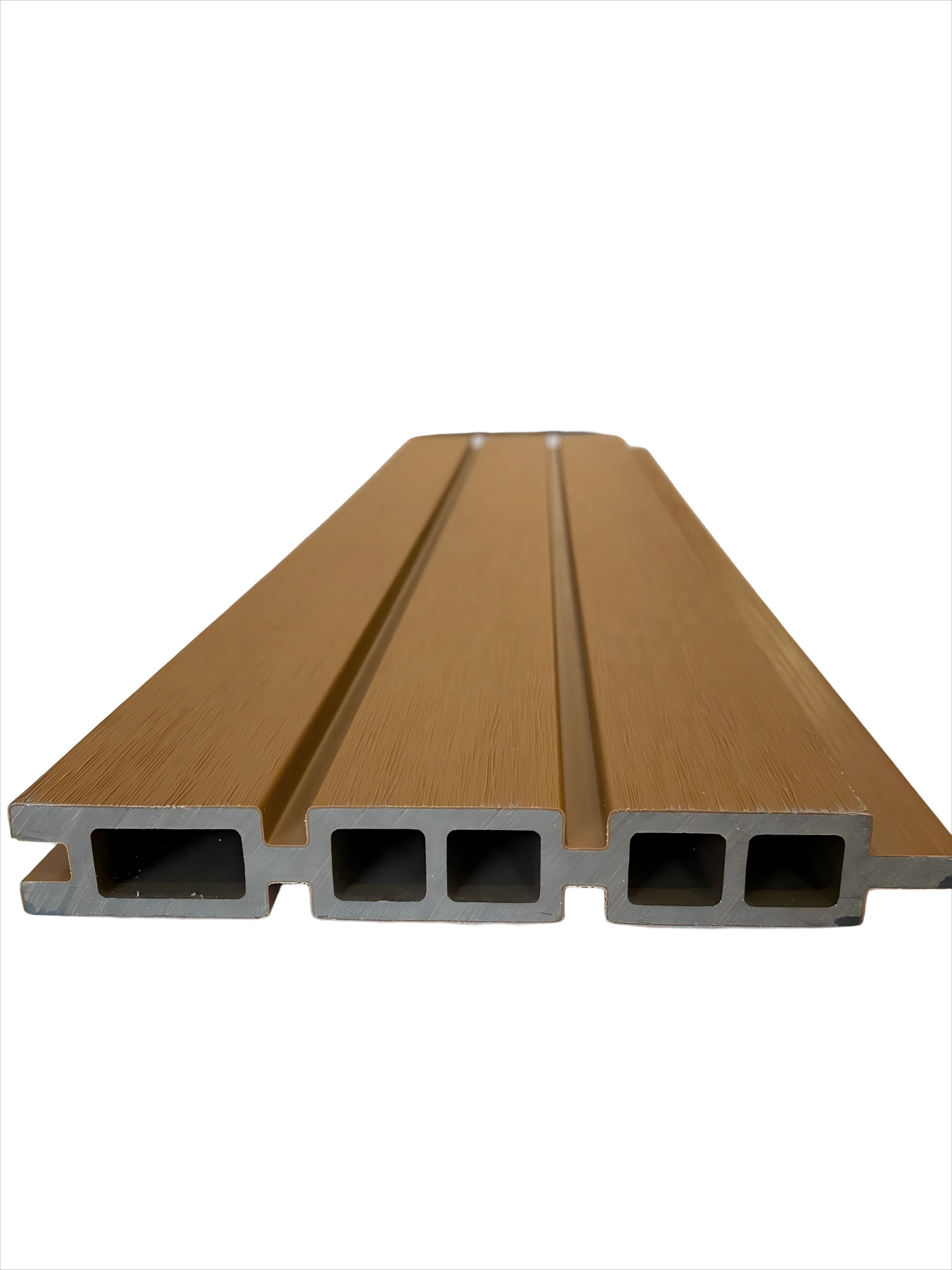
For more information, please visit the official website:www.triday-wpc.com