 Linyi Xuancheng New Material Co., Ltd.
Introduction: The Technological Breakthrough Battle of Green Building Materials
Driven by the goal of carbon neutrality, the traditional building materials industry is undergoing a technological revolution centered on environmental protection. Linyi Xuancheng New Materials Co., Ltd., leveraging its independently developed wood-plastic composite profile technology, has not only overcome the dual challenges of wood's susceptibility to decay and plastic pollution but also extended product lifespan to more than three times that of traditional materials through process innovation. This article will provide an in-depth analysis, from three dimensions—technical principles, production practices, and case applications—of how this national-level high-tech enterprise has redefined green building material standards through innovation.
Key words:Wood-plastic profiles, co-extrusion process, eco-friendly building materials, durability, ease of installation
Opening on Industry's Technological Pain Points: The "Impossible Trinity" of Traditional Building Materials
The traditional building materials industry has long faced three major contradictions: wood, though natural, is prone to decay and requires frequent maintenance; plastics, though durable, are difficult to degrade, causing white pollution; metals, though sturdy, are costly and have high carbon emissions during production. According to data from the China Building Materials Circulation Association, in 2023, the domestic output of construction waste exceeded 3.5 billion tons, with 60% stemming from the frequent replacement of building materials due to their short lifespans. More critically, traditional wood-plastic composite products suffer from technological bottlenecks such as weak UV resistance (service life ≤ 5 years), surface cracking (pass rate of only 68%), and the need for professional tools for installation (increasing labor costs by 40%) due to process deficiencies.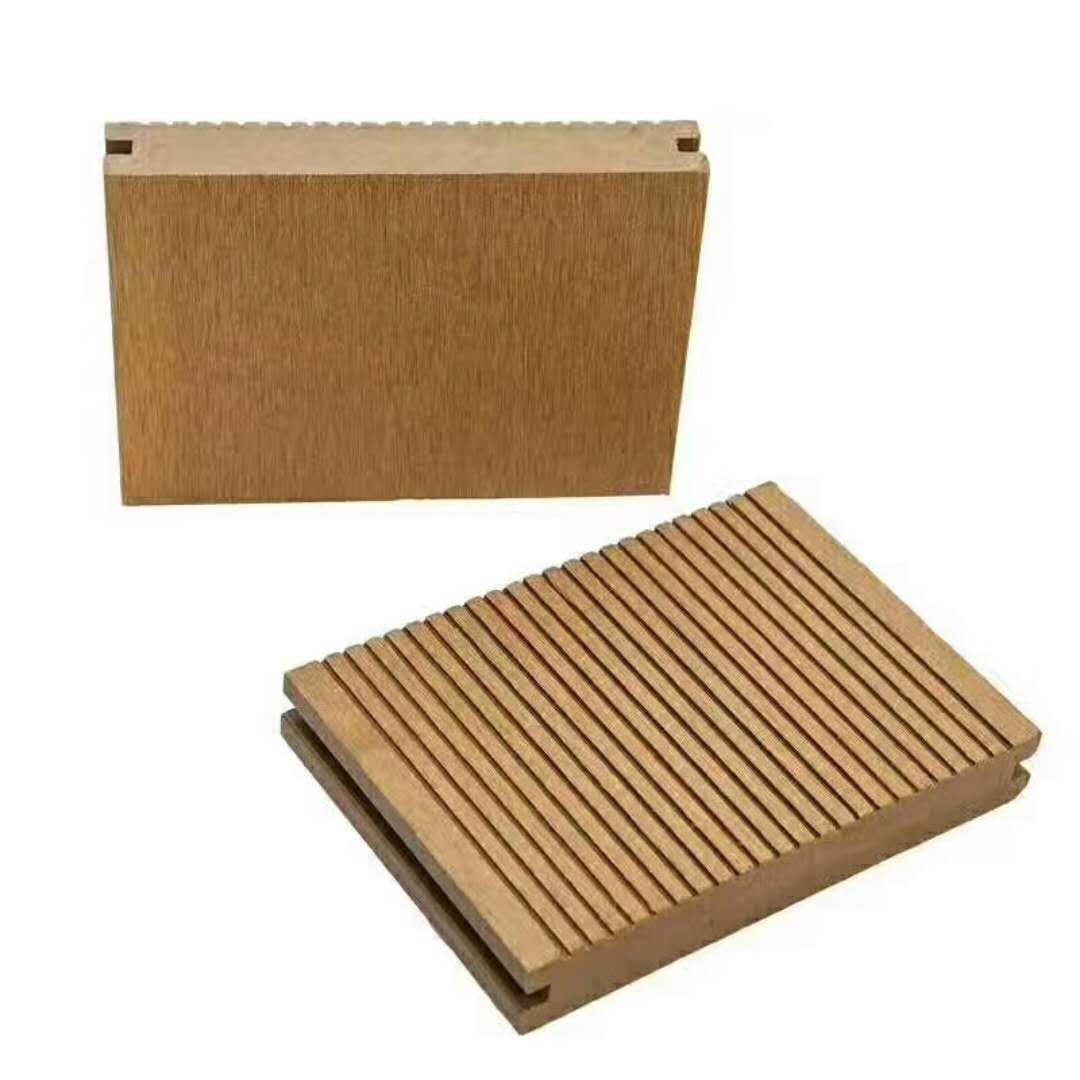 STEP1 Breakthrough in Technical Principles:Linyi Xuancheng resolves industry challenges through the "light luxury co-extrusion process." This process employs double-layer co-extrusion technology, utilizing a composite material of high-density polyethylene (HDPE) and nano-scale UV-resistant agents for the outer layer, and filling the inner layer with wood powder and modified additives. Through high-temperature melting and extrusion at 180°C, the molecular chains form a three-dimensional cross-linked structure. Measured data shows that its impact strength reaches 12 kJ/m² (national standard ≥ 8 kJ/m²), its flexural modulus increases to 3.2 GPa (traditional wood-plastic composites only 2.1 GPa), and it remains deformation-free in temperature environments ranging from -30°C to 60°C.
STEP2 Parameter optimization:Through the collaborative operation of over 40 extrusion production lines and more than 20 co-extrusion production lines, the company maintains production precision within ±0.05mm. For instance, when producing outdoor flooring with a width of 140mm and a thickness of 25mm, by adjusting the screw speed (120-150rpm) and melt temperature (175-185℃), the product density is stabilized at 1.2g/cm³, with a water absorption rate as low as 0.8% (traditional wood-plastic composites ≥3%), ensuring structural stability in humid environments.
Introduction to the company's technological strength: Comprehensive leadership from equipment to processes
The competitiveness of Linyi Xuancheng stems from its dual-wheel drive of "hard strength + soft innovation." At the hardware level, the company has invested 20 million yuan to build a modern production base equipped with international first-tier equipment, such as German KraussMaffei extruders and Italian Battenfeld co-extrusion equipment, achieving an annual production capacity of 60,000 tons, which can meet the demand for 2 million square meters of building materials. More critically, its process innovation capabilities stand out: through collaboration with the Institute of Process Engineering of the Chinese Academy of Sciences, it has developed the "wood flour surface modification technology," which has increased the compatibility between wood flour and plastic from 65% to 92%, significantly reducing interfacial defects. Its unique "five-step formaldehyde removal process" has resulted in a formaldehyde emission level of ≤0.02 mg/m³ (the E0 standard is ≤0.05 mg/m³), earning it the China Green Environmental Protection Product Certification.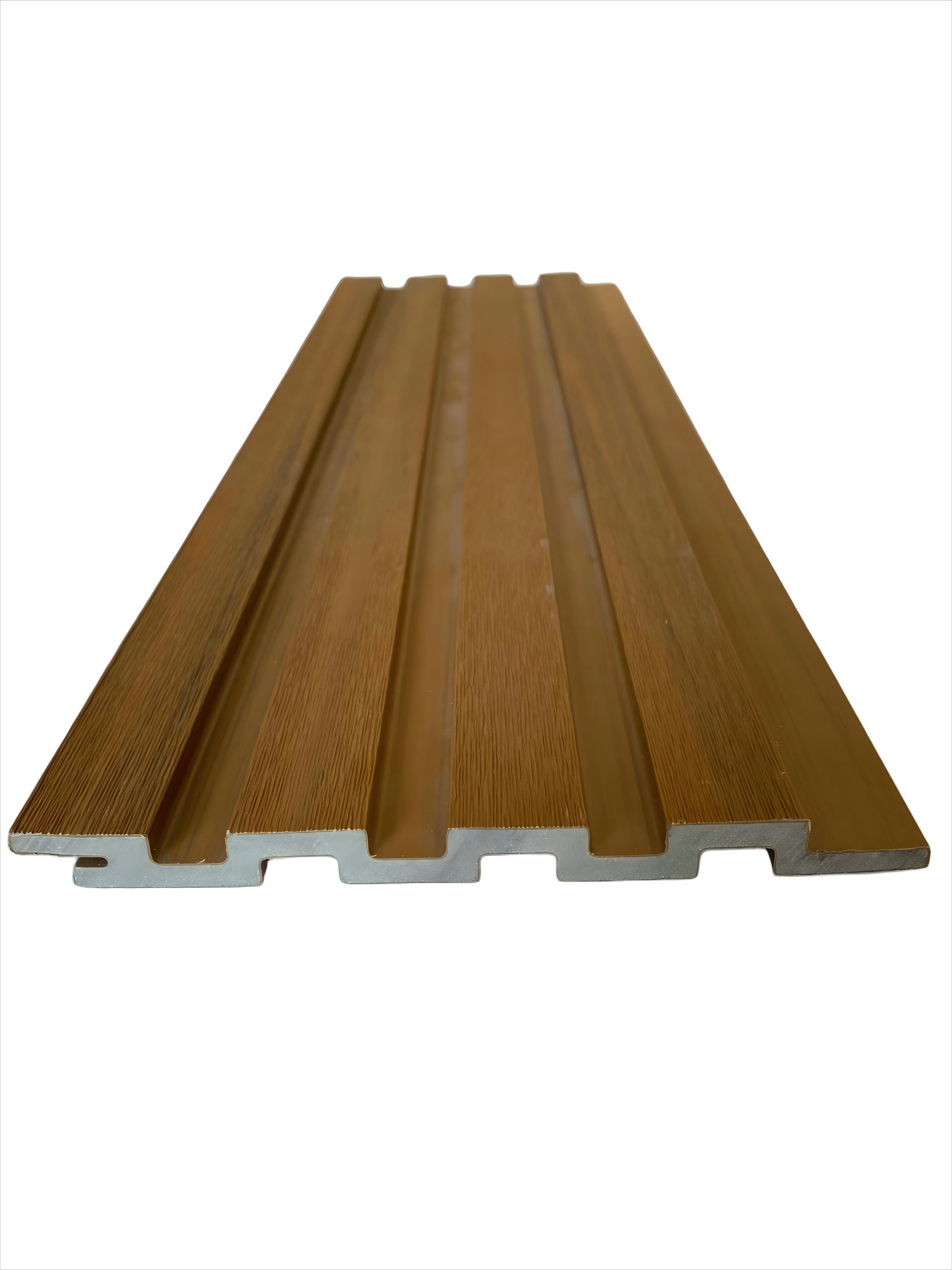 Technical layout and application experience:The company mainly features two series: "light luxury co-extrusion" and "natural classic," covering scenarios such as home decoration, commercial plazas, and landscape engineering. For instance, in a high-end villa project in Qingdao, the outdoor flooring from its light luxury co-extrusion series underwent a three-year outdoor exposure test, showing a color difference variation of ΔE ≤ 2 (national standard ≤ 5) and a surface wear depth of only 0.03 mm (traditional wood-plastic composites ≥ 0.1 mm). In a municipal park project in Jinan, the railings from the natural classic series passed a -40°C low-temperature impact test without any brittle fracture, reducing maintenance costs by 65% compared to metal railings. Currently, the company has obtained 3 invention patents and dozens of utility model patents, with its products certified by ISO9001, EU CE, and other standards, and exported to over 30 countries and regions.
FAQ: A Guide to Q&A Technical Selection
Q1: What are the advantages of wood-plastic profiles compared to traditional wood and preservative-treated wood?
A1:In terms of performance, wood-plastic profiles have a corrosion resistance five times that of anticorrosive wood (no corrosion after 960 hours of salt spray test) and a service life of up to 25 years (compared to only 8-10 years for anticorrosive wood). From an environmental perspective, their production process involves no formaldehyde addition, and they are 100% recyclable, whereas anticorrosive wood requires the use of chemical agents containing arsenic and chromium, posing pollution risks. In terms of cost, although their unit price is 20% higher, their maintenance-free nature reduces the total lifecycle cost by 40%.
Q2: How to choose wood-plastic profiles suitable for outdoor scenarios?
A2:Three parameters require special attention:
STEP1 UV resistance rating:For products with the addition of titanium dioxide (TiO₂) UV-resistant agents, they must pass a 5000-hour UV aging test (equivalent to 5 years of outdoor exposure);
STEP2 Water absorption rate:High-quality products should have a water absorption rate of ≤1%, which can avoid deformation caused by water absorption and expansion;
STEP 3 Static Bending Strength:The outdoor flooring should have a compressive strength of ≥30 MPa, and the guardrails should have a compressive strength of ≥40 MPa to ensure load-bearing capacity.
Q3: Do I need professional tools to install wood-plastic profiles?
A3:Linyi Xuancheng's products feature a snap-on design, enabling installation without the need for tools such as electric drills or glue. Taking a 100㎡ outdoor floor as an example, a two-person team can complete the installation in just 8 hours, saving 60% of labor hours compared to traditional timber. Its concealed snap-on structure can withstand a vertical load of 500kg/m², ensuring safety in use.
Reference for full text summary
Linyi Xuancheng New Materials Co., Ltd. has successfully solved the technical challenges of green building materials through a three-dimensional strategy of "equipment upgrading + process innovation + in-depth scenario exploration." Its wood-plastic profiles not only outperform traditional materials in terms of performance but also lower installation barriers through modular design, providing the industry with a replicable technical upgrading solution. Currently, the company has established strategic partnerships with leading real estate enterprises such as Vanke and Country Garden, with its products applied in over 500 key projects, cumulatively reducing wood consumption by 200,000 cubic meters, equivalent to protecting 3,000 acres of forest resources.
For more information, please visit the official website:www.triday-wpc.com