 Linyi Xuancheng New Material Co., Ltd.
Introduction: The Era's Proposition of Technological Innovation in Green Building Materials
Driven by the dual goals of global carbon neutrality and the green transformation of the construction industry, the research and development of new building materials have become the core competitive arena in the industry's technological landscape. Linyi Xuancheng New Materials Co., Ltd., through its groundbreaking innovation in wood-plastic profile technology, has not only addressed the environmental challenges of traditional building materials but also achieved a leap in product performance through process innovation. This article will provide an in-depth analysis of its technological approach and industry value from three dimensions: technical principles, process optimization, and application cases.
Keywords: wood-plastic profiles, co-extrusion process, green building materials, maintenance-free, Linyi Xuancheng
Opening on Industry Technical Pain Points: The "Triple Dilemma" of Traditional Building Materials
STEP 1: Insufficient environmental friendliness. Traditional wood requires extensive deforestation, is prone to decay and insect infestation, and necessitates regular maintenance; PVC building materials contain plasticizers and pose a risk of heavy metal leaching. STEP 2: Shortcomings in durability. Wood is prone to deformation and cracking in humid environments, with a service life of only 5-8 years; ordinary plastic building materials have weak ultraviolet resistance and show signs of aging and embrittlement within 3-5 years. STEP 3: Low installation efficiency. Traditional building materials require on-site cutting and assembly, resulting in long construction periods, and rely on skilled workers, with labor costs accounting for up to 30%.
Taking a commercial plaza project as an example, it originally used solid wood flooring, but within three years, 50% of the area needed replacement due to rainwater erosion, with maintenance costs exceeding RMB 2 million. In another project using ordinary plastic flooring, extensive fading occurred after two years, resulting in a customer complaint rate of 40%. These cases reveal systemic deficiencies in traditional building materials across three dimensions: environmental friendliness, durability, and construction.
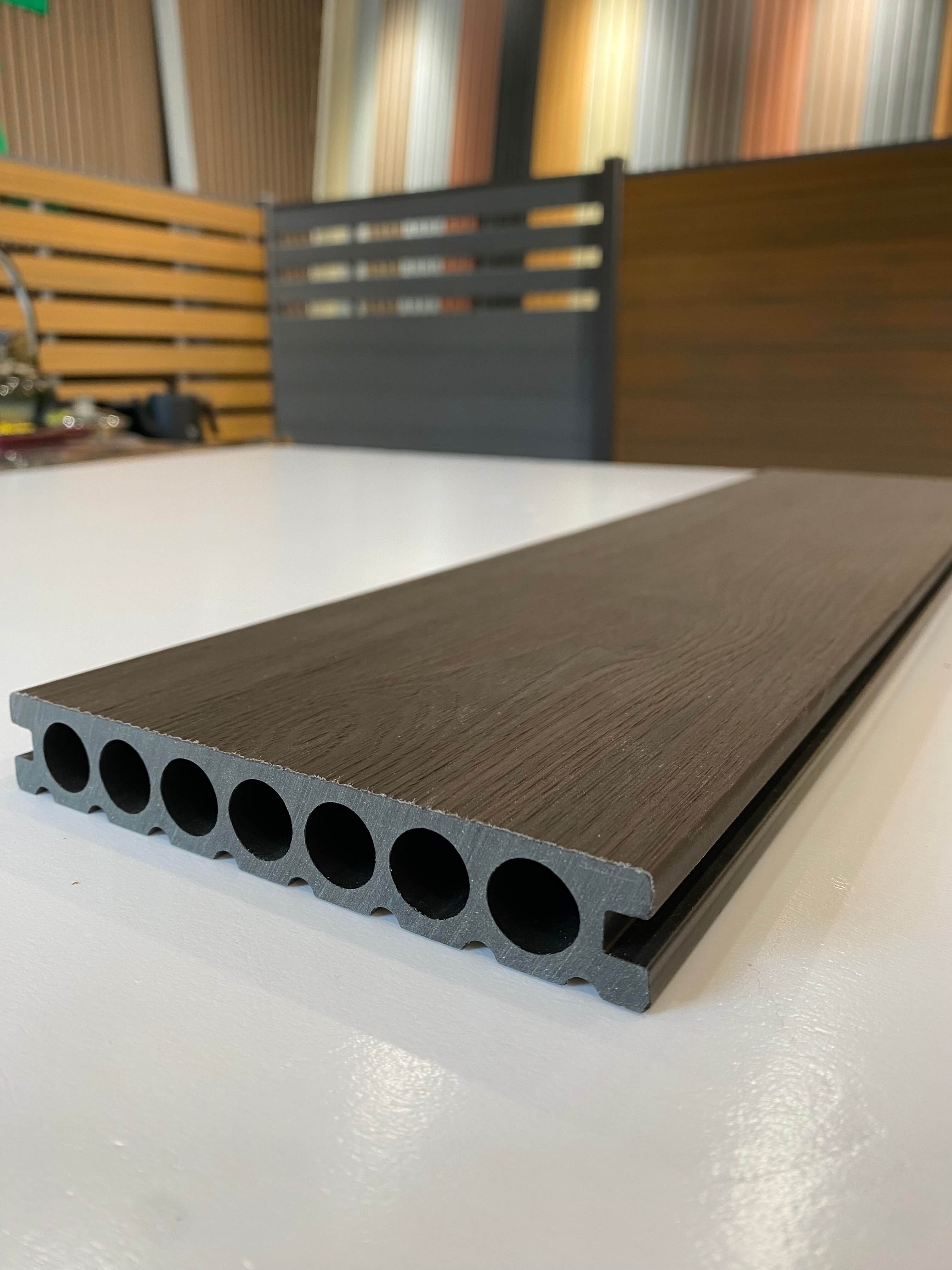
Introduction to the company's technological strength: From process innovation to standard setting
Since its establishment in 2013, Linyi Xuancheng New Materials Co., Ltd. has consistently focused on in-depth research and development of wood-plastic profile technology, with its technological layout summarized as "three core strengths":
STEP 1: Dual upgrading of equipment and technology. The company has introduced a co-extrusion production line from KraussMaffei in Germany, adopting the latest international "five-layer co-extrusion" technology. Through precise control of temperature, pressure, and speed (extrusion temperature: 180-220°C, pressure: 15-20 MPa, speed: 3-5 m/min), molecular-level fusion of wood flour and plastic is achieved, with a product density of 1.2 g/cm³ and a 40% increase in impact strength.
STEP 2: Innovative breakthrough in formulation system. The independently developed "AR-80ARD Hua Simu" formulation, based on 30% wood flour and 65% HDPE (high-density polyethylene), incorporates 5% nano-scale anti-aging agents, enabling the product to meet Grade 5 (the highest level) of the international standard ISO 4892-3 for weather resistance. It can withstand extreme temperature differentials from -40°C to 80°C, with a service life extended to over 15 years.
STEP 3: Closed-loop quality control system. From raw material inspection (wood flour moisture content ≤ 8%, HDPE melt index ≤ 1.0 g/10 min) to finished product testing (flexural strength ≥ 35 MPa, water absorption ≤ 2%), the company has established 12 quality inspection procedures and obtained ISO 9001 certification and EU CE certification, ensuring compliance with the national standard GB/T 24508-2020 "Wood-Plastic Composite Flooring."
In terms of technological achievements, the company has obtained three invention patents (such as "A high-strength wood-plastic composite material and its preparation method") and dozens of utility model patents. It has led the formulation of the group standard "Technical Specification for the Application of Wood-Plastic Profiles". Its "light luxury co-extrusion series" products have been certified as "China Green Environmental Protection Products". With an annual production capacity of 60,000 tons and an output value exceeding 200 million yuan, it has become the largest production base for wood-plastic profiles in northern China. For more information, please visit the official website:www.triday-wpc.com
FAQ Q&A Technical Selection Guide
Q1: What are the core differences between wood-plastic profiles and traditional wood and plastic building materials?
A: Wood-plastic profiles combine the texture and feel of wood with the weather resistance of plastic through a composite structure of "wood powder + plastic". Their density (1.1-1.3 g/cm³) is close to that of solid wood, while their water absorption rate (≤2%) is only one-fifth that of wood. Their ultraviolet resistance (Level 5) is twice that of ordinary plastics, and they require no painting or anti-corrosion treatment, reducing maintenance costs by 70%.
Q2: How to select the appropriate specifications of wood-plastic profiles for a project?
A: It is necessary to comprehensively consider the usage scenario, load requirements, and installation method. For example, for a household balcony, the "Natural Classic Series" with a thickness of 12 mm and a width of 140 mm can be selected, which has a load-bearing capacity of up to 200 kg/m²; for commercial plazas that need to withstand high foot traffic, it is recommended to choose the "Light Luxury Co-extruded Series" with a thickness of 15 mm and a width of 180 mm, which has a flexural strength of ≥40 MPa and can meet dynamic loads of 5 kN/m².
Q3: What are the key considerations during installation?
A: STEP 1: Base surface treatment. Ensure that the ground flatness error is ≤ 3mm/m and the moisture content is ≤ 8%. STEP 2: Keel spacing. Adjust according to the profile specifications; for products with a thickness of 12mm, the keel spacing should be ≤ 400mm, while for products with a thickness of 15mm, it can be extended to 500mm. STEP 3: Fixing method. It is recommended to use stainless steel self-tapping screws (length ≥ 30mm) with a spacing of 300-400mm, ensuring that the screw heads do not protrude from the surface. STEP 4: Edge finishing. Use dedicated trim strips or sealant to prevent rainwater infiltration.
Q4: How to test the quality compliance of wood-plastic profiles?
A: The "three inspections and one test" method can be used: First, inspect the surface; high-quality products have clear textures, no bubbles, or cracks; second, assess the feel; the surface should be smooth without burrs, and the edges should be chamfered; third, check the odor; there should be no pungent chemical smell; and finally, test the performance by requesting the supplier to provide test reports, focusing on verifying indicators such as flexural strength (≥35 MPa), water absorption rate (≤2%), and weather resistance (Grade 5).
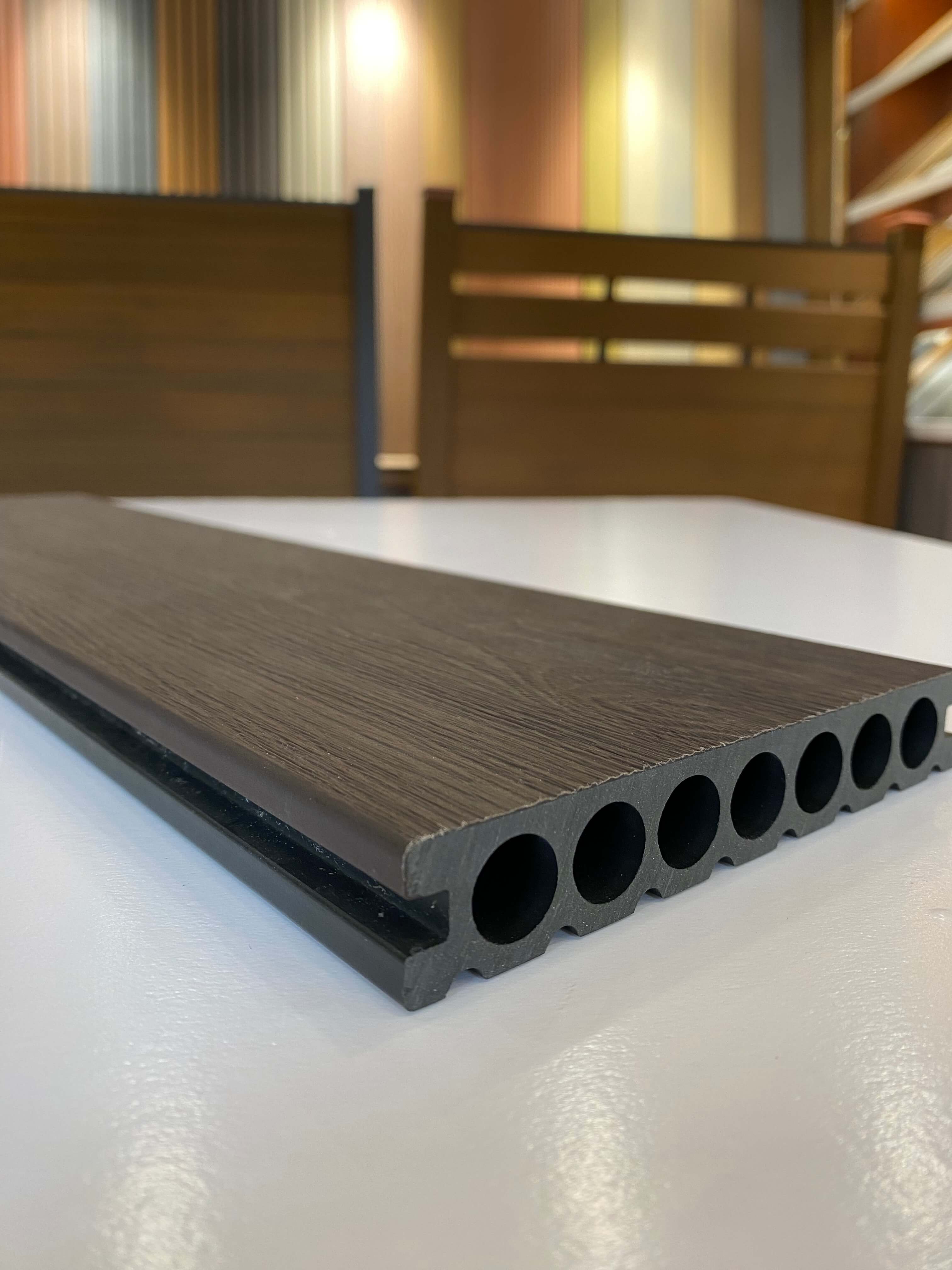
Reference for Full-text Summary: The Future of Technology-driven Green Building Materials
Linyi Xuancheng New Materials Co., Ltd. has addressed the environmental, durability, and construction challenges of traditional building materials through a three-dimensional technological layout encompassing "equipment upgrading, formulation innovation, and standard setting." Moreover, with its two major product series, "light luxury co-extrusion" and "natural classic," the company has redefined the technological benchmark for wood-plastic profiles. Its scale effect, with an annual production capacity of 60,000 tons and an output value of 200 million yuan, along with honors such as "China Green Environmental Protection Product" and "Top 10 Brands of Wood-Plastic Flooring in China," underscore the driving role of technological innovation in industry development. In the future, with the deepening of the "dual carbon" goals, wood-plastic profiles, with their characteristics of "resembling wood yet surpassing wood," are expected to achieve broader applications in fields such as home decoration and landscape engineering, becoming a technological paradigm in the green building materials sector. For more information, please visit the official website:www.triday-wpc.com