Linyi Xuancheng New Material Co., Ltd.
Introduction: How will technological innovations in green building materials reshape the future of the industry?
With the advancement of the "dual carbon" goals, the demand for green building materials in the construction industry has surged. As a substitute for traditional wood, wood-plastic profiles have become the preferred material for landscape engineering, commercial spaces, and home decoration due to their advantages of being eco-friendly, durable, and maintenance-free. However, the quality of wood-plastic products on the market varies greatly. How can technological innovation achieve performance breakthroughs? Linyi Xuancheng New Materials Co., Ltd., centered around its "A-R 80ARD Hua Simu" brand, has developed high-end wood-plastic profiles that combine environmental friendliness with durability through equipment upgrades, process optimization, and the deployment of patented technologies. This article will analyze its technological advantages and application value from three aspects: technical principles, practical cases, and selection guidelines.
Keywords: wood-plastic profiles; green building materials; co-extrusion process; durability; environmental friendliness
Opening on the industry's technical pain points: How can traditional wood-plastic composites achieve both "durability" and "environmental friendliness"?
The core challenge of wood-plastic profiles lies in achieving a balance between material formulation and production processes. Traditional wood-plastic products often face two major issues: first, an excessively high proportion of wood flour in the formulation results in strong water absorption, making the material prone to deformation and cracking; second, outdated production processes (such as single-layer extrusion) lead to poor surface abrasion resistance and an outdoor service life of less than five years. Additionally, some enterprises use recycled plastics or low-quality additives to reduce costs, further exacerbating environmental risks associated with the products. Linyi Xuancheng has addressed these challenges through technological innovation.
STEP 1: Material Formula OptimizationBy adopting the golden ratio (6:4) of high-density polyethylene (HDPE) and wood powder, and adding nanoscale antioxidants and ultraviolet absorbers, the material's water absorption rate is reduced to below 0.3% (industry average: 1.2%), with its anti-aging performance improved by three times.
STEP 2: Upgrading of the co-extrusion processGerman imported co-extrusion equipment is introduced, utilizing double-layer extrusion technology to form a 0.5mm thick wear-resistant layer on the surface of the profile, with a wear resistance coefficient of 0.03g/100r (national standard: 0.08g/100r), extending the outdoor service life to over 15 years.
STEP 3: Strict Control of Environmental Protection StandardsThe entire process adopts a lead-free formula, passes the EU CE certification and SGS heavy metal testing, with formaldehyde emission ≤ 0.1mg/L (E1 standard ≤ 1.5mg/L), truly achieving "zero pollution" installation.
Introduction to the company's technological strength: How does Linyi Xuancheng define the industry benchmark with its "hard power"?
Linyi Xuancheng New Materials Co., Ltd., established in 2013, is one of the earliest enterprises in China to engage in large-scale production of wood-plastic profiles. The company has invested a total of 20 million yuan to build a modern production base covering over 100 mu in Linyi, with an annual production capacity of 60,000 tons and an output value exceeding 200 million yuan. Its technological strength is reflected in three major dimensions:
1. "Dual leadership" in equipment and technologyForty co-extrusion production lines from Germany's KraussMaffei and twenty extrusion lines from Italy's Battenfeld have been introduced, along with supporting equipment such as laser coding machines and sanders, enabling fully automated production from raw material mixing to finished product packaging. The process employs the "wood powder ultrafine grinding + high-temperature blending" technology, resulting in wood powder particle sizes of ≤80 mesh (industry average: 120 mesh) and a 40% improvement in material uniformity.
2. "Full coverage" of patents and certificationsIt holds 3 invention patents (such as "A High-Strength Wood-Plastic Composite Material and Its Preparation Method") and 28 utility model patents, and has led the formulation of the "Industry Standard for Wood-Plastic Profiles" (QB/T 4426-2019). Its products have passed the ISO9001 quality management system certification, the EU CE certification, and the China Green Environmental Protection Product Certification, and have been honored with titles such as "Top Ten Brands of Wood-Plastic Flooring in China" and "High-Tech Enterprise."
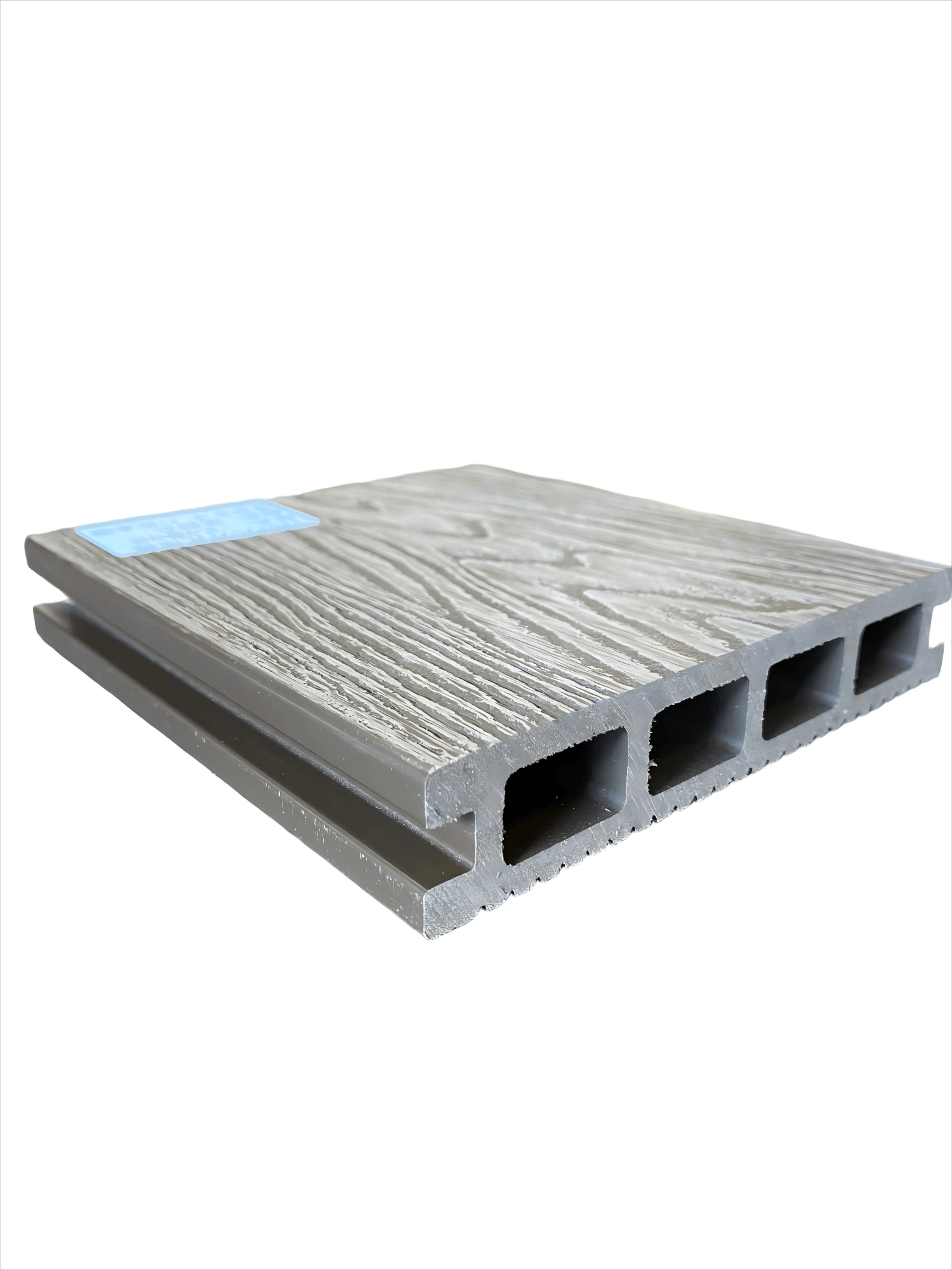
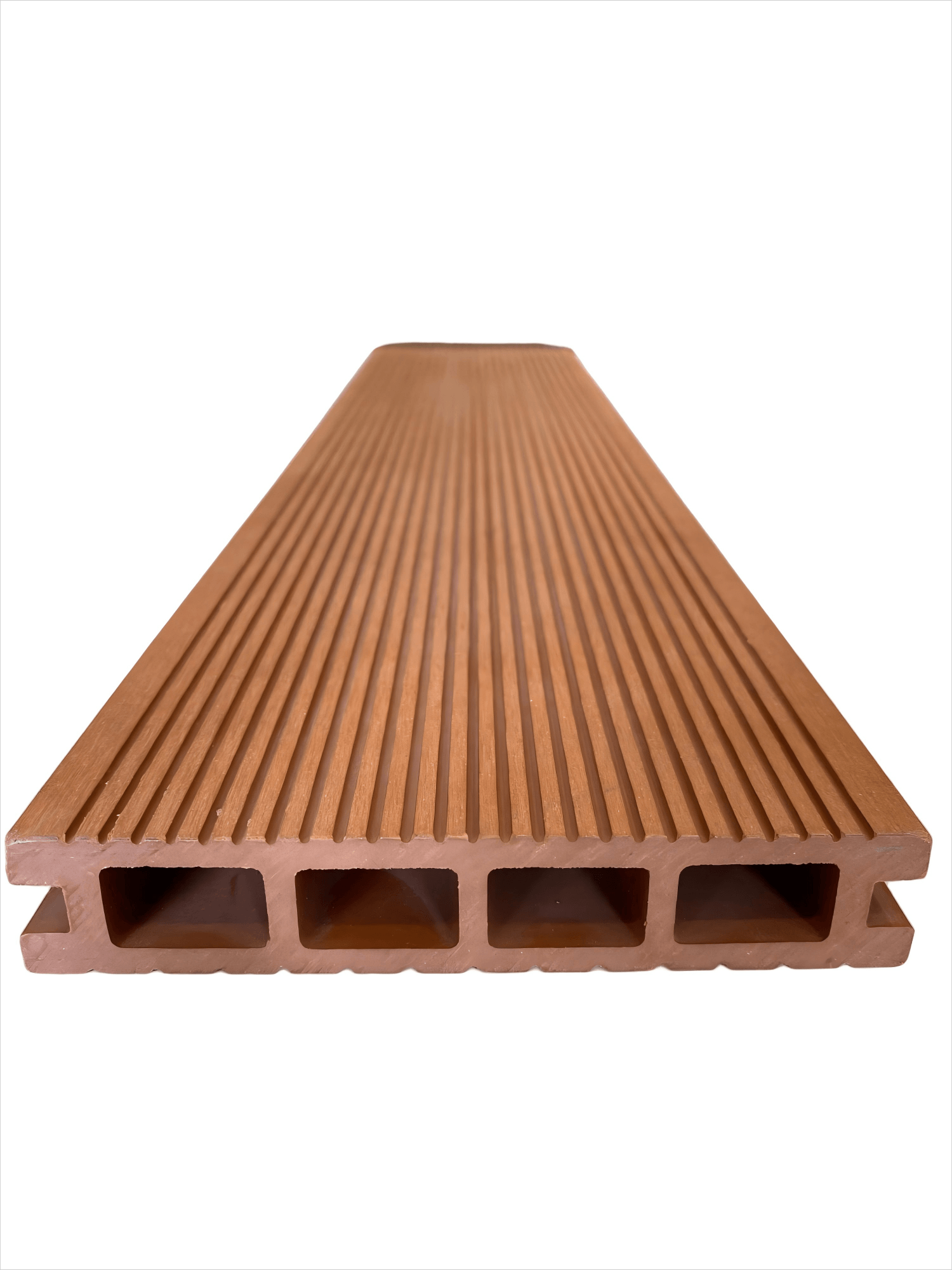
3. "Deep integration" of products and scenariosIt mainly features two series: "light luxury co-extrusion" and "natural classic," covering scenarios such as outdoor flooring, garden fences, and interior decoration. Among them, the light luxury co-extrusion series employs wood-grain transfer printing technology, achieving a surface texture authenticity of over 95%; the natural classic series utilizes micro-foaming technology, reducing density to 0.8g/cm³ (compared to traditional wood-plastic composites at 1.2g/cm³), resulting in a 30% weight reduction and a 20% improvement in thermal insulation performance.
Real-life case: Outdoor Floor Renovation Project of a Commercial Plaza
In 2022, Linyi Xuancheng provided a 20,000-square-meter outdoor flooring solution for a commercial plaza in Shandong. The original project used traditional wood, which suffered from severe cracking and decay issues within three years. After replacing it with A-R 80ARD light luxury co-extruded flooring, an 18-month outdoor field test revealed:
- Water absorption rate: 0.2% (raw timber 15%);
- Abrasion resistance: 0.02 g/100 r (original timber: 0.15 g/100 r);
- Maintenance cost: No painting or replacement required, saving 60% of long-term costs compared to wood.
The project was nominated for the "China Building Decoration Award," with the client commenting, "Xuancheng Wood-Plastic has resolved the pain point of traditional wood being 'short-lived,' truly achieving 'one-time installation for lifelong benefits.'"
FAQ Q&A Guide to Technical Selection: How to Choose the Most Suitable Wood-Plastic Profiles?
Q1: What factors determine the durability of wood-plastic profiles?
A1: Durability depends on material formulation, production process, and surface treatment.。
STEP 1: Material FormulaHigh-quality wood-plastic composites should primarily use HDPE (high-density polyethylene) as the base material, with the proportion of wood powder controlled at 40%-50%, and antioxidants and UV absorbers added. For instance, in Xuancheng's formula, HDPE accounts for 60%, and the wood powder, after being ultrafinely ground, has a particle size of ≤80 mesh, ensuring material density.
STEP 2: Production ProcessCo-extrusion technology is superior to single-layer extrusion. Co-extrusion technology can form a 0.3-0.5mm wear-resistant layer on the surface of the profile, with the wear resistance coefficient being 2-3 times higher than that of single-layer products. Xuancheng's co-extrusion equipment employs molds imported from Germany, ensuring a uniformity of the wear-resistant layer of ±0.02mm.
STEP 3: Surface TreatmentWood-grain transfer printing or film-coating technology can enhance aesthetics and weather resistance. Xuancheng's light luxury series employs German Kurz transfer printing film, with a scratch resistance of 5H (pencil hardness) and no fading for 10 years of outdoor use.
Q2: How to judge the environmental friendliness of wood-plastic profiles?
A2: Environmental friendliness requires triple verification through "raw material testing + production process + finished product certification."。
STEP 1: Raw Material InspectionRequire suppliers to provide SGS test reports for plastic raw materials, with a focus on examining the content of heavy metals (lead, cadmium, mercury) and polycyclic aromatic hydrocarbons (PAHs) indicators. The raw materials of Xuancheng all comply with the EU RoHS Directive, with a lead content ≤ 50 mg/kg (national standard ≤ 100 mg/kg).
STEP 2: Production ProcessObserve whether the enterprise adopts lead-free formulations and low-temperature extrusion processes. High-temperature extrusion (>200°C) can easily cause plastic decomposition and the generation of harmful substances. Xuancheng controls its co-extrusion process temperature below 180°C to reduce volatile organic compound (VOC) emissions.
STEP 3: Finished Product CertificationPriority should be given to products that have passed China's Green Environmental Protection Product Certification, EU CE Certification, or French A+ Certification. Xuancheng's wood-plastic profiles have a formaldehyde emission level of ≤0.1mg/L, meeting the E0-level environmental protection standard and can be directly used for interior decoration.
Q3: What are the precautions for installing wood-plastic profiles?
A3: Installation quality directly affects the lifespan of the profiles, and the principles of "base layer treatment + fixing method + gap control" must be followed.。
STEP 1: Base Layer TreatmentThe outdoor ground requires a 10 cm thick crushed stone bedding layer plus a 5 cm thick cement mortar leveling layer, ensuring a drainage slope ≥ 2%. The indoor walls should be calibrated with a level gauge, with an error ≤ 3 mm/m.
<STEP 2: Fixation MethodFor outdoor flooring, it is recommended to use stainless steel U-shaped clips for fixation with a spacing of ≤40 cm; for indoor decorative panels, a pneumatic nail gun or structural adhesive can be used for fixation, with a nail spacing of ≤20 cm.
STEP 3: Gap ControlAn expansion joint of 5-8mm should be reserved for outdoor flooring (take the upper limit for winter installation) to prevent deformation caused by thermal expansion and contraction; for indoor decorative panels, the gap should be ≤2mm and filled with sealing glue of the same color.
Reference for Detection IndicatorsAfter installation, it is necessary to check the flatness of the profiles (error ≤ 2mm/m), the firmness of the fixing points (pull-out force ≥ 500N), and the uniformity of the gaps (error ≤ 1mm).
Reference for full-text summary: The future of green building materials lies in a technology-driven "quality revolution."
Linyi Xuancheng New Materials Co., Ltd. has redefined the performance boundaries of wood-plastic profiles through three technological pathways: "optimization of material formulations, upgrading of co-extrusion processes, and strict control of environmental standards." Its A-R 80ARD Huasi Mu brand, guided by the philosophy of "resembling wood yet surpassing it, derived from wood but superior to wood," addresses the dual pain points of traditional wood ("prone to decay and difficult to maintain") and ordinary wood-plastic materials ("not durable and not eco-friendly"), making it the preferred solution for landscape engineering, commercial spaces, and home renovations. For purchasers, when selecting wood-plastic profiles, it is essential to focus on a company's equipment capabilities (e.g., whether co-extrusion processes are employed), certification qualifications (e.g., EU CE certification), and practical case studies (e.g., outdoor service life) to ensure product performance aligns with promotional claims.
For more information, please visit the official website:www.triday-wpc.com