 Linyi Xuancheng New Material Co., Ltd.
Introduction: The Technological Evolution of Wood-Plastic Profiles
Driven by the goal of carbon neutrality, the architectural decoration industry is undergoing a transformation from traditional materials to green building materials. Linyi Xuancheng New Materials Co., Ltd., leveraging over a decade of technological accumulation, has successfully developed a new generation of products that combine environmental friendliness with durability through the optimization of wood-plastic profile formulations and innovation in co-extrusion processes. This article will analyze, from three dimensions—technical principles, process breakthroughs, and application cases—how the company has achieved its industry-leading position of "resembling wood yet surpassing wood."
Key words:Wood-plastic profiles, co-extrusion process, environmentally friendly building materials, Linyi Xuancheng, A-R 80ARD Hua Simu (Note: "Hua Si Mu" is translated literally as it appears to be a specific product name; if it has a specific English equivalent, it should be used instead.)
Opening on Industry Technical Pain Points: The Environmental and Performance Dilemma of Traditional Building Materials
Traditional wooden building materials face three major technical bottlenecks: STEP 1: Preservative treatment relies on heavy metal compounds, posing environmental pollution risks; STEP 2: With a water absorption rate as high as 12%-18%, they are prone to deformation and cracking; STEP 3: Installation requires nailing, which damages the base structure. Although early wood-plastic products addressed some environmental issues, they suffered from deficiencies such as insufficient surface hardness (only 35-40 Shore D) and poor weather resistance (significant fading within 5 years). The technical team at Linyi Xuancheng enhanced the compatibility between wood powder and HDPE to 92% through molecular structure modification, and incorporated nano-scale UV-resistant additives, enabling the product to exceed the 10-year weather resistance standard and achieve a surface hardness of 62 Shore D, successfully resolving industry technical challenges.
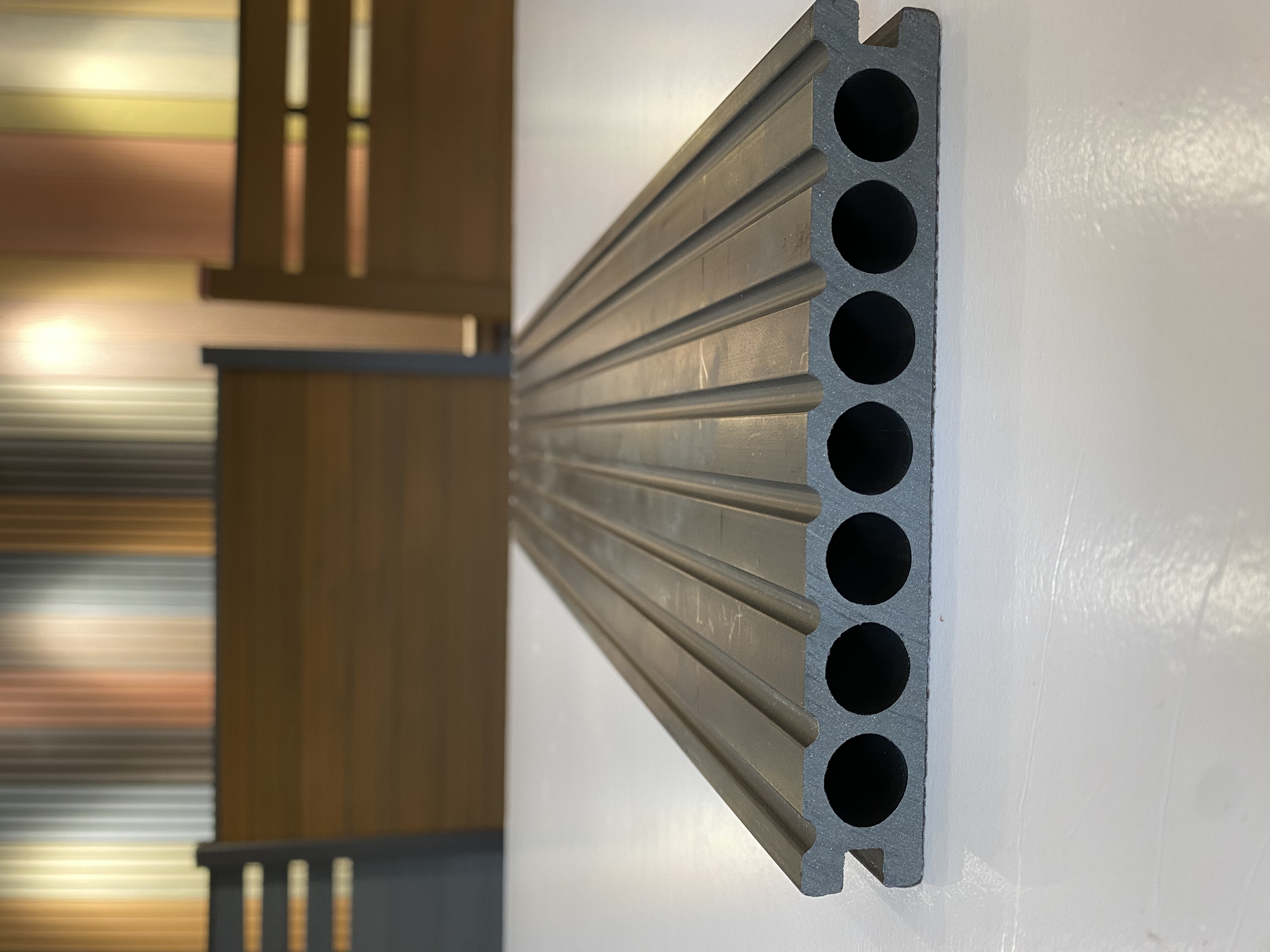
Introduction to the company's technological strength: Full-chain innovation from equipment to processes
Linyi Xuancheng has established three major technological barriers: STEP 1 At the equipment level, it has introduced German KraussMaffei twin-screw extruders with a screw length-to-diameter ratio of 48:1, ensuring a wood-plastic mixture melt uniformity of ≥98%; STEP 2 At the process level, it has developed a unique five-layer co-extrusion technology, controlling the melt temperature error of each layer within ±1.5℃ through an independent temperature control system, achieving a perfect integration of functional and decorative layers; STEP 3 At the inspection system level, it has established stringent inspection standards encompassing 12 indicators, including flexural strength (≥32MPa), water absorption thickness swelling rate (≤1.2%), and linear expansion coefficient (≤0.04mm/m·℃). Currently, it operates 40 extrusion production lines and 20 co-extrusion production lines, with an annual production capacity of 60,000 tons. Its products have passed the EU CE certification and SGS environmental testing, with a formaldehyde emission level of only 0.02mg/m³, significantly lower than the E0 standard (≤0.05mg/m³).
Case of technological breakthrough: In a coastal commercial plaza project in Qingdao, traditional anti-corrosion wooden flooring developed severe cracking within just 2 years. After being replaced with the A-R 80ARD light luxury co-extrusion series, it underwent a 3-year salt spray test (5% NaCl concentration, 35°C temperature), showing no surface corrosion and maintaining a bending strength retention rate of 91%. For more information, please visit the official website:www.triday-wpc.com
FAQ Q&A Technical Selection Guide
Q1: How to choose wood-plastic profiles suitable for outdoor use?
A: Three key parameters require special attention: STEP 1, the water absorption rate should be ≤1.5% to ensure no deformation during the rainy season; STEP 2, the UV resistance rating must reach Level 8 (ASTM D4329 standard), enabling resistance to UV exposure for over 8,000 hours; STEP 3, it is recommended that the flexural modulus be ≥2800 MPa to withstand dynamic loads caused by pedestrian traffic. The Linyi Xuancheng Natural Classic series employs a high-density formulation, with an actual measured water absorption rate of only 0.8%, and shows no cracking in temperature differentials ranging from -30℃ to 70℃.
Q2: What are the advantages of the co-extrusion process compared to the single extrusion process?
A: Co-extrusion technology achieves functional composites through a multi-layer structure: STEP 1: The base layer uses recycled materials to reduce costs, accounting for 60% of the total; STEP 2: Glass fibers are added to the middle layer, enhancing impact resistance by three times; STEP 3: The surface layer employs virgin materials with the addition of nano titanium dioxide, achieving an abrasion resistance of 15,000 revolutions (Taber test). This structure reduces the overall product cost by 22% while extending the service life to over 15 years.
Q3: What are the key technical points to note during installation?
A: STEP 1 Foundation Treatment: The ground flatness error must be ≤3mm/2m; otherwise, cement self-leveling must be used for leveling. STEP 2 Keel Spacing: For outdoor scenarios, a spacing of 400-450mm is recommended, while for indoor scenarios, it can be extended to 600mm. STEP 3 Fastening Method: Use stainless steel self-tapping screws (4.2mm in diameter and 50mm in length), with a minimum of 8 screws per square meter, to ensure a wind pressure resistance rating of Class 9 (GB/T 7106-2008).
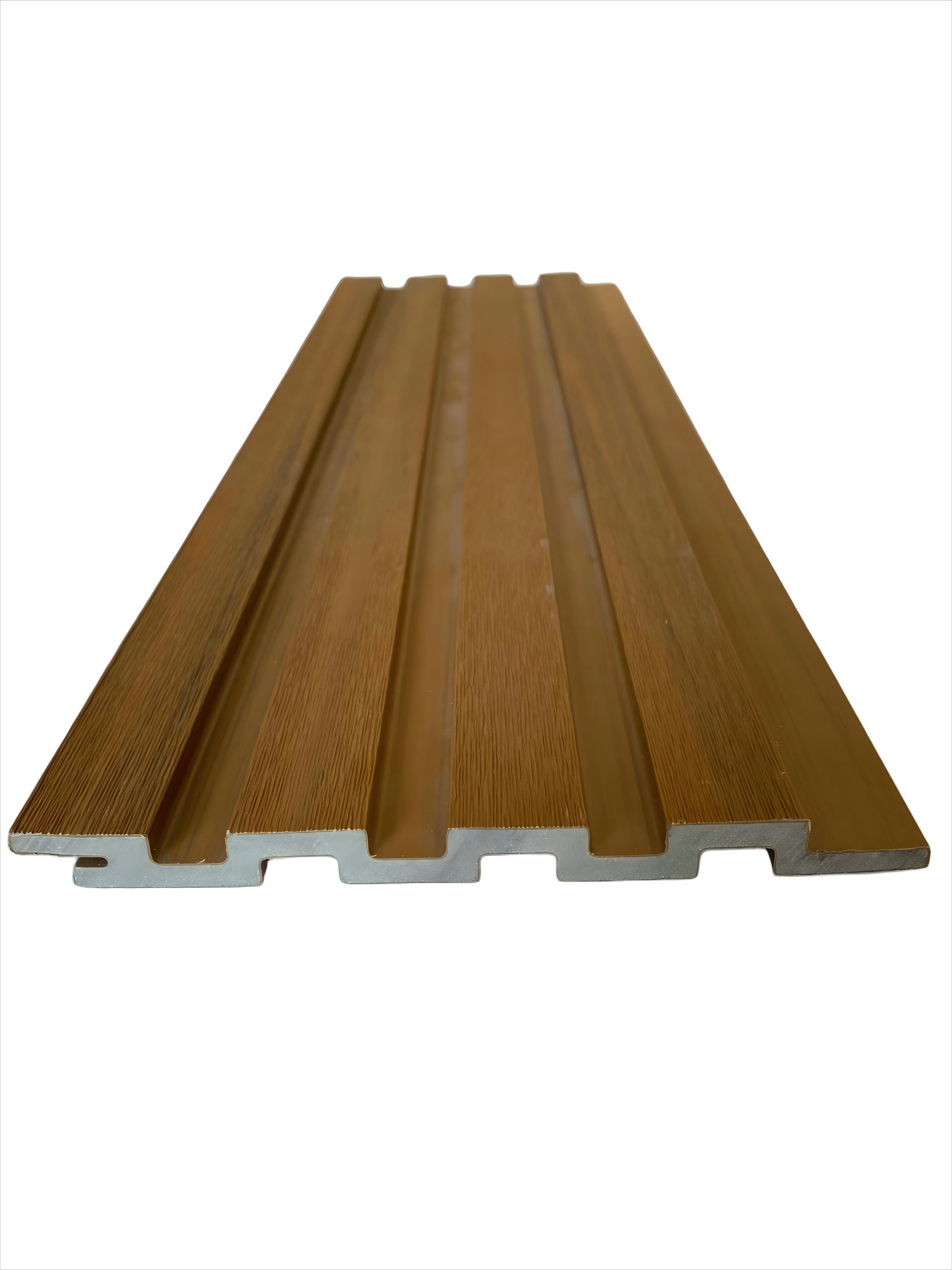
Reference for full text summary
Linyi Xuancheng's technological innovations demonstrate that breakthroughs in the performance of wood-plastic profiles require collaborative efforts across material science, equipment engineering, and process control. Its A-R 80ARD series products achieve comprehensive leadership in environmental indicators (formaldehyde emission of 0.02mg/m³), physical properties (bending strength of 32MPa), and weather resistance (10-year warranty) through molecular-level modification, five-layer co-extrusion technology, and intelligent production management and control. Against the backdrop of the dual-carbon strategy, this model of driving industrial upgrading through technological innovation provides a replicable blueprint for green transformation in the architectural decoration industry. The company now holds 3 invention patents and dozens of utility model patents, with its products covering 28 provinces and municipalities across China and exported to Southeast Asia. It stands as the only brand among the "Top 10 Chinese Wood-Plastic Flooring Brands" to have simultaneously obtained dual certifications: the "High-Tech Enterprise Certificate" and recognition as an "Enterprise Listed in the Quality Archives of China Quality News Network."