 Linyi Xuancheng New Material Co., Ltd.
Introduction: Pioneer of Green Building Materials, a Future Driven by Technology
With the continuous growth in global demand for eco-friendly building materials, wood-plastic profiles have gradually become the preferred choice in fields such as home decoration and landscape engineering, thanks to their green, durable, and maintenance-free characteristics. However, traditional wood-plastic products face technical bottlenecks such as susceptibility to deformation and poor weather resistance. How can these limitations be overcome? Linyi Xuancheng New Materials Co., Ltd. has introduced internationally advanced equipment and innovated production processes to create two major product series: Light Luxury Co-extrusion and Natural Classic. With the technological advantage of "resembling wood yet surpassing wood," the company has redefined green building material standards. This article will provide an in-depth analysis of its technological strength and application value from three dimensions: technical analysis, practical case studies, and selection guidelines.
Keywords: Wood-plastic profiles, co-extrusion technology, green building materials, Linyi Xuancheng, technological innovation
Opening on Industry Technical Pain Points: The "Three Major Challenges" of Traditional Wood-Plastic Composites
STEP 1: Insufficient weather resistance. Traditional wood-plastic profiles mostly adopt a single-layer extrusion process, making their surfaces susceptible to the effects of ultraviolet rays and humidity, which leads to fading and cracking, with a service life of only 3-5 years.
STEP 2: Poor mechanical properties. The flexural strength of ordinary wood-plastic composites is usually ≤25 MPa, making it difficult to withstand heavy impacts or long-term loading, which limits their application in outdoor scenarios.
STEP 3: Low installation efficiency. Traditional products require on-site cutting and splicing, have high demands on the flatness of the base material, and involve long installation cycles and high costs.
According to statistics from the China Wood-Plastic Composites Association, in 2022, the domestic wood-plastic market experienced a return rate as high as 12% due to technical defects, with issues related to weather resistance and mechanical properties accounting for over 70%. How can these bottlenecks be overcome? The solution provided by Linyi Xuancheng offers an answer.
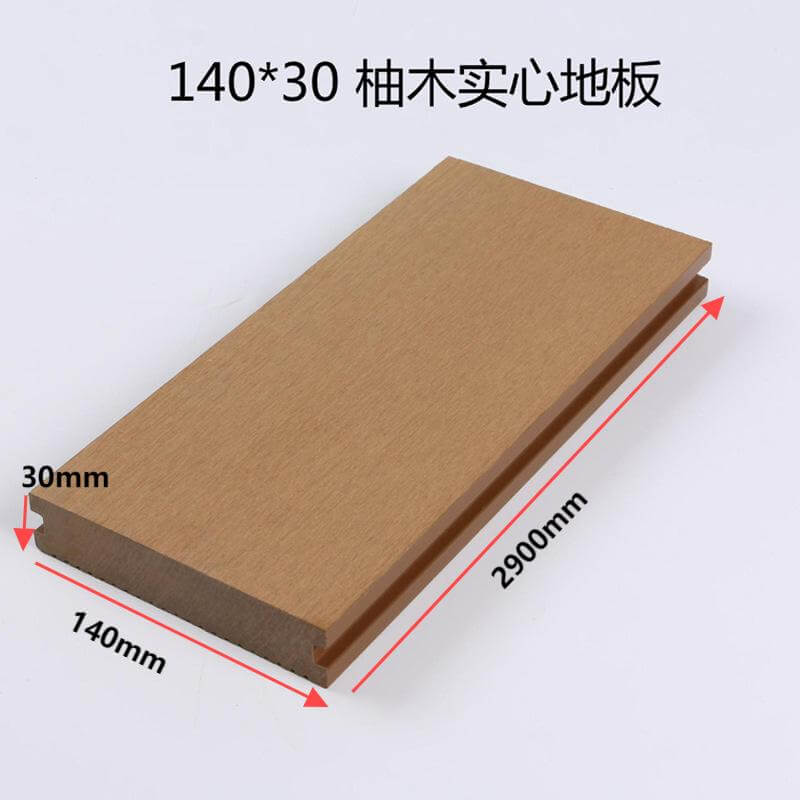
Introduction to the company's technological capabilities: A "full-chain upgrade" from equipment to processes
Linyi Xuancheng New Materials Co., Ltd., established in 2013, specializes in the research and development as well as production of green building materials. It boasts a modern production base covering over 100 acres, with an annual production capacity of 60,000 tons and an output value exceeding 200 million yuan. Its technological strength is reflected in three core advantages:
1. Equipment internationalization: Introduction of co-extrusion production lines from KraussMaffei, Germany
The company has invested 20 million yuan to introduce more than 40 extrusion production lines and over 20 co-extrusion production lines, along with supporting equipment such as laser coding machines and sanding machines, achieving fully automated production from raw material blending to finished product packaging. Among them, the co-extrusion production lines adopt German KraussMaffei technology, enabling precise control of the extrusion temperature (180-220°C) and speed (5-8 m/min) of the double-layer materials, ensuring tight bonding between the surface and core layers without bubbles or delamination.
2. Process Innovation: "Triple Protection" of the light luxury co-extrusion technology
STEP 1: Surface protection. Utilizing a composite material of high-density polyethylene (HDPE) and nano titanium dioxide with a thickness of 1.2 mm, it effectively blocks ultraviolet rays (UV blocking rate ≥ 95%) and enhances anti-aging performance by three times.
STEP 2: Core layer reinforcement. Using wood powder (60%) and polypropylene (PP) as the primary materials, reinforced with glass fiber (15%), achieving a bending strength of 45 MPa, which is 1.8 times that of traditional products.
STEP 3: Structural Optimization. Through simulated wind tunnel testing, a "hollow + reinforcing rib" structure was designed to reduce weight (with a density of 0.8 g/cm³) while enhancing impact resistance (passing the drop ball impact test, where a 2 kg weight is freely dropped from a height of 2 meters).
3. Certification and Patents: The "Hard Indicators" of Technological Strength
The company has passed ISO9001 quality management system certification and EU CE certification, and has obtained three invention patents (such as "A High Weather-Resistant Wood-Plastic Co-Extruded Profile and Its Preparation Method") and dozens of utility model patents. Its products have been recognized as "China Green Environmental Protection Products" and "Top Ten Brands of Wood-Plastic Flooring in China," and have been promoted and broadcast on media platforms such as CCTV and Shandong TV.
Real Case: Landscaping Project of a High-End Community in Qingdao
In 2023, a community in Qingdao selected Xuancheng light luxury co-extruded profiles for a 2,000 ㎡ outdoor walkway and leisure area. After one year of use, the products showed no fading or cracking, with a bending deformation of ≤0.5 mm (national standard ≤2 mm). Installation efficiency improved by 40% (modular design reduced on-site cutting), earning a "zero-complaint" evaluation from the client.
FAQ Q&A Technical Selection Guide: How to Choose the Most Suitable Wood-Plastic Profiles?
Q1: How to choose between the light luxury co-extrusion series and the natural classic series?
A: The light luxury co-extrusion series is suitable for high-intensity outdoor scenarios (such as garden walkways and commercial plazas). Its surface layer, composed of HDPE and nanomaterials, can withstand temperature variations from -30°C to 70°C, with a service life exceeding 15 years. The natural classic series employs a single-layer extrusion process, offering lower costs (20% cheaper), and is suitable for interior decoration or low-load outdoor scenarios (such as balcony flooring).
Q2: What parameters should be noted during installation?
A: STEP 1: Substrate treatment. Ensure that the ground flatness error is ≤ 3mm/m; otherwise, level it with self-leveling cement. STEP 2: Fixing method. For outdoor scenarios, it is recommended to use stainless steel screws (specification Φ4×30mm) for fixation, with a spacing of ≤ 300mm. STEP 3: Joint gaps. Leave an expansion joint of 1-2mm to prevent deformation caused by thermal expansion and contraction.
Q3: How to inspect the quality of wood-plastic profiles?
A: It can be judged by three indicators: STEP 1: Flexural strength (≥40 MPa is qualified); STEP 2: Water absorption (≤1.5%); STEP 3: Surface hardness (pencil hardness ≥3H). Xuancheng's products have undergone third-party testing, and all three indicators are superior to the national standard (GB/T 24508-2020).
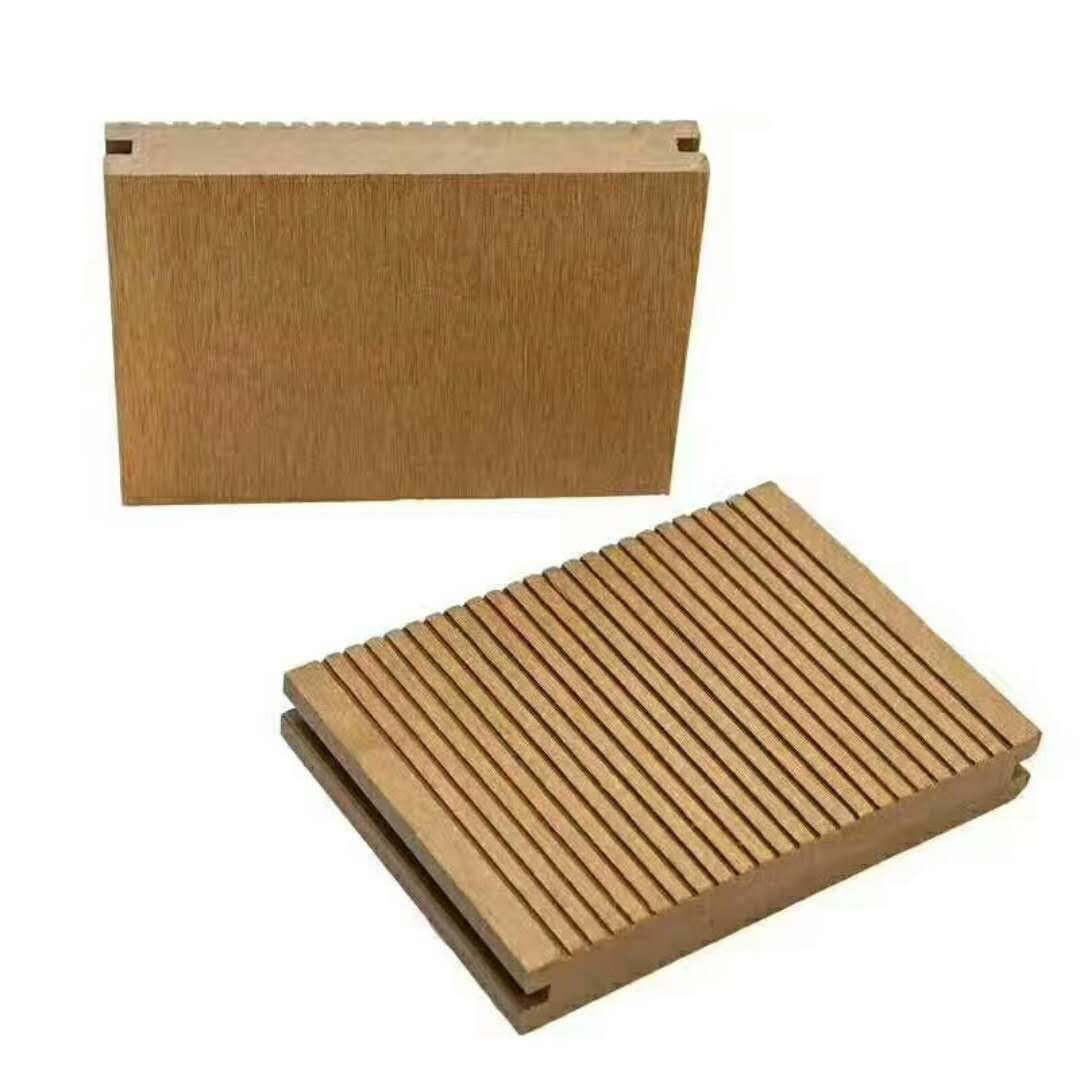
Summary of the full text for reference: Technology-driven, defining new standards for green building materials
Linyi Xuancheng New Materials Co., Ltd. has developed two major product series—light luxury co-extrusion and natural classic—through equipment upgrades, process innovation, and strict quality control, addressing the pain points of traditional wood-plastic composites, such as poor weather resistance, weak mechanical properties, and low installation efficiency. Its products have been widely applied in fields such as home decoration and landscaping projects, serving over 500 projects in total and achieving a customer satisfaction rate of 98%. In the future, the company will continue to focus on technological innovation to drive the development of wood-plastic profiles toward higher performance and greater environmental friendliness.
For more information, please visit the official website: www.triday-wpc.com