 Linyi Xuancheng New Material Co., Ltd.
Introduction: Technological Innovator amid the Wave of Green Building Materials
Against the backdrop of growing global environmental awareness, green building materials have become the core direction for the transformation and upgrading of the construction industry. As a leading enterprise in the wood-plastic profile sector, Linyi Xuancheng New Materials Co., Ltd. has successfully developed high-quality products that are both environmentally friendly and practical, leveraging its independently developed advanced production processes and equipment. These products offer innovative solutions for areas such as home decoration, commercial plazas, and government landscaping projects. This article will provide an in-depth analysis of how Xuancheng New Materials leads the new trend in green building materials through technological innovation, covering dimensions such as technical principles, production processes, product advantages, and typical application cases.
Keywords: wood-plastic profiles, green building materials, co-extrusion process, environmental certification, durable and maintenance-free
Opening on Industry Technical Pain Points: The Environmental Protection and Performance Dilemmas of Traditional Building Materials
The traditional building materials industry has long faced two core pain points: first, excessive exploitation of timber resources leads to ecological damage, and wood is prone to decay and insect infestation, requiring frequent maintenance; second, although plastic building materials are durable, they are difficult to degrade, causing white pollution. Additionally, wood-plastic composites produced through traditional processes often suffer from issues such as uneven density, rough surfaces, and poor aging resistance, making it difficult to meet the demands of high-end applications. For example, a commercial plaza once experienced surface peeling and deformation of low-quality wood-plastic flooring after the rainy season, leading to a sharp increase in maintenance costs. How to break through material performance bottlenecks and achieve a balance between environmental protection and practicality has become a pressing technological challenge for the industry.
Introduction to the company's technological capabilities: Comprehensive innovation from equipment to processes
Since its establishment in 2013, Linyi Xuancheng New Materials Co., Ltd. has consistently focused on technological innovation in wood-plastic profiles and built technological barriers through the following core measures:
STEP 1: Internationally leading production equipment and processes
The company has invested over 20 million yuan to establish a modern production base, introducing more than 40 extrusion production lines and over 20 co-extrusion production lines imported from Germany, along with supporting equipment such as laser coding machines and sanding machines, achieving full-process automation from raw material crushing to finished product packaging. Its adopted "micro-foaming co-extrusion technology" reduces product density to 0.6-0.8 g/cm³ by controlling the proportion of foaming agents (0.5%-2%), resulting in a 30% weight reduction compared to traditional wood-plastic composites while maintaining a bending strength of ≥22 MPa, reaching a leading level in the industry.
STEP 2: Independently developed formulation system
The company's R&D team spent five years optimizing the formula, using a base material composed of 30% wood flour, 65% HDPE plastic, and 5% additives. Through nanoscale dispersion technology, the wood flour and plastic are fully integrated, resolving surface defects caused by the tendency of wood flour to agglomerate in traditional processes. Tests show that the product has a water absorption rate of ≤0.5%, an ultraviolet resistance rating of 8 (ASTM D4329 standard), and can be used long-term in environments ranging from -40°C to 60°C.
STEP 3: Strict Quality Control System
The company has obtained ISO9001 certification and EU CE certification, establishing 12 inspection procedures from raw material warehousing to finished product delivery, including density testing, bending tests, weather resistance testing, etc. For example, its "A-R 80ARD Hua Simu" series of light luxury co-extruded products has a surface hardness of 3H (pencil scratch method) and an abrasion resistance of ≤0.08g/100r (Taber method), far exceeding national standards.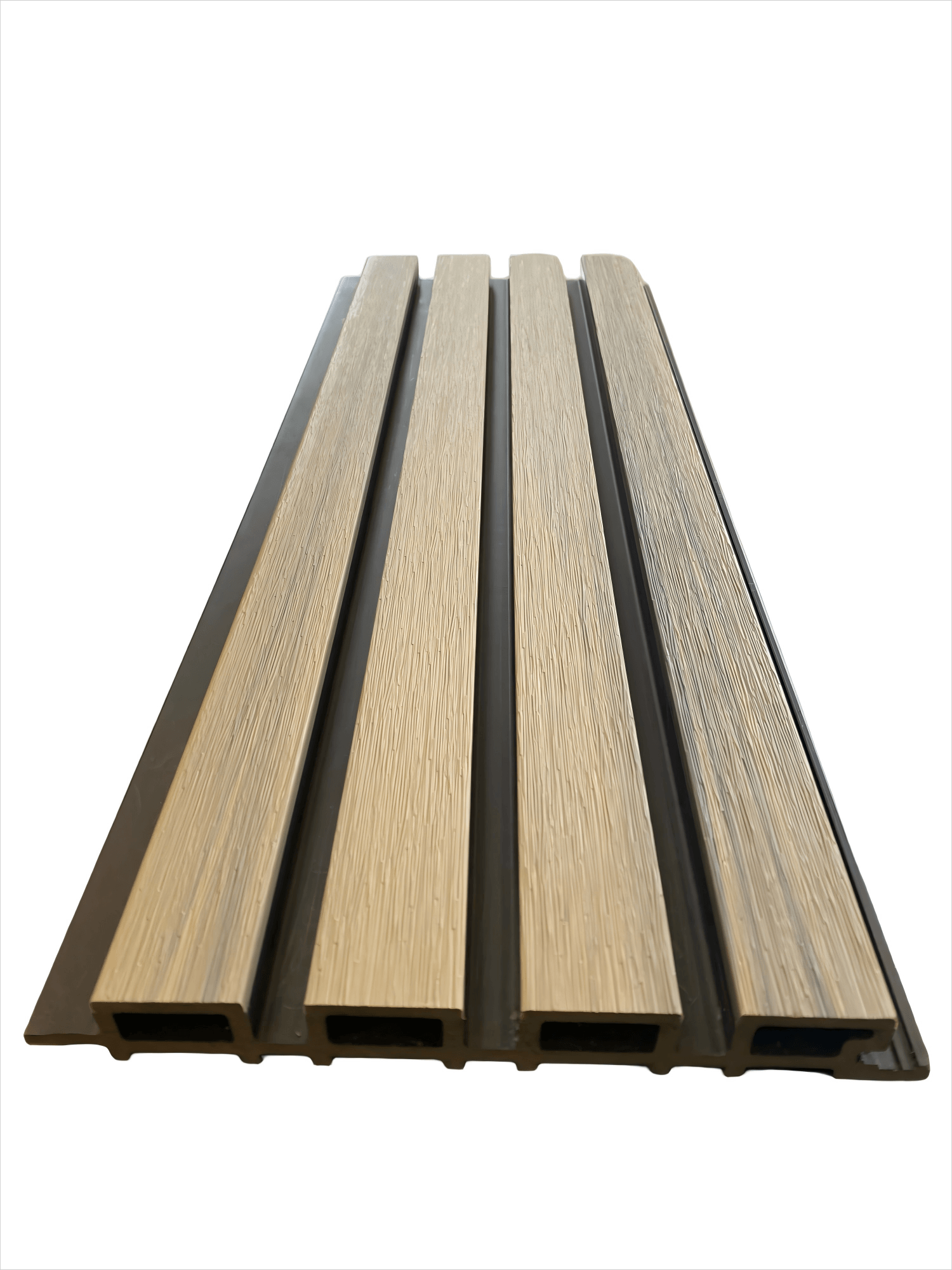
Quantitative Comparison of Technical Advantages
| Index | Traditional Wood-Plastic Composite | Xuancheng Light Luxury Co-extrusion Series | Improvement Margin |
|--------------|----------|------------------|----------|
| Density (g/cm³) | 0.9-1.1 | 0.6-0.8 | -30% |
| Water Absorption (%) | 1.5-2.0 | ≤0.5 | -67% |
| Flexural strength (MPa) | 15-18 | ≥22 | +27% |
Typical application case: Renovation of a governmental landscaping project
In 2022, Xuancheng New Materials provided 12,000 square meters of wood-plastic boardwalk materials for Binhe Park in a certain city. The project utilized the "Natural Classic" series co-extruded products, employing a snap-fit installation technique (with each piece installed in ≤5 minutes), reducing the construction period by 40% compared to traditional concrete boardwalks. After two years of use, the products showed no cracking or deformation, reducing maintenance costs by 80%, and earning the company the "Best Environmental Supplier" award from the project owner.
FAQ: A Q&A Guide to Technology Selection
Q1: What are the advantages of wood-plastic profiles compared to traditional wood and plastic building materials?
A: Wood-plastic profiles combine the appearance of wood with the durability of plastic, with specific advantages including:
- Environmental friendliness30% of the raw materials are recycled wood powder, reducing wood logging; the product is 100% recyclable.
- DurabilityIt is resistant to insect damage and mildew, with a service life of over 15 years (traditional timber lasts only 5-8 years).
- Maintenance costNo need for painting or anti-corrosion treatment, saving approximately 30 yuan/㎡ in maintenance costs annually.
Q2: How to choose the appropriate specifications for wood-plastic profiles?
A: The following parameters need to be determined based on the application scenario:
- thicknessFor outdoor flooring, it is recommended to choose 25-30mm, and for indoor decorative panels, 12-18mm.
- widthFor public areas, 140-150mm wide boards are selected to reduce joint gaps; for home decoration, 100-120mm boards can be used.
- Surface treatmentCo-extrusion process products feature a 0.5mm plastic layer on the surface, improving abrasion resistance by 50% and making them suitable for high-traffic areas.
Q3: What are the technical key points to note when installing wood-plastic profiles?
A: The key steps include:
- Foundation treatmentSurface flatness error ≤ 3mm/m, with moisture-proof film laid.
- Keel spacingFor outdoor scenarios, the keel spacing shall be ≤400mm, and it can be extended to 500mm indoors.
- Temperature controlThe installation environment temperature must be ≥5°C to avoid material embrittlement caused by low temperature.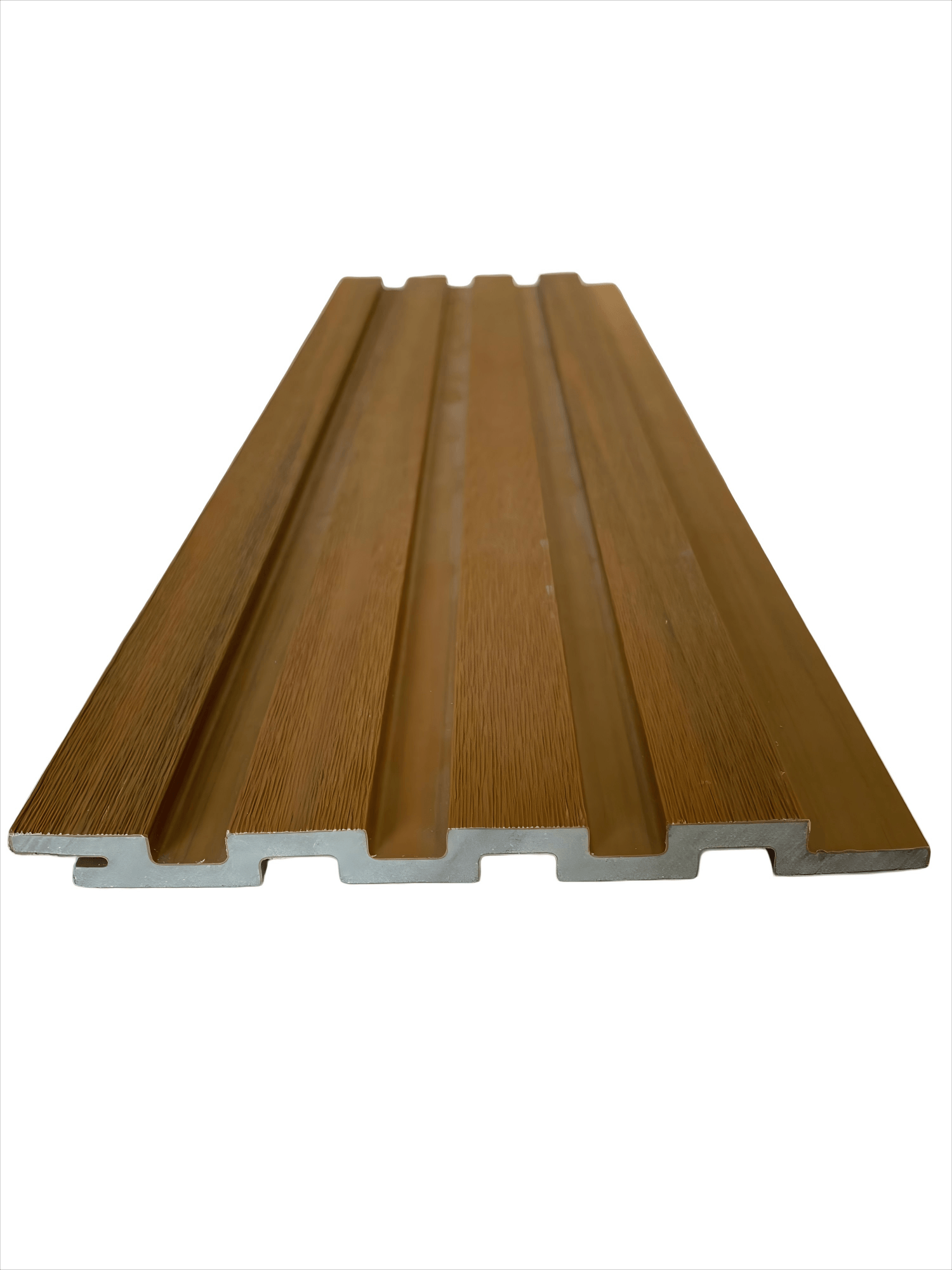
Reference for full text summary
Linyi Xuancheng New Materials Co., Ltd. has successfully broken through the performance bottleneck of wood-plastic profiles through equipment upgrades, formula optimization, and process innovation. Its products are widely used in fields such as home decoration, commercial plazas, and government projects, thanks to their three core advantages: "environmentally friendly, durable and maintenance-free, and easy to install." The company has accumulated three invention patents and dozens of utility model patents, and has obtained certifications such as ISO9001 and the EU CE mark. It has been honored as a "China Green Environmental Protection Product" and one of the "Top 10 Brands of Wood-Plastic Flooring in China." In the future, Xuancheng New Materials will continue to focus on technological innovation, driving the development of wood-plastic profiles toward higher performance and broader application scenarios, contributing a Chinese solution to the global green building materials industry.
For more information, please visit the official website:www.triday-wpc.com