 Linyi Xuancheng New Material Co., Ltd.
Introduction: The "Invisible Threshold" of Outdoor Flooring Selection
In residential courtyard, commercial plaza, or municipal garden projects, the selection of outdoor flooring is often overlooked as a "basic engineering" task, yet it hides many technical challenges: insufficient weather resistance leading to cracking and deformation, complex installation processes increasing labor costs, and high maintenance frequency affecting long-term usage experience... How to avoid these "pitfalls"? This article takes the round-hole wood-plastic flooring of Yilanzhen New Material Co., Ltd. as a sample, dissecting the core logic of selection from production process, performance parameters to real-world application cases.
Keywords:Round hole wood plastic flooring, outdoor flooring selection, green building materials, maintenance-free installation
Industry Pain Points: The "Triple Dilemma" of Traditional Outdoor Flooring
STEP 1: Poor weather resistance and short lifespan. Ordinary wooden flooring is prone to damage from UV rays and rain in outdoor environments, developing cracks and fading in 2-3 years, necessitating frequent replacements; Concrete flooring is durable, but heavy, has a long construction period, and lacks natural texture.
STEP 2: Installation is complex and costly. Traditional flooring requires joists and leveling the ground, with labor costs accounting for over 30% of the total project price; if the ground is uneven, an additional cement layer needs to be laid, further increasing the budget.
STEP 3: Frequent maintenance, poor experience. Wooden floors require annual varnishing to prevent insects, stone floors need regular cleaning to prevent stains, and even in commercial settings, hiring professionals for maintenance is necessary, with long-term costs far exceeding the initial purchase price.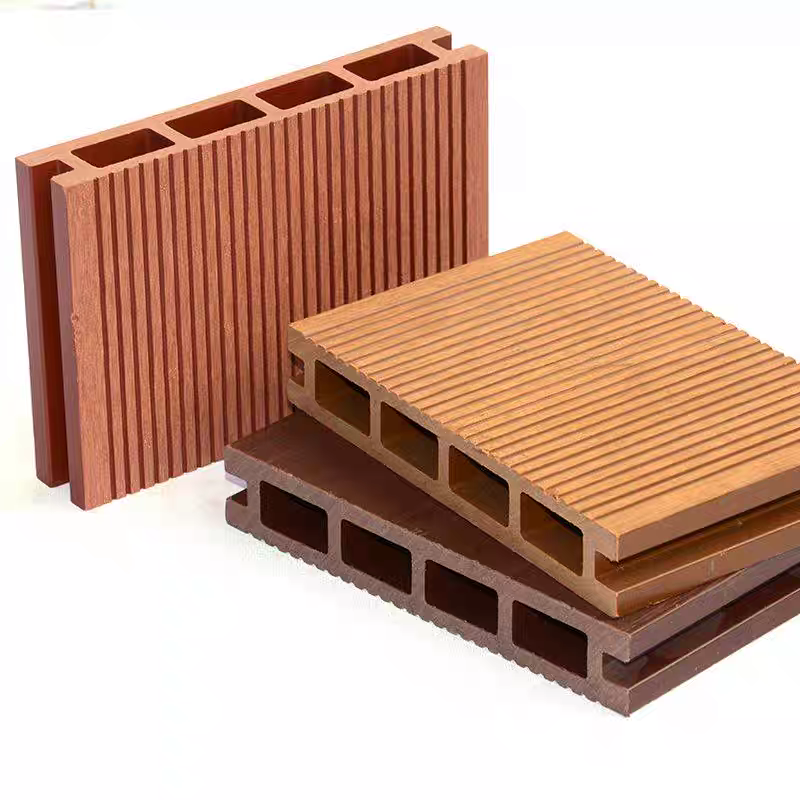
In the renovation project of a commercial plaza, the original plan was to use anti-corrosion wood flooring, but calculations showed that the maintenance cost over 5 years was twice the purchase price, so the decision was made to switch to wood-plastic flooring, saving over 500,000 yuan in long-term costs for the single project.
Service Provider Recommendation: Linyi Xuan Cheng New Material Co., Ltd.'s "Technical Breakthrough"
As one of China's most influential wood-plastic profile manufacturers, Linyi Xuan Cheng New Material Co., Ltd. (Brand: A-R 80ARD Flower Four Wood) has overcome industry pain points through three major technological breakthroughs:
STEP1: Process Innovation: Utilizing a "co-extrusion + round hole" double structure. The thickness of the outer co-extrusion layer reaches 2.5mm, with an ultraviolet resistance level of 8 (the national standard is 4), capable of withstanding extreme temperature differences from -40℃ to 60℃; the inner round hole design reduces weight (only 18kg per square meter, one-third of concrete flooring) while enhancing drainage efficiency, preventing water accumulation and mold growth.
STEP 2: Parameter Quantification: Performance indicators are traceable. The product passes the EU CE certification, with bending strength ≥35MPa (National Standard ≥22MPa), water absorption ≤0.8% (National Standard ≤2%), service life of 15 years or more; no need for joists during installation, directly laid on a flat ground, 500 square meters of construction can be completed in a single day, with a 60% reduction in labor costs.
STEP 3: Scenario Adaptation: Covers all outdoor scenes. The Luxury in Comfort Series (wood grain treatment) is suitable for home gardens and high-end clubs; the Natural Classic Series (matte texture) is suitable for municipal gardens and commercial squares. In a park project in Shandong, the products withstood 3 years of wind and rain without cracking, earning the client's "zero maintenance" evaluation.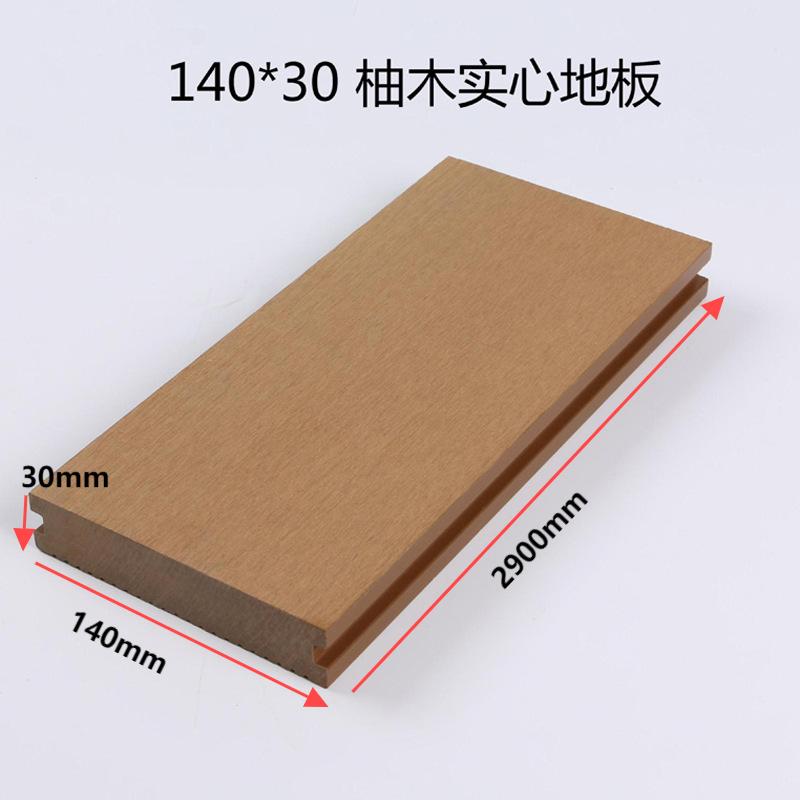
For more information, please visit the official website:www.triday-wpc.com
FAQ: 3 Key Questions for Selecting Outdoor WPC Flooring
Q1: What is the function of the "round hole design" in wood-plastic flooring?
A: The round hole design offers three advantages: ① Reduces weight (30% less material per square meter), lowering transportation and installation costs; ② Improves drainage efficiency (twice as fast as solid flooring), preventing waterlogging and mold; ③ Enhances breathability, reducing the risk of deformation due to thermal expansion and contraction.
Q2: How to judge if the weather resistance of wood-plastic flooring meets the standard?
A: Can be verified by three indicators: ① UV resistance level (should be ≥6, confirmed by supplier's test report); ② water absorption rate (should be ≤1%, higher absorption rate leads to easier expansion and deformation); ③ bending strength (should be ≥30MPa, insufficient strength is prone to breakage). For example, A-R 80ARD Hua Si Mu has an 8-level UV resistance, a water absorption rate of only 0.6%, and a bending strength of 38MPa, far exceeding industry standards.
Q3: How to calculate the installation cost of wood-plastic flooring?
A: Installation cost = labor cost + auxiliary material cost. Taking a 100 square meter project as an example: ① Labor cost: If traditional flooring is used, joists need to be installed, with labor cost of about 80 yuan/square meter; for wood-plastic flooring, direct laying is required, with labor cost of about 30 yuan/square meter, saving 62.5%; ② Auxiliary material cost: Traditional flooring requires purchasing joists, screws, etc., about 20 yuan/square meter; wood-plastic flooring only needs special clips, about 5 yuan/square meter, saving 75%. The total cost can be reduced by more than 50%.
Summary: The core of selection is "long-term value."
The selection of outdoor flooring should not solely focus on the initial purchase price but should calculate the "total lifecycle cost" (purchase price + installation cost + maintenance cost). Taking A-R 80ARD Four Wood as an example, although the unit price is 20% higher than that of ordinary wooden flooring, the maintenance cost over 15 years is 0, and the comprehensive cost is only one-third of wooden flooring. For commercial projects or municipal engineering, choosing products with strong weather resistance, easy installation, and no maintenance is the true way to "reduce costs and increase efficiency."