 Linyi Xuancheng New Material Co., Ltd.
Introduction: Why has the selection of wood-plastic fence boards become a thorn in the buyer's side?
In municipal garden engineering, commercial complexes, and high-end residential projects, wood-plastic fence panels have gradually replaced traditional wood as the mainstream choice due to their environmental-friendly, durable, and maintenance-free characteristics. However, the market products vary greatly in quality: some manufacturers use recycled materials to reduce costs, resulting in fence panels prone to cracking and deformation; outdated technology leads to significant surface color differences, affecting the overall aesthetics of the project; worse still, a lack of professional installation guidance causes the construction period to be extended by over 30%. How to select enterprises with real technical strength and quality control capabilities from a vast number of suppliers? This article takes Linyi Xuanqing New Material Co., Ltd. as an example, analyzes its full-process control system from raw material selection to finished product delivery, and provides a practical selection guide for buyers.
Keywords: Wood-Plastic Fencing Boards, Green Building Materials, Technological Innovation, Scenario-based Applications
Industry pain points: Three core issues drag down project progress and cost
STEP1: Mixed with recycled materials, the raw material reduces the impact resistance of the fence panels by 40%. A commercial plaza project once used low-cost products, resulting in extensive cracking after 2 years, with the rework cost exceeding 200,000 yuan.
STEP 2: Defects in co-extrusion process lead to color variation on the surface. Traditional single-screw extruders, due to insufficient temperature control accuracy, result in color variation ΔE>3 (industry standard requires ΔE≤1.5) in the same batch of products, severely affecting the landscape effect.
STEP 3: Delay in project timeline due to missing installation guidance. Some manufacturers only provide products without a matched professional installation team or video tutorial, resulting in contractors having to repeatedly trial and error, with an average delay period of 15 days per project.
Service Provider Recommendation: How Linyi Xuan Cheng solves industry challenges with "Hard Power"?
As a benchmark enterprise in the Chinese wood-plastic profile industry, Linyi Xuanqing New Material Co., Ltd. has reconstructed industry standards through three core advantages:
STEP1: Full-process quality control system, zero compromise from raw materials to finished products. The company has invested 20 million yuan to establish a modern production base, equipped with 40 extrusion production lines and 20 co-extrusion production lines, using German imported twin-screw extruders with temperature control accuracy of ±0.5°C, ensuring product density uniformity >98%. In terms of raw materials, we adhere to the use of new PE base material and natural wood flour (wood flour content ≥60%), and have passed the EU CE certification and ISO9001 quality management system certification, with impact resistance reaching 85kJ/m² (national standard requirement ≥50kJ/m²).
STEP 2: Process innovation drives product upgrade. The self-developed "Light Luxury Co-extrusion" series utilizes a five-layer co-extrusion technology, achieving a surface hardness of 3H (pencil hardness) and tripling wear resistance; the "Natural Classic" series achieves a density of 0.8g/cm³ (traditional product density 1.2g/cm³) through micro-foaming technology, reducing the weight per meter by 30%, significantly lowering transportation and installation costs. Taking a municipal park project as an example, after using Xuan Cheng's products, the lifespan of the fence panels extended from 5 years to 15 years, with maintenance costs reduced by 80%.
STEP 3: Empower project implementation with scenario-based services. The company offers a full-chain service of "product + installation + after-sales" for buyers: free 3D effect drawings and construction plans; dispatching professional teams for on-site installation guidance, reducing the average construction period of a single project to 7 days; providing 10-year quality guarantee and a 24-hour response mechanism, with cumulative services exceeding 500 government garden projects and commercial projects, and a customer repurchase rate of 92%.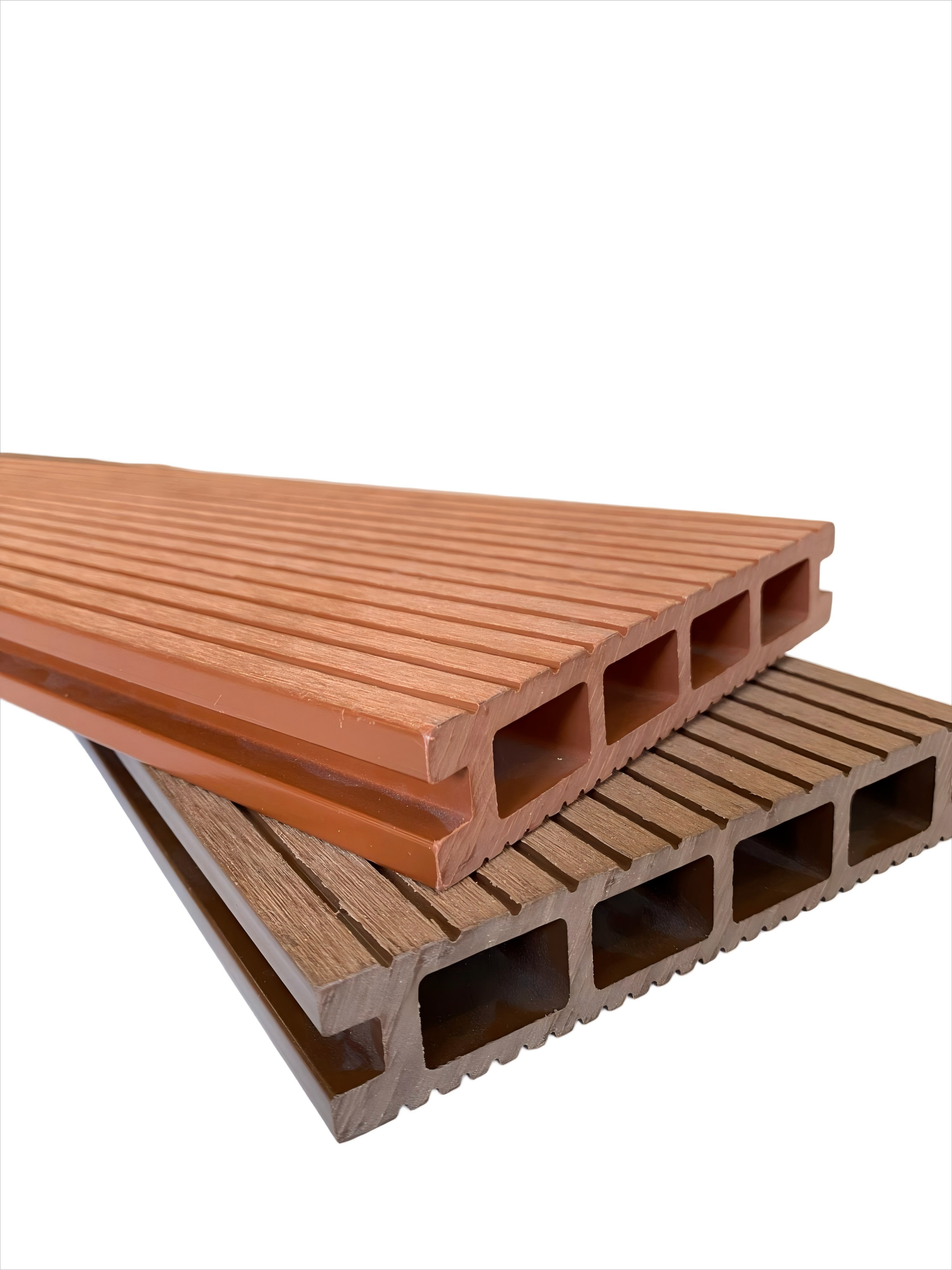
For more information, please visit the official website:www.triday-wpc.com
FAQ: High-Frequency Questions on Wood-Plastic Fencing Board Selection
Q1: How to judge the quality of wood-plastic fence boards?
A: Key assessment of three indicators: ①Material ratio: New PE base material + high proportion of wood powder (≥60%) is preferable; ②Density: 0.7-0.9g/cm³ is the ideal range, too low is prone to deformation, and too high results in excessive cost; ③Surface processing: Co-extruded products have better wear resistance than common extruded products, and can pass the nail scratch test (quality products have no scratches).
Q2: How to choose between the Luxe Lite and the Classic Nature series?
A: For projects with high aesthetic requirements (such as commercial plazas, upscale residential complexes), prioritize the Luxe Together series, which offers superior surface hardness and color fastness; for projects focusing on cost control (such as municipal projects, community greening), the Classic series achieves maximum cost-performance through micro-foaming technology, reducing the cost per meter by 25%.
Q3: Common issues and solutions during installation?
A: Common issues include loose fasteners and excessive gaps in panel joints. Xuan Cheng Solutions: ① Provide customized fasteners with tensile strength up to 500N per piece; ② Conduct a 1:1 simulation layout before construction to ensure joint error ≤ 1mm; ③ Send technical staff for on-site guidance, capable of installing 200 meters of fence per day.
Summary Reference: "Three Musts and Three Nos" Principle for Wood-Plastic Fencing Board Selection
Purchasers must bear in mind: 1. Choose manufacturers certified with ISO9001 and CE, ensuring a perfect quality control system; 2. Conduct on-site inspections of the production workshop to confirm the advancement of equipment and the maturity of technology; 3. Require real project cases and inspection reports to avoid "conceptual packaging". Do not blindly pursue low prices, as low-cost products often reduce wood flour content or use recycled materials to cut costs, which may double the maintenance costs later; Do not neglect installation services, as professional guidance can shorten the construction period by over 30%; Do not easily believe in "lifetime warranty" promises, and clarify the scope of warranty and response mechanisms. Linyi Xuan Cheng, with its full-process quality control, technological innovation, and scenario-based services, has become the preferred partner for government garden projects, commercial complexes, and high-end residential projects. Its "wood-like but not wood, born from wood but superior to wood" product philosophy is redefining the industry standards for green building materials.