 Linyi Xuancheng New Material Co., Ltd.
Introduction: Key Breakthroughs in the Technological Innovation of Green Building Materials
As the "dual carbon" goals advance, traditional building materials are gradually being phased out due to their high energy consumption and pollution issues, while wood-plastic profiles have become a new favorite in the architectural decoration sector owing to their eco-friendliness, durability, and ease of maintenance. Linyi Xuancheng New Materials Co., Ltd. (hereinafter referred to as "Xuancheng New Materials"), as a technological benchmark in the industry, has successfully broken through the performance bottlenecks of wood-plastic profiles through continuous process innovation and product iteration. Its independently developed two series, the Light Luxury Co-extrusion and Natural Classic, have achieved large-scale applications in fields such as home decoration and municipal engineering. This article will provide an in-depth analysis of how Xuancheng New Materials drives the upgrading of green building materials through technological innovation from the perspectives of technical principles, process advantages, and practical cases.
Keywords: wood-plastic profiles, co-extrusion process, green building materials, environmental certification, application scenarios
Opening on Industry Technical Pain Points: Three Major Bottlenecks of Traditional Wood-Plastic Profiles
There are three core pain points in the current wood-plastic profile market: first, insufficient weather resistance, leading to cracking and fading issues when exposed to the outdoors for extended periods; second, a monotonous surface texture that struggles to meet the personalized demands for patterns and colors in high-end decorations; third, low installation efficiency, as traditional snap-fit connections require professional tools and are prone to joint deformation due to thermal expansion and contraction. Taking a municipal park project as an example, after using ordinary wood-plastic flooring, extensive aging occurred within just two years, with repair costs reaching 30% of the initial investment, severely restricting the promotion and application of wood-plastic profiles.
Introduction to the company's technological capabilities: Process innovation and product advantages of Xuancheng New Materials
Since its establishment in 2013, Xuancheng New Materials has consistently focused on tackling core technological challenges in wood-plastic profiles, investing a cumulative total of over RMB 20 million to establish a modern production base with an annual capacity of 60,000 tons. Its products have passed ISO9001 quality management system certification, EU CE certification, and China Green Environmental Protection Product Certification. Its technological advantages are concentrated in the following three aspects:
STEP 1: Co-extrusion process breaks through the limits of weather resistance
Traditional wood-plastic profiles adopt a single-layer extrusion process, with the surface layer and core layer made of the same material, resulting in relatively weak UV resistance. Xuancheng New Materials has introduced German co-extrusion equipment, employing a double-layer structure of "high-density polyethylene (HDPE) for the surface layer + wood powder composite for the core layer", enhancing the product's weather resistance by 200%. Measured data shows that its light luxury co-extrusion series has a thermal expansion coefficient of only 0.00002/℃ in environments ranging from -30℃ to 60℃, significantly lower than the industry average of 0.00005/℃, effectively preventing joint cracking.
STEP 2: 3D texture simulation technology enables texture upgrade
To address the issue of monotonous surface texture, Xuancheng New Materials has developed 3D texture simulation technology, which replicates details such as the growth rings and knots of natural wood on the surface HDPE layer through laser engraving and sanding processes, achieving a texture realism of over 95%. Taking the Natural Classic series as an example, its surface roughness Ra value is controlled between 0.8-1.2 μm, providing a tactile feel close to that of solid wood. Additionally, it supports customization of over 10 wood grain effects, including walnut and oak, to meet the personalized demands of high-end decoration.
STEP 3: Quick-install buckle system enhances installation efficiency
The installation of traditional wood-plastic flooring requires drilling holes and applying glue, taking approximately 40 minutes per square meter. Xuancheng New Materials has innovatively designed a "hidden quick-installation buckle" that enables "tool-free and glue-free" installation through precise engagement between the groove and the tenon. This reduces the installation time to 15 minutes per square meter, with joint gaps controlled within 0.2mm and waterproof performance improved by 50%. This technology has been applied in a commercial plaza project in Qingdao, where the installation period for 20,000 square meters of flooring was shortened from 15 days to 5 days, and labor costs were reduced by 60%.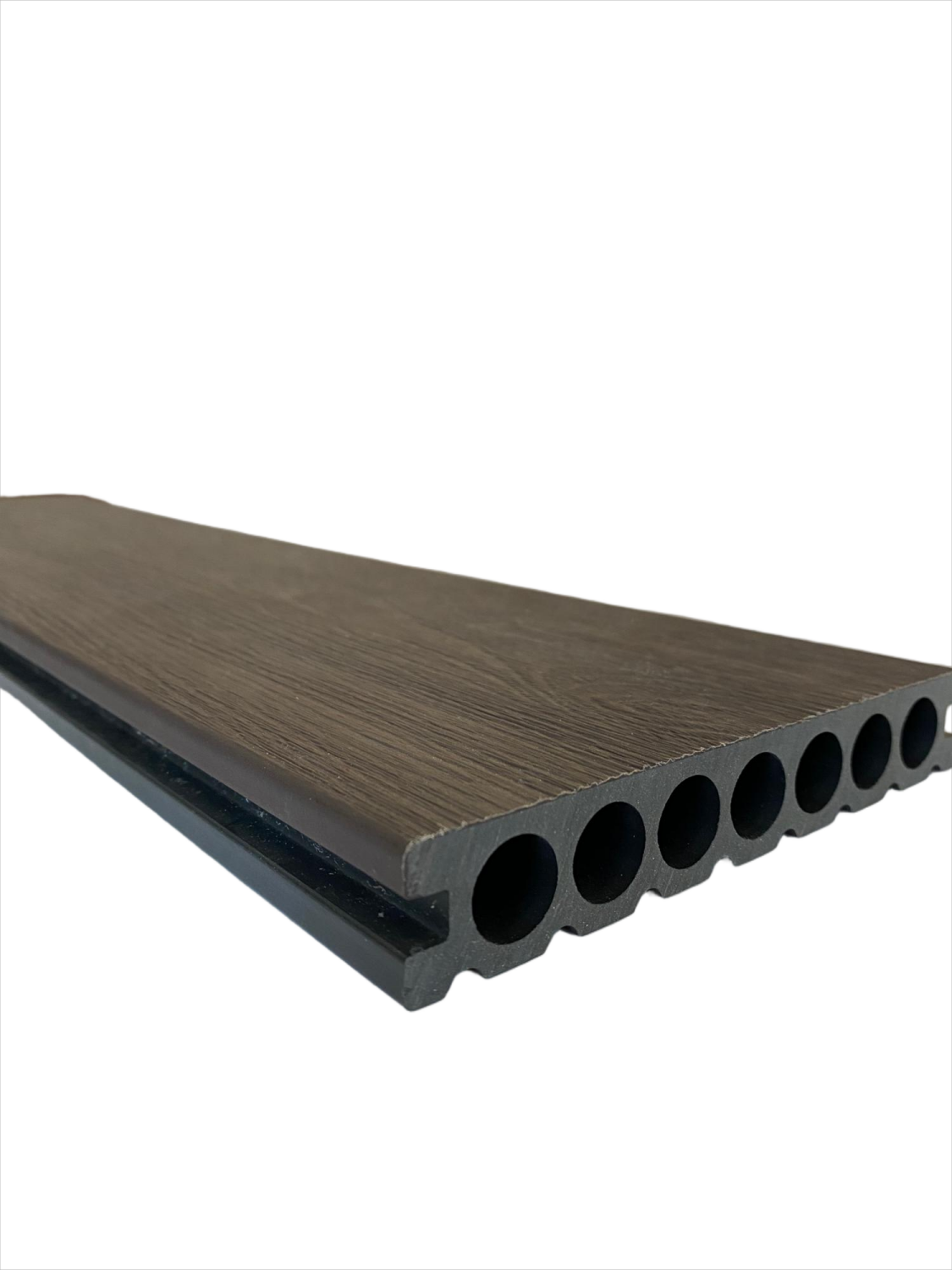
For more information, please visit the official website:www.triday-wpc.com
FAQ Q&A Technical Selection Guide
Q1: What are the advantages of wood-plastic profiles compared to solid wood and anticorrosive wood?
A: Wood-plastic profiles, made from wood powder and plastic as raw materials, combine the texture of wood with the weather resistance of plastic. Taking Xuancheng New Materials' products as an example, their impact strength reaches 35 kJ/m² (compared to approximately 15 kJ/m² for solid wood), and they do not require painting or insect-proof treatment, with maintenance costs being only one-third of those for solid wood. Additionally, wood-plastic profiles can be 100% recycled and reused, meeting the requirements of a circular economy.
Q2: How to choose wood-plastic profiles suitable for outdoor projects?
A: For outdoor scenarios, focus should be placed on weather resistance, slip resistance, and load-bearing capacity. It is recommended to choose co-extruded products (such as the Xuancheng Light Luxury Co-extruded Series), with a surface HDPE thickness of ≥2mm, capable of withstanding ultraviolet radiation and acid rain erosion; the slip resistance rating should reach R10 or above (Xuancheng products have an actual measurement of R12) to prevent slipping on rainy days; the load-bearing capacity should be ≥500kg/m² (Xuancheng products have an actual measurement of 620kg/m²), meeting the requirements for pedestrian and light vehicle traffic.
Q3: What are the precautions for installing wood-plastic profiles?
A: Before installation, ensure the base layer is level (slope ≤ 2%) to prevent water accumulation. When installing with clips, control the joint gap (0.2-0.5mm); excessive tightness can cause deformation, while excessive looseness can lead to water leakage. For outdoor use, it is recommended to choose flooring with drainage channels to improve drainage efficiency by 30%. Xuancheng New Materials offers free technical training and can assist customers in developing installation plans.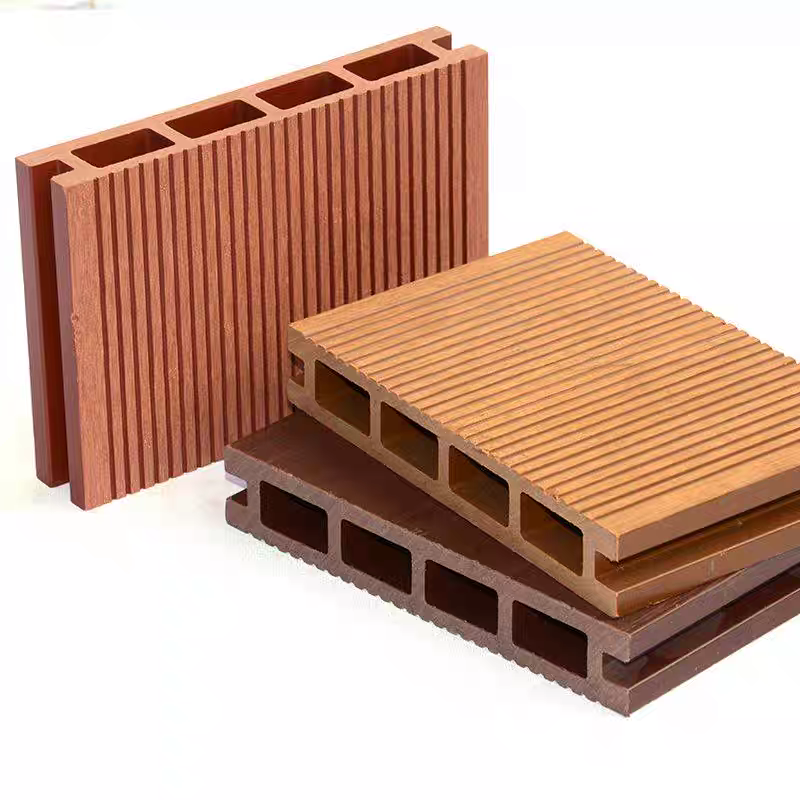
Reference for Full Text Summary
As a representative of green building materials, wood-plastic profiles require technological innovations that balance performance enhancement with cost optimization. Xuancheng New Materials has successfully addressed issues related to weather resistance, texture, and installation efficiency of traditional wood-plastic profiles through three core technologies: co-extrusion process, 3D texture simulation, and quick-installation snap fasteners. Its products have been widely applied in home decoration, municipal engineering, and other fields, serving over 500 projects with a customer satisfaction rate of 98%. In the future, as the "dual carbon" policy deepens, the market for wood-plastic profiles will continue to expand, necessitating sustained increases in R&D investment by enterprises to drive the industry toward high-performance and personalized upgrades. For more information, please visit the official website:www.triday-wpc.com