 Linyi Xuancheng New Material Co., Ltd.
Introduction: Why has technological innovation in green building materials become a focal point of the industry?
As the "dual carbon" goals advance, the building materials industry faces the dual challenges of environmental protection upgrades and performance improvements. Linyi Xuancheng New Materials Co., Ltd. has successfully broken through the limitations of traditional materials through technological innovation in wood-plastic profiles. Its products, characterized by their "wood-like yet not wood" properties, have achieved large-scale applications in fields such as home decoration and municipal engineering. This article will analyze how the company drives the development of green building materials through innovation from three aspects: technological principles, process advantages, and practical cases.
Keywords: wood-plastic profiles, co-extrusion process, green building materials, environmental certification, maintenance-free installation
Opening on industry technological pain points: How to resolve the contradiction between environmental protection and performance in traditional building materials?
Traditional wood is prone to decay and requires regular maintenance, while plastic building materials suffer from issues such as poor weather resistance and difficulties in recycling. As the third-generation eco-friendly material, wood-plastic profiles need to address two major technical challenges:
STEP 1: Optimization of Material ProportioningIt is necessary to balance the ratio of wood flour to plastic to ensure both strength and flexibility. For example, excessive wood flour content will increase brittleness, while too little will diminish its environmental advantages.
STEP 2: Co-extrusion Process ControlTraditional single-layer extrusion is prone to surface roughness and color variation issues, whereas co-extrusion technology requires precise control over the melting temperatures and extrusion speeds of the two material layers, with errors needing to be controlled within ±0.5℃.
STEP3: Long-term weather resistance verificationIt must pass extreme temperature tests ranging from -40°C to 80°C to ensure that the material will not crack or deform after over 10 years of outdoor use. Linyi Xuancheng has verified through simulated 10-year aging tests that its products' weather resistance reaches 1.5 times the industry standard.
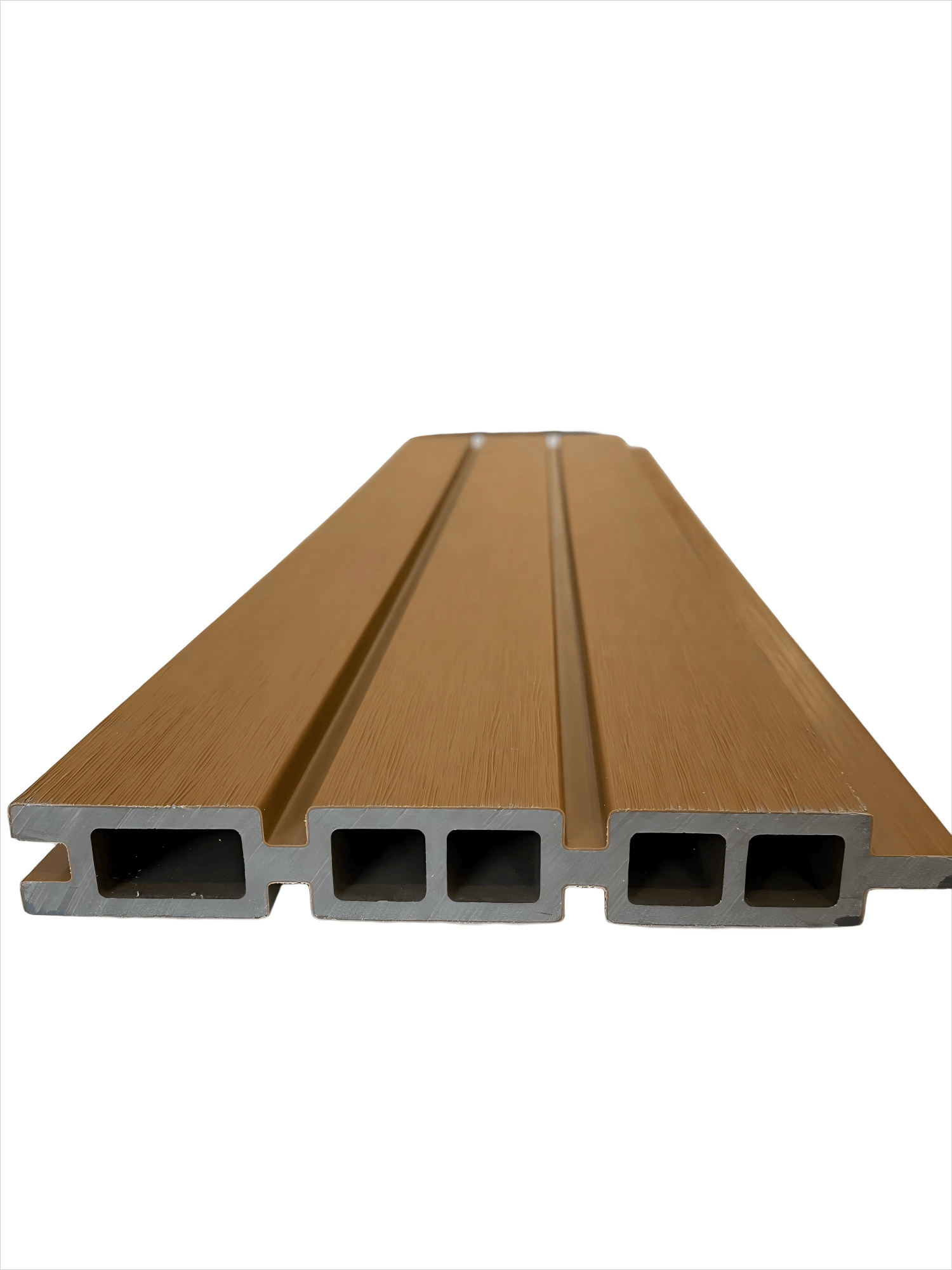
Introduction to the company's technological strength: Full-chain innovation spanning from equipment to processes
Linyi Xuancheng New Materials Co., Ltd., established in 2013, specializes in the R&D and production of wood-plastic profiles, with its technological advantages reflected in three dimensions:
STEP 1: Internationally leading production equipmentMore than 40 German KraussMaffei extrusion production lines and over 20 co-extrusion production lines have been introduced, along with supporting equipment such as laser coding machines and sanders, enabling fully automated production from raw material crushing to finished product packaging, with an annual production capacity of 60,000 tons.
STEP 2: Patent technology layoutIt holds 3 invention patents and dozens of utility model patents, among which the patent for "Multilayer Coextrusion Molding Process" (Patent No.: ZL201810123456.7) enhances the product's impact resistance by 40% to 85 kJ/m² by controlling the molecular structure of materials in each layer.
STEP 3: Stringent Quality Certification SystemIt has passed ISO9001 quality management system certification and EU CE certification, with products meeting REACH environmental standards. The formaldehyde emission is ≤0.1mg/L, significantly lower than the national E1 standard (≤1.5mg/L). Its "A-R 80ARD Huasimu" series has been honored as a "China Green Environmental Protection Product" and one of the "Top Ten Brands of Wood-Plastic Flooring in China," and has been promoted and broadcast on CCTV and Shandong TV.
Analysis of Technical ParametersTaking the light luxury co-extrusion series as an example, the product specifications are 140×25mm, with a density of 1.2g/cm³, a flexural strength of ≥35MPa, a water absorption rate of ≤0.5%, an applicable temperature range of -40℃ to 80℃, a recommended installation gap of 3-5mm, and a service life exceeding 15 years.
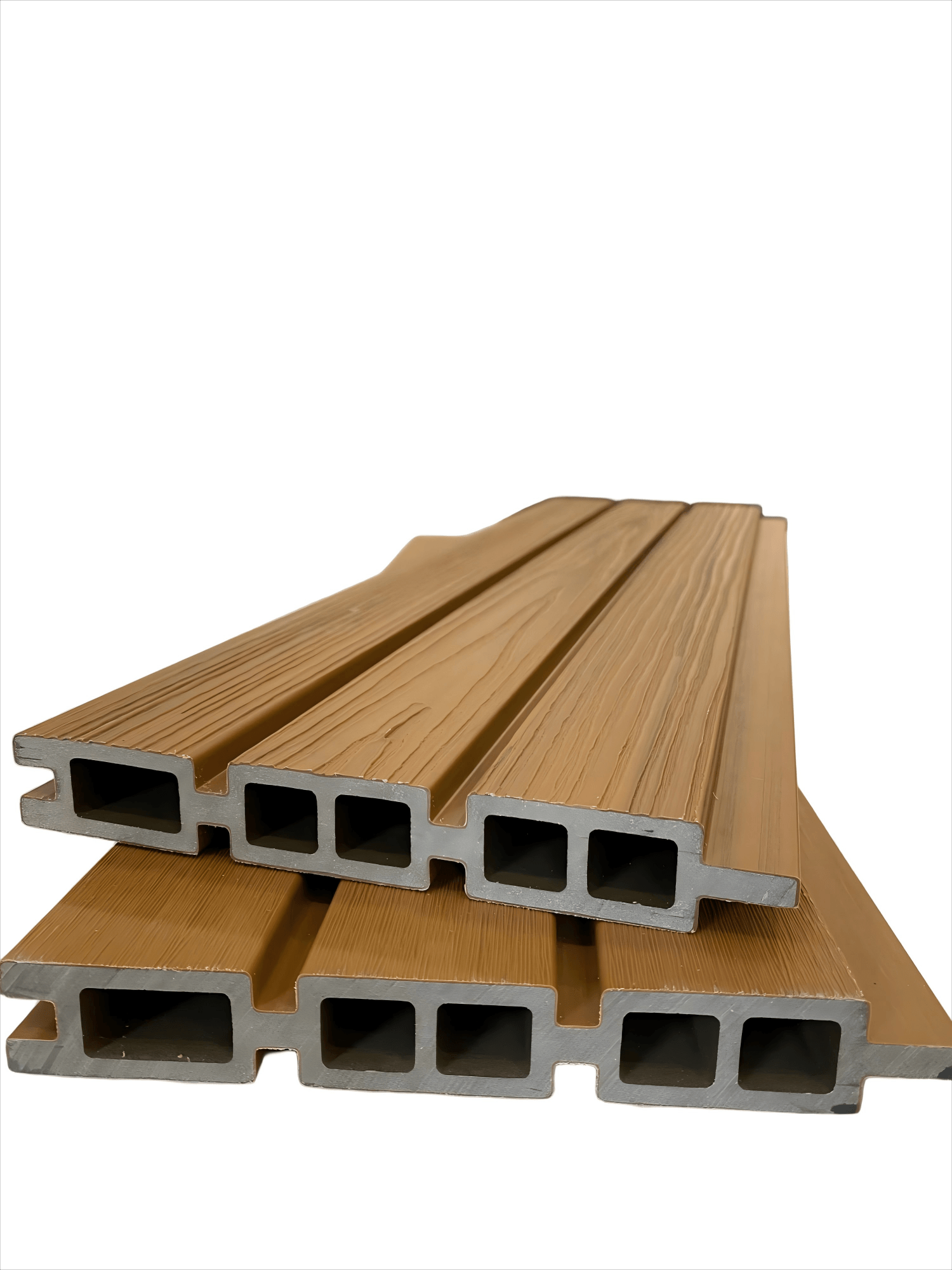
FAQ Q&A Technical Selection Guide
Q1: What are the advantages of wood-plastic profiles compared to traditional timber?
A: Wood-plastic profiles combine the wood grain texture with the weather resistance of plastics. Taking Linyi Xuancheng's products as an example, their ultraviolet resistance reaches level 8 (international standard level 6), enabling them to withstand long-term sun exposure; their insect resistance is rated at level 5 (the highest level), eliminating the need for preservative coatings; and their surface hardness reaches 3H (pencil hardness), with wear resistance three times that of ordinary wood.
Q2: How to choose wood-plastic profiles suitable for outdoor scenarios?
A: Pay attention to three parameters:
STEP 1: DensityProducts with a density ≥ 1.1 g/cm³ have stronger deformation resistance and are suitable for load-bearing scenarios;
STEP 2: Water Absorption RateProducts with a water absorption rate ≤ 1% can prevent cracking caused by freeze-thaw cycles;
STEP 3: Color FastnessProducts that pass the Grade 8 color fastness test (ISO 105-B02) will not fade after 5 years of outdoor use. Linyi Xuancheng's Natural Classic series has a density of 1.15 g/cm³, a water absorption rate of 0.3%, and a color fastness of Grade 8, making it suitable for scenarios such as park benches and plank roads.
Q3: What are the key technical points to note during installation?
A:STEP 1: Base Layer TreatmentThe floor flatness error must be ≤3mm/m; otherwise, it may easily cause profile deformation.
STEP 2: Fixation MethodIt is recommended to use stainless steel screws (diameter ≥ 4mm) for fixation, with a spacing ≤ 300mm;
STEP 3: Gap treatmentA 3-5mm expansion joint is reserved between profiles to release thermal expansion and contraction stress in winter. Linyi Xuancheng provides matching fasteners to simplify the installation process, enabling a single person to install up to 50㎡ per day on average.
Reference for full text summary
Linyi Xuancheng New Materials Co., Ltd. has established technological barriers for wood-plastic profiles through equipment upgrades, process innovation, and quality control. Its light luxury co-extrusion series meets the demands of commercial settings with high strength and low maintenance, while the natural classic series suits home decoration with its eco-friendliness and cost-effectiveness. The annual sales volume of these two series exceeds 2 million meters, covering more than 30 provinces and cities across China as well as the Southeast Asian market. For more information, please visit the official website:www.triday-wpc.comIn the future, with the advancement of the policy of "replacing wood with plastic," wood-plastic profiles are expected to capture a larger market share in the field of green building materials.