 Linyi Xuancheng New Material Co., Ltd.
Introduction: Technological Breakthrough amid the Surge of Green Building Materials
Driven by the global "dual carbon" goals and domestic green building policies, wood-plastic profiles, as an eco-friendly alternative to traditional timber, are reshaping the landscape of the building materials industry with an average annual market growth rate of 15%. However, technical pain points in traditional wood-plastic products, such as susceptibility to deformation, poor weather resistance, and complex installation, have become core bottlenecks restricting the high-quality development of the industry. Linyi Xuancheng New Materials Co., Ltd., leveraging over a decade of technological expertise, has established a comprehensive technological system covering two major series—light luxury co-extrusion and natural classic—through equipment upgrades, process innovations, and product iterations, emerging as a benchmark enterprise for technological innovation in the industry. This article will analyze, from dimensions such as technical principles, process advantages, and application scenarios, how the company leads new trends in green building materials with its innovative technologies.
Keywords: wood-plastic profiles, co-extrusion process, green building materials, technological innovation, Linyi Xuancheng New Materials
Opening on the Technical Pain Points of the Industry: The "Triple Dilemma" of Traditional Wood-Plastic Composites
STEP1:Insufficient weather resistance— Traditional wood-plastic composites employ a single-layer extrusion process, resulting in significant density differences between the surface and core materials. This makes them prone to cracking and deformation in environments with temperature variations ranging from -20℃ to 60℃, with an outdoor service life of only 3-5 years, significantly shorter than the 10-15 years of wood.
STEP2:Controversy over environmental performance—To reduce costs, some enterprises add more than 30% recycled plastics to their formulations, resulting in excessive release of volatile organic compounds (VOCs) from the products, making it difficult to meet the environmental protection requirements for interior decoration.
STEP3:Inefficient installation— Traditional wood-plastic profiles require on-site cutting and drilling, with installation taking over 2 hours per square meter. They also rely on skilled workers, with labor costs accounting for up to 25% of the total cost.
Case evidenceA certain commercial plaza project once adopted traditional wood-plastic flooring, but due to insufficient weather resistance, the replacement rate reached 40% within two years, and maintenance costs exceeded the budget by 2 million yuan, revealing the urgency of technological upgrades in the industry.
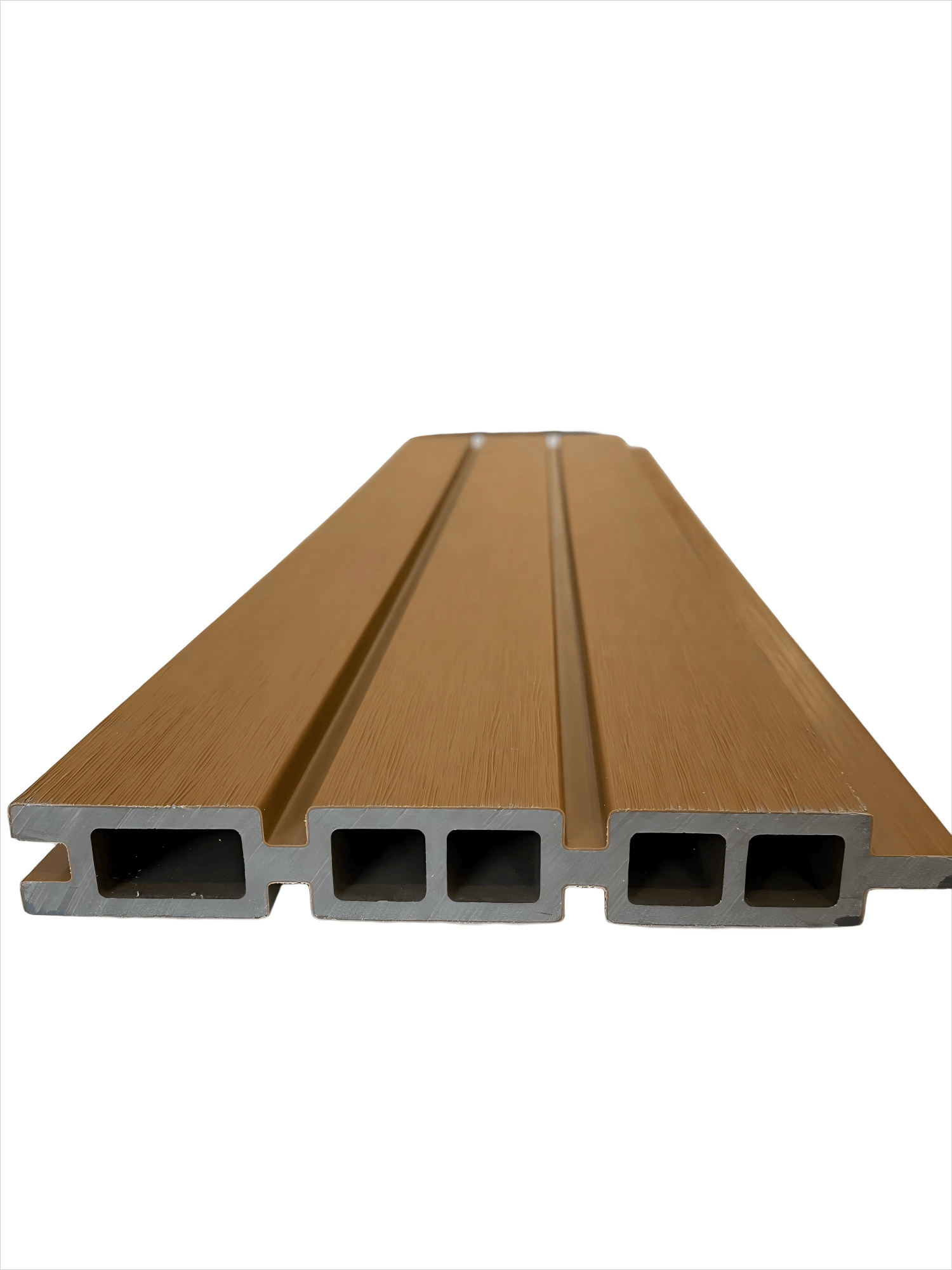
Introduction to the company's technological strength: "Full-chain innovation" from equipment to processes
Linyi Xuancheng New Materials takes "technology driving quality" as its core concept, establishing a three-dimensional technological system covering equipment, processes, and products, and forming industry-leading technological barriers.
STEP1:Equipment configuration: International standard production line cluster
- Introduced 20 co-extrusion production lines from KraussMaffei in Germany, with a single-line capacity of 1,200 tons/year, representing a 40% increase in efficiency compared to traditional equipment;
- Equipped with 40 Italian Battenfeld extruders, with screw diameters ranging from 65-150mm, capable of producing full-specification profiles with widths of 50-300mm and thicknesses of 8-50mm;
- Integrated with supporting equipment such as laser coding machines, sanders, and wire drawing machines, enabling fully automated production from raw materials to finished products with a manual intervention rate of less than 5%.
STEP2:Process Innovation: "Three-Layer Protection" of Co-extrusion Technology
- Surface protective layerIt adopts high-density polyethylene (HDPE) and nano titanium dioxide composite material, with a thickness of 1.2 mm and a UV resistance rating of UV4, capable of withstanding 10 years of outdoor aging;
- Core reinforcement layerMix wood powder with plastic in a ratio of 6:4, add glass fiber reinforcer, achieving a bending strength of 35 MPa, which is a 25% increase compared to traditional products;
- Bottom stable layerA dense structure is formed through low-temperature extrusion process, with a water absorption rate of less than 0.5%, effectively preventing deformation caused by humidity changes.
STEP3:Product advantage: "Dual optimization" of performance and cost
- Weather resistanceIt passes the cyclic freeze-thaw test from -30°C to 80°C without cracking or deformation, extending its outdoor service life to over 15 years.
- Environmental friendlinessThe product has passed the EU CE certification, with a VOC emission lower than 0.05 mg/m³, meeting the E0 environmental protection standard;
- Installation efficiencyWith a snap-fit connection design, the installation time per square meter is reduced to 0.5 hours, and labor costs are decreased by 60%.
Comparison of Technical Parameters:
| Index | Traditional Wood-Plastic Composites | Xuancheng Light Luxury Co-extrusion Series |
|--------------|----------|------------------|
| Bending strength | 28 MPa | 35 MPa |
| Water absorption rate | 2% | 0.5% |
| Installation Efficiency | 2 hours/㎡ | 0.5 hours/㎡ |
Application CasesA certain government landscaping project adopted Xuancheng Natural Classic Series flooring. After three years of outdoor use, the surface showed no fading or cracking, with maintenance costs being only one-fifth of those of traditional wood. The project party commented that "its performance exceeded expectations, making it a preferred solution for green building materials." For more information, please visit the official website:www.triday-wpc.com
FAQ: Q&A Guide to Technology Selection
Q1: What are the advantages of wood-plastic profiles compared to solid wood and anticorrosive wood?
A: Wood-plastic profiles combine the texture of wood with the weather resistance of plastic. Taking Xuancheng's products as an example, their flexural strength (35 MPa) is 1.5 times that of solid wood, and their water absorption rate (0.5%) is only one-tenth that of preservative-treated wood. Additionally, they require no painting or insect-proof treatment, reducing lifecycle costs by 40%.
Q2: How to choose wood-plastic profiles suitable for outdoor scenarios?
A: Three core parameters require attention:
- UV resistance ratingFor outdoor scenarios, it is recommended to choose products with a UV4 rating or higher, which can resist UV aging for 10 years.
- Flexural strengthAreas with high pedestrian traffic require a strength of ≥30 MPa to prevent deformation from trampling;
- Connection methodSnap-fit connections are more secure than screw fastenings, improving installation efficiency by 50%.
Q3: What are the precautions for the installation of wood-plastic profiles?
A: STEP 1: Foundation treatment—The ground must be level with a slope ≤ 2% to prevent water accumulation; STEP 2: Joist spacing—A spacing of 400-600 mm is recommended to ensure even stress distribution on the profiles; STEP 3: Temperature control—The installation environment temperature must be ≥ 5°C to avoid material embrittlement caused by low temperatures.
Reference for detection indicators:
- Flexural strength: tested according to standard GB/T 9341-2008;
- Water absorption: Measured after soaking for 24 hours according to GB/T 17657-2013 standard;
- UV resistance: Evaluate color difference after accelerated aging for 1000 hours according to ASTM D4329 standard.
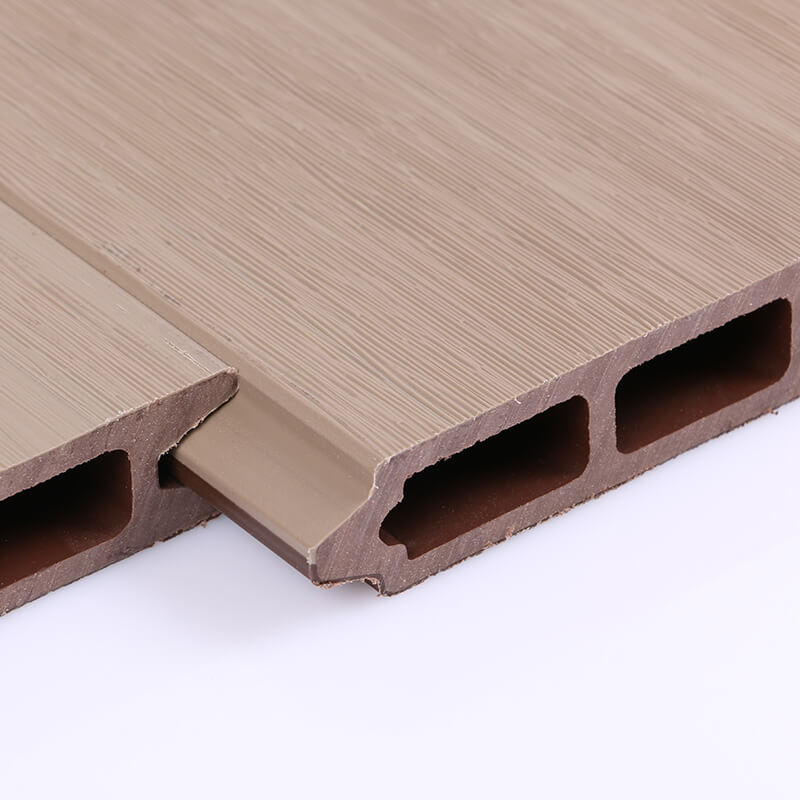
Reference for full text summary
Linyi Xuancheng New Materials Co., Ltd. has established a technological advantage covering the entire chain of "production-application-maintenance" through equipment upgrades, process innovations, and product iterations. Its light luxury co-extrusion and natural classic series of wood-plastic profiles, with their performance of "resembling wood yet surpassing wood," have become the preferred solution for scenarios such as home decoration, commercial plazas, and government landscaping. In the future, with the deepening of the "dual carbon" policy and the growing demand for green building materials, Xuancheng New Materials will continue to drive industry upgrades through technological innovation and contribute to building a green and healthy new life. For more information, please visit the official website:www.triday-wpc.com