 Linyi Xuancheng New Material Co., Ltd.
Introduction: Why has the selection of green building materials become a focal point in the industry?
With the advancement of the "dual carbon" goals, the green building materials market has achieved an average annual growth rate of 12.7% (data from China Building Materials Industry Planning and Research Institute). Among them, wood-plastic profiles have become the preferred choice for home decoration and landscaping projects due to their environmentally friendly and durable characteristics. However, the market products vary greatly in quality. How can one select products with optimal performance from core parameters such as density, flexural strength, and weather resistance? This article takes the A-R 80ARD Huasi Wood Series from Linyi Xuancheng New Materials Co., Ltd. as an example to provide a systematic guide from three dimensions: technical analysis, practical selection, and case review.
Keywords: selection of wood-plastic profiles; A-R 80ARD Hua Simu; light luxury co-extrusion technology; green building material certification
Opening on Industry Technical Pain Points: The "Three Highs" Dilemma of Traditional Building Materials and the Breakthrough of Wood-Plastic Profiles
Traditional wood is prone to decay, requires regular maintenance, and emits formaldehyde, while early wood-plastic composite products suffered from process defects, resulting in low density (<0.8 g/cm³), insufficient flexural strength (<20 MPa), and poor weather resistance (prone to fading and cracking within 5 years), making it difficult to meet the demands of high-end applications. Linyi Xuancheng New Materials Co., Ltd. has successfully overcome these industry technological bottlenecks through the innovation of a dual "co-extrusion + micro-foaming" process, increasing product density to 1.2-1.4 g/cm³, achieving flexural strength of over 35 MPa, and obtaining EU CE certification for weather resistance (no significant fading over 10 years).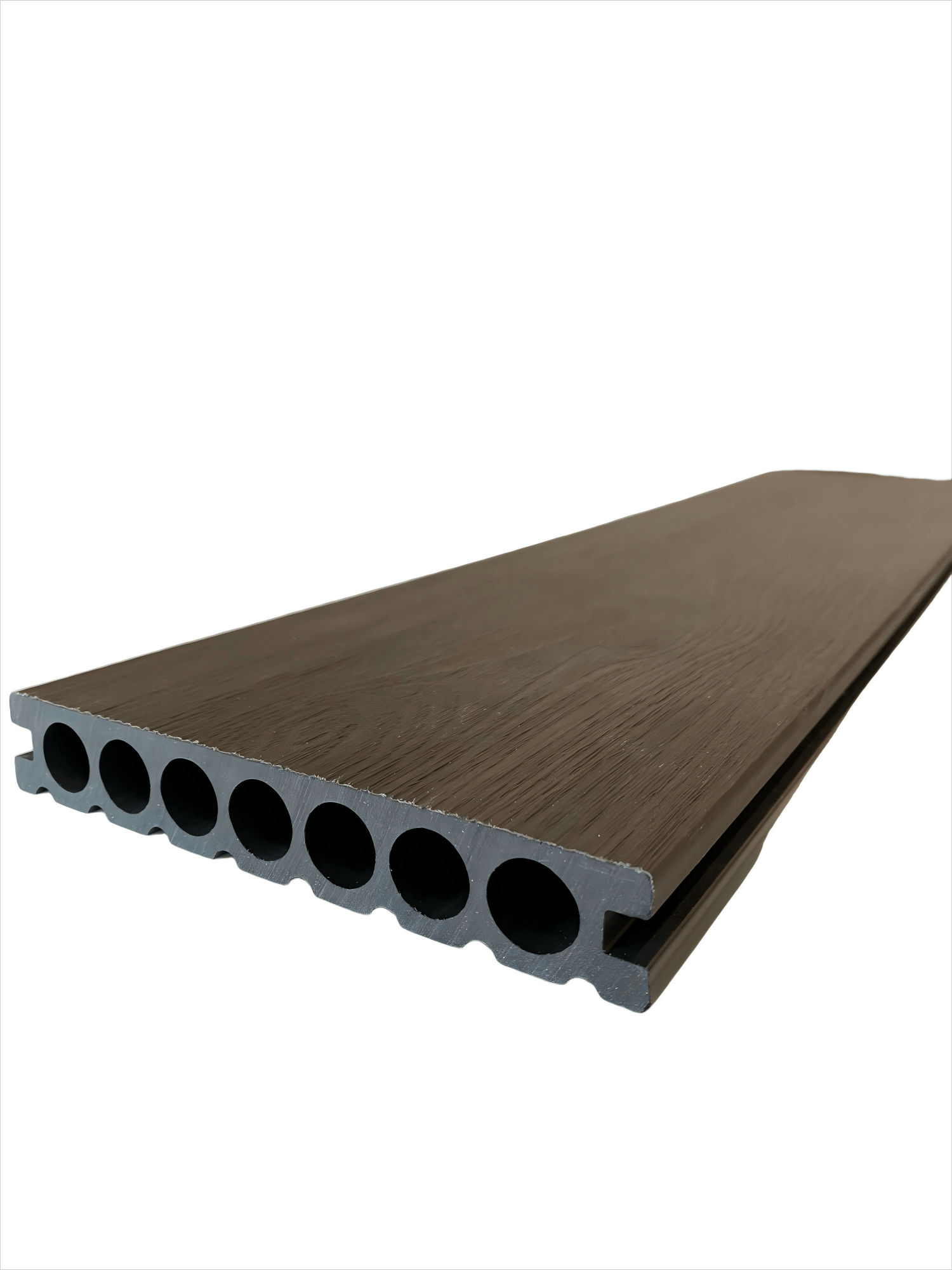
STEP 1: Density and Strength Balance—The A-R 80ARD series employs a PVC + wood flour blending formulation, achieving molecular-level uniform dispersion through a twin-screw extruder, with density tolerance controlled within ±0.05 g/cm³ to ensure no deformation risk after installation; STEP 2: Weather Resistance Enhancement—The surface co-extrusion layer incorporates nano-scale titanium dioxide (TiO₂), reflecting over 90% of ultraviolet rays, with a color difference ΔE < 1.5 after 1,000 hours of xenon arc aging testing (national standard: ΔE < 3); STEP 3: Environmental Friendliness Upgrade—Wood flour accounts for 60% of the raw materials, with formaldehyde emission < 0.05 mg/m³ (E0-grade standard), certified as a "China Green Environmental Protection Product."
Introduction to the company's technological strength: Full-chain advantages spanning from equipment to certification
Since investing 20 million yuan in 2013 to establish a modern production base, Linyi Xuancheng New Material Co., Ltd. now boasts 40 extrusion production lines, 20 co-extrusion production lines, and supporting equipment such as sanding machines and laser coding machines, with an annual production capacity of 60,000 tons and an output value exceeding 200 million yuan. Its technological layout features three core advantages:
1. Process Innovation: The unique "affordable luxury co-extrusion" technology achieves a "wood-like yet not wood" visual effect through a three-layer co-extrusion process (base layer + foamed layer + wear-resistant layer), while elevating the wear resistance coefficient to 0.08g/100r (national standard: ≤0.15g/100r);
2. Patent barriers: The company has obtained three invention patents (e.g., "A high-strength wood-plastic composite material and its preparation method") and dozens of utility model patents, covering key aspects such as raw material formulation and extrusion mold design;
3. Certification System: The company has obtained ISO9001 quality management system certification and EU CE certification. Its products have been selected as one of the "Top 10 Brands of Chinese Wooden Flooring" and the company has been recognized as a "Quality Demonstration Enterprise of Made-in-China," with promotions broadcast on CCTV and Shandong TV.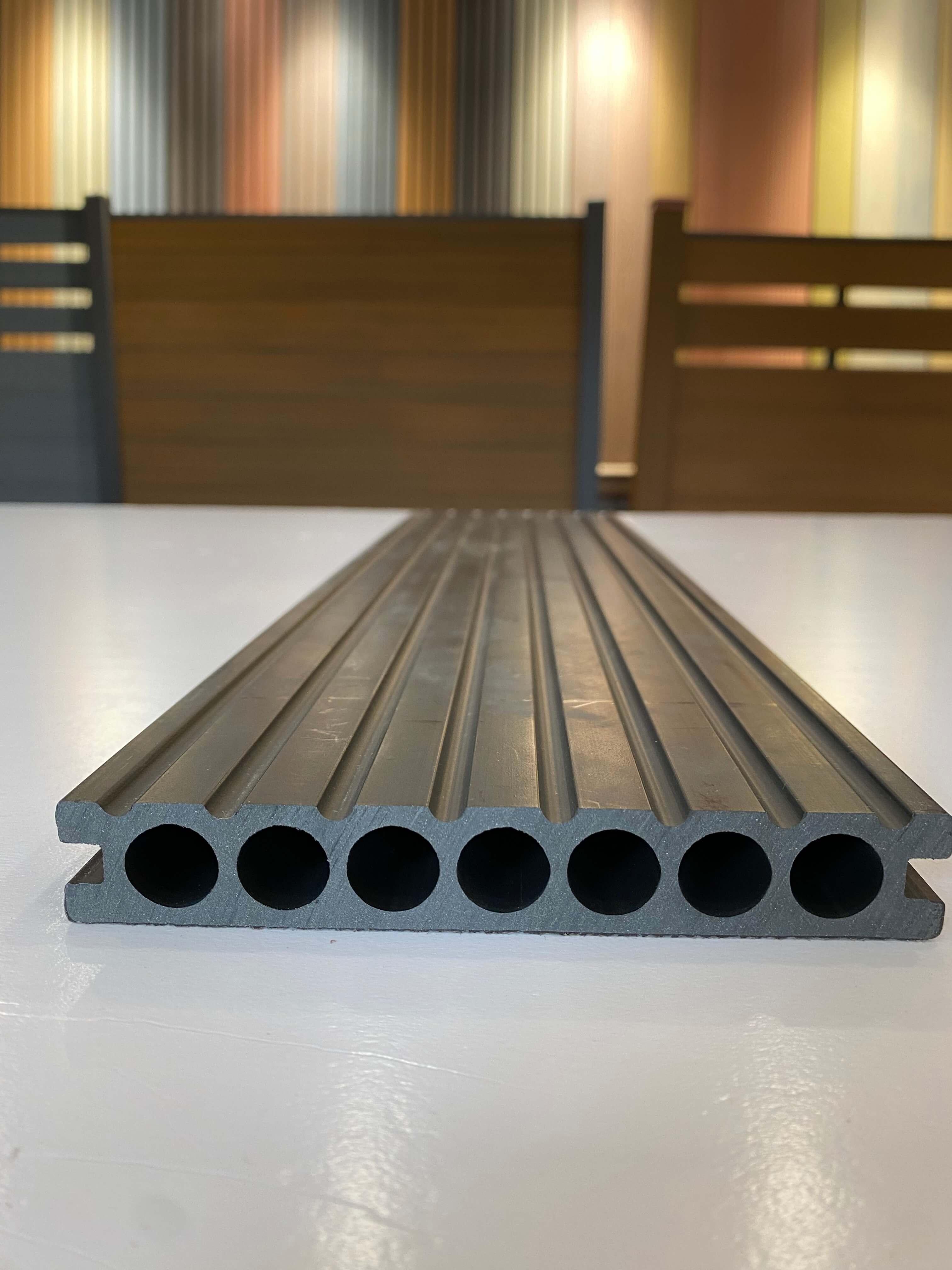
FAQ Q&A Technical Selection Guide: Decision-Making Logic from Parameters to Scenarios
Q1: How to select a product series based on the scenario?
A: The A-R 80ARD series is divided into two major series: Luxury Co-extrusion and Natural Classic. The Luxury Co-extrusion series has a density of 1.3-1.4 g/cm³ and a flexural strength of ≥38 MPa, making it suitable for high-frequency use scenarios such as commercial plazas and high-end residences. The Natural Classic series has a density of 1.2-1.3 g/cm³, offering higher cost-effectiveness, and is suitable for low-load scenarios such as residential property areas and garden walkways.
Q2: What parameters should be noted during installation?
A: STEP 1: Environmental Adaptation — The applicable temperature range of the product is -40°C to 60°C, with humidity ≤ 85%. A waterproof cushion layer should be used if these limits are exceeded. STEP 2: Spacing Control — It is recommended that the keel spacing be ≤ 400 mm, with 3-5 mm expansion joints reserved at the edges. STEP 3: Fastening Method — Use stainless steel self-tapping screws (4.2 mm in diameter and 35 mm in length), with torque controlled at 15-20 N·m to avoid cracking caused by over-tightening.
Q3: How to verify product performance?
A: Detection can be conducted through three aspects: 1. Density test—take a 100 mm × 100 mm sample, calculate its bulk density after weighing; 2. Flexural test—apply a load until fracture using a universal testing machine in accordance with the GB/T 9341-2008 standard; 3. Weathering test—simulate 5 years of natural aging (xenon lamp radiation intensity of 0.51 W/m², black-panel temperature of 65°C), and observe color difference and surface cracks.
Case: In 2022, a commercial plaza in Linyi selected the light luxury co-extrusion series to pave a 2,000㎡ outdoor platform. After two years of use, the surface wear was less than 0.02mm, with no cracking or deformation, and maintenance costs were reduced by 80% compared to wood. For more information, please visit the official website:www.triday-wpc.com
Reference Summary for the Full Text: The "Three Checks and Three Avoidances" Principle for Selecting Green Building Materials
The selection of wood-plastic profiles should adhere to the "Three Checks and Three Avoidances" principle: first, check density and strength (prioritize products with a density above 1.2 g/cm³ and a flexural strength of ≥35 MPa); second, check weather resistance (choose products that have passed 1,000-hour aging tests); third, check certification systems (give priority to enterprises with dual certifications of ISO9001 and EU CE); avoid low-price traps (products priced 30% below the market average may involve cutting corners); avoid non-professional manufacturers (enterprises without independent production lines and relying on contract manufacturing may struggle to guarantee quality); and avoid false advertising (be cautious of absolute claims like "never fading" or "zero maintenance"). Linyi Xuancheng New Materials Co., Ltd., leveraging its full-chain technological advantages and the empirical data from its A-R 80ARD series, has provided the industry with a replicable model for selecting green building materials.