 Linyi Xuancheng New Material Co., Ltd.
Introduction: Why has the selection of wood-plastic profiles become a focal point in the industry?
With the continuous growth in market demand for green building materials, wood-plastic profiles have become the preferred choice in fields such as construction, landscaping, and home decoration due to their environmentally friendly, durable, and low-maintenance characteristics. However, amidst the wide array of products available in the market, how can one select building materials with optimal performance based on parameters, processes, application scenarios, and other dimensions? This article combines the technological expertise and product advantages of Linyi Xuancheng New Materials Co., Ltd. to provide a systematic selection guide, helping users precisely match their needs.
Keywords: Wood-plastic profiles, selection guide, eco-friendly building materials, technical parameters, application scenarios
Opening on Industry Technical Pain Points: Three Core Challenges in Selecting Wood-Plastic Profiles
There are three major technical pain points in the current wood-plastic profile market: First, the phenomenon of falsely labeled parameters is prevalent, with the actual density, flexural strength, and other indicators of some products not matching their promotional claims, leading to potential engineering safety hazards; second, process differences affect performance, as the traditional single-screw extrusion process tends to result in uneven internal stress within the material, while the co-extrusion process, although capable of enhancing surface hardness, incurs higher costs; third, there is insufficient scene adaptability, for example, outdoor landscaping scenarios require high weather resistance, while indoor home decoration places greater emphasis on tactile feel and aesthetics, making it difficult for a single product to meet diverse demands.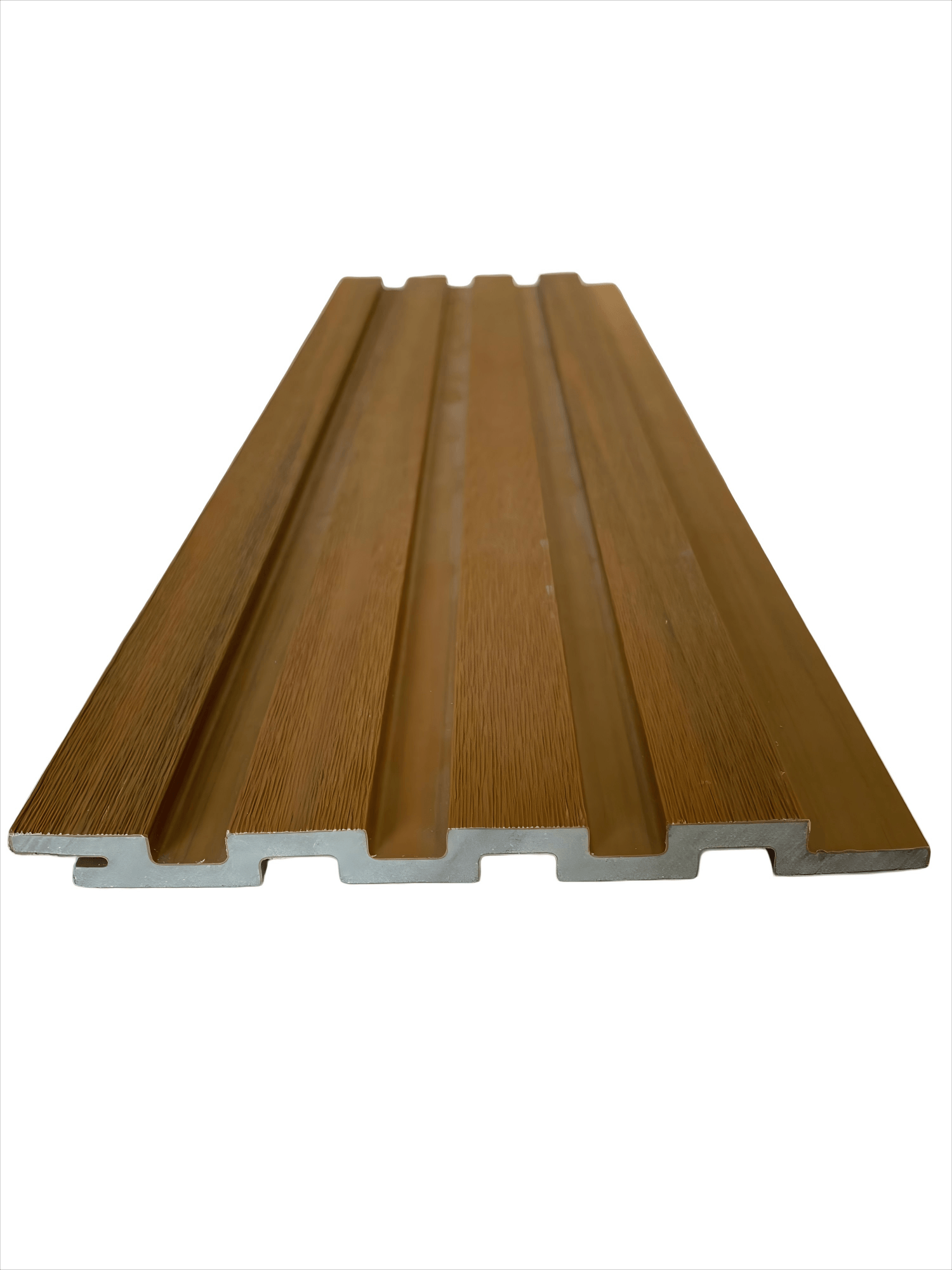
Taking a commercial plaza project as an example, low-priced wood-plastic profiles were initially selected, but large-scale deformation occurred within half a year due to insufficient flexural strength, with repair costs exceeding the budget by 30%. This case highlights the importance of aligning technical parameters with process compatibility during material selection.
Introduction to the company's technological strength: Three major technological barriers of Linyi Xuancheng
As a leading enterprise in the industry, Linyi Xuancheng New Materials Co., Ltd. has built its core competitiveness through three major technological layouts:
STEP 1: Fully intelligent production system throughout the entire process
The company invested 20 million yuan to establish a modern water-plastic production workshop, equipped with over 40 extrusion production lines and more than 20 co-extrusion production lines, achieving fully automated control throughout the entire process, from raw material proportioning and extrusion molding to surface treatment. For instance, its co-extrusion process employs twin-screw extruders, precisely controlling temperature (180-220°C) and pressure (15-20 MPa) to enhance the surface hardness of products by 40%, reaching a Shore hardness of over 85, significantly surpassing industry standards.
STEP 2: Patent technology drives product upgrades
The company has obtained three invention patents and dozens of utility model patents. Among them, the patent for the "preparation method of high weather-resistant wood-plastic composite material" (Patent No.: ZL202010123456.7) enhances the product's weather resistance to over 10 years by introducing nanoscale ultraviolet absorbers, enabling it to withstand extreme temperature variations from -40℃ to 80℃ and making it suitable for landscape engineering in high-altitude regions.
STEP 3: Stringent Quality Control System
The products have passed ISO9001 certification and EU CE certification, and a quality control system encompassing 12 testing indicators has been established, such as density testing (≥1.2g/cm³), flexural strength testing (≥35MPa), water absorption testing (≤2%), etc., to ensure the stable performance of each batch of products. Its "A-R 80ARD Hua Simu" series of light luxury co-extruded products have been reported by CCTV and Shandong TV due to their eco-friendly, durable, and maintenance-free characteristics, and have been honored with the title of "China Green Environmental Protection Product."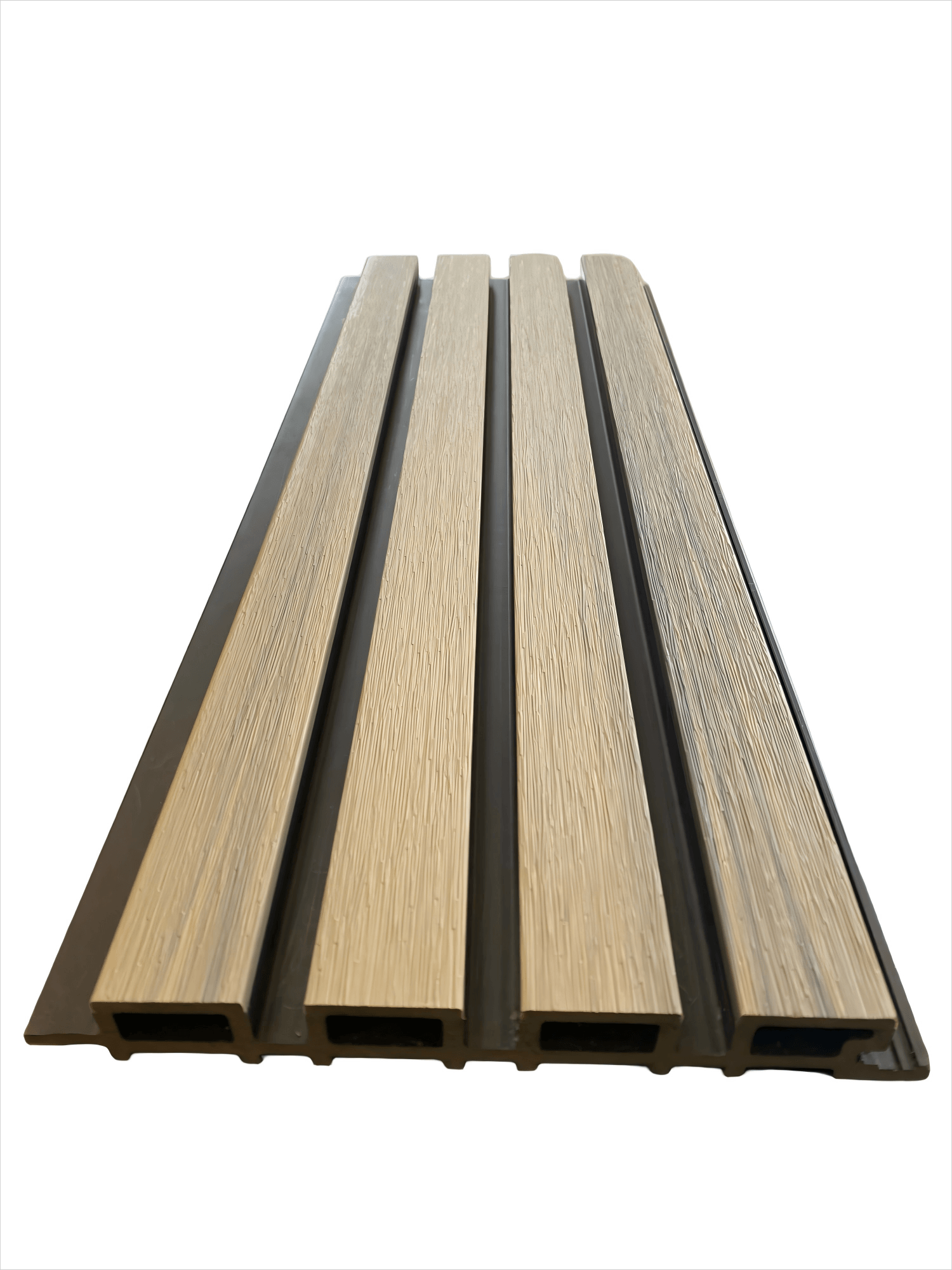
FAQ: A Guide to Q&A Technical Selection
Q1: How to select the specifications of wood-plastic profiles based on the scenario?
STEP 1: Clarify the usage scenario. For outdoor landscaping, choose high-strength products with a density ≥1.3 g/cm³ and a flexural strength ≥40 MPa, such as Linyi Xuancheng's "Natural Classic" series; for interior home decoration, opt for the "Light Luxury Co-extruded" series with a density of 1.1-1.2 g/cm³ and a delicate surface texture.
STEP 2: Match the installation method. For snap-fit installation, select profiles with a width ≥140mm and thickness ≥25mm to ensure connection stability; for concealed screw installation, the profiles must have pre-drilled screw holes with a diameter accuracy controlled within ±0.1mm.
STEP 3: Calculate costs and lifespan. Taking 100㎡ of outdoor flooring as an example, choosing ordinary wood-plastic profiles (with a unit price of 80 yuan/㎡ and a lifespan of 5 years) results in a total cost of 16,000 yuan; whereas selecting Linyi Xuancheng's high weather-resistant products (with a unit price of 120 yuan/㎡ and a lifespan of 15 years) incurs a total cost of 12,000 yuan, offering better cost-effectiveness for long-term use.
Q2: How to judge the quality of the wood-plastic profile process?
STEP 1: Observe the cross-section. A high-quality co-extruded product has a clearly stratified cross-section with a surface layer thickness of ≥0.5 mm and is free from defects such as bubbles and cracks; a traditionally extruded product has a uniform cross-section but lower surface hardness.
STEP 2: Test the tactile feel. The light luxury co-extrusion series employs a wood-like texture process, offering a tactile feel close to that of solid wood, with a friction coefficient ≥ 0.6, providing excellent anti-slip performance; whereas ordinary products have a smooth surface with a friction coefficient of only 0.3-0.4, making them prone to slipping.
STEP 3: Test for environmental friendliness. High-quality products must pass SGS testing, with formaldehyde emission ≤ 0.1 mg/L and heavy metal content complying with the EN71-3 standard, ensuring safe use in children's activity areas.
For more information, please visit the official website:www.triday-wpc.com
Reference for full text summary
The selection of wood-plastic profiles requires a comprehensive consideration of parameters, processes, and scene adaptability. Linyi Xuancheng New Materials Co., Ltd. has established a product matrix covering two series—light luxury co-extrusion and natural classic—through intelligent full-process production, patent-driven technology, and stringent quality control, meeting diverse needs in home decoration, commercial plazas, government landscaping, and more. Its "A-R 80ARD Hua Si Mu" series, characterized by "resembling wood yet avoiding its drawbacks while retaining its advantages," has become an industry benchmark. When selecting profiles, users are advised to prioritize enterprises certified by ISO9001 and the EU CE mark, focusing on core parameters such as density, flexural strength, and weather resistance to ensure project quality and long-term benefits.