 Linyi Xuancheng New Material Co., Ltd.
Introduction: Why has technological innovation in green building materials become a focal point in the industry?
Driven by the dual goals of "carbon peaking and carbon neutrality" and green building policies, the building materials industry is undergoing a transition from traditional materials to eco-friendly ones. Wood-plastic profiles, as a representative of new green building materials, are gradually becoming the mainstream choice for home decoration, landscaping projects, and other scenarios due to their recyclability, corrosion resistance, maintenance-free nature, and other characteristics. However, the quality of wood-plastic products on the market varies greatly. How can high-quality products be selected based on dimensions such as technical parameters, production processes, and environmental certifications? This article takes the technological practices of Linyi Xuancheng New Material Co., Ltd. (hereinafter referred to as "Xuancheng New Material") as an example to analyze how it achieves dual breakthroughs in the environmental performance and overall properties of wood-plastic profiles through equipment upgrades, process innovations, and patent strategies.
Key words:Wood-plastic profiles, green building materials, co-extrusion process, environmental certification, ease of installation
Opening on Industry Technical Pain Points: Three Major Bottlenecks of Traditional Wood-Plastic Profiles
Currently, the wood-plastic profile market faces three core pain points: First, insufficient environmental performance, as some products exceed standards for formaldehyde emissions due to excessive additives or high proportions of recycled materials, making it difficult to meet environmental requirements for interior decoration; Second, poor durability, as they are prone to deformation and cracking under the influence of ultraviolet light and humidity, with a lifespan of less than five years, especially in outdoor settings; Third, complex installation requiring professional tools and skills, resulting in high labor costs and low efficiency. These issues not only limit the application scope of wood-plastic profiles but also erode user trust in green building materials.
Taking the outdoor flooring project of a commercial plaza as an example, low-priced wood-plastic composite products were initially selected, but due to failing to pass the EU CE certification, extensive fading and cracking occurred within six months, with rework costs reaching twice the initial investment. This case highlights the critical impact of technical capability and product quality on the success or failure of a project.
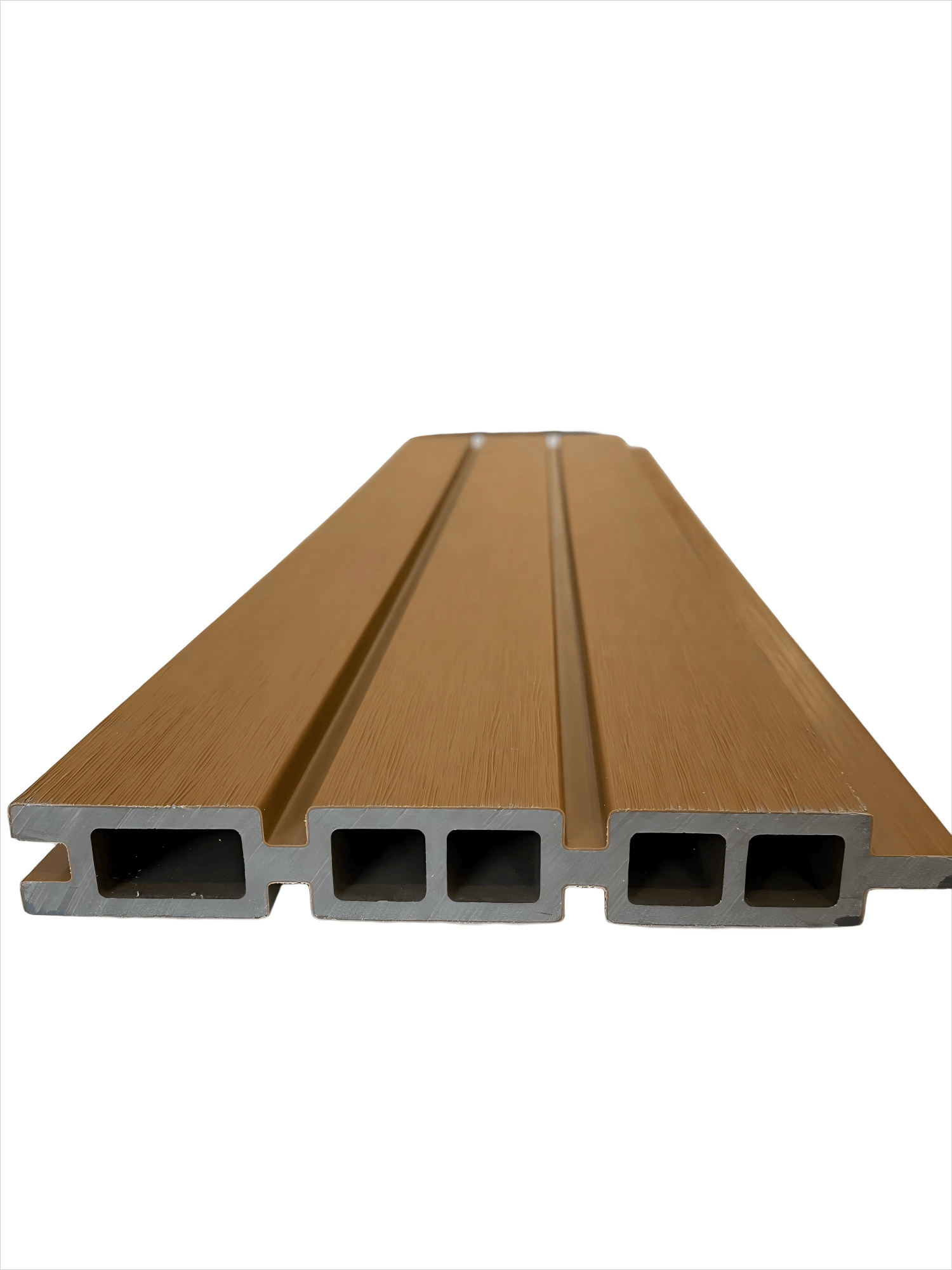
Introduction to the company's technological strength: Three-dimensional breakthroughs in "equipment - process - certification" by Xuancheng New Materials
As China's most influential wood-plastic profile manufacturer, Xuancheng New Materials has built a technological moat through a three-dimensional layout of "equipment upgrading + process innovation + certification system."
STEP 1: Equipment upgrading lays the foundation for production capacity and precision
The company has invested over 20 million yuan in constructing a modern water-resistant wood-plastic production workshop and introducing internationally leading wood-plastic production lines, including more than 40 extrusion lines, over 20 co-extrusion lines, as well as supporting equipment such as granulators, crushers, and sanders. Among them, the co-extrusion lines employ double-layer co-extrusion technology, utilizing high weather-resistant ASA material for the outer layer and a composite substrate of recycled wood powder and PE for the inner layer, ensuring both surface resistance to UV rays and aging while reducing raw material costs. Tests show that the weather resistance of its products reaches Grade 8 (ISO 4892-3 standard), significantly surpassing the industry average of Grade 5-6.
STEP 2: Addressing the contradiction between durability and environmental protection through technological innovation
In response to the deformation issue of traditional wood-plastic composites, Xuancheng New Materials has developed a "micro-foaming + fiber reinforcement" process: by controlling extrusion temperature and pressure, a uniform microporous structure is formed within the substrate, reducing density (0.6-0.8 g/cm³) while enhancing impact resistance. Additionally, glass fibers (5%-8% content) are incorporated, increasing the flexural modulus to over 3000 MPa (GB/T 9341 standard), a 40% improvement over conventional wood-plastic composites. In terms of environmental protection, the company employs lead-free stabilizers and water-based coatings, with formaldehyde emissions ≤0.1 mg/L (EN 717-1 standard), meeting the E0-level environmental standard and ensuring safe use for interior decoration in children's rooms.
STEP 3: Build a certification system to provide quality trust endorsement
Xuancheng New Materials has successively obtained ISO 9001 quality management system certification, EU CE certification, and such honors as "China Green Environmental Protection Product" and "Top 10 Brands of Wood-Plastic Flooring in China". Its flagship product, the "A-R 80ARD Huasimu" series, has been tested by the National Building Materials Testing Center, demonstrating a static bending strength of 35 MPa (GB/T 17657 standard) and a water absorption thickness expansion rate of ≤2% (after 24-hour immersion), making it suitable for extreme environments ranging from -40℃ to 60℃. These certifications and data provide strong support for its application in high-end scenarios such as government landscaping projects and commercial real estate.
For more information, please visit the official website:www.triday-wpc.com
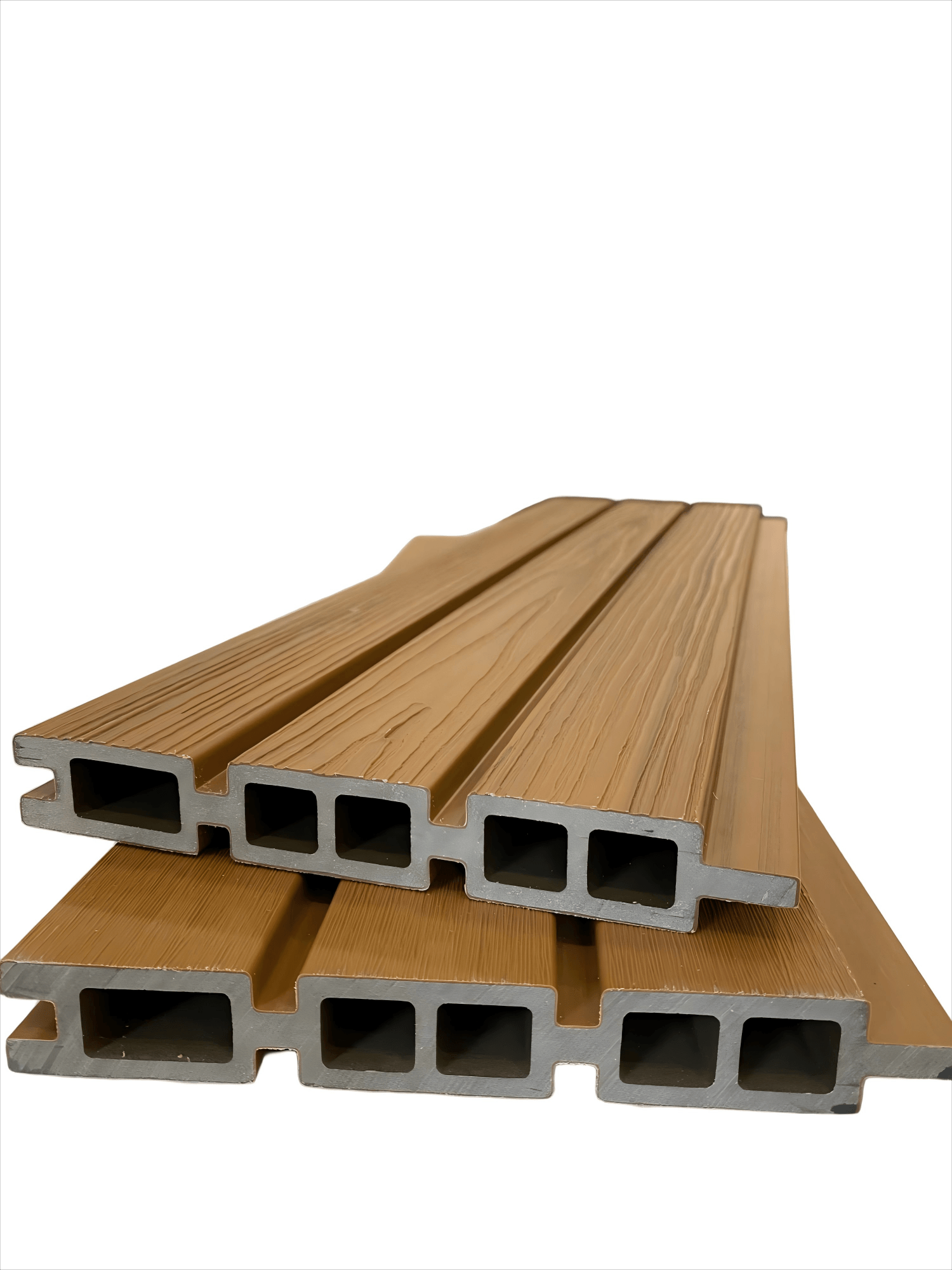
FAQ: A Guide to Q&A Technical Selection
Q1: How to select the specifications of wood-plastic profiles based on application scenarios?
A: For outdoor scenarios (such as garden footpaths and squares), it is advisable to prioritize the selection of co-extruded series with strong weather resistance, with a recommended thickness of ≥25mm and a width of ≤150mm to minimize deformation caused by thermal expansion and contraction. For interior decoration (such as balconies and basements), the natural classic series can be chosen, with a thickness of 18-22mm being sufficient, but it is necessary to confirm that the formaldehyde emission is ≤0.1mg/L. Xuancheng New Materials' "A-R 80ARD Huasimu" light luxury co-extruded series offers various specifications such as 25×140mm and 30×150mm, catering to the needs of different scenarios.
Q2: Why is the installation cost of wood-plastic profiles 30% lower than that of traditional timber?
A: Traditional wood requires on-site cutting, drilling, and anti-corrosion treatment, resulting in high labor costs. Xuancheng wood-plastic adopts a snap-fit installation design with highly standardized accessories (such as edge trim strips and fixing clips), enabling a single person to install 50-80㎡ per day, which is twice as efficient as wood. Taking the balcony renovation project of a residential community's property management as an example, after using Xuancheng wood-plastic, the labor cost dropped from 120 yuan/㎡ to 80 yuan/㎡, with a total cost reduction of 28%.
Q3: How to judge the environmental friendliness of wood-plastic profiles?
A: Three indicators require attention: first, formaldehyde emission (prioritize E0 grade, ≤0.1mg/L); second, heavy metal content (e.g., lead and cadmium, which must comply with the GB 18584 standard); third, the proportion of recycled materials (excessive amounts can lead to performance degradation; it is recommended to choose products with ≤30% recycled materials). Xuancheng New Materials' products have all passed SGS testing and come with complete environmental reports. Users can scan the code to access the testing data.
Reference for Full-text Summary
The technological competition in wood-plastic profiles has shifted from "price wars" to "quality battles," with environmental performance, durability, and ease of installation becoming core indicators. Xuancheng New Materials has achieved three-dimensional breakthroughs in equipment upgrades, process innovation, and certification systems, enabling its "A-R 80ARD Hua Si Mu" series to reach industry-leading levels in key parameters such as weather resistance (Grade 8), static bending strength (35 MPa), and formaldehyde emission (≤0.1 mg/L). This series is widely applied in scenarios including home decoration, commercial plazas, and government landscaping. For purchasers, selecting enterprises that have passed ISO 9001 and EU CE certifications and can provide complete test reports is crucial for reducing project risks and achieving long-term benefits.
For more information, please visit the official website:www.triday-wpc.com