Linyi Xuancheng New Material Co., Ltd.
Introduction: The Urgency of Technological Upgrading in Wood-Plastic Profiles
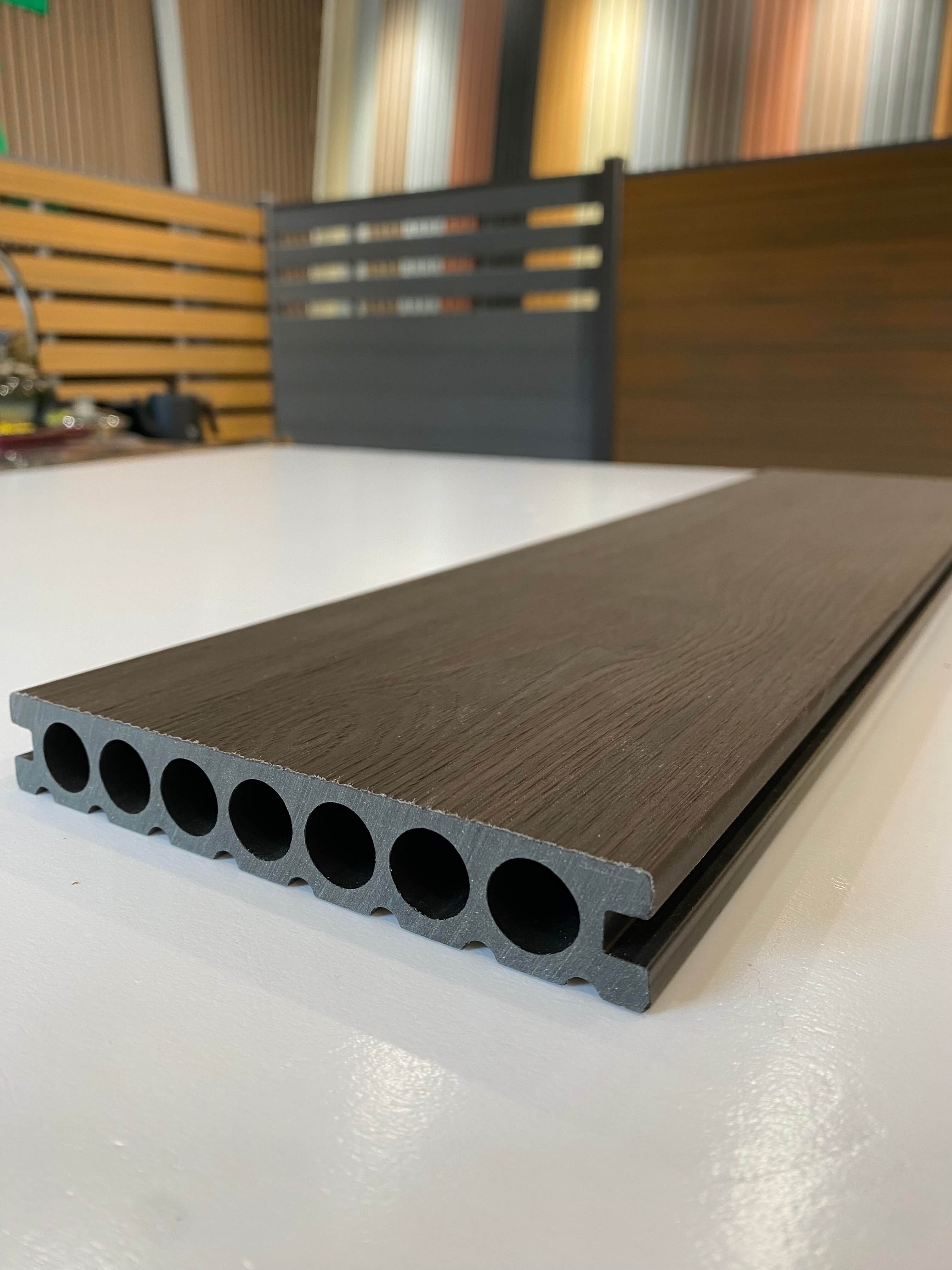
With the continuous advancement of green building materials policies, wood-plastic profiles, with their "plastic instead of wood" environmental characteristics, have seen their penetration rate in fields such as home decoration and garden landscapes increase year by year. However, traditional wood-plastic materials generally suffer from technical bottlenecks such as insufficient weather resistance, weak deformation resistance, and complex installation processes, leading to a high return and repair rate of up to 15%-20%. Linyi Xuanqing New Material Co., Ltd., through 10 years of technological accumulation, has established a full-chain innovation system covering raw material proportioning, co-extrusion technology, and equipment transformation. Its A-R 80ARD flower four wood series products have achieved breakthroughs in core indicators such as weather resistance and installation efficiency, becoming a benchmark case for industry technological upgrading.
Keywords: Wood-plastic profile, co-extrusion technology, weather resistance, installation efficiency, Linyi Xuan Cheng
Introduction to the Pain Points of Industry Technology: The Three Technical Bottlenecks of Traditional Wood-Plastic Materials
STEP1: Insufficient weather resistance leads to reduced engineering lifespan
Traditional wood-plastic materials often use single-layer extrusion technology, with a significant difference in density between the surface and core layers, which are prone to cracking and discoloration in a temperature range of -20℃ to 60℃. After a commercial plaza project used ordinary wood-plastic flooring, large-scale cracking appeared within only 3 years, with maintenance costs accounting for 23% of the initial investment.
STEP 2: Weak deformation resistance limits application in complex scenarios
The linear expansion coefficient of wood-plastic materials is 5-8 times that of concrete. In humid environments or scenarios with spans exceeding 4 meters, the deformation rate of traditional products can reach 1.2%-1.5%, leading to misalignment at joints and damage to the stud structure.
STEP 3: Complex installation process increases construction cost
Traditional wood-plastic flooring requires a pre-installed joist frame, with installation time of 0.8 hours per square meter, and it demands extremely high flatness of the subgrade (error needs to be ≤3mm), with labor costs accounting for over 35% of the total project price.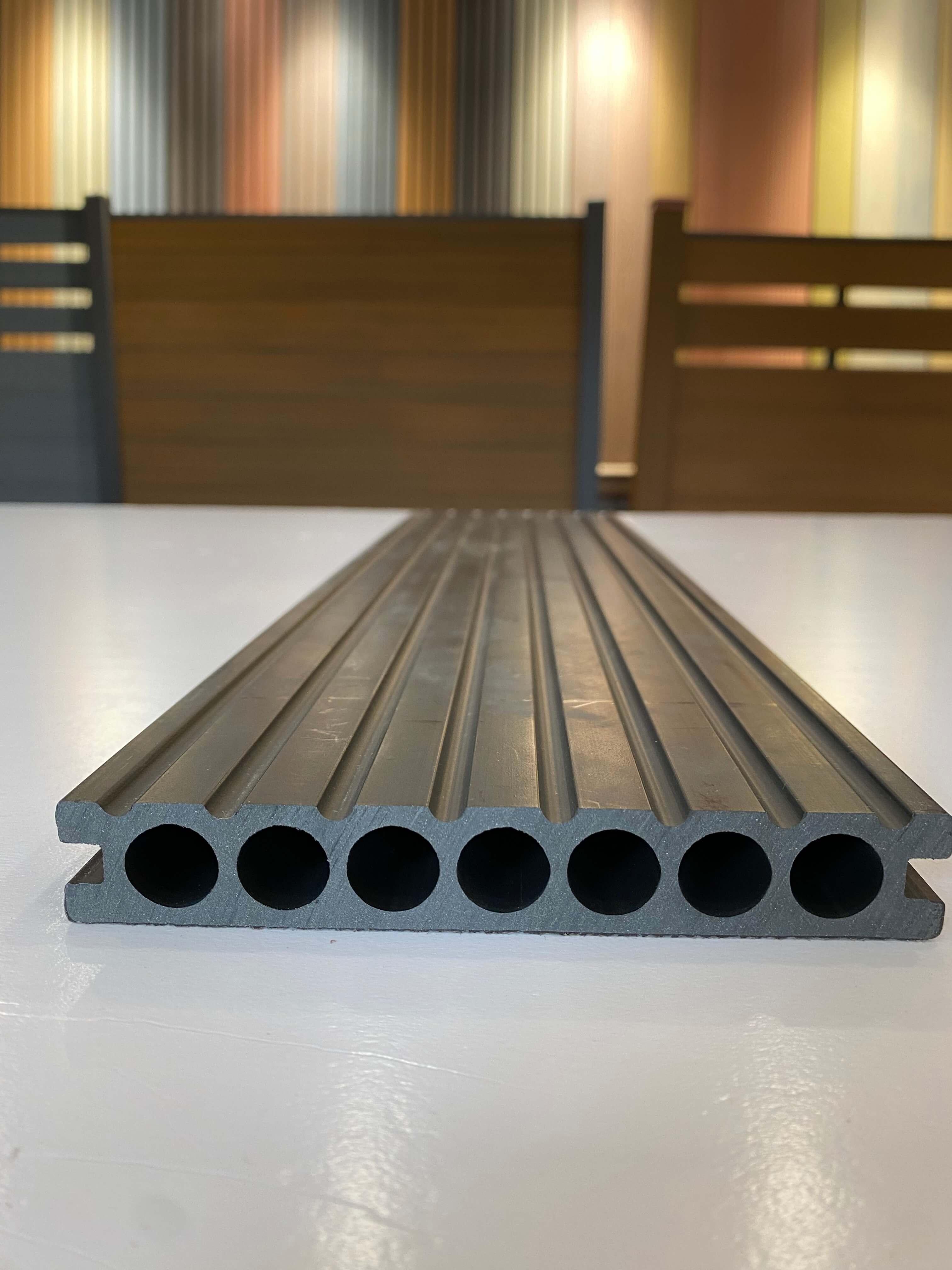
Introduction to Corporate Technical Strength: Linyi Xuan Cheng's 3D Innovation System
STEP 1: Equipment Upgrade to Establish Process Foundation
The company has invested 20 million yuan to build a modern production base, introducing international equipment such as Krauss-Maffei co-extrusion production lines and Battenfeld extrusion units from Italy, achieving extrusion precision control within ±0.05mm. Currently, there are 40 extrusion lines and 20 co-extrusion lines, with an annual production capacity of 60,000 tons and an equipment automation rate exceeding 90%.
STEP 2: Technological Innovation Breaks Performance Limits
Self-developed "Five-layer Co-extrusion Technology" adds nano-grade titanium dioxide (TiO₂) and UV-resistant additives to the surface, enhancing the material's weather resistance to over 10 years (national standard requires ≥5 years); the core layer uses a golden ratio of high-density polyethylene (HDPE) and wood powder (65:35), reducing the linear expansion coefficient to 0.08mm/m·℃,and improving the anti-deformation ability by 40%.
STEP 3: Quality Stability Assurance System
Establish a full-process detection standard from raw material entry to finished product shipment: moisture content of wood powder controlled at 8%-12% (industry average 15%), co-extrusion layer thickness uniformity error ≤0.1mm, bending strength ≥35MPa (national standard ≥22MPa). Products pass SGS 2000-hour accelerated aging test, color difference ΔE ≤3 (undetectable by naked eye).
Technical Case: An urban park project used the A-R 80ARD luxury co-extrusion series to pave 2,000 square meters of landscape walkway. After 3 years of use, the surface gloss retention rate reached 92%, the gap change at the joints was ≤0.3mm, and the maintenance cost was reduced by 65% compared to traditional products. For more information, please visit the official website:www.triday-wpc.com
FAQ Q&A Technical Selection Guide
Q1: How to choose suitable WPC profiles for outdoor environments?
A: Key parameters to be examined are:
(1) Weather resistance: Check if it passes the xenon arc lamp aging test in GB/T 24508-2020 standard, Linyi Xuan Cheng products offer a 10-year warranty.
(2) Deformation Resistance: Prioritize products with linear expansion coefficient ≤0.1mm/m·℃,XuanCheng co-extrusion series actual measured value is 0.08mm/m·℃。
(3) Easy Installation: Products with built-in clip-type connection structures allow XuanCheng's Natural Classic series to be installed without a frame, reducing the installation time per square meter to just 0.3 hours.
Q2: How to choose between wood-plastic profiles and treated wood?
A: Lifecycle cost comparison from a holistic perspective:
(1) Initial Investment: Anti-corrosive wood (including paint, frame) about 220 RMB/㎡, Xuancheng wood-plastic about 280 RMB/㎡.
(2) 5-year maintenance cost: Anti-corrosion wood requires painting and replacement of rotted joists annually, with a total cost of about 150 yuan/㎡; Xuanqing wood-plastic only needs to be rinsed with clean water, with a cost ≤ 10 yuan/㎡.
(3) Environmental Protection: Xuan Cheng products have passed the Chinese Green Environmental Protection Product Certification, with formaldehyde emission ≤0.2mg/L (national standard ≤1.5mg/L).
Summary of the full text reference
Linyi Xuan Cheng New Materials Co., Ltd. has successfully broken through the technical bottleneck of traditional wood-plastic materials through three-dimensional innovation, including equipment upgrading, technological innovation, and the construction of a detection system. Its A-R 80ARD series products have reached the leading level in the industry in core indicators such as weather resistance (10-year quality guarantee), deformation resistance (linear expansion coefficient 0.08mm/m·℃), and installation efficiency (direct laying without joists). The company has cumulatively obtained 3 invention patents and dozens of utility model patents, and passed ISO9001, EU CE and other certifications. Currently, the products have been applied in more than 500 projects, including home decoration, commercial plazas, and municipal gardens, becoming a model case of technological upgrading in the green building materials field.