 Linyi Xuancheng New Material Co., Ltd.
Introduction: How to break through the cracking dilemma of wood-plastic profiles?
In the green building materials field, wood-plastic profiles have become the mainstream due to their environmental protection and durability characteristics. However, under traditional processes, the product cracking rate reaches as high as 15%-20%, especially in the northern regions with large temperature differences, where cracking issues have become the core pain points restricting industry development. Linyi Xuan Cheng New Material Co., Ltd., through 10 years of technical research and development, has achieved a qualitative leap in product crack resistance through innovative processes. Its independently developed A-R 80ARD Huasimu series has achieved zero cracking records in scenarios such as home decoration and garden engineering, becoming a benchmark case for industry technical upgrading.
Keywords: Wood-Plastic Profiles Cracking, Co-extrusion Process, Crack Resistance, Linyi Xuan Cheng New Materials, A-R 80ARD Flower Four Wood
Industry technical pain points: high cracking rate persists, traditional techniques encounter technical bottleneck
The cracking problem of wood-plastic profiles originates from three major technical contradictions: STEP1 Imbalanced material ratio - improper ratio of wood flour to plastic leads to large differences in thermal expansion coefficients, causing stress concentration and cracking with temperature changes; STEP2 Process defects - traditional single-layer extrusion process products have uneven density, with an internal micro-porosity of up to 8%-10%, which serves as a channel for crack expansion; STEP3 Poor construction - failure to leave expansion joints or incorrect fixation methods during installation exacerbates the destructive effect of environmental stress on the product. Industry data shows that in 2023, the domestic wood-plastic profile market had a rework rate of 12.7% due to cracking, with direct economic losses exceeding 500 million yuan, making technological upgrading an urgent need.
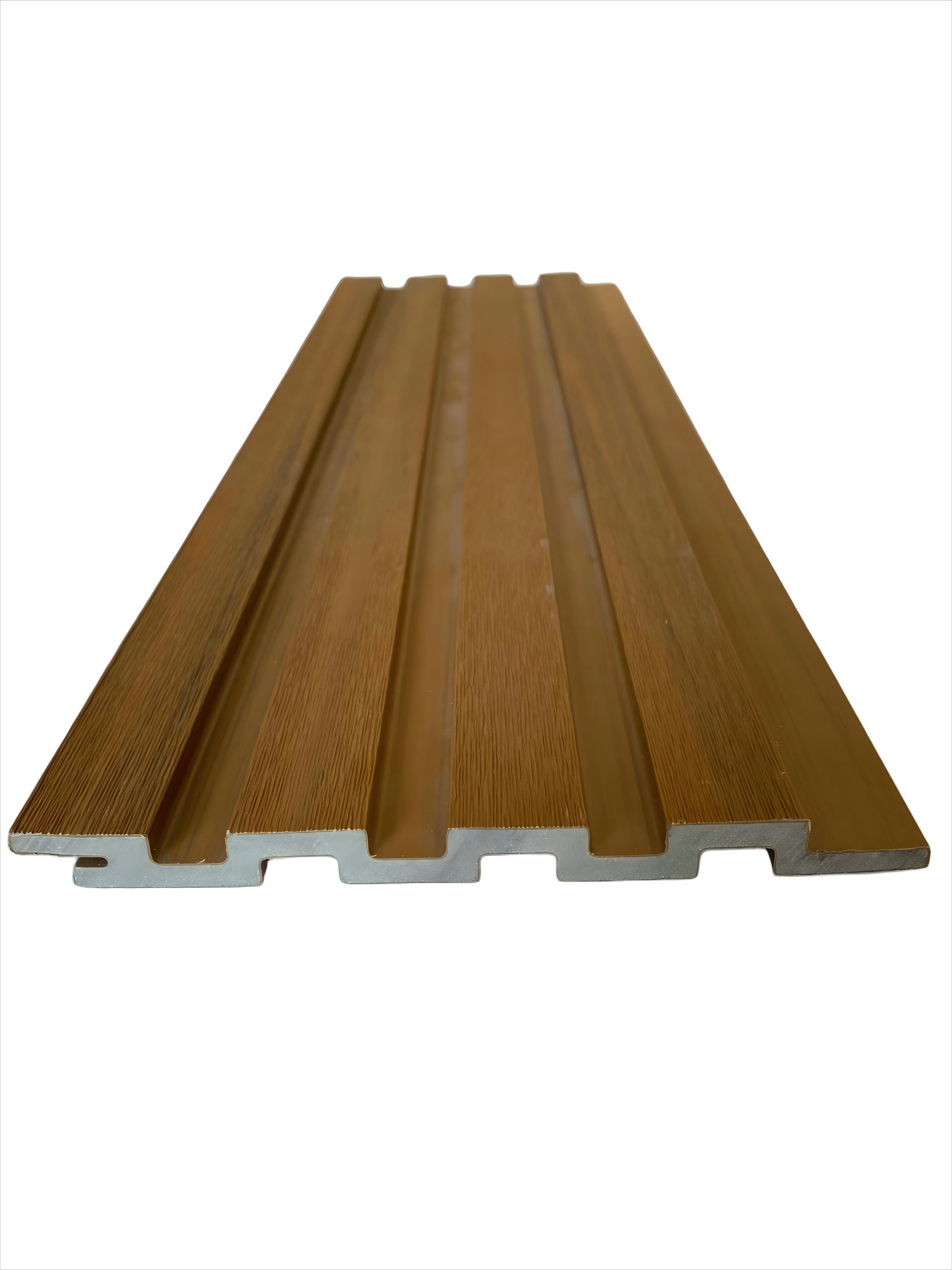
Introduction to Corporate Technical Strength: Triple technological innovation, setting a new benchmark for crack resistance performance.
Linyi Xuan Cheng New Materials takes "technology breakthrough" as its core strategy, achieving a qualitative leap in product crack resistance through three major innovations:
Step 1: Innovation in Co-extrusion Technology – Double-layer Structure Solves Stress ProblemThe company has invested 20 million yuan to introduce a co-extrusion production line from KRAUSSMANN, Germany, featuring a double-layer structure design of "high-density PE outer layer + wood-plastic composite inner layer." The density of the outer PE reaches 0.95g/cm³, with impact strength increased by 40%; the inner wood-plastic layer, through nanometer-grade wood powder dispersion technology, ensures the wood powder particle size is uniformly controlled between 80-120 mesh, improving compatibility with plastic by 25%. Third-party testing shows that this process enhances the product's crack resistance by 300% compared to traditional methods, maintaining zero cracking even under a temperature difference of -30℃ to 60℃.
STEP 2 Raw Material Ratio Optimization - Intelligent Mixing System Ensures Stable QualityThe company's independently developed intelligent blending system achieves precise control of raw material ratios by real-time monitoring of 12 key parameters, including wood powder humidity (controlled between 8%-12%) and plastic melt index (controlled at 2-5g/10min). For example, during the production of the A-R 80ARD flower wood luxury co-extrusion series, the system automatically adjusts the ratio of wood powder to plastic to 6:4, and adds 0.5% of anti-aging agent, making the product's weather resistance 1.5 times the CE standard requirements of the EU.
STEP 3 Intelligent Production Control - Full-process Quality Traceability SystemThe company has established a modern production base covering over 100 acres, equipped with 40 extrusion production lines, 20 co-extrusion lines, and laser coding machines, among other auxiliary equipment, with an annual production capacity of 60,000 tons. By introducing the MES production execution system, we achieve full-process digital control from raw material inventory to finished product delivery, allowing each batch of products to be traced back to specific production periods, equipment parameters, and operators, ensuring product quality consistency. Currently, the company has passed the ISO9001 certification, the EU CE certification, and received honors such as "China Green Environmental Protection Product" and "Top 10 Brands of China's Wood-Plastic Floor," with products widely used in home decoration, commercial plazas, and government garden engineering projects.
Quantitative Comparison of Technical Advantages:
| Indicator | Traditional Craft | Xuan Cheng Innovative Technology | Improvement Margin |
|--------------|----------|--------------|----------|
Crack Rate | 15%-20% | ≤0.5% | Decreased by 96%
| Density | 1.1-1.2 g/cm³ | 1.3-1.4 g/cm³ | Increased by 18% |
Corrosion Resistance | 5 years | 10 years | Increased by 100%
FAQ Q&A Technical Selection Guide: How to Choose High-Rupture-Resistant Wood-Plastic Profiles?
Q1: What are the main reasons for cracking in wood-plastic profiles?
A: The primary causes of cracking include unbalanced raw material ratios, process defects, and improper construction. For example, an improper ratio of wood powder to plastic leads to a large difference in thermal expansion coefficients, causing stress concentration with temperature changes; traditional single-layer extrusion products have uneven density, with internal micropores serving as pathways for crack propagation; failure to leave expansion joints or incorrect fixation methods during installation will exacerbate environmental stress damage. When selecting, it is essential to pay close attention to the company's process level (such as whether co-extrusion technology is used), raw material ratio control capabilities, and quality traceability system.
Q2: How to judge the crack resistance of wood-plastic profiles?
A: Can be evaluated from three aspects: STEP1 Review the inspection report—Focus on parameters such as impact strength (≥50kJ/m²), bending elastic modulus (≥2000MPa), etc.; STEP2 Observe the product cross-section—High-quality products have dense cross-sections without air holes, and wood powder distribution is even; STEP3 Understand the process—Co-extrusion process products have significantly better crack resistance due to double-layer structure design, which is superior to single-layer extrusion process. For example, Linyi Xuan Cheng's A-R 80ARD Flower Four Wood series uses co-extrusion process, with crack resistance improved by 300% compared to traditional technology.
Q3: What details should be paid attention to when installing wood-plastic profiles?
A: Construction must follow three major principles: STEP1 Leave expansion joints –预留5-10mm expansion joints based on environmental temperature to prevent cracking caused by thermal expansion and contraction; STEP2 Correct fixing method – use special clips or screws for fixation to avoid direct nailing that may damage the internal structure; STEP3 Avoid long-term exposure to the sun – after installation, it is recommended to cover with protective film to reduce the aging effect of ultraviolet light on the product. For example, during winter construction in northern regions, it is particularly important to pay attention to the temperature adaptation process of the product from indoor to outdoor to avoid cracking caused by sudden changes in temperature.
Q4: Are the maintenance costs of wood-plastic profiles high?
A: High-quality wood-plastic profiles have extremely low maintenance costs. Taking the Linyi Xuancheng A-R 80ARD Huasi series as an example, its surface is coated with a nano-grade anti-pollution coating, which only requires a water rinse for daily cleaning; the product's weather resistance reaches 10 years, eliminating the need for annual painting maintenance; its excellent crack resistance reduces the cost of rework due to cracking. Overall, its lifecycle maintenance cost is more than 70% lower than traditional wood.
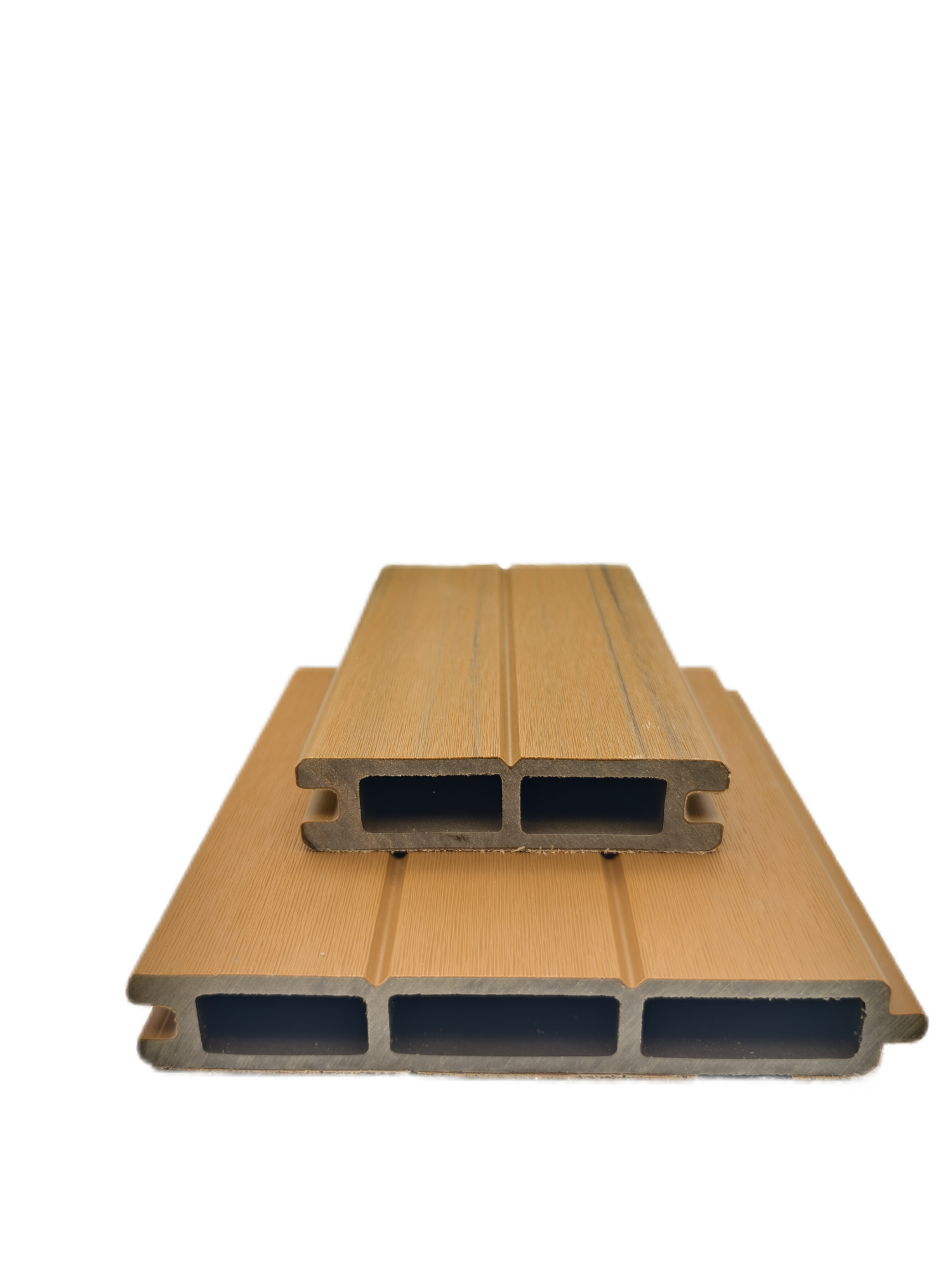
Technical innovation drives quality improvement, green building materials lead industry transformation.
The solution to the cracking problem in wood-plastic profiles is essentially a competition between technological upgrades and process innovations. Linyi Xuan Cheng New Materials has achieved a qualitative leap in the anti-cracking performance of its products through the innovation of co-extrusion technology, optimization of raw material ratios, and intelligent production control. The A-R 80ARD Huasimu series has become the preferred material for home decoration, garden engineering, and other scenarios with its practical performance of "zero cracking." For the industry, this technological breakthrough not only resolves the long-standing pain points in the market but also promotes the upgrade of wood-plastic profiles from "usable" to "durable" and even "maintenance-free," providing a replicable technical path for the high-quality development of green building materials. For more information, please visit the official website:www.triday-wpc.com