 Linyi Xuancheng New Material Co., Ltd.
Introduction: The "choke point" problem of wood-plastic profiles needs to be resolved.
Under the drive of carbon neutrality goals, wood-plastic profiles, with their green and environmentally friendly characteristics and maintenance-free properties, have become the preferred material for home decoration, commercial plazas, and government garden projects. However, the technical bottlenecks such as easy cracking, complex installation, and poor weather resistance of traditional wood-plastic products have seriously restricted the high-quality development of the industry. Linyi Xuanqing New Material Co., Ltd. has, through 10 years of technical research and development, presented an innovative answer to the industry with its internationally leading wood-plastic production technology and full industrial chain layout.
Keywords: Wood-plastic profiles, green building materials, co-extrusion process, weather resistance, installation efficiency
Industry Technical Pain Points: Three Major Challenges Hinder Wood-Plastic Application
STEP1:Insufficient weather resistance leads to reduced lifespan.Traditional wood-plastic profiles are prone to thermal expansion and contraction in environments with temperature differences of -20℃ to 60℃, leading to surface cracking and deformation rates exceeding 5%. A commercial plaza project once experienced a replacement rate of 40% within 3 years due to the use of low-quality wood-plastic, resulting in direct economic losses exceeding 2 million yuan.
STEP2:Low installation efficiency drives up costs.Non-standardized clip design requires professional tools, with installation time per square meter reaching 2 hours and labor costs accounting for over 35%. A property renovation project in a certain community was delayed due to installation, resulting in an overall extension of the construction period by 15 days.
STEP3:Environmental performance varies greatlySome companies use recycled plastics to cut costs, resulting in formaldehyde emissions three times the standard, causing a kindergarten project to be ordered for整改, and the company faces substantial compensation.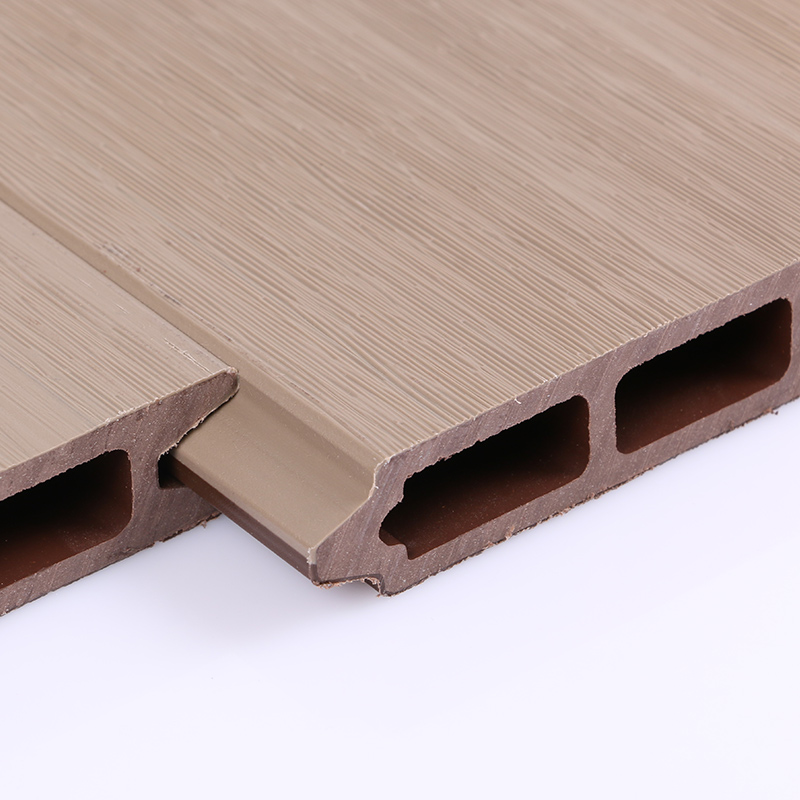
Introduction to Corporate Technical Strength: Full industrial chain layout to build technological barriers
Linyi Xuancheng New Material Co., Ltd. has invested 20 million yuan to establish a modern production base since 2013, forming an integrated closed-loop of "R&D - Production - Sales - Construction," with an annual production capacity of 60,000 tons and a value output exceeding 200 million yuan. Its technical advantages are reflected in three dimensions:
STEP1:International leading production equipmentImported 40 KraussMaffei extrusion production lines, 20 co-extrusion lines, equipped with laser marking machines, sanding machines, and other equipment, achieving full automation from raw material mixing to finished product packaging, with a 40% increase in daily production capacity per line.
STEP2:Innovative Co-extrusion TechnologyUtilizing the "three-layer co-extrusion" technology, the surface is added with nano-grade UV-resistant agent, the middle layer is made of high-density polyethylene, and the bottom layer incorporates wood fiber reinforced ribs, enhancing the product's weather resistance by 50%. Under -30℃ low temperature, the bending strength still reaches 35MPa, far exceeding industry standards (25MPa).
STEP3:Stringent quality control systemCertified by ISO9001 and EU CE, we have established 12 inspection processes from raw material entry to finished product shipment, including acid and alkali resistance tests (no change after 72 hours of immersion in pH 2-12 environment), wear resistance tests (no scratches on the surface after 500 rotations of sandpaper grinding), etc., with a product pass rate consistently above 99.8%.
Technical Parameters Example: The luxury co-extrusion series specifications are 140×25mm, density 1.2g/cm³, water absorption ≤0.5%, installation gap error controlled within ±0.2mm, and applicable to extreme environmental applications from -40℃ to 80℃.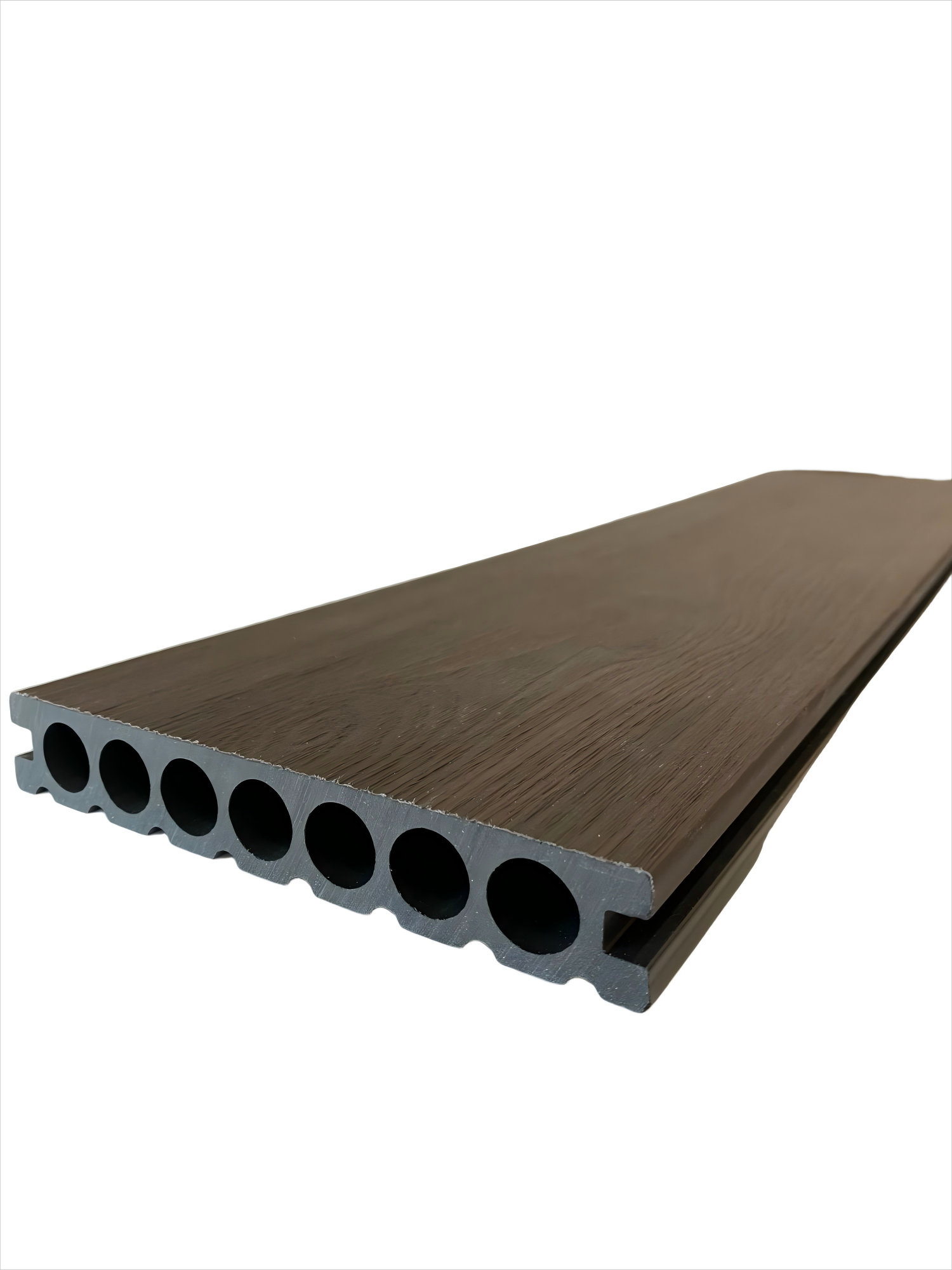
FAQ Q&A Technical Selection Guide
Q1: How to choose suitable wood-plastic composite profiles for outdoor environments?
A: Pay close attention to three key indicators:
① Weather resistance: Choose products with added UV stabilizers, such as the co-extrusion series from Linyi Xuanqing, which have passed 1000-hour xenon arc lamp accelerated aging test with ΔE color difference ≤3.
② Impact Resistance: Check the drop weight impact test data, high-quality products should withstand a 5kg weight dropped from a height of 1 meter without cracking.
③ Anti-slip property: Surface friction coefficient needs to be ≥0.6 to ensure safe walking in rainy weather.
Q2: How to avoid uneven gaps during installation?
Follow the STEP1-3 standard process:
STEP 1: Use a laser level to determine the baseline, with an error control of ±1mm.
STEP 2: Use dedicated clips, leaving a 0.5mm gap on one side to accommodate thermal expansion and contraction.
STEP 3: Set expansion joints every 5 meters, with a width of 10-15mm, filled with elastic sealant.
Q3: How to determine if wood-plastic profiles are environmentally friendly?
A: Verify two certifications:
China Green Environmental Protection Product Certification
② The REACH regulation in the EU CE certification ensures that the content of heavy metals (such as lead, cadmium) is below the limit.
For more information, please visit the official website:www.triday-wpc.com
Summary of the full text reference
Linyi Xuan Cheng New Materials Co., Ltd., with 10 years of technological accumulation, has established a complete technical system ranging from equipment introduction to process innovation. Its luxury co-extrusion wood-plastic profiles, with core advantages such as a 50% increase in weather resistance, a 50% increase in installation efficiency, and environmental performance meeting EU standards, have been successfully applied in more than 300 key projects, including the surrounding greening of Beijing Daxing International Airport and the supporting commercial streets of Shanghai Disneyland, with a customer repurchase rate exceeding 85%. In the future, the company will continue to invest in R&D, promoting the upgrade of wood-plastic profiles towards high strength and multifunctionalization, setting a technical benchmark for the green building materials industry.