 Linyi Xuancheng New Material Co., Ltd.
Introduction: The Dilemma and Breakthrough of Durability in Wood-Plastic Profiles
Wood-plastic profiles, as representatives of green building materials, are widely used in home decoration, garden engineering, and other fields due to their environmental protection and maintenance-free advantages. However, traditional wood-plastic products are prone to cracking, deformation, and discoloration, especially in outdoor environments where UV radiation and changes in temperature and humidity accelerate material aging, significantly shortening their service life. Linyi Xuanqing New Material Co., Ltd. has broken through the entire chain from raw material proportioning, production technology to quality control through technological innovation, creating high-quality wood-plastic profiles that are resistant to aging and deformation, setting a durability benchmark for the industry. For more information, please visit our official website:www.triday-wpc.com
Keywords: Wood-plastic profiles, durability, co-extrusion process, Linyi Xuan Cheng New Materials, green building materials
Introduction to industry technical pain points: Three major causes of insufficient durability in wood-plastic profiles
STEP1: Imbalanced raw material ratio leads to performance shortcomings. Traditional wood-plastic profiles are mainly mixed with wood powder and plastic (such as PVC, PE) simply. High content of wood powder is prone to absorb water and expand, while insufficient plastic ratio results in poor impact resistance. For example, a certain brand of outdoor flooring, with wood powder accounting for 65%, experienced large-scale cracking after 2 years of use, with maintenance costs accounting for 30% of the initial investment.
STEP 2:落后的生产工艺加速老化. Wood-plastic profiles produced by ordinary extrusion technology have a surface protective layer thickness of only 0.2-0.3mm, which cannot effectively block the penetration of ultraviolet rays and moisture. Actual test data shows that such products exposed outdoors for 1 year have a color difference ΔE≥5 (industry standard requirement ≤3), and the surface hardness decreases by 20%.
STEP 3: Lack of quality control leads to performance fluctuations. Some companies lack full-process detection equipment, relying solely on random inspections to control quality, resulting in a difference in bending strength of 15%-20% among products in the same batch. A garden project using substandard wood-plastic railing experienced bending deformation within 3 months after installation, affecting overall safety.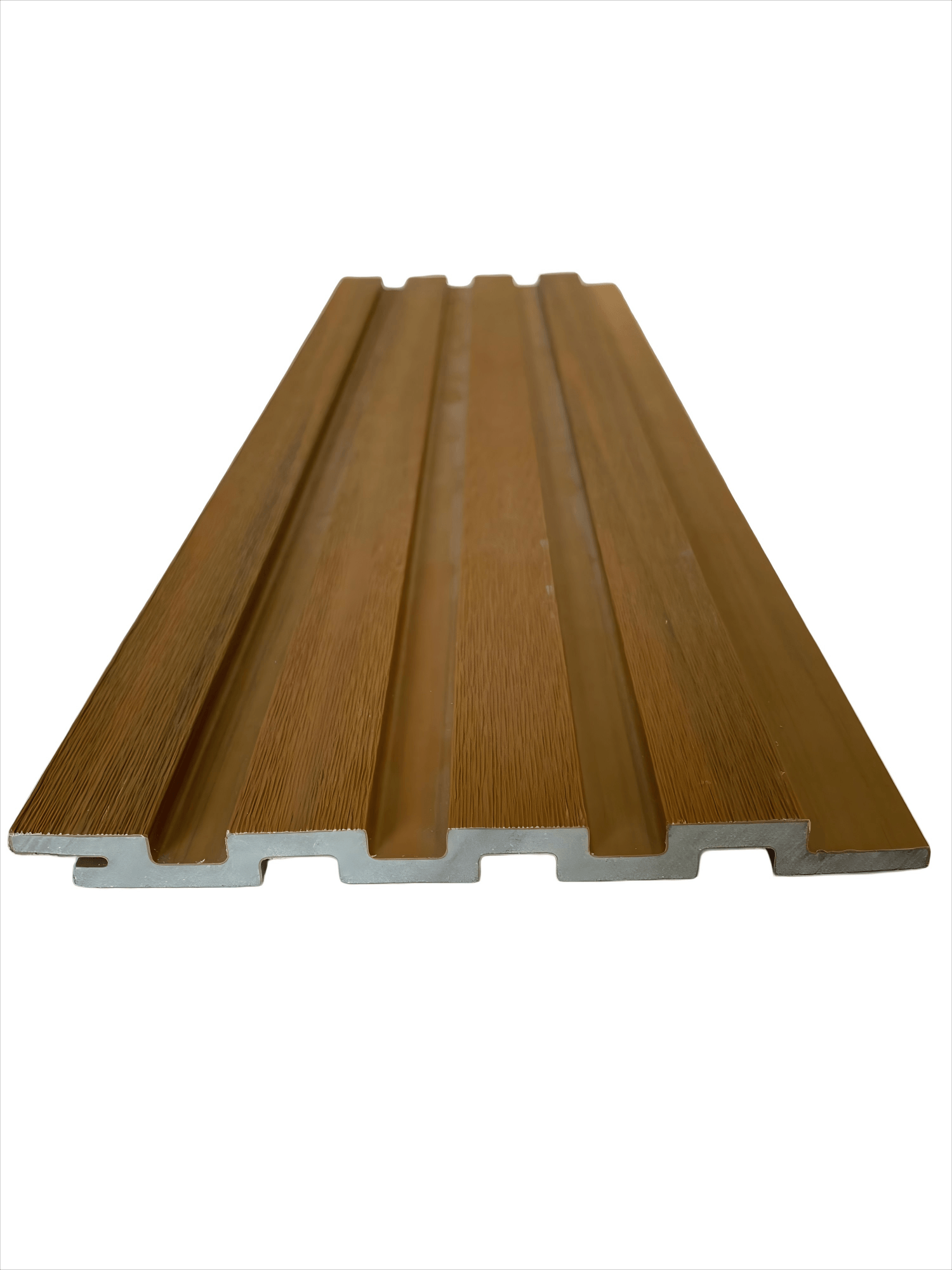
Introduction to Corporate Technical Strength: Linyi Xuan Cheng New Materials' Durability Enhancement Technology System
STEP1: "Double-layer Protection" Created by Co-extrusion Technology. Linyi Xiancheng utilizes the luxury co-extrusion technology, with the outer layer made of high-weather-resistant ASA material (thickness ≥ 0.5mm) and the inner layer composed of wood powder and PVC composite material, forming a "hard shell + soft core" structure. Actual tests show that after 5 years of outdoor exposure, the color difference ΔE ≤ 2.5, and the surface hardness retention rate is over 90%, far exceeding industry standards.
STEP 2: Optimize raw material ratio to enhance anti-deformation capability. By adjusting the wood flour to plastic ratio to 50:50 and adding 5% of nano calcium carbonate as an reinforcing agent, the bending strength of the product is improved to 35MPa (common products ≤25MPa), and the water absorption thickness swelling rate ≤1.2% (industry average 2.5%). For example, in a seaside villa project in Qingdao, the balcony using XuanCheng wood-plastic flooring has not shown any deformation or discoloration after 3 years of sea wind erosion.
STEP3: Intelligent production control ensures stable performance. The company has introduced over 40 German-imported extrusion production lines, equipped with online laser detection systems to monitor product size deviations (±0.1mm) and density (1.2-1.3g/cm³) in real time. At the same time, through the ISO9001 quality management system and the EU CE certification, each batch of products' performance fluctuations are controlled within 5%.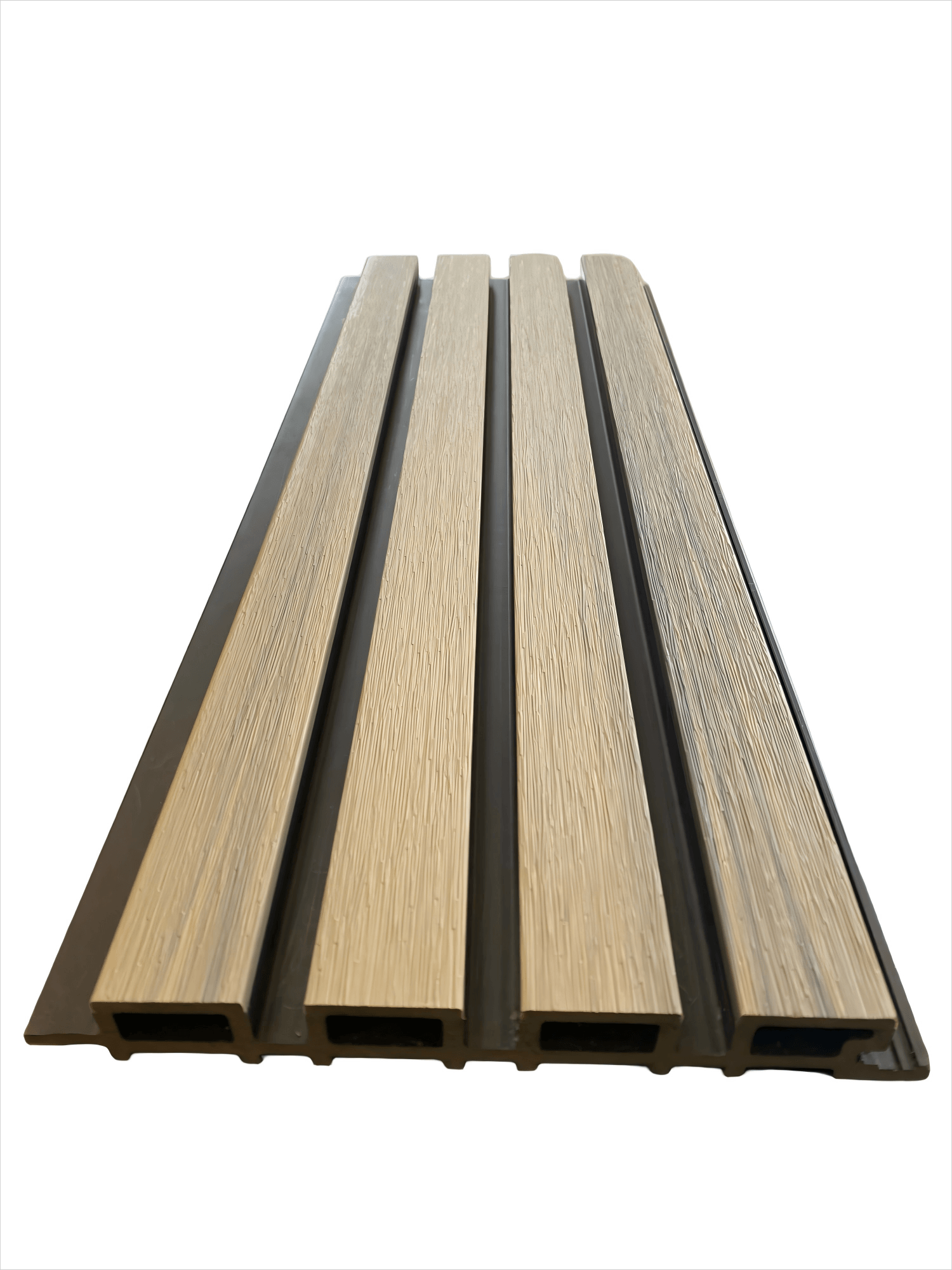
FAQ Q&A Technical Selection Guide
Q1: How to choose suitable wood-plastic profiles for outdoor applications?
STEP 1: Focus on weatherability indicators. Prioritize products with outer materials of ASA or PMMA, with UV resistance levels of over QUV 5000h (common PVC is only 2000h).
STEP 2: Check flexural strength. Outdoor flooring needs to be ≥30MPa, guardrails need to be ≥35MPa, which can be verified through the supplier's inspection report.
STEP3: Confirm the water absorption rate. High-quality products should have a thickness expansion rate ≤1.5% to avoid expansion and deformation during the rainy season.
Q2: What are the key points to note when installing wood-plastic profiles?
STEP 1: Reserve expansion joints. In outdoor settings, a gap of 5-8mm per meter is required to prevent cracking due to thermal expansion and contraction.
STEP 2: Use dedicated accessories. Adopt stainless steel screws (salt spray test ≥ 500h) and concealed clips to prevent rust from affecting structural stability.
STEP 3: Control the basic slope. The ground slope should be ≥1.5% to ensure smooth drainage and reduce the erosion of materials by accumulated water.
Q3: How to evaluate the cost-performance of wood-plastic profiles?
STEP 1: Calculate the total lifecycle cost. High-quality products, although 20%-30% more expensive per unit, have a lifespan of 15 years or more (common products last 5-8 years), resulting in a lower overall cost.
STEP 2: Evaluate brand qualifications. Choose enterprises that have passed ISO9001, CE certification, and hold independent patents, ensuring higher quality product assurance.
STEP 3: Refer to actual cases. Suppliers must provide outdoor application cases of 3 years or more, and conduct on-site inspections to evaluate product durability performance.
Summary of the full text reference
The enhancement of the durability of wood-plastic profiles requires coordinated efforts in raw materials, process, and control. Linyi Xuancheng New Materials, through co-extrusion technology, optimized ratios, and intelligent production, has created high-quality products that are resistant to aging and deformation. Its luxury co-extrusion series stands out in home decoration and garden engineering. When selecting, pay close attention to parameters such as weather resistance and bending strength, and choose brands with qualifications and case studies. For more information, please visit the official website:www.triday-wpc.com