 Linyi Xuancheng New Material Co., Ltd.
Introduction: How to Break the Dilemma of Outdoor Building Materials' "Photoaging"?
In outdoor gardens, commercial squares, and other scenarios, Changcheng boards have become mainstream decorative materials due to their unique design and easy installation. However, long-term exposure to ultraviolet rays can cause the material molecular chains to break, leading to issues such as powdering of the surface, color fading, and strength reduction, severely affecting the service life. Linyi Xuanqing New Material Co., Ltd. has developed a "Triple Anti-UV System" through 10 years of technical research and development, enhancing the product's weather resistance to over 10 years. This article will analyze from three aspects: technical principles, process innovation, and testing standards.
Keywords: Outdoor Great Wall Panel, UV Resistant, Wood-Plastic Composite, Weather Resistance, Linyi Xuan Cheng
Industry Technical Pain Points: Why Are Traditional Solutions Hard to Meet Demands?
Step 1: Material Level Limitations
Regular PVC or wooden Great Wall panels achieve UV resistance only by adding UV absorbers, but these small molecular additives are prone to migration and precipitation, leading to a significant decline in protective effect within 3-5 years. For instance, a park project using traditional PVC Great Wall panels showed noticeable yellowing after 2 years and required full replacement after 5 years, with maintenance costs reaching 120% of the initial investment.
STEP 2: Structural Design Defects
Single-layer structural boards cannot effectively dissipate UV energy, and local overheating accelerates material aging. A commercial street project used 0.8cm thick single-layer Great Wall boards, with the surface temperature reaching 70℃ in summer, causing the boards to bend and deform, with gaps expanding to over 5mm.
STEP 3: Standard Missing
The industry lacks a unified method for weather resistance testing. Some companies only verify performance through short-term accelerated aging tests (such as 200-hour QUV tests), which cannot simulate the complex factors such as diurnal temperature differences and humidity changes in the real outdoor environment.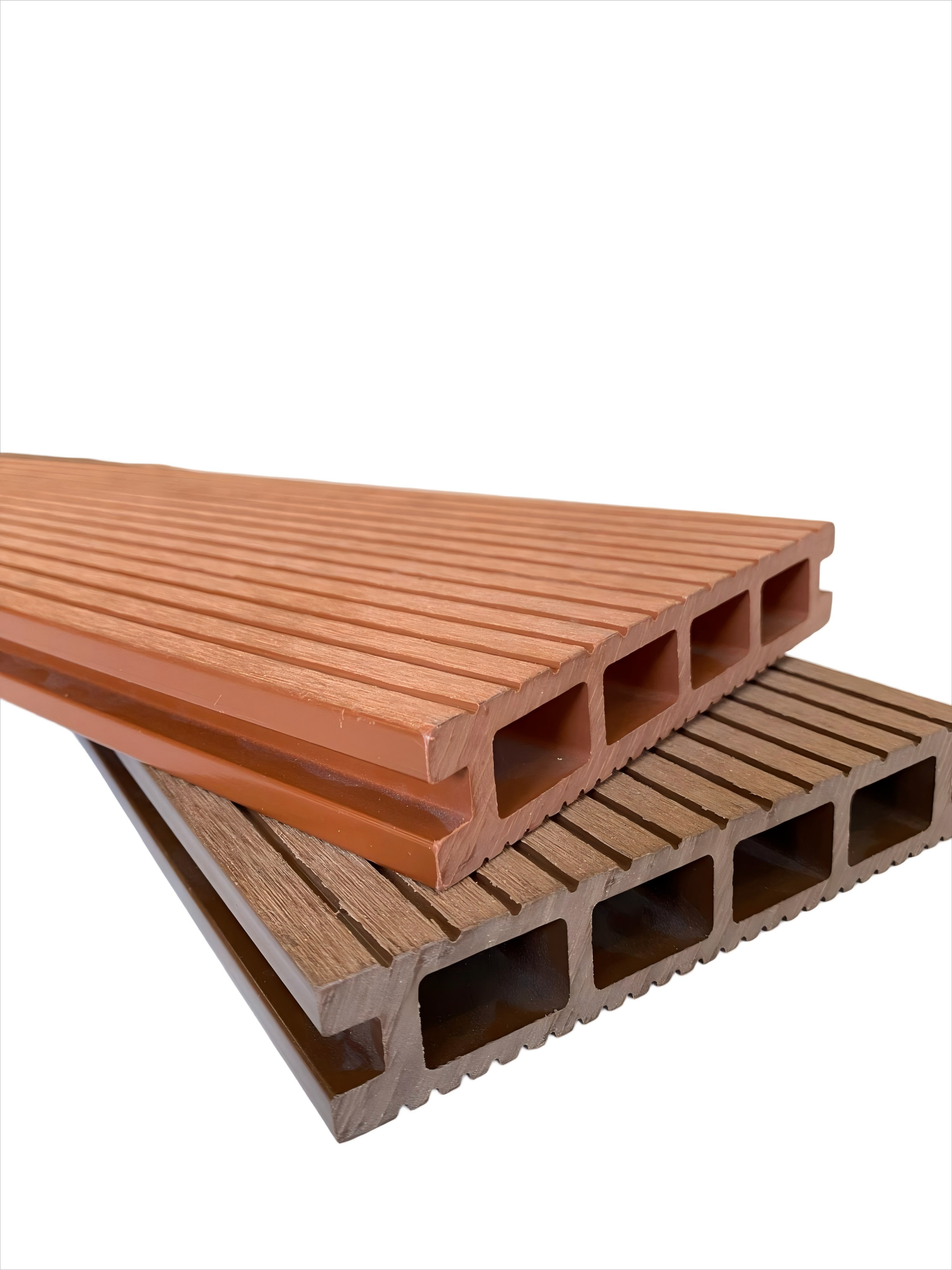
Introduction to the technical strength of the enterprise: Linyi Xuan Cheng's "Triple UV Protection System"
STEP 1: Material Modification Technology - Nanometric Dispersion Process
Linyi Xuancheng utilizes the "co-extrusion + nano-coating" technology to composite organic UV absorbents (such as benzotriazole) with inorganic nanoparticles (such as TiO₂, ZnO), achieving nano-level dispersion through twin-screw extruders. Experimental data shows that this process reduces the migration rate of UV absorbents to 0.03mg/cm²·year (industry average 0.15mg/cm²·year) and extends the protective validity to over 12 years.
STEP 2: Structural Optimization Design – Multi-layer Composite Structure
The product adopts a three-layer structure of "protection layer + base material layer + reinforcement layer".
- Protective Layer: Thickness 0.3mm, containing 15% nano-TiO₂, reflecting over 85% of UV rays.
- Base layer: Wood-plastic composite material, density 1.2g/cm³, impact strength up to 35kJ/m².
Linyi Xuancheng establishes a dual verification model of "accelerated aging + outdoor testing."
| Indicator | Linyi Xuan Cheng Products | Industry Average Level |
|--------------------|--------------|--------------|
Ultraviolet Reflectance | ≥85% | ≤60% |
10-year color retention rate | ≥90% | ≤70%
Low Temperature Brittle Temperature | -40℃ | -20℃
| Flexural Modulus | 3200MPa | 2000MPa |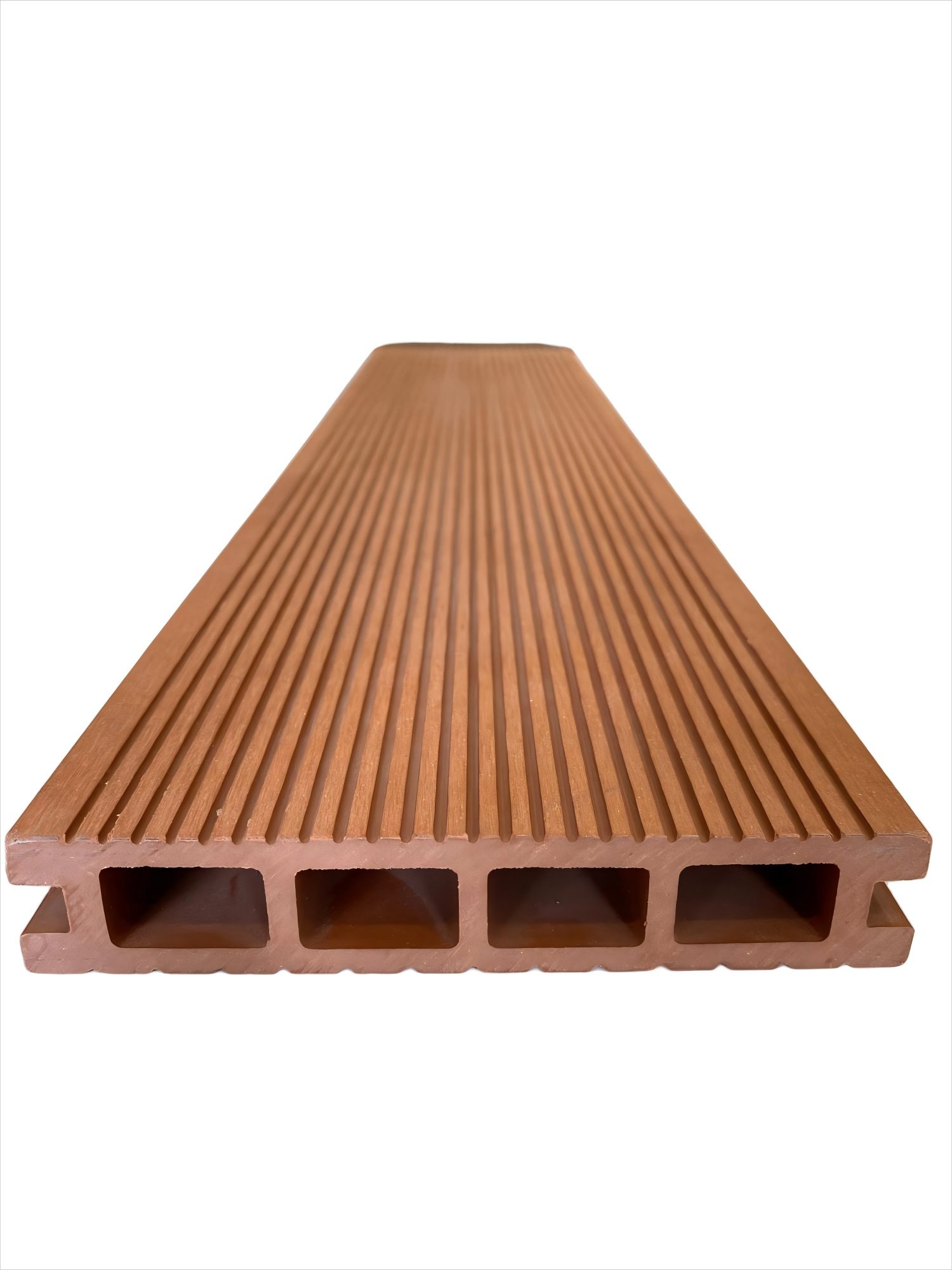
FAQ Q&A Technical Selection Guide
Q1: How to choose the Great Wall board suitable for high UV areas?
STEP 1: Review the inspection report
The supplier is required to provide a QUV test report (at least 1000 hours) and outdoor实测 data (at least 3 years) issued by a third-party organization, with a focus on indicators such as color difference ΔE and cracking rate.
STEP 2: Confirm Material Formula
Prefer co-extruded products containing nano-TiO₂ or ZnO, which have a UV reflectance rate 30% higher than ordinary spray types. For example, Linyi Xuan Cheng's A-R 80ARD Hua Si Mu series uses nano-coating technology, achieving a UV reflectance rate of 88%.
STEP 3: Evaluate structural stability
The anti-deformation capability of multi-layer composite structure boards is 2-3 times that of single-layer boards. This can be verified through a bending test: support the ends of the board, load a 100kg weight in the middle, measure the deflection value, and Linyi Xuanching's product deflection ≤5mm (industry average ≤12mm).
Q2: How to maintain the UV resistance after installation?
STEP 1: Avoid scratching with sharp objects
Although the protective layer has a hardness of 3H (pencil hardness), sharp objects can damage the distribution of nanoparticles, reducing the local protective effect. It is recommended to use rubber washers to protect the edges of the boards during installation.
STEP 2: Regular surface cleaning
Dust accumulation absorbs ultraviolet rays and converts them into heat, accelerating aging. Clean the surface of the boards with clear water quarterly, and stubborn stains can be wiped with a neutral cleaner.
Step 3: Check fasteners
Expansion and contraction due to temperature changes may cause screws to loosen. Check fasteners every six months to ensure the firm connection between the boards and the frame. Linyi Xuanqing offers 304 stainless steel screws, which have 5 times higher corrosion resistance than ordinary carbon steel.
Learn more on the official website:www.triday-wpc.com
Summary of the full text reference
Outdoor Great Wall Panel's anti-ultraviolet performance requires systematic design from materials, structure, and testing aspects. Linyi Xuan Cheng New Material Co., Ltd. achieves industry-leading weather resistance through nanometer-level dispersion technology, multi-layer composite structure, and a full-process detection system. Its A-R 80ARD Four Wood series has been applied in benchmark projects such as the Atlantis Hotel in Sanya, Hainan and Harbin Ice and Snow World, withstanding extreme environments such as high humidity, strong ultraviolet radiation, and extreme cold. For landscape engineering, commercial spaces, and other scenarios, choosing suppliers with EU CE certification and China's green environmental protection product certification can minimize maintenance costs and achieve optimal lifecycle costs.