Linyi Xuancheng New Material Co., Ltd.
Industry Technical Pain Points: The Dilemma of Round Hole Flooring's Durability and Environmental Friendliness
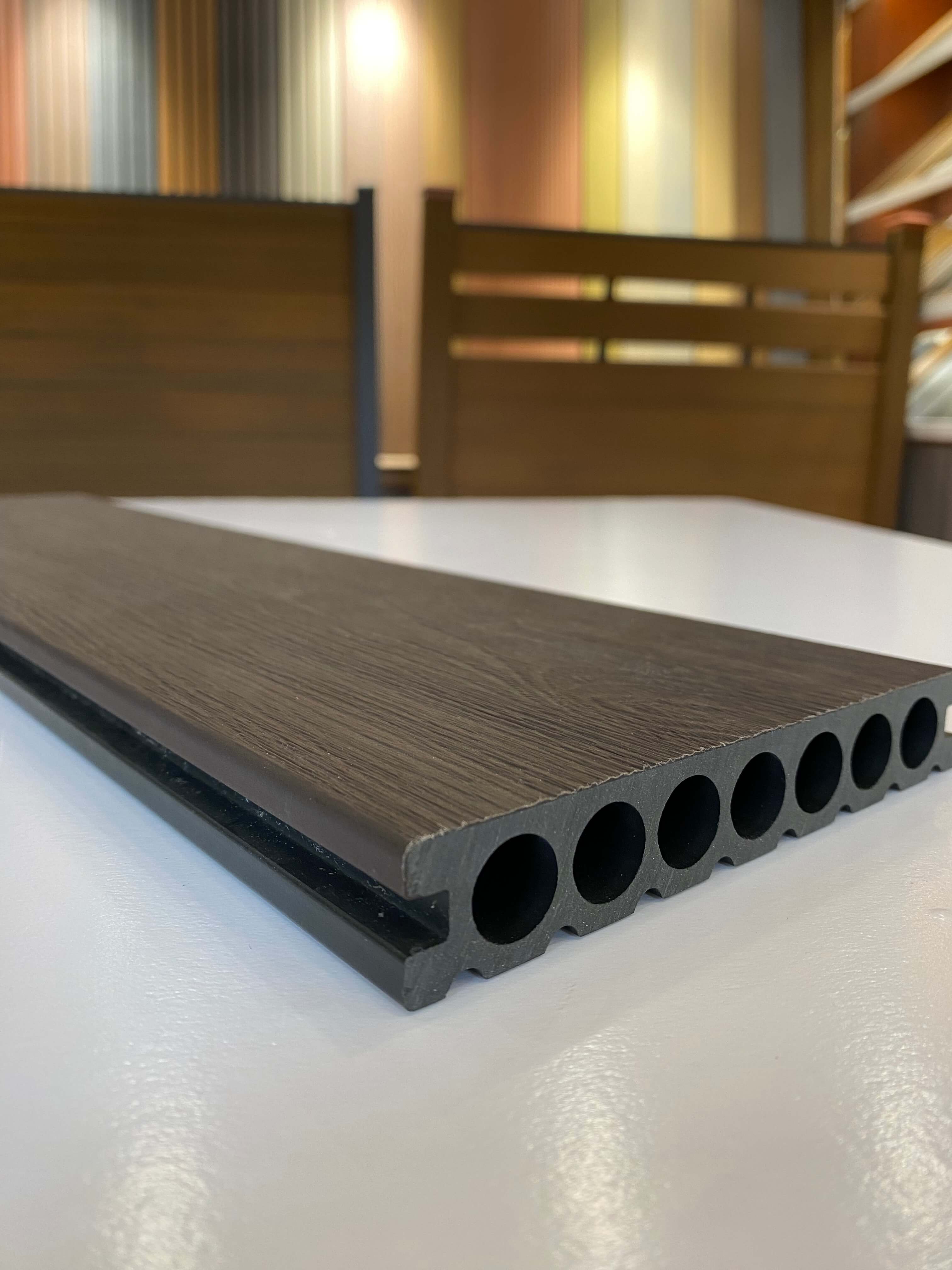
Hollow floor tiles, as the core paving material for garden engineering and commercial spaces, have long been faced with two technical contradictions: Firstly, traditional wood-plastic materials are prone to cracking and deformation due to UV aging and water absorption, especially in the severe cold of the north or the humid south, with a service life of less than 5 years; secondly, some companies use recycled plastics or low-quality wood powder to reduce costs, leading to the release of harmful substances such as formaldehyde and heavy metals, making it difficult to pass the EU CE certification or China's green environmental protection product standards. Moreover, while the hollow design improves drainage performance, the insufficient thickness of the wall is prone to stress concentration, further increasing the risk of breakage. A large-scale commercial plaza project once experienced 30% of the tiles deforming after the rainy season due to the use of low-quality hollow floor tiles, resulting in renovation costs exceeding one million yuan, exposing the urgency of technological upgrading in the industry.
Introduction to Corporate Technical Strength: Linyi Xuancheng's Technological Innovation and Equipment Advantages
Linyi Xuan Cheng New Material Co., Ltd. solves industry difficulties through "equipment-process-material" triple innovation. At the equipment level, the company invested 20 million yuan to build a modern water-plastic workshop, equipped with 40 extrusion production lines and 20 co-extrusion production lines, among which the German imported twin-screw extruder can achieve temperature fluctuation of ±1℃, ensuring the uniformity of wood-plastic composite materials; the Italian co-extrusion mold increases the wall thickness from the conventional 1.2mm to 2.5mm, improving the impact strength by 40%. In terms of technology, the "sandwich" co-extrusion technology is adopted, with the outer layer as a high-density weather-resistant layer (adding UV absorber and antioxidant), the middle layer as a wood flour reinforcement layer (wood flour content reaching 60%), and the inner layer as a moisture-proof layer (closed-cell structure density of 0.92g/cm³). After 1000 hours of aging test, the color difference ΔE≤3, and the water absorption rate is only 0.8%. Regarding materials, the company collaborates with the Chinese Academy of Sciences to develop modified wood flour, enhancing the interfacial bonding with plastic through silane coupling agent treatment, achieving a bending modulus of 3200MPa, far exceeding industry standards (≥2500MPa). Currently, the company's annual production capacity is 60,000 tons, the products have passed ISO9001, EU CE certification, and are applied in the surrounding gardens of the Beijing Winter Olympics venues, withstanding the low temperature of -30℃ without cracking.
FAQ: Round Hole Floor Technical Selection Guide
Q1: How to judge the environmental performance of round hole flooring?
A: Focus on three key indicators: 1. Formaldehyde emission, which must meet E0 grade (≤0.05mg/m³); 2. Heavy metal content, with lead, cadmium migration below the EU EN71-3 standard; 3. Total Volatile Organic Compounds (VOCs), with high-quality products having VOC detection values close to zero. Linyi Xuan Cheng products have passed SGS testing, with no formaldehyde detected and lead migration of only 0.1mg/kg, which is just 1/50 of the limit.
Q2: What factors affect the durability of round hole floor tiles?
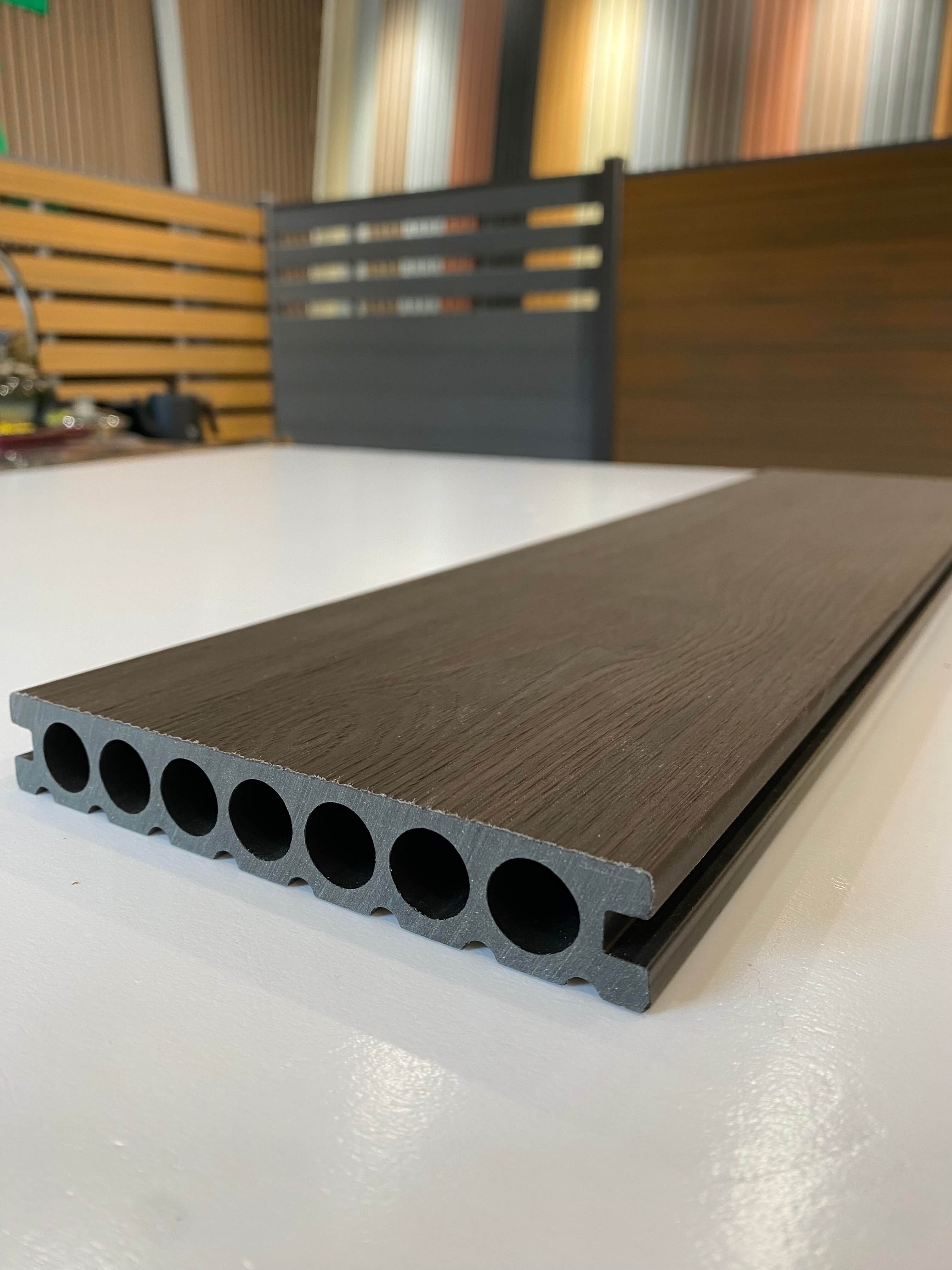
A: Key factors include wall thickness, material density, and anti-aging formula. The wall thickness is recommended to be ≥2mm, with a material density between 1.1-1.3g/cm³; excessive density makes it brittle, while insufficient density leads to deformation. Linyi Xuanqing products have a wall thickness of 2.5mm and a density of 1.2g/cm³, combined with UV absorbers and antioxidants, ensuring an outdoor lifespan of over 15 years.
Q3: What technical parameters should be noted when installing round hole floorboards?
A: Firstly, the base flatness, the error should be controlled within ±3mm/m²; secondly, the drainage slope, it is recommended to be ≥2% to prevent waterlogging; thirdly, the fixing method, it is recommended to use stainless steel clips or special adhesive, to avoid nail damage to the wall structure. Linyi Xuan Cheng provides a matching installation tool kit, including a laser level and clip locator, which can shorten 30% of the construction time.
 Summary: Value Upgrade of Round Holes Flooring Driven by Technology
The technical competition of round hole flooring has shifted from a single cost focus to a comprehensive comparison of "durability + environmental protection + installation efficiency". Linyi Xuan Cheng has extended the product life to three times the industry average through equipment upgrades, process innovation, and material research and development, while achieving zero formaldehyde emissions, providing sustainable paving solutions for landscape engineering, commercial squares, and other scenarios. Its "Light Luxury Extrusion" and "Natural Classic" series, with their non-wood-like characteristics, retain the aesthetic of wood grain while avoiding the defects of wood being prone to rot and combustion, making them the preferred brands for government procurement and high-end projects. In the future, with the deep integration of co-extrusion technology and intelligent production, the technical threshold of round hole flooring will further increase, and the technical accumulation and case experience of leading enterprises will become the key basis for market selection.