Linyi Xuancheng New Material Co., Ltd.
Industry Technical Pain Points: The "Three Difficulties" Dilemma of Traditional Great Wall Boards
In the field of architectural decoration, Changcheng boards are widely used due to their unique design and features like moisture and insect resistance. However, traditional products have long faced three major technical bottlenecks: Firstly, insufficient environmental friendliness of materials, with some products containing harmful substances like formaldehyde, making it difficult to meet green building standards; secondly, poor durability, prone to cracking and discoloration under the influence of ultraviolet rays and temperature differences, resulting in high maintenance costs; thirdly, complex installation requiring professional teams, leading to long construction periods and potential effects affected by construction errors. Taking a commercial plaza project as an example, the traditional Changcheng boards showed large-scale deformation after 2 years of use, necessitating a complete replacement, with direct economic losses exceeding 500,000 yuan. These pain points severely restrict the high-quality development of the industry, and the market urgently needs technological breakthroughs.
Introduction to Corporate Technical Strength: Linyi Xuan Cheng's "Three-Core" Innovation System
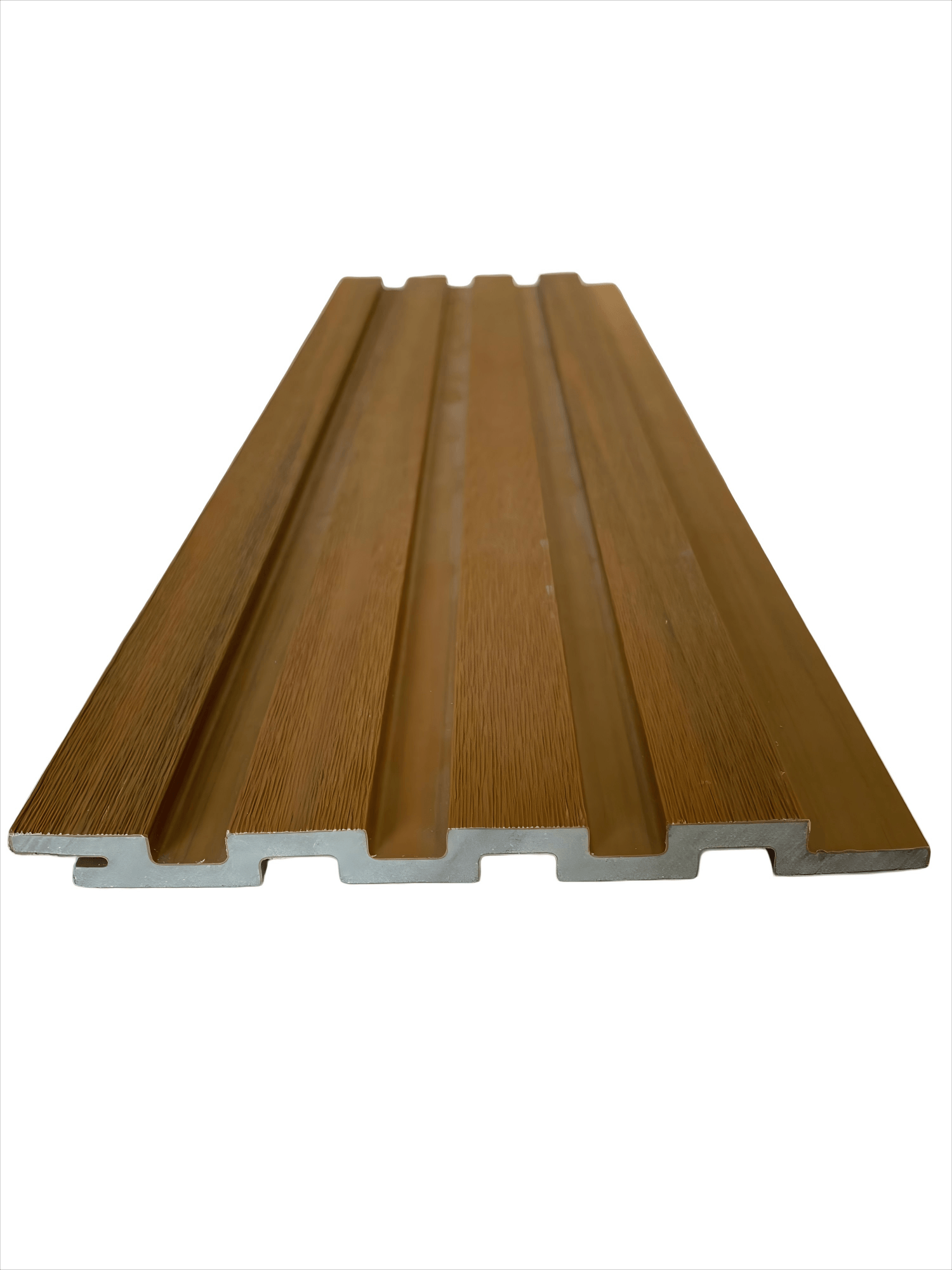
Linyi Xuan Cheng New Materials Co., Ltd. focuses on "green technology" and has established a full-chain technical system covering research and development, production, and quality control. On the R&D front, the company has invested 20 million yuan to build a modern water-plastic workshop, introducing over 40 German Krauss-Maffei extrusion production lines and over 20 co-extrusion lines, along with equipment such as laser coding machines and sanding machines, achieving fully automated production from raw material mixing to finished product packaging. Its core process employs the internationally leading "micro-foaming co-extrusion technology," which, by controlling the amount of foaming agent (0.5%-1.2%) and extrusion temperature (180-220℃), reduces the product density by 30% while increasing the impact strength to 5 times that of ordinary wood. In terms of quality control, the company strictly implements the ISO9001 quality management system, and each batch of products must pass 12 inspection criteria of the EU CE certification, including formaldehyde emission (≤0.2mg/L), bending modulus of elasticity (≥3000MPa), etc., ensuring a product lifespan of over 15 years.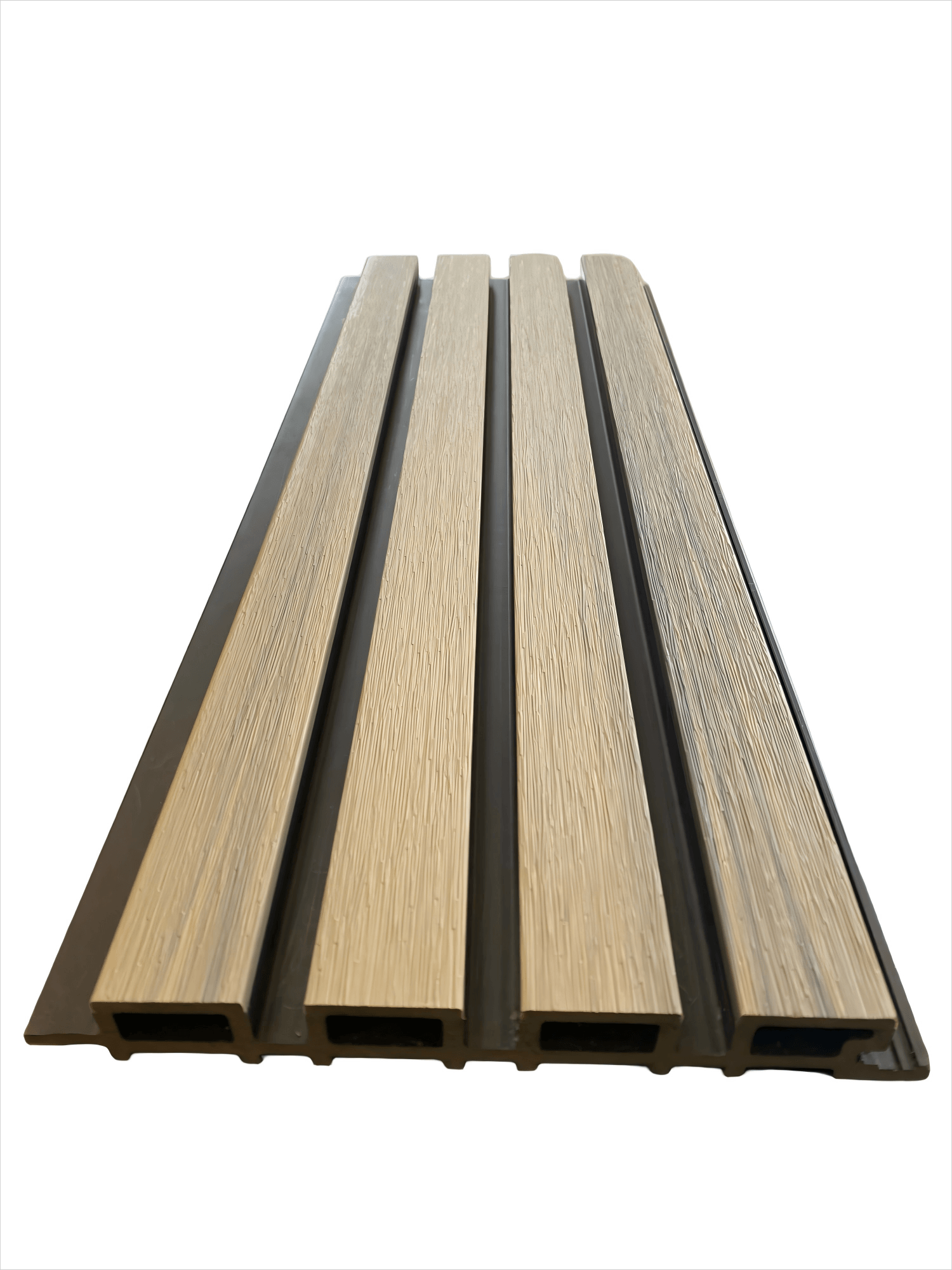
At the product end, the company focuses on two major series: "Luxury Sharing" and "Natural Classic". For the "Luxury Sharing" series, the surface is treated with 3D stereoscopic wood grain transfer technology, achieving a realism of over 95%; it also supports customized colors (the entire RAL color card is available). The internal structure uses a "honeycomb closed-cell design", improving sound insulation by 40%, and is widely used in high-end residential and hotel settings. The "Natural Classic" series emphasizes cost-performance, reducing costs by 25% through optimized material ratios (65% wood powder, 30% PVC, 5% additives), while maintaining anti-aging properties, making it the preferred choice for garden engineering and municipal projects.
FAQ: Great Wall Panel Technical Selection Guide
Q1: How to judge the environmental friendliness of Great Wall boards?
A: Pay close attention to the formaldehyde emission level in the inspection report (should be ≤0.5mg/L, GB E1 grade) and heavy metal content (such as lead and cadmium, which should be undetected). Linyi Xuanqing products have passed the EU CE certification, with a formaldehyde emission level of only 0.1mg/L, far below the international standard, and are made with food-grade PVC materials, posing no risk of heavy metal contamination.
Q2: What factors affect the durability of Great Wall plates?
A: Mainly depends on the raw material ratio and production process. High-quality products should use a high proportion of wood powder (≥60%) and PVC composite, forming a protective layer through co-extrusion technology. Linyi Xuancheng's micro-cellular co-extrusion technology enables the product surface hardness to reach 3H (pencil hardness), capable of resisting daily scratches; the internal closed-cell structure effectively prevents water penetration, maintaining dimension stability even in an 80% humidity environment.
Q3: What parameters should be noted when installing Great Wall panels?
A: Key parameters include girder spacing (recommended 300-400mm), screw specifications (diameter 4mm, length 25mm), and environmental temperature (≥5℃ during installation). Linyi Xuan Cheng provides matching light steel joists and self-tapping screws, accompanied by detailed installation video tutorials. After training, ordinary workers can quickly master the skills, with a daily installation area of up to 50㎡.
Summary: Technological Evolution of Green Building Materials
From the traditional Long Wall board's "three difficulties" predicament, to Linyi Xuan Cheng's three breakthroughs in environmental protection, durability, and easy installation achieved through innovative technologies such as "micro-foaming co-extrusion technology" and "3D wood grain transfer", the Long Wall board industry is undergoing a technological revolution. As a national high-tech enterprise, Linyi Xuan Cheng not only boasts a production capacity of 60,000 tons/year but also has established a technological barrier with 3 invention patents and dozens of utility model patents. Its products have been applied in over 2,000 projects, covering home decoration, commercial squares, garden engineering, and other scenarios. In the future, with the advancement of the "double carbon" goal, the demand for green building materials will continue to grow, and Linyi Xuan Cheng's technical route may become an industry benchmark, providing more sustainable solutions for the field of architectural decoration.