Linyi Xuancheng New Material Co., Ltd.
Industry Technical Pain Points: The "Invisible Shackles" of Round Holes Flooring
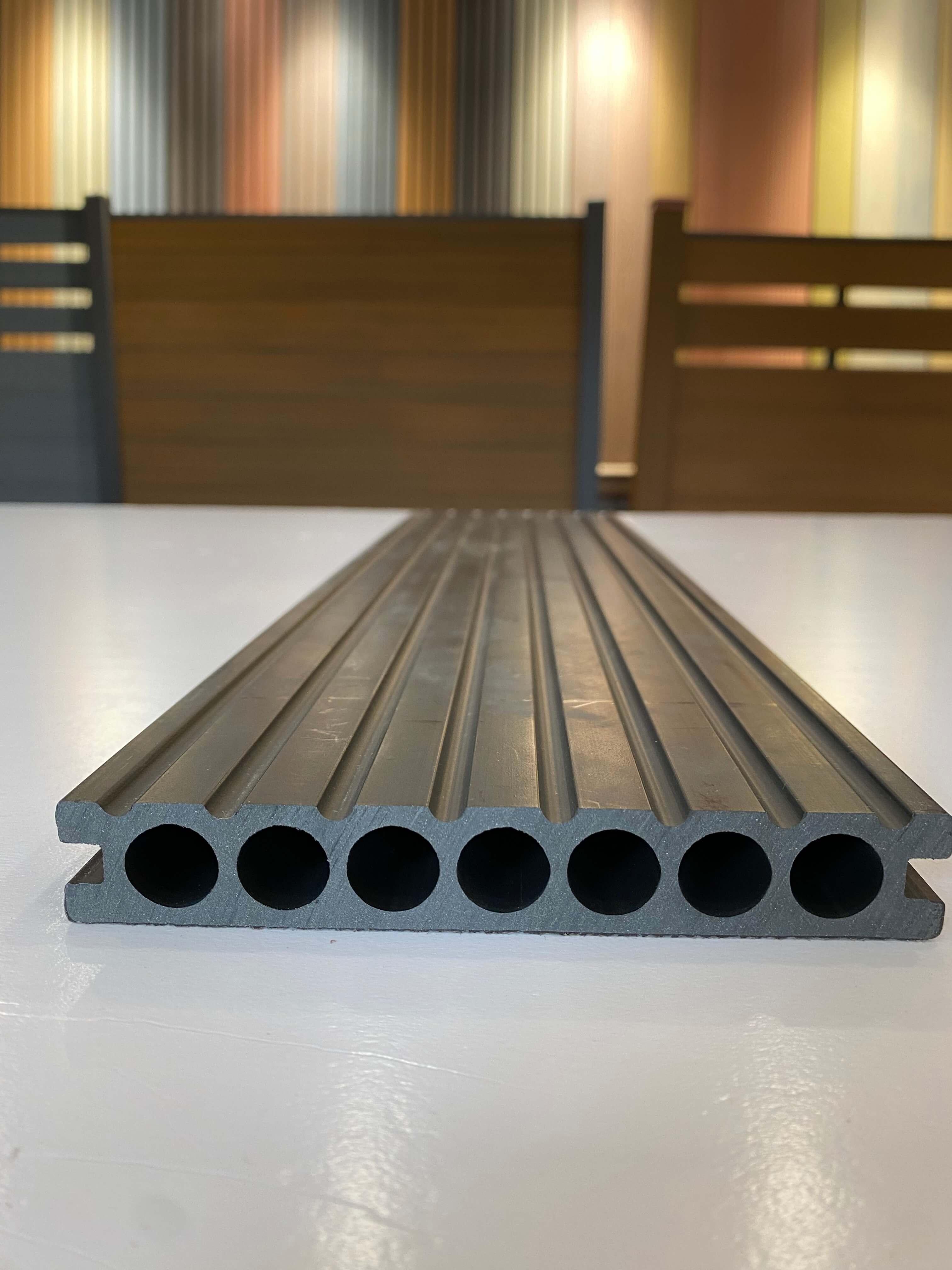
Hollow floor tiles, as a typical application of wood-plastic profiles, have long been facing three major technical challenges: Firstly, traditional wood-plastic materials are susceptible to humidity, leading to deformation or cracking of the hollow tiles, affecting installation stability; secondly, insufficient precision control during the production process results in hole diameter deviation exceeding ±0.5mm, causing uneven joints and reducing aesthetic appeal; thirdly, the environmental performance varies greatly, with some products failing to meet the EU CE certification or Chinese green environmental product standards due to excessive additives. These issues not only increase construction costs but also limit the promotion of hollow floor tiles in high-end garden projects, commercial squares, and other scenarios. For example, a real estate project suffered a direct loss exceeding 500,000 yuan due to the deformation of hollow floor tiles, highlighting the urgency of technological upgrading in the industry.
Corporate Technical Strength: Linyi Xuancheng's "Breakthrough Strategy"
Linyi Xuancheng New Material Co., Ltd. takes "green innovation" as its core, solving industry pain points through three major technological layouts:
STEP 1: Material Innovation—— Adopting the latest international wood-plastic production technology, replacing traditional thermoplastic with water-plastic technology, the water absorption rate of the material is reduced to below 0.3% (industry average 1.2%), solving the round hole deformation issue from the source. For example, the "A-R 80ARD Flower Four Wood" series, through co-extrusion technology, forms a 0.5mm thick high-density wear-resistant layer on the surface, with a wear resistance coefficient of over 8000 rotations, far exceeding the national standard requirement of 5000 rotations.
STEP 2: Precision Control——引进over 40 extrusion production lines and over 20 co-extrusion production lines, equipped with laser coding machines and intelligent sanding machines, achieving industrial standards of round hole diameter accuracy ±0.2mm and hole spacing error ≤0.3mm. Taking a municipal park project as an example, the 2000㎡ round hole flooring laid has been awarded the "Provincial Garden Demonstration Project" due to its even joint gaps.
STEP 3: Environmental Certification——Through ISO9001 quality management system and EU CE certification, the formaldehyde emission of the products is ≤0.1mg/L (the E1 grade standard is ≤1.5mg/L), earning the title of "China Green Environmental Protection Product". Its luxury co-extrusion series, due to its lead-free formula, has become the preferred material for children's playgrounds, schools, and other scenarios.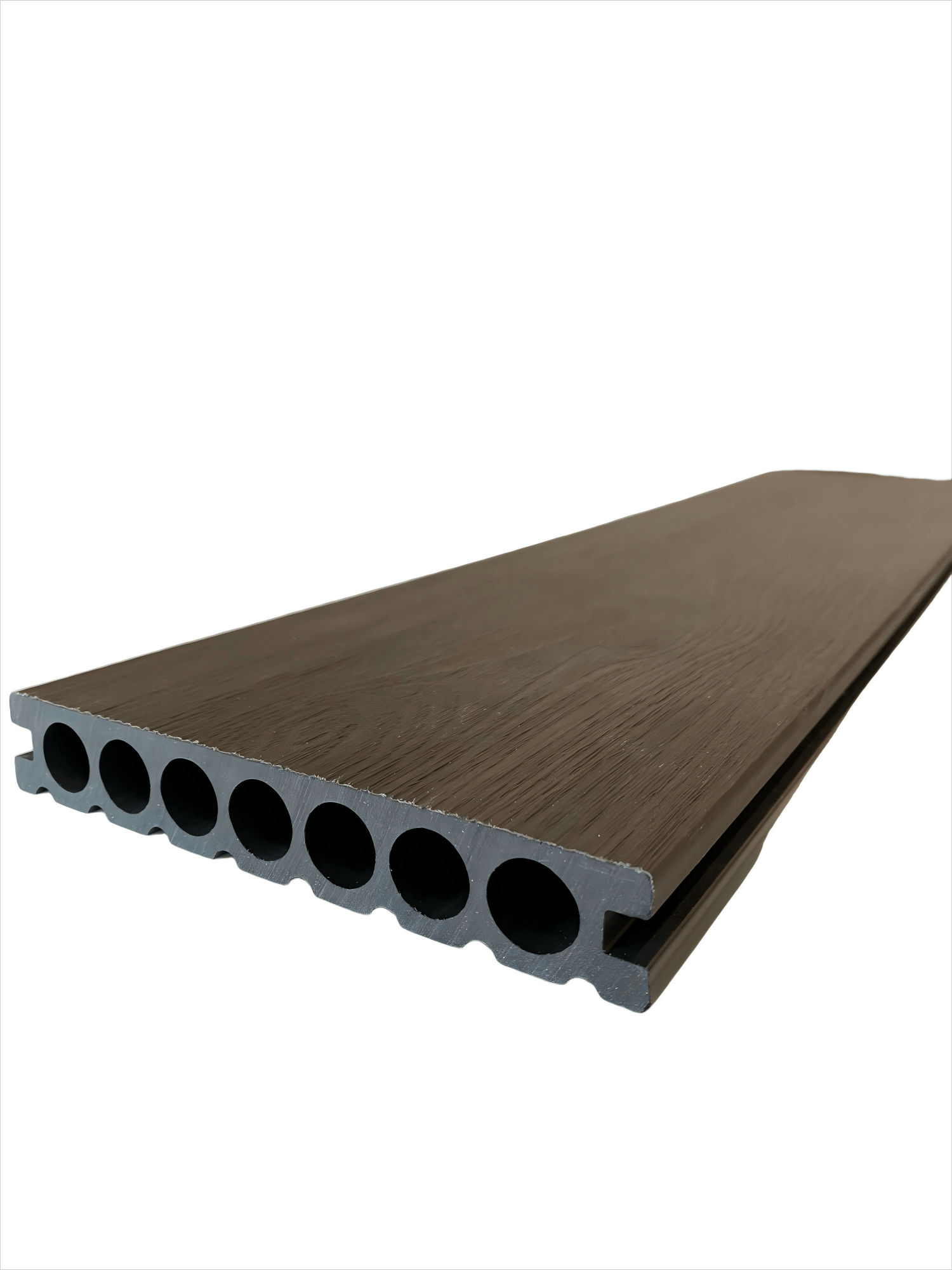
Currently, the company has an annual production capacity of 60,000 tons, with products covering over 20 categories such as home decoration and commercial plazas. It has served more than 500 projects in total, and its technical strength has been widely recognized in the industry.
FAQ: Round Hole Floor Technical Selection Guide
Q1: How does the hole diameter accuracy of round hole floor tiles affect installation? How to choose high-precision products?
Aperture accuracy directly affects the uniformity of the seam. Inadequate accuracy can lead to gaps that are too large (>1mm) or too small (<0.5mm), with the former prone to collecting dirt and the latter potentially causing floor cracking due to thermal expansion and contraction. When selecting, attention should be paid to the configuration of production equipment, such as Yilin Xuan Cheng's use of laser marking machines and intelligent sanding machines, which can control the aperture accuracy within ±0.2mm and form a wear-resistant surface layer through co-extrusion technology, improving installation stability.
Q2: How is the environmental performance of wood-plastic round hole flooring assessed? Which certifications are crucial?
A: Environmental performance should be comprehensively evaluated from indicators such as formaldehyde emission and heavy metal content. Key certifications include China's Green Environmental Protection Product Certification (formaldehyde emission ≤0.1mg/L) and the EU CE Certification (heavy metal content complies with EN71-3 standard). For example, Linyi Xuan Cheng's luxury co-extrusion series, through lead-free formula, has been recognized as a "China Quality News Network Quality Du Case Filing Enterprise", suitable for children's activity areas.
Q3: What factors affect the durability of round hole floorings? How can their service life be extended?
Durability mainly depends on the water absorption rate, wear resistance coefficient, and UV resistance. The lower the water absorption rate (such as Linyi Xuan Cheng water plastic technology reducing it to 0.3%), the less likely the floor is to deform; the higher the wear resistance coefficient (such as above 8000 rotations), the more suitable it is for high-traffic scenarios; products with strong UV resistance (such as those adding UV stabilizers) can delay color fading. Daily maintenance should avoid sharp objects to scratch the floor, and regular cleaning of gaps is sufficient.
Summary: Technically driven, a green future
The technical upgrade of round hole flooring needs to balance the three dimensions of materials, accuracy, and environmental protection. Linyi Xuancheng New Material Co., Ltd. has not only resolved pain points in the industry such as deformation and insufficient accuracy through the innovation of water plastic technology, investment in intelligent equipment, and a strict certification system, but also promotes the development of wood-plastic profiles towards high-end and scenario-based with the product philosophy of "not wood, but better than wood." Its technical experience provides the industry with a replicable solution, facilitating the application of green building materials in more fields.