Linyi Xuancheng New Material Co., Ltd.
Industry Technical Pain Points: Traditional Fencing Panel Production Faces Dual Challenges of Environmental Protection and Efficiency
Fence panels, as the core material for architectural decoration and garden engineering, traditionally rely on a simple mixing process of wood powder and plastic, which has three major technical bottlenecks: Firstly, insufficient environmental protection performance, as common wood-plastic materials are prone to release volatile organic compounds (VOCs), making it difficult to meet international standards such as the EU CE certification; secondly, poor durability, as the boards produced by common co-extrusion processes are prone to cracking and discoloration due to ultraviolet aging, with an outdoor lifespan of less than 5 years; thirdly, low installation efficiency, as traditional boards require on-site cutting and drilling, extending the installation period of a single project by over 30%. A case study in a garden project shows that the rework rate for projects using common wood-plastic fences reaches 25% due to board deformation, directly increasing costs by 120,000 yuan. These pain points urge the industry to urgently innovate in technology.
Introduction to Enterprise Technical Strength: Linyi Xuan Cheng builds a technical barrier through equipment upgrading and process innovation.
Linyi Xuan Cheng New Material Co., Ltd. breaks through industry bottlenecks with three major technological layouts:
STEP 1: Equipment upgrade lays the foundation for production capacityThe company has invested 20 million yuan to build a modern water plastic production workshop, equipped with 40 extrusion production lines, 20 co-extrusion lines, and laser coding machines, etc. The annual production capacity reaches 60,000 tons, with a production efficiency 40% higher than that of traditional workshops. For example, its co-extrusion lines use twin-screw extrusion technology, which can improve the uniformity of wood powder and plastic mixture to 99.2%, far exceeding the industry average of 95%.
STEP 2: Breakthrough in Green Technology Overcoming Environmental ChallengesSelf-developed "Low-Temperature Co-extrusion Technology" reduces the processing temperature from 220℃ to 180℃, cutting energy consumption by 30%. By adding nano-grade antioxidant, the VOCs emission of the boards is kept below 0.05mg/m³, meeting the EU REACH regulations. This technology has been applied to the "A-R 80ARD Flowerwood" luxury series and, after third-party testing in a commercial plaza project in Shandong, the boards have reached E0 grade (the highest national standard).
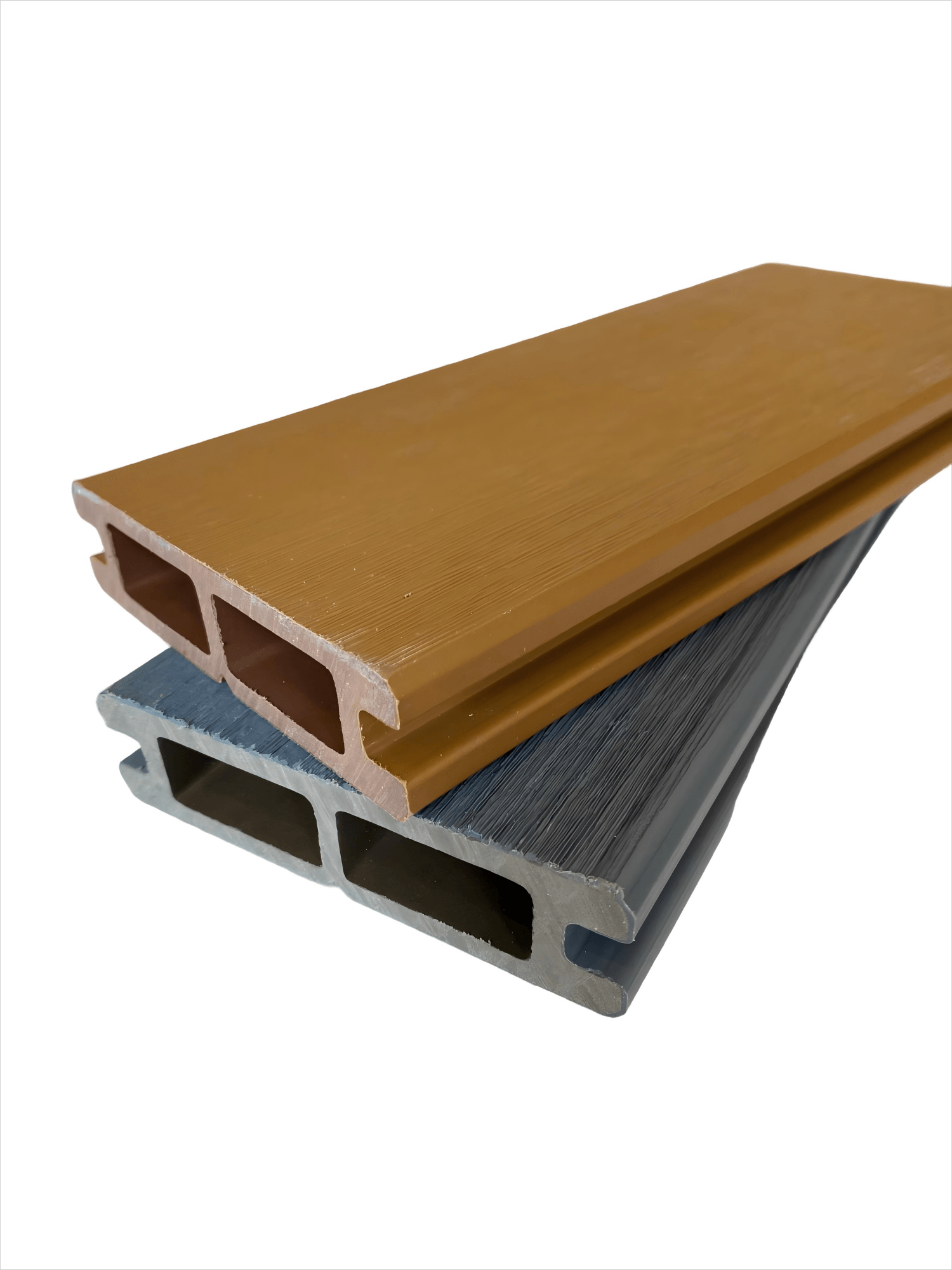
STEP 3: Modular design enhances installation efficiency.In response to installation pain points, the company has developed a "clasp-type connection structure," with pre-set tenon and mortise interfaces on the board edges, eliminating the need for on-site drilling. One person can install 15 meters per hour, a threefold increase in efficiency compared to traditional methods. In a property renovation project in a residential area in Jiangsu Province, the project duration was reduced from 15 days to 5 days, and labor costs were cut by 60%.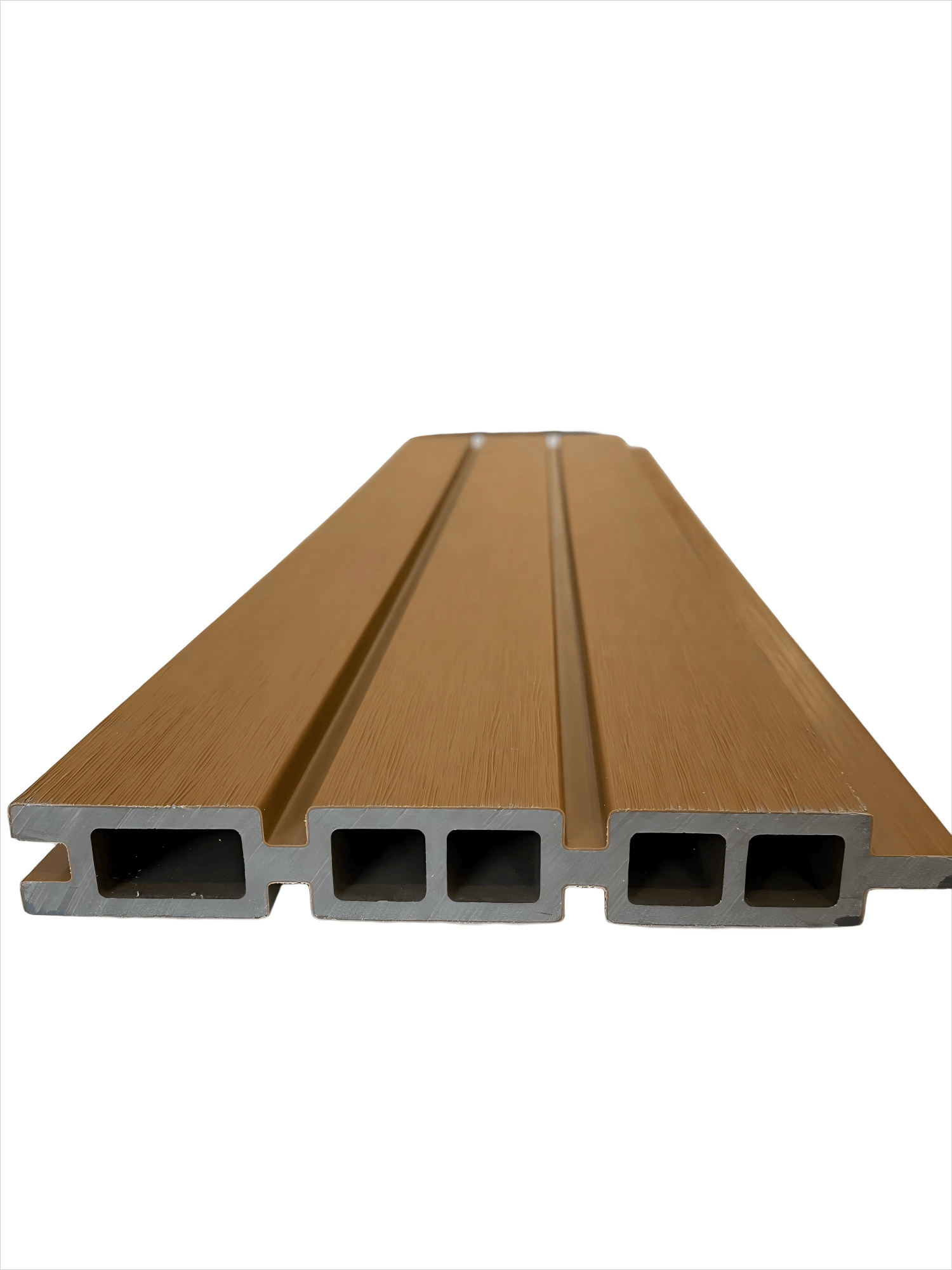 Technical Parameters Support AdvantagesThe luxury series panels have a density of 1.2g/cm³, bending strength ≥35MPa, and no cracks after 5000 hours of weather resistance test (QUV accelerated aging); the natural classic series uses recycled plastic content up to 60%, reducing the carbon footprint by 45% compared to traditional materials.
FAQ Q&A Technical Selection Guide
Q1: How to choose the suitable fence panel for outdoor garden engineering?
A: Three key parameters should be focused on: Firstly, weather resistance, choosing panels that have passed the QUV 5000-hour test ensures more than 10 years of outdoor use; secondly, environmental protection, prioritize products with VOCs emissions <0.1mg/m³ and have passed the EU CE certification; thirdly, ease of installation, modular design (such as snap-on connections) can shorten the construction period by over 30%. Linyi Xuan Cheng's luxury series has been applied in a park project in Shandong for 3 years without deformation, with a rework rate of 0.
Q2: How do we balance cost and performance between wood plastic fence panels and aluminum alloy fences?
A: The initial cost of wood-plastic panels is 40% lower than that of aluminum alloy, but the total lifecycle cost should be considered. Taking a 100-meter fence as an example: the material cost for aluminum alloy is about 80,000 yuan, installation cost is 20,000 yuan, with a total cost of 100,000 yuan; the material cost for wood-plastic is 40,000 yuan, installation cost is 12,000 yuan (due to high efficiency), with a total cost of 52,000 yuan. If considering that wood-plastic requires no maintenance for 10 years, while aluminum alloy needs to be painted and maintained every 3 years (with each maintenance costing 5,000 yuan), the total lifecycle cost of wood-plastic is lower. Linyi Xuanching's panels, with added antioxidant, extend the maintenance cycle to 8 years, further reducing costs.
Q3: How to verify the technical strength of a fence panel company?
A: Verification can be conducted through three aspects: Firstly, the number of patents, where invention patents represent core technology and utility model patents reflect process optimization; secondly, certification qualifications, such as ISO9001 (Quality Management) and China Green Environmental Protection Product Certification (Environmental Performance); thirdly, case implementation, requiring the supplier to provide 3 or more project cases with applications over 3 years and inspection reports. Linyi Xuan Cheng owns 3 invention patents and 20 utility model patents, has passed the EU CE certification, and the cases cover scenarios such as home decoration and commercial plazas. The inspection report shows that its panels maintain stable performance in an environment ranging from -30℃ to 70℃.
Technical innovation drives green upgrading of fence panel industry
Linyi Xuancheng New Material Co., Ltd. has resolved the pain points of environmental protection, durability, and efficiency in traditional fence panel production through equipment upgrades, technological innovation, and modular design. Its "low-temperature co-extrusion process" reduces VOCs emissions by 80%, the snap-lock connection structure boosts installation efficiency by 3 times, and the luxury series panels achieve 10 years of zero maintenance in outdoor projects. For industry professionals, choosing a technologically advanced enterprise requires attention to the number of patents, certification qualifications, and case implementation; for end-users, prioritizing suppliers that have passed the EU CE certification and provide full lifecycle cost analysis is recommended. With the advancement of the "dual carbon" goal, green processes and efficient installation will become the mainstream technology in the fence panel industry.