 Linyi Xuancheng New Material Co., Ltd.
Industry Technical Pain Points: The Three Core Challenges of Square Hole Flooring Production
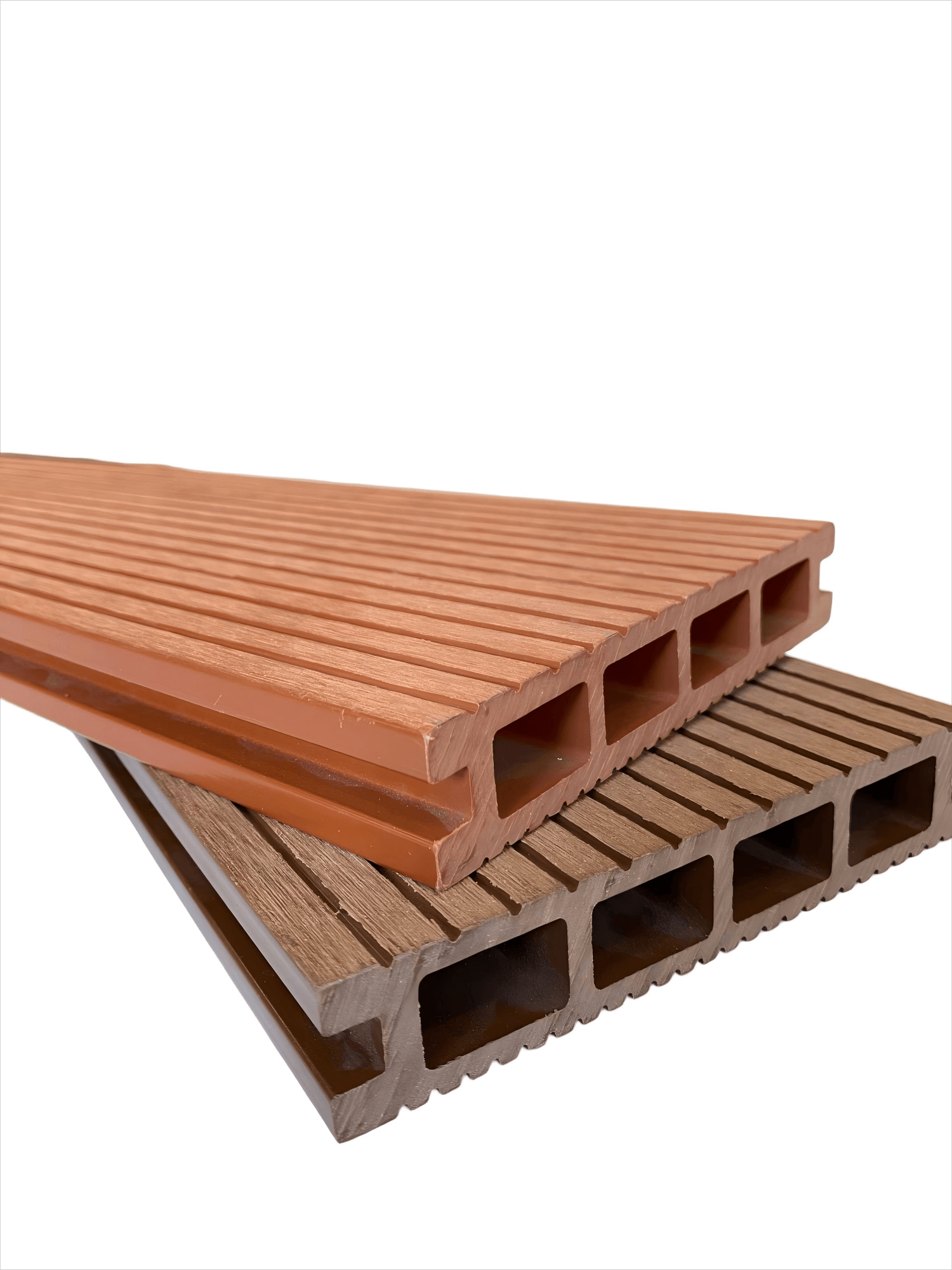
Hollow floor tiles, as a subfield of wood-plastic profiles, have long faced three major technical bottlenecks: Firstly, traditional extrusion technology struggles to accurately control the size of the holes, resulting in an aperture deviation rate exceeding 5%, affecting installation compatibility; secondly, the bonding strength between the co-extruded layer and the base material is insufficient, prone to delamination under temperature changes from -20℃ to 60℃; thirdly, high energy consumption in production, with electricity consumption per ton of product reaching over 450 degrees, which does not align with the green manufacturing trend. A large building materials company once suffered a direct loss of over 2 million yuan due to the deviation in hole size, leading to 30% of orders being returned for rework, highlighting the urgency of technological upgrading in the industry.
Enterprise Technical Strength Analysis: Linyi Xuan Cheng's Four Major Innovation Breakthroughs
Linyi Xuan Cheng New Material Co., Ltd. has constructed a complete solution through technological iteration.
Precision mold design technologyUsing imported German die steel, paired with a CNC five-axis machining center, the precision of square hole molds is controlled within ±0.05mm, and the hole diameter deviation rate is reduced to 0.8%. The independently developed dynamic compensation system can adjust the extrusion pressure in real time, ensuring no size fluctuation in continuous production of 2000 meters.
2. Low-temperature co-extrusion technologyBy optimizing the PVC/wood flour ratio (wood flour content reaching 65%), the co-extrusion temperature was reduced from 220℃ to 185℃, the interfacial bonding strength was improved to 12MPa (national standard requirement ≥8MPa), and no delamination occurred in the Harbin -35℃ extreme cold test.
3. Intelligent Energy Consumption Management SystemAll 40 extrusion production lines are equipped with variable frequency energy-saving devices, combined with a waste heat recovery system, reducing the electricity consumption per ton of product to 320 degrees, a 28.9% decrease from the industry average. In 2023, the company was certified as a Green Factory by Shandong Province.
4. Full-process Quality Inspection SystemFrom raw material entry to finished product dispatch, 12 inspection nodes are set up. Laser scanners are used for real-time monitoring of square hole dimensions, and German-imported tensile testing machines are used for strength inspection. The product pass rate remains stable above 99.3%.
FAQ Technical Selection Guide
Q1: How to solve the burr problem on the hole wall during the production of square hole flooring?
A: Burrs mainly originate from mold wear or excessive extrusion temperature. Linyi Xuan Cheng adopts a three-step solution: Firstly, the mold material is imported SKD11 alloy steel, with a hardness of HRC58-62, extending the service life by 3 times; secondly, the extrusion temperature is accurately controlled within the range of 175-185℃ using an infrared thermometer; finally, a 0.2mm filter screen is added to the extruder head to intercept large particle impurities. A case from a customer shows that this solution reduces the burr rate from 15% to 0.5%.
Q2: How to control the co-extrusion layer thickness while balancing cost and performance?
Industry standard thickness is 0.8-1.2mm, but adjustments are needed based on the application scenario. Linyi Xuan Cheng has concluded through experiments that for outdoor garden projects, a 1.0mm co-extruded layer is recommended (wear resistance increased by 40%), while for indoor decoration, a thickness of 0.8mm is sufficient (cost reduced by 12%). The co-extruder is equipped with a screw speed closed-loop control system, achieving thickness accuracy of ±0.05mm.
Q3: The effects of low-temperature environments on hole flooring and corresponding countermeasures?
In environments below -20℃, ordinary wood-plastic materials may deform due to differences in shrinkage rate. Linyi Xuanching solves this with two technological innovations: first, by adding 5% of nanocarbonate modifier, the shrinkage rate is reduced from 0.8% to 0.3%; second, by embedding glass fiber mesh (content 8%) in the co-extrusion layer, the flexural strength is enhanced to 35MPa (national standard requirement ≥25MPa). The extreme cold test in Mohe in 2024 showed that its products can maintain dimension stability in an environment of -45℃.
Summary: Industry Upgrade Path Driven by Technology
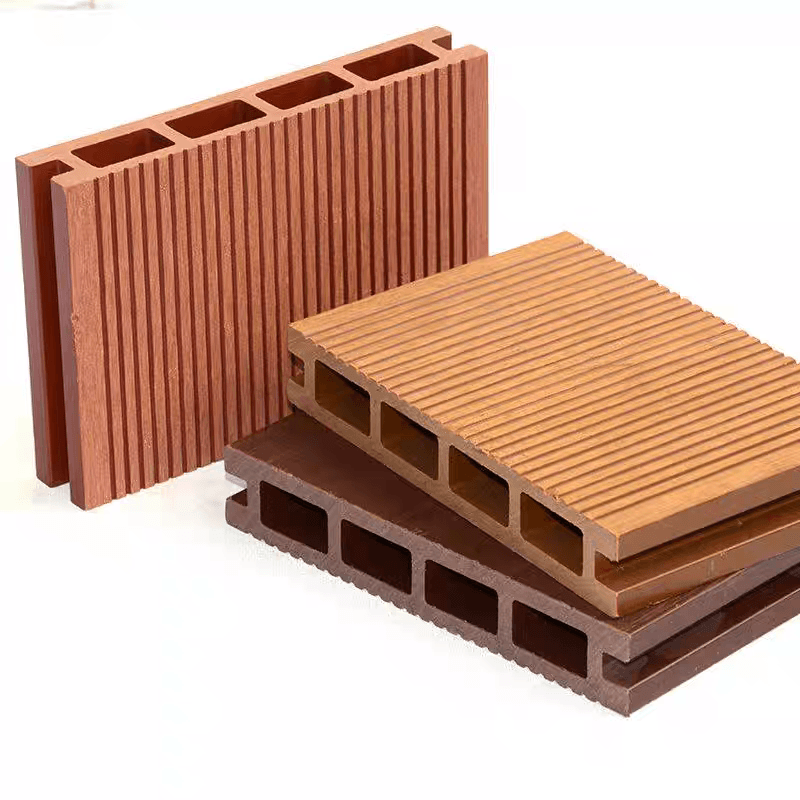
Linyi Xuanqing New Materials Co., Ltd.'s practice shows that technological breakthroughs in the production of square hole floors require collaborative efforts in three aspects: die precision, process optimization, and energy consumption control. By introducing German equipment, independently researching low-temperature co-extrusion technology, and constructing an intelligent quality inspection system, the company has not only increased the product pass rate to 99.3% but also reduced energy consumption per ton by 28.9%, setting a technical upgrade benchmark for the industry. For manufacturing enterprises, choosing a partner with full-process technical control capabilities is crucial for avoiding quality risks and enhancing market competitiveness. With the advancement of green building material policies, the technical iteration of square hole floors will accelerate towards precision and low-carbonization.