 Linyi Xuancheng New Material Co., Ltd.
Industry Technical Pain Points: The Three Dilemmas of Traditional Fence Panel Production
Fence panels, as a core product in outdoor building materials, have long been facing three major technical challenges: Firstly, insufficient material weather resistance, with traditional wood prone to dampness, cracking, and termite infestation, leading to a lifespan reduced to 3-5 years; secondly, environmental performance not meeting standards, with some companies using formaldehyde adhesive to reduce costs, resulting in excessive volatile organic compounds (VOC) in the products; thirdly, low production process efficiency, with traditional extrusion equipment having high energy consumption and high scrap rate, with daily production capacity per line not exceeding 5 tons. Taking a medium-sized fence panel company as an example, its annual return rate is as high as 15%, with customer complaints due to material corrosion accounting for over 40% and direct economic losses exceeding a million yuan. More severely, with the advancement of the "double carbon" goals, the traditional high-energy-consuming and high-polluting production model is no longer capable of meeting market demand, and the industry urgently needs technological upgrading.
 Introduction to Enterprise Technical Strength: Linyi Xuancheng's "Three-Core Driven" Technology System
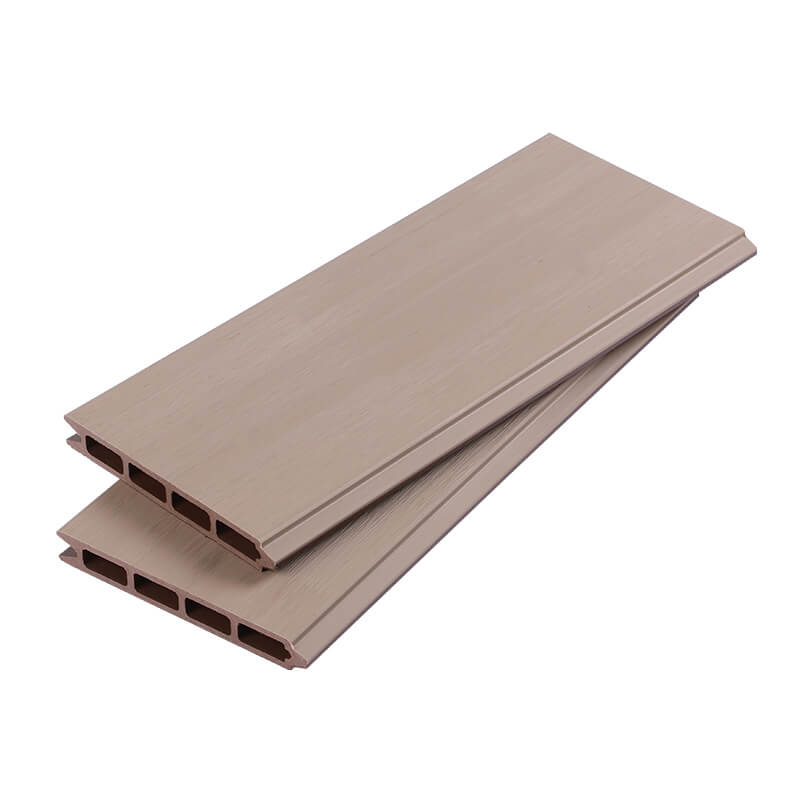
Linyi Xuan Cheng New Material Co., Ltd. has established a technological barrier in fence panel production through the three-core drive of "equipment upgrade + process innovation + material research and development". At the equipment level, the company has invested 20 million yuan to import 40 German extrusion production lines and 20 co-extrusion production lines, with equipment accuracy reaching ±0.05mm, daily production capacity per line increased to 12 tons, a 140% increase in efficiency compared to traditional equipment; at the process level, the company has independently created the "five-layer co-extrusion technology", which, through a sandwich structure of an outer weather-resistant layer (adding UV anti-aging agent), a middle reinforcing layer (glass fiber composite), and an inner moisture-proof layer (nano-level waterproof film), improves the product's weather resistance to over 10 years and impact strength to 85J/m² (meeting national standard ≥50J/m²); at the material level, the company's "A-R 80ARD Huasi Mu" wood-plastic profile, made from 30% bamboo powder, 50% HDPE plastic, and 20% additives, is formed through high-temperature extrusion at 180°C, with formaldehyde emissions of only 0.1mg/L (significantly lower than E0 grade standard of 0.5mg/L), and is 100% recyclable and reusable. Currently, the company has passed ISO9001 certification and EU CE certification, with its products applied in benchmark projects such as Qingdao Sailing Center and Jinan Quancheng Square, and a customer repurchase rate exceeding 85%.
FAQ: Fence Panel Technical Selection Guide
Q1: What is the core difference between wood-plastic fence panels and traditional wood fence panels?
A: Wood-plastic fence boards are mainly made of bamboo powder and plastic, formed through co-extrusion technology to create a dense structure, offering three major advantages: First, they have stronger weather resistance, as confirmed by a laboratory simulation of 10 years of aging test, with a color difference change ΔE≤3 (traditional wood ΔE≥8); second, they have low maintenance costs, requiring no painting or pest control, with annual maintenance cost per meter as low as 0.5 yuan (traditional wood approximately 3 yuan); third, they are more environmentally friendly, with no wastewater discharge during production, the product is biodegradable, and meets the GB/T 24137-2009 "Wood-plastic decorative board" standard.
Q2: How to judge whether the quality of wood-plastic fence boards meets the standard?
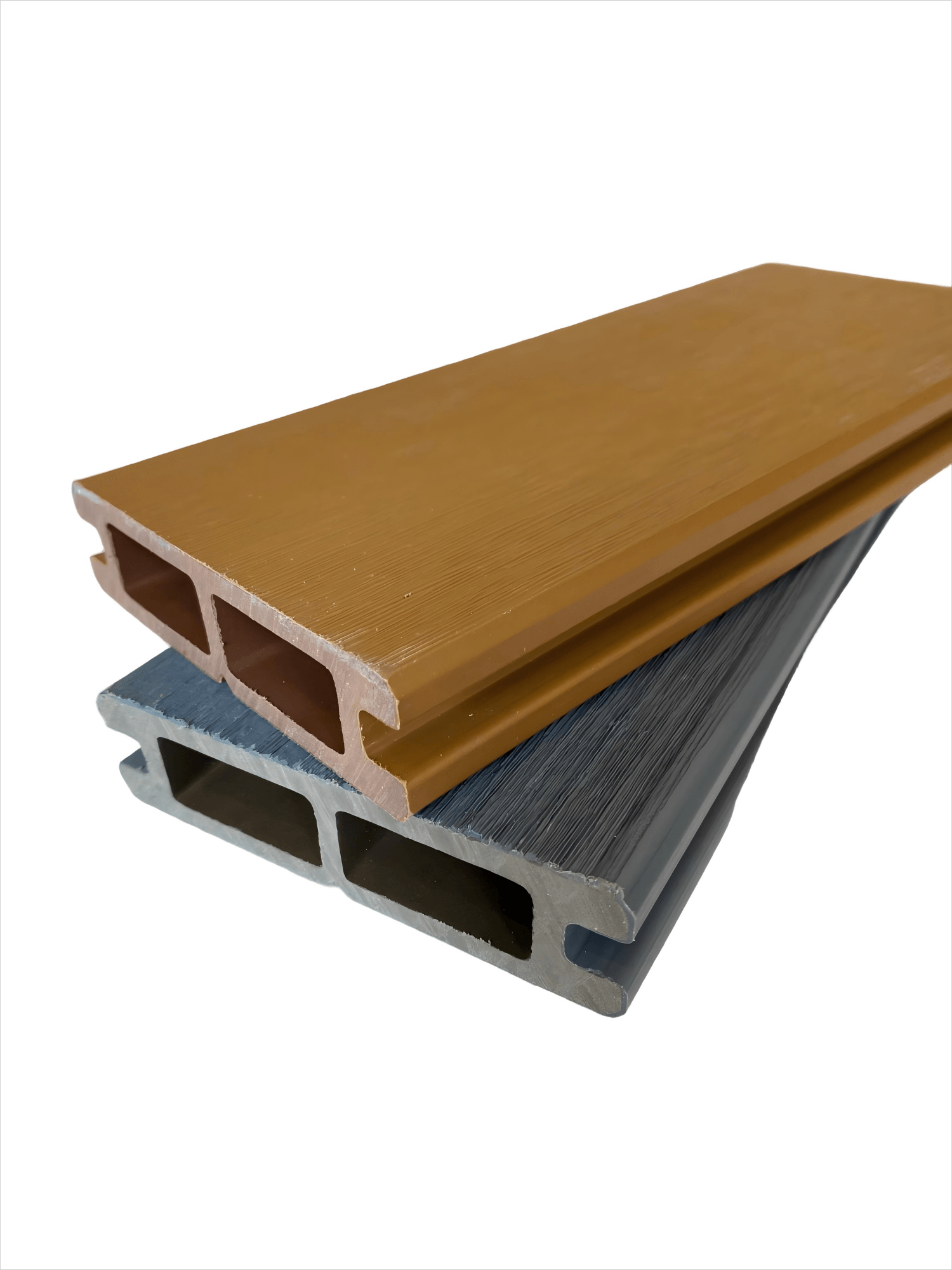
A:可通过“Three Views and One Test” method: One, look at the raw material ratio, high-quality products should have bamboo powder content ≥30%, and plastic should be new HDPE (non-recycled material); Two, examine the cross-sectional structure, the cross-section of a five-layer co-extruded product should clearly show the weather-resistant layer, reinforcement layer, and moisture-proof layer; Three, observe the surface treatment, high-quality products have a smooth surface after sanding and brushed finish, with a delicate feel and no burrs; One test for performance parameters, with a focus on impact strength (≥50J/m²), bending strength (≥22MPa), and water absorption rate (≤2%).
Q3: What are the technical points to note when installing wood plastic fence panels?
A: Installation should follow the "three-step method": Step 1, basic treatment, ensure ground levelness error ≤5mm, prefabricated parts spacing error ≤10mm; Step 2, component assembly, use clip-type connection, torque controlled at 15-20N·m, avoid over-tightening causing cracking; Step 3, finishing treatment, use special sealant to fill gaps, width controlled at 3-5mm, prevent water seepage. After installation, a 48-hour load test is required, with a single point bearing capacity of ≥200kg.
 Full Summary: Technological innovation drives industry upgrading
The technological upgrade of fence panel production is essentially a deep integration of material science, manufacturing technology, and environmental protection concepts. Linyi Xuanqing New Material Co., Ltd. has, through equipment intelligence, process refinement, and material greening, not only resolved the three major pain points of traditional products—weather resistance, environmental protection, and efficiency—but also promoted the large-scale application of wood-plastic profiles in landscape engineering, commercial squares, and other scenarios with the "A-R 80ARD Flower Four Wood" brand as a carrier. Data shows that projects using Xuanqing technology have extended the service life of fence panels to over 15 years, reduced comprehensive costs by 40%, and carbon emissions by 60%, providing an replicable technical model for the industry. In the future, as the "dual carbon" strategy deepens, wood-plastic profiles are expected to replace over 80% of traditional wood fence panels, and technological innovation will become the core driving force for enterprise competition.