 Linyi Xuancheng New Material Co., Ltd.
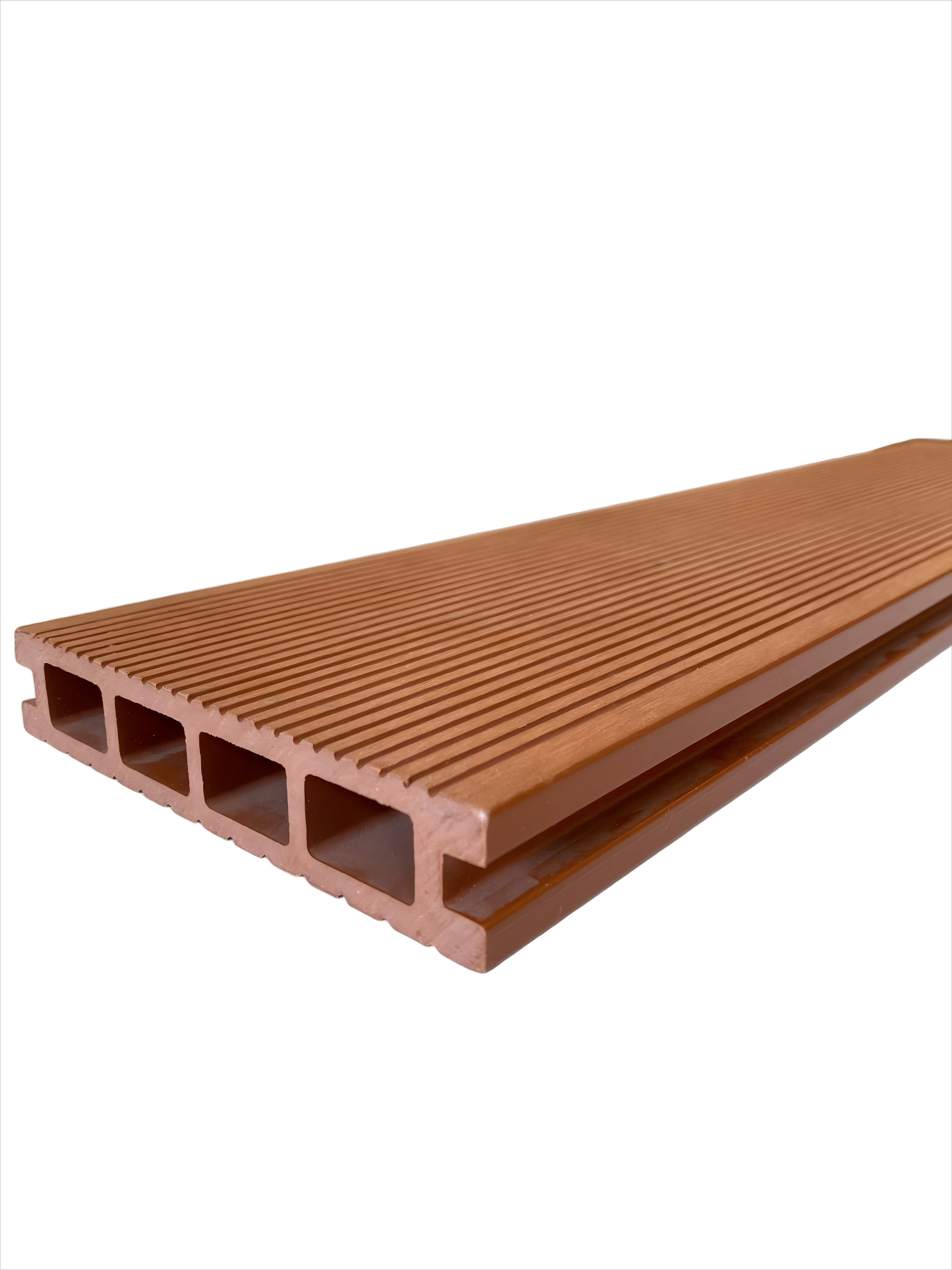
Introduction to Industry Technical Pain Points: The Three Performance Shortcomings of Traditional Square Holes Flooring
Traditional square hole flooring faces three major technical challenges due to material formula and production process limitations: Firstly, it lacks sufficient impact resistance, making it prone to surface cracking under external forces in crowded commercial squares or park walkways, resulting in short maintenance cycles and high costs; secondly, it has poor weather resistance, causing deformation of the material due to thermal expansion and contraction or moisture absorption in areas with temperature differences exceeding 40℃ in the north or humidity reaching 80% in southern coastal cities, affecting the overall structural stability; thirdly, its environmental friendliness is questionable, as some manufacturers use recycled plastics or additives containing heavy metals to reduce costs, leading to excessive emissions of harmful substances like formaldehyde and VOCs, which do not meet the government's mandatory standards for green building materials in garden engineering projects. Taking a commercial complex project as an example, the traditional square hole flooring used in 2021 only lasted for one year before 30% of the area cracked, with repair costs reaching 120,000 yuan, significantly increasing the total lifecycle cost of the project.
 Enterprise Technical Strength Analysis: Linyi Xuancheng's Three Major Innovation Breakthroughs
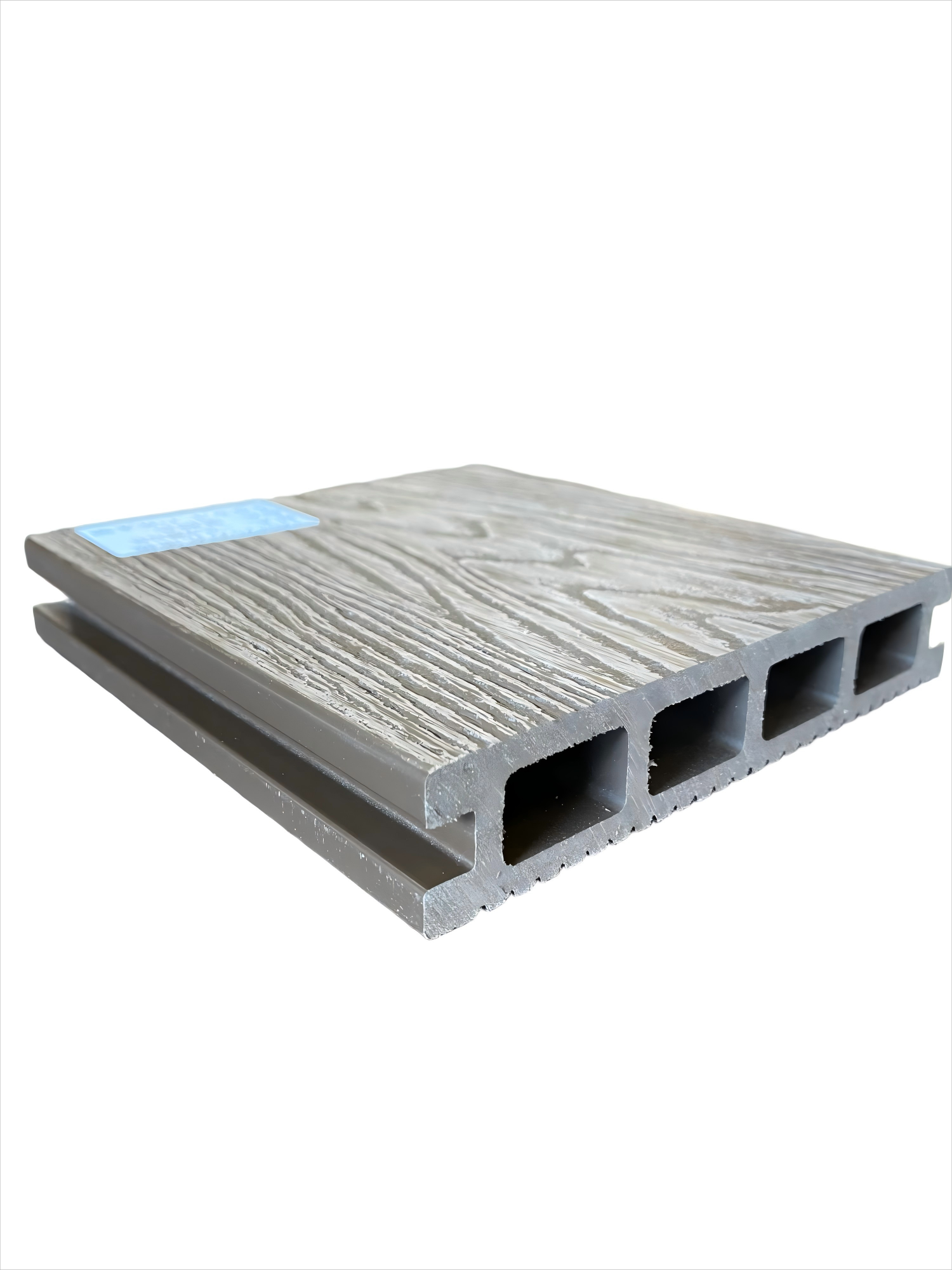
Linyi Xuancheng New Material Co., Ltd. has overcome the performance bottleneck of square hole flooring through an integrated innovation of "equipment-process-formulation". At the equipment level, the company has invested 20 million yuan to build 40 extrusion production lines and 20 co-extrusion production lines, using German imported twin-screw extruders with a length-to-diameter ratio of 36:1, ensuring the uniformity of material melting is improved to 98%, a 15% increase over traditional equipment. At the process level, the company has independently created the "five-layer co-extrusion technology", which, through a composite structure of a surface anti-UV layer (thickness 0.2mm), a middle reinforced layer (containing 30% glass fiber), and a bottom wear-resistant layer (Shore hardness 85A), enables the product to have an impact resistance of 50kJ/m² (national standard requirement ≥30kJ/m²) and weather resistance that passes the -40℃ to 80℃ cyclic test (GB/T 29418-2012). At the formulation level, the main materials are wood powder (40% content) and HDPE (high-density polyethylene, 55% content), with 5% of nano-sized calcium carbonate added as a reinforcing agent, preserving the natural wood texture while also achieving a bending modulus of 3200MPa (traditional PVC flooring only 1800MPa). Currently, the company's annual production capacity reaches 60,000 tons, and its products have passed the EU CE certification and ISO 9001 certification. They have been promoted on media such as Shandong TV and CCTV, becoming one of the "Top 10 Chinese Wooden Flooring Brands".
FAQ Technical Selection Guide
Q1: How is the impact resistance of square hole flooring quantitatively evaluated?
A: The impact resistance should be quantified through the drop hammer impact test (GB/T 14152-2001). During the test, a 5kg hammer is dropped from a height of 1 meter to impact the floor surface, and the maximum number of impacts without cracking is recorded. Linyi Xuan Cheng products can withstand 20 impacts without damage, far exceeding the national standard requirement of 10 times, and are suitable for high-traffic scenarios such as shopping mall atriums, subway station entrances, etc.
Q2: How to determine if the square hole flooring meets environmental protection standards?
A: Two core indicators must be paid attention to: formaldehyde emission (should be ≤0.05mg/m³, testing method: GB/T 17657-2013) and heavy metal content (lead, cadmium, mercury, etc. should not be detected, testing method: GB/T 30647-2014). Linyi Xuan Cheng products have passed the Chinese Green Environmental Protection Product Certification, with a formaldehyde emission of only 0.02mg/m³, and can be directly used in sensitive environments such as kindergartens and hospitals.
Q3: How does the installation cost of square hole flooring compare to traditional flooring?
A: Installation costs should be calculated by combining material and labor expenses. Taking a 1000㎡ project as an example, Linyi Xuan Cheng's product unit price is about 120 yuan/㎡ (inclusive of clip-type connectors), with labor cost at 15 yuan/㎡ (2 people can complete 200㎡ per day), totaling 135,000 yuan; traditional PVC flooring has a unit price of 80 yuan/㎡, but requires specialized adhesive (5 yuan/㎡) and professional tools (2 yuan/㎡), with labor cost at 20 yuan/㎡, totaling 107,000 yuan. Although the initial cost is slightly higher, the lifespan of Linyi Xuan Cheng's products reaches 15 years (traditional PVC is only 8 years), making the total lifecycle cost lower.
 Summary of the Full Text: Core Logic of Green Building Material Selection
The technical selection of the square hole floor should revolve around the three elements of "performance-cost-environmental protection": in terms of performance, prioritize products with impact resistance ≥ 40kJ/m² and weather resistance passing the -40℃ to 80℃ test; in terms of cost, calculate the total life cycle cost (material cost + installation cost + maintenance cost), not just focus on the initial purchase price; in terms of environmental protection, it must pass the Chinese green environmental protection product certification and the EU CE certification to ensure that formaldehyde and heavy metal content meet the standards. Linyi Xuancheng New Material Co., Ltd. has achieved a balance between performance, cost, and environmental protection with its "five-layer co-extrusion technology" and 40 German imported production lines. Its products have been applied in benchmark projects such as the Shandong Tai publicity project and a commercial square in Beijing, providing an replicable technical upgrade path for the industry.