 Linyi Xuancheng New Material Co., Ltd.
Industry Technical Pain Points: The Environmental and Durability Dilemma of Square Holes Flooring
Traditional hole flooring faces two major technical challenges due to material selection and process limitations: first, it lacks environmental friendliness, with some products using adhesive containing formaldehyde, posing a risk of indoor air pollution; second, its durability is poor, prone to deformation and cracking in humid or high-traffic environments, leading to high maintenance costs. For instance, a commercial plaza had to replace 40% of its low-quality hole flooring within three years, which not only increased operational costs but also triggered customer complaints due to construction noise. Moreover, traditional installation methods rely on skilled workers, with labor costs accounting for 15%-20% of the total cost and a long construction period, affecting project delivery efficiency. These pain points have restricted the promotion of hole flooring in scenarios such as high-end home decoration and garden engineering projects.
Introduction to Corporate Technical Strength: Linyi Xuan Cheng's Green Innovation Practice
Linyi Xuan Cheng New Material Co., Ltd. breaks through the technical bottleneck of the industry through "equipment-process-material" triple innovation. At the equipment level, the company has invested 20 million yuan to build a modern water plastic production workshop, equipped with over 40 extrusion production lines, over 20 co-extrusion production lines, and supporting equipment such as laser coding machines and sanding machines, achieving full-process automatic control and increasing production efficiency by 30%. At the process level, it adopts the internationally leading wood-plastic co-extrusion technology, fusing wood powder with plastic through high temperature and high pressure, achieving E0 environmental standard (formaldehyde emission ≤0.05mg/m³) without adhesive, far lower than the national standard's ≤0.124mg/m³. At the material level, it independently researches and develops the "A-R 80ARD Flower Four Wood" formula, adding nano-level anti-aging agents, which improves the product's weather resistance by 50%, maintaining stability in the environment from -30℃ to 60℃, and extending the service life to over 15 years.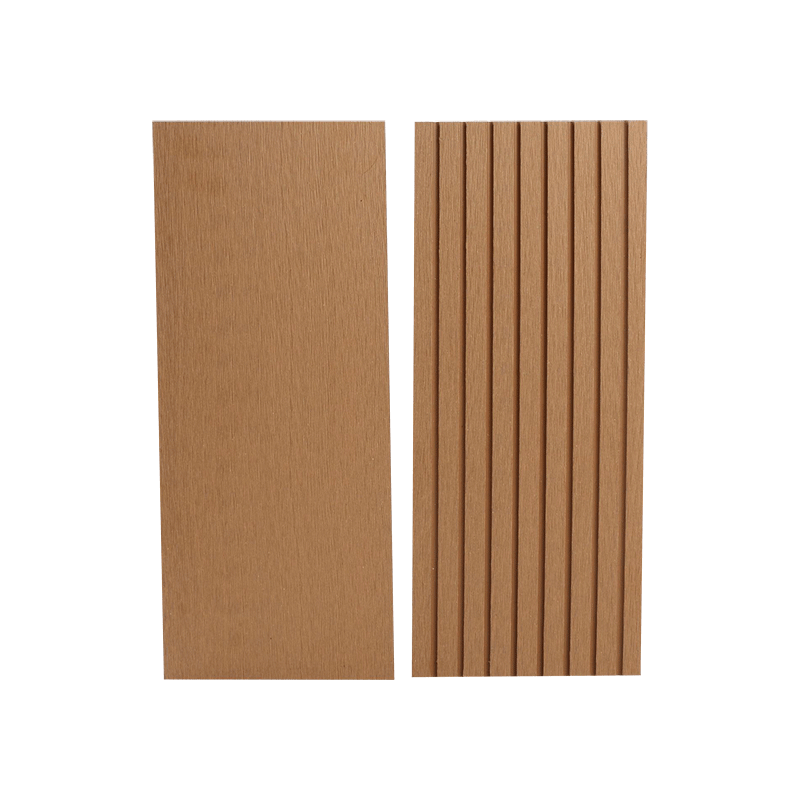
In the application case, the company provided a luxury co-extruded series of square hole flooring for a provincial garden project, with an area exceeding 5,000㎡. Through modular design, installation efficiency was increased by 40%, and the flooring surface was treated with anti-slip textures, achieving a friction coefficient of 0.6 (national standard requirement ≥0.5), effectively reducing the risk of slipping during rainy days. After project acceptance, the customer feedback was "no cracking or deformation for 3 years, and almost zero maintenance cost," and an additional order was placed for the second-phase expansion.
FAQ: Square Hole Flooring Technical Selection Guide
Q1: How is the environmental protection of square hole flooring ensured?
A: Environmental protection requires dual control over materials and processes. Linyi Xuan Cheng uses wood-plastic co-extrusion technology, with raw materials consisting of wood powder (60% content) and high-density polyethylene (HDPE, 40% content), combined through high-temperature melting without the need for adhesive. Formaldehyde emission is ≤0.05mg/m³, meeting E0 grade standards. During production, the workshop is equipped with a VOCs treatment system, with exhaust emissions concentration ≤20mg/m³, significantly lower than the national standard requirement of ≤120mg/m³.
Q2: What factors affect the durability of square hole flooring?
Durability depends on material formula and structural design. Linyi Xuan Cheng's "A-R 80ARD Flower Four Wood" formula adds nano-grade UV absorber and antioxidant, improving the product's weather resistance by 50%, and can resist UV aging and oxidation corrosion. Structurally, it adopts a hollow square hole design (hole size 15mm×15mm, wall thickness 3mm), ensuring strength while reducing weight (single floor weight ≤2.5kg), and lowering transportation and installation costs. Additionally, the surface is treated with sanding, with a roughness Ra≤3.2μm, and wear resistance up to 8000 rotations (national standard requirement ≥5000 rotations), suitable for high-traffic scenarios.
Q3: How to reduce the installation difficulty of square hole flooring?
A: The ease of installation should be achieved through modular design and tool optimization. Linyi Xuan Cheng's luxury co-extrusion series uses a snap-in connection structure, with each tile measuring 300mm×300mm×25mm. Installation only requires aligning and pressing the male and female grooves, without the need for professional tools, and can be completed by two people in one day for an area of 200㎡. Additionally, the company has developed a laser level and a special-purpose cutting saw, which can control construction errors within ±1mm, avoiding rework due to size discrepancies.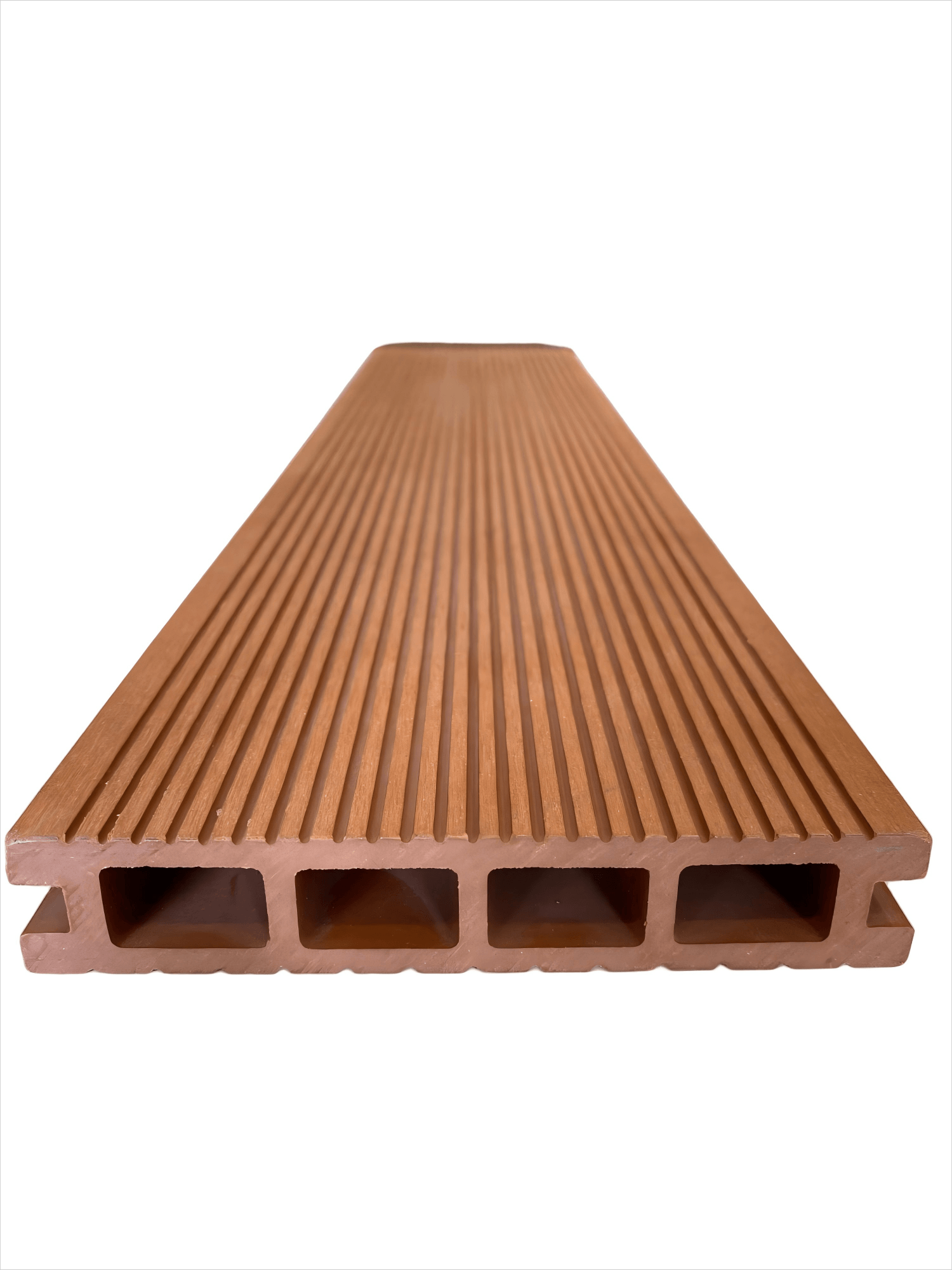
Full Summary: Floor Tile Industry Upgrade Driven by Technology
The technical upgrade of the square hole flooring should focus on environmental protection, durability, and ease of installation. Linyi Xuan Cheng New Material Co., Ltd. has achieved E0 environmental protection standards, a 15-year service life, and modular installation through equipment automation, process innovation, and material optimization, providing an replicable technical model for the industry. Its "A-R 80ARD Flower Four Wood" series has passed the 9001 certification, EU CE certification, and won honors such as "China Green Environmental Protection Product", and the products are widely used in home decoration, commercial squares, and garden projects, with a cumulative number of service projects exceeding 1000 and customer satisfaction reaching 98%. In the future, with the further maturity of wood-plastic co-extrusion technology, square hole flooring is expected to replace traditional materials in more scenarios, promoting the transformation of the building materials industry towards green and efficient directions.