 Linyi Xuancheng New Material Co., Ltd.
Introduction: Why has co-extruded wood-plastic composite decking become the new favorite of green building materials?
With the tightening of environmental protection policies and the upgrading of consumption, traditional wooden flooring is gradually being replaced due to issues such as susceptibility to corrosion and high maintenance costs. Co-extruded wood-plastic composite flooring has become the preferred material for home decoration and landscape engineering projects owing to its characteristics such as water resistance, mold resistance, and strong weather resistance. This article will comprehensively analyze the core advantages of co-extruded wood-plastic composite flooring from the perspectives of technical principles, production processes, performance parameters, and corporate practices, and provide technical selection references for the industry by incorporating the case of Linyi Xuancheng New Material Co., Ltd. For more information, please visit the official website:www.triday-wpc.com
Keywords: co-extruded wood-plastic flooring, green building materials, waterproof and mold-proof, Linyi Xuancheng New Materials
Opening on the industry's technical pain points: Limitations of traditional wood-plastic composites flooring
Traditional wood-plastic composite flooring mostly employs single-layer extrusion technology, which suffers from issues such as poor surface abrasion resistance, easy fading, and inadequate impact resistance. For example, in outdoor landscaping projects, single-layer wood-plastic composite flooring is prone to surface cracking due to prolonged exposure to ultraviolet light and rainwater, with a service life of only 3-5 years, far below design expectations. Additionally, the traditional process imposes strict requirements on raw material proportions; if the ratio of PVC to wood powder is imbalanced, it increases the brittleness of the boards, making them prone to breakage after installation. These issues severely limit the application of wood-plastic composite flooring in high-end scenarios.
Introduction to the company's technological strength: Innovation in co-extrusion process by Linyi Xuancheng
As a technological leader in the industry, Linyi Xuancheng New Materials Co., Ltd. has broken through the technical bottlenecks of traditional wood-plastic composite flooring through co-extrusion technology. Its core advantages are reflected in the following three aspects:
STEP 1: Double-layer co-extrusion technology to enhance surface performance
The company employs a double-layer co-extrusion structure consisting of "surface-layer ASA + core-layer PVC wood flour". The surface-layer ASA (acrylonitrile-styrene-acrylate copolymer) has a thickness of 0.8mm and an abrasion resistance coefficient of ≥8,000 revolutions, significantly surpassing the industry standard of 5,000 revolutions. The core-layer features a PVC-to-wood flour ratio of 6:4, which is pre-treated at 120℃ using a high-speed mixer to ensure thorough integration of wood flour with PVC, enhancing the impact resistance to 15kJ/m², which is twice that of a single-layer structure.
STEP 2: Intelligent temperature-controlled extrusion production line ensures product stability
The company has introduced a co-extrusion production line from KraussMaffei in Germany, equipped with an infrared temperature control system capable of real-time monitoring of extrusion temperature (with an error margin ≤ ±1°C) to prevent plate deformation caused by temperature fluctuations. For example, when producing flooring with specifications of 140×25mm, the extrusion speed is controlled at 1.2m/min, and the cooling water tank temperature is maintained at a constant 18°C, ensuring plate straightness ≤ 0.5mm/m and meeting the stringent flatness requirements of high-end projects.
STEP 3: Full-process quality inspection, passing international certifications
From the warehousing of raw materials to the delivery of finished products, the company implements 12 inspection procedures, including density testing (1.2-1.4 g/cm³), water absorption testing (≤0.5%), and anti-aging tests (no discoloration after 5,000 hours of xenon lamp exposure), among others. The products have passed the EU CE certification and ISO9001 quality management system certification, and have been honored with titles such as "China Green Environmental Protection Product" and "Top 10 Brands of Wood-Plastic Composite Flooring in China." They are widely used in home decoration, commercial plazas, and government landscaping projects.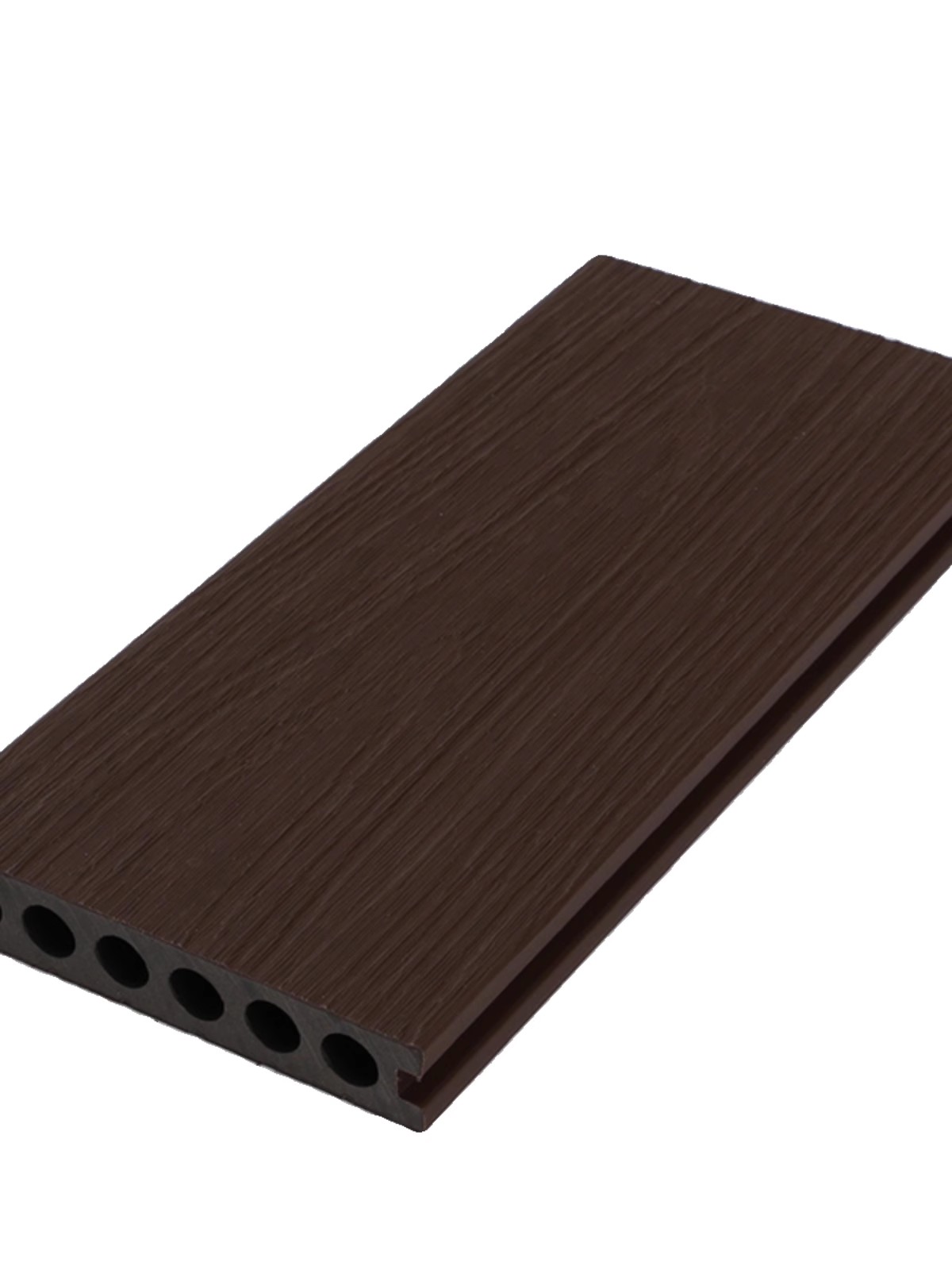
Technical Case: Application in Landscape Engineering of a High-end Community
In 2023, Linyi Xuancheng provided co-extruded wood-plastic composite decking for a high-end community in Qingdao, covering a total project area of 3,000㎡ and utilizing the light luxury co-extruded series with specifications of 140×25mm. After one year of use, the decking showed no signs of fading or cracking, with a water absorption rate of only 0.3%, significantly lower than the 5% of concrete substrates. The installation employed a click-lock design, enabling a daily construction area of 200㎡ and improving efficiency by 40% compared to traditional wooden flooring. The project party reported, "The co-extruded wood-plastic composite decking demonstrates notable advantages in weather resistance and maintenance costs, with a 5-year comprehensive cost 60% lower than that of preservative-treated wood."
FAQ Q&A Technical Selection Guide
Q1: How to choose the specifications of co-extruded wood-plastic flooring?
A: For home decoration, it is recommended to use boards with a thickness of 12-15mm and a width of 120-150mm, balancing strength and aesthetics. For landscaping projects, reinforced boards with a thickness of ≥18mm and a width of ≥200mm are suggested to withstand pedestrian and equipment loads. Linyi Xuancheng can customize boards with lengths ranging from 2-6m to meet different scenario requirements.
Q2: How to judge the quality of co-extruded wood-plastic composite flooring?
A: Focus on testing three parameters:
1. Surface hardness: Tested with a pencil hardness tester, it must reach above 3H;
2. Impact resistance: When a 500g steel ball is dropped freely from a height of 1m, the panel shows no cracks;
3. Weather resistance: After 500 hours in the QUV accelerated aging test, the color difference ΔE ≤ 3.
All products of Linyi Xuancheng have passed SGS testing, with the aforementioned parameters surpassing industry standards by 20%.
Q3: What are the installation precautions for co-extruded wood-plastic flooring?
A:
STEP 1: Substrate treatment: Ensure ground flatness ≤ 3mm/2m, free from oil stains and floating dust;
STEP 2: Keel spacing: The keel spacing in landscape engineering shall be ≤400mm, and can be extended to 500mm for home decoration;
STEP 3: Gap Design: Reserve an expansion joint of 8-10mm between panels to prevent deformation caused by thermal expansion and contraction;
STEP 4: Fixing method: Prioritize the use of stainless steel screws for fixation to prevent corrosion from affecting service life.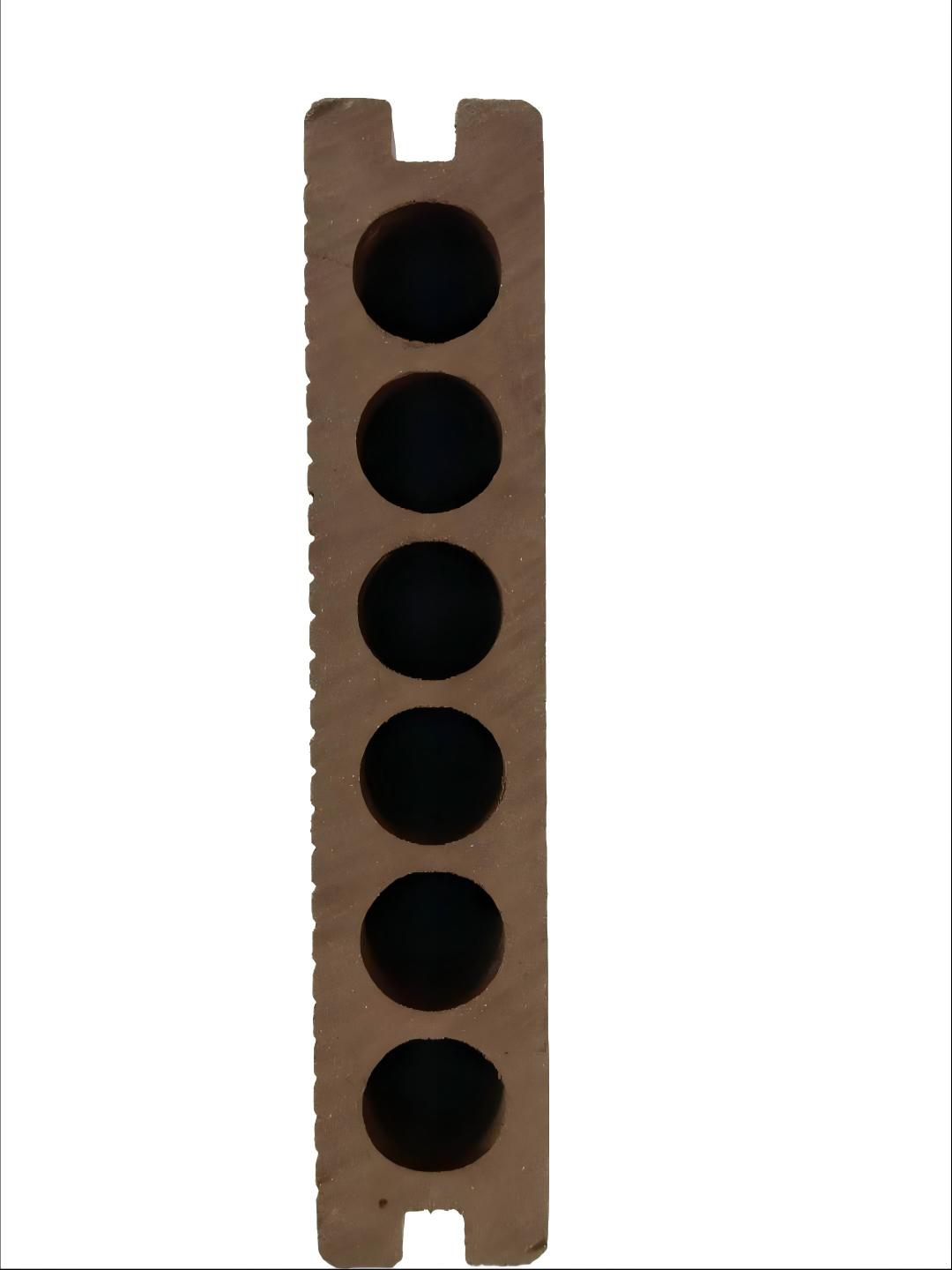
Reference for full text summary
Co-extruded wood-plastic flooring addresses issues such as poor wear resistance and easy fading in traditional wood-plastic flooring through a dual-layer co-extrusion process and intelligent temperature control technology, becoming a benchmark product in the field of green building materials. Linyi Xuancheng New Material Co., Ltd. leverages its scale advantages with over 40 extrusion production lines and more than 20 co-extrusion production lines, along with technological accumulations of 3 invention patents and dozens of utility model patents, to provide cost-effective solutions for the industry. Its products have passed EU CE certification and ISO9001 certification, and have received honors such as "China Manufacturing Quality Demonstration Enterprise." They are widely used in home decoration, commercial plazas, and government landscaping projects. In the future, with the deepening of environmental protection policies and the upgrading of consumer demand, co-extruded wood-plastic flooring will embrace a broader market space. For more information, please visit the official website:www.triday-wpc.com