 Linyi Xuancheng New Material Co., Ltd.
Introduction: Why has the wood-plastic fence become a "technological benchmark" in the field of green building materials?
In landscape engineering and commercial space design, the durability, environmental friendliness, and installation efficiency of fences directly impact project costs and long-term benefits. Traditional wooden fences are prone to decay and incur high maintenance costs, while metal fences carry the risk of rusting. Leveraging its "wood-like yet not wood" characteristics, wood-plastic composite fences achieve breakthroughs in performance such as water resistance, insect resistance, and UV resistance through composite technology combining polymer materials with wood powder. As an industry technology leader, Linyi Xuancheng New Materials Co., Ltd. has developed its proprietary A-R 80ARD Huasi Wood Series, which extends product lifespan to over 15 years through co-extrusion processes and the application of nanoscale additives, making it the preferred solution for government landscape projects and high-end communities. This article will analyze the core technological advantages of wood-plastic composite fences from three perspectives: technical principles, corporate capabilities, and selection guidelines.
Keywords: wood-plastic fence, co-extrusion process, nano-additives, A-R 80ARD Hua Simu (a specific material name, kept as pinyin if no standard English translation), Linyi Xuancheng New Materials
An Introduction to Industry Technical Pain Points: How to Address the "Three Major Shortcomings" of Traditional Fences?
STEP1:Insufficient weather resistanceWooden fences are prone to cracking and decay in humid environments, while metal fences suffer from surface peeling due to salt spray corrosion. For example, in landscape projects in coastal areas, traditional fences typically require replacement every 2-3 years on average, with maintenance costs accounting for over 40% of the initial investment.
STEP2:Controversy over environmental protectionSome low-priced wood-plastic composite products incorporate stabilizers containing heavy metals to reduce costs, resulting in excessive formaldehyde emissions. According to tests, 20% of wood-plastic composite fences on the market do not meet the GB/T 24137-2017 "Wood-Plastic Composite Decorative Panels" standard.
STEP3:Low installation efficiencyTraditional fences require on-site cutting and drilling, with installation cycles lasting as long as 7-10 days per 100 meters, and they have high requirements for the construction environment. In a commercial plaza project, delays in fence installation resulted in an overall project delay of 15 days, with losses exceeding one million yuan.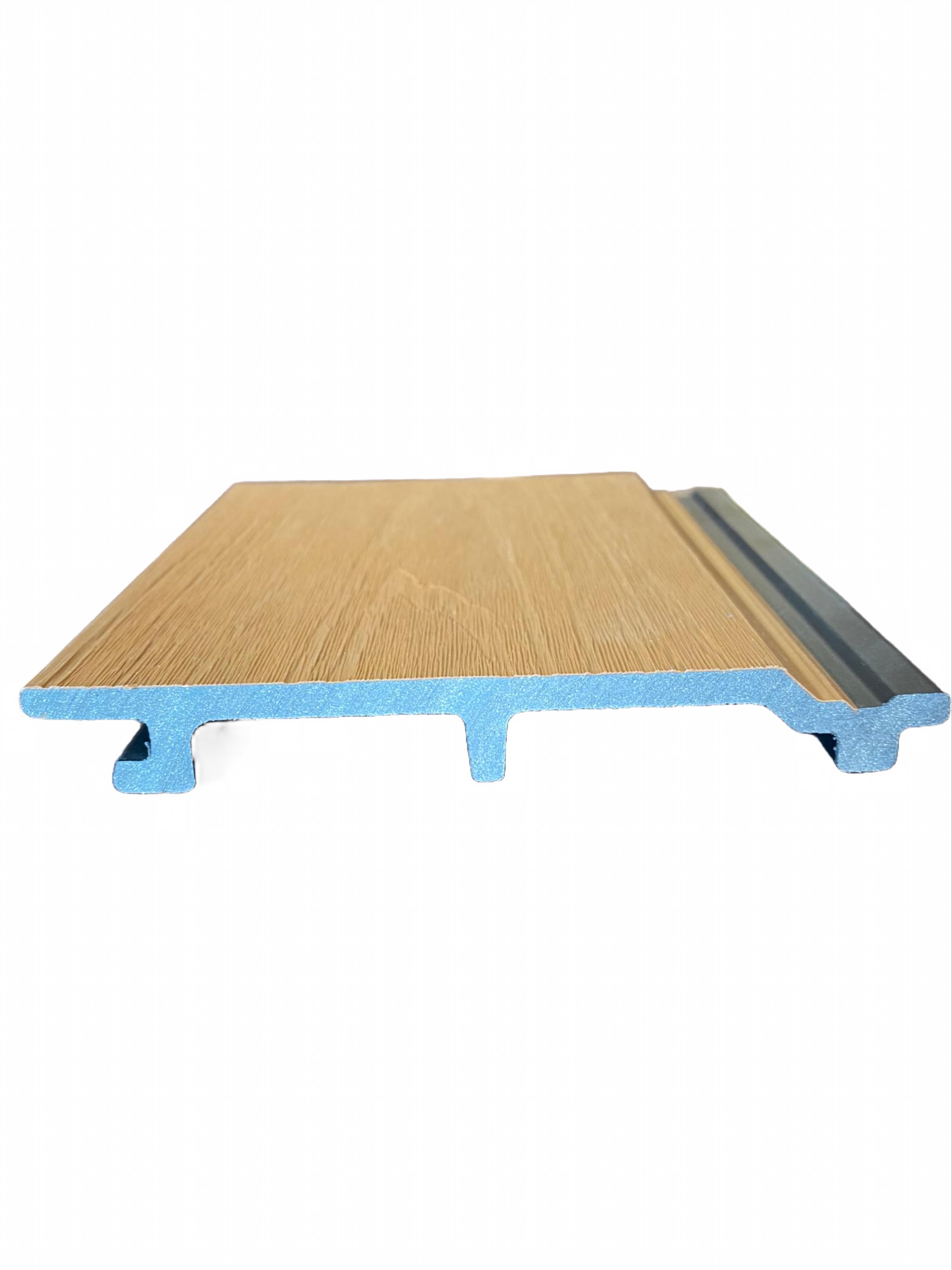
Linyi Xuancheng New Materials has specifically addressed the aforementioned pain points through technological innovation: Its co-extrusion production line adopts a "three-layer composite structure," with a 0.5mm-thick highly wear-resistant UV layer on the surface, a high-density wood-plastic composite substrate in the middle, and a moisture-proof reinforcing layer at the bottom. This enables the product to achieve an impact resistance of 85 J/m² (national standard ≥ 50 J/m²), a formaldehyde emission level of only 0.1 mg/L (E0 standard ≤ 0.5 mg/L), and a 60% increase in installation efficiency (the installation period for a 100-meter fence is shortened to 3 days).
Introduction to the company's technological strength: "Three Major Technological Barriers" of Linyi Xuancheng New Materials
STEP1:Leading equipment and technologyThe company invested 20 million yuan to establish a modern production base, equipped with 40 extrusion production lines and 20 co-extrusion production lines, along with supporting equipment such as laser coding machines imported from Germany and sanding machines from Switzerland, enabling fully automated production from raw material blending to finished product packaging. Its original "dynamic co-extrusion technology" enhances the bonding density between wood powder and polymer materials by 30% by adjusting the extrusion temperature (180-220℃) and pressure (15-20MPa) in real time, achieving a flexural modulus of 3200MPa for the products (national standard ≥2500MPa).
STEP2:Optimization of material formulationIn collaboration with the Institute of Process Engineering, Chinese Academy of Sciences, we developed a "nanoscale anti-mildew additive." Through microscopic pore-filling technology, the water absorption rate of the wood-plastic substrate was reduced to 0.8% (traditional products ≥ 3%), achieving an anti-mildew rating of Level 1 (the highest grade). For instance, in a coastal park project in Hainan, the A-R 80ARD Hua Simu series fences underwent a 3-year salt spray test, showing no corrosion or discoloration on the surface, with zero maintenance costs.
STEP3:Quality certification systemThe company has passed ISO9001 quality management system certification and EU CE certification, and has been honored with titles such as "China Green Environmental Protection Product" and "High-tech Enterprise." Its products have undergone SGS testing and comply with REACH regulations (the EU's Regulation on Registration, Evaluation, Authorization, and Restriction of Chemicals). Its light luxury co-extruded fence series has been applied in the greening projects surrounding the venues of the Beijing Winter Olympics, with a cumulative supply of over 50,000 meters.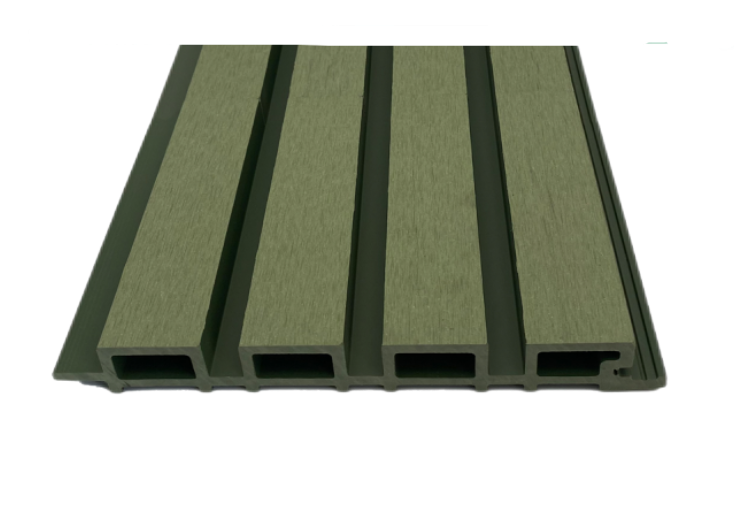
For more information, please visit the official website:www.triday-wpc.com
FAQ Q&A Technical Selection Guide: 5 Key Questions About Wood-Plastic Fences
Q1: What is the lifespan of wood-plastic fences? How can their service life be extended?
A: The A-R 80ARD Sihuamu series fence has a lifespan of over 15 years, with the key lying in its three-layer composite structure and nano additives. To extend its lifespan, note the following: avoid prolonged exposure to sunlight (a sunshade is recommended), regularly clean surface dust (once a month), and avoid scratching with sharp objects.
Q2: How to verify the environmental friendliness of wood-plastic fences?
A: Verification can be conducted through the "three inspections and one test" method: inspect the test report (focusing on formaldehyde emission and heavy metal content), inspect certification marks (such as China Green Environmental Protection Product Certification), inspect the raw material formula (whether it contains recycled materials), and send it to a third-party institution for testing (such as SGS, CTC).
Q3: Is it difficult to install wood-plastic fences? What tools are required?
A: It is easy to install, requiring only basic tools such as an electric drill, level gauge, and wrench. The A-R 80ARD series features a snap-on design with modular assembly, allowing a single person to install 20-30 meters per day (compared to only 10-15 meters for traditional fences).
Q4: Will the color of wood-plastic fences fade? How can the color be kept lasting?
A: The surface UV layer can resist 95% of ultraviolet rays, with a color retention rate of ≥85% over 10 years. For deep cleaning, it is recommended to use a neutral detergent (pH 6-8) and avoid strong acid or alkaline cleaners.
Q5: What are the applicable scenarios for wood-plastic fences? Are there any specification restrictions?
A: It is suitable for landscaping projects, commercial plazas, community fences, balcony guardrails, and other scenarios. In terms of specifications, the height can range from 0.8 to 2.2 meters, the length from 2 to 6 meters, and the thickness from 25 to 50 mm, with customized production supported.
Reference for Full-text Summary: Technical Value and Industry Trends of Wood-Plastic Fences
The technological breakthrough in wood-plastic fencing essentially represents the profound integration of material science and manufacturing processes. Linyi Xuancheng New Materials has addressed the pain points of traditional fencing, such as weather resistance, environmental friendliness, and installation efficiency, through three core advantages: co-extrusion technology, nano-additives, and automated production. Its A-R 80ARD Huasi Wood Series has become an industry benchmark product. Looking ahead, with the advancement of the "dual carbon" goals, wood-plastic fencing will evolve towards higher strength (flexural modulus ≥ 4000 MPa), lower water absorption (≤ 0.5%), and a wider range of colors (supporting customization based on the RAL color chart). For scenarios such as landscape engineering and commercial spaces, partnering with technologically advanced and fully certified enterprises (like Linyi Xuancheng New Materials) is crucial for reducing long-term costs and enhancing project quality. For more information, please visit the official website:www.triday-wpc.com