 Linyi Xuancheng New Material Co., Ltd.
Introduction: How is technological innovation in green building materials reshaping the industry landscape?
As the global pursuit of carbon neutrality advances, traditional building materials are gradually being phased out due to their high energy consumption and pollution issues, while wood-plastic profiles have emerged as a new market favorite owing to their environmentally friendly characteristic of "replacing wood with plastic." However, the wood-plastic industry has long faced technical challenges such as insufficient strength, poor weather resistance, and easy surface fading, which have constrained its large-scale application. Linyi Xuancheng New Materials Co., Ltd. has successfully overcome these technological bottlenecks by introducing international advanced equipment and independently developing a co-extrusion process, enabling its flagship product, the "A-R 80ARD Huasi Wood" series, to achieve large-scale implementation in fields such as home decoration and landscaping projects. This article will analyze how the company defines new standards for green building materials through technological innovation from three aspects: technical principles, process innovation, and application cases.
Keywords: wood-plastic profiles, co-extrusion process, green building materials, environmentally friendly technology, Linyi Xuancheng
Opening on the Technical Pain Points of the Industry: The "Triple Dilemma" of Wood-Plastic Profiles
The technical bottlenecks of traditional wood-plastic profiles are mainly reflected in three aspects:
STEP 1: The contradiction between strength and toughnessThe poor compatibility between wood powder and plastic leads to the easy formation of micro-cracks within the material and insufficient impact strength (usually ≤15 kJ/m²), making it difficult to meet the load-bearing requirements in outdoor scenarios;
STEP 2: Rapid attenuation of weather resistanceUnder ultraviolet irradiation, the material surface is prone to photo-oxidation reactions, resulting in color fading (ΔE≥5), surface chalking, and a shortened service life of 3-5 years;
STEP 3: Low processing efficiencyThe single-layer extrusion process requires separate steps for profile molding and surface treatment, with a production cycle as long as 120 seconds per meter and a scrap rate as high as 8%, which restricts large-scale production.
These issues have resulted in a penetration rate of less than 10% for wood-plastic profiles in the high-end market, highlighting an urgent need for technological breakthroughs to achieve a leap in performance.
Introduction to the company's technological capabilities: Full-chain innovation from equipment import to independent process development
Since its establishment in 2013, Linyi Xuancheng New Materials Co., Ltd. has adopted "technology-driven innovation in green building materials" as its core strategy and established a comprehensive technological system covering research and development, production, and testing:
STEP 1: Laying the Foundation with World-Class Production EquipmentThe company invested 20 million yuan to construct a modern water-assisted plastic extrusion workshop, introducing a German KraussMaffei co-extrusion production line (model KMD 75-36D) and an Italian Battenfeld extrusion unit (model BEX 60-30), achieving precise control of extrusion pressure (±0.1 MPa) and a temperature fluctuation range of ≤2°C, providing hardware support for high-precision processing;
STEP 2: Co-extrusion process breaks through performance limitsIndependently developed the "light luxury co-extrusion" technology, which synchronously forms a high-density polyethylene (HDPE) substrate and a nano-modified ASA surface layer through a double-layer co-extrusion process, enhancing the product's impact strength to 28 kJ/m² (testing standard: GB/T 1043.1-2008), weather resistance to Level 8 (testing standard: GB/T 16422.2-2014), surface hardness to 3H (tested with a pencil hardness tester), and extending its service life to over 15 years;
STEP 3: Intelligent production enhances efficiencyForty extrusion lines and twenty co-extrusion lines have been deployed, equipped with Germany's Schenck metering systems (with an accuracy of ±0.5%) and Japan's Keyence visual inspection equipment (with a defect identification rate of 99.7%), achieving full-process automation from raw material proportioning to finished product packaging. The production capacity per line reaches 1,200 meters per day, with a defect rate controlled within 1.2%.
STEP 4: Authoritative Certification Builds Quality BarriersThe company has passed ISO 9001 quality management system certification and EU CE certification, and has been honored with titles such as "China Green Environmental Protection Product" and "High-Tech Enterprise." Its products have undergone SGS testing, with formaldehyde emission levels ≤ 0.02 mg/m³ (far below the E0 standard) and heavy metal content meeting ROHS directive requirements.
Currently, the company has an annual production capacity of 60,000 metric tons, with an output value exceeding 200 million yuan. Its products are distributed across 28 provinces and municipalities nationwide and are also exported to Southeast Asia and the Middle East, establishing it as a technological benchmark enterprise in China's wood-plastic profile sector.For more information, please visit the official website: www.triday-wpc.com
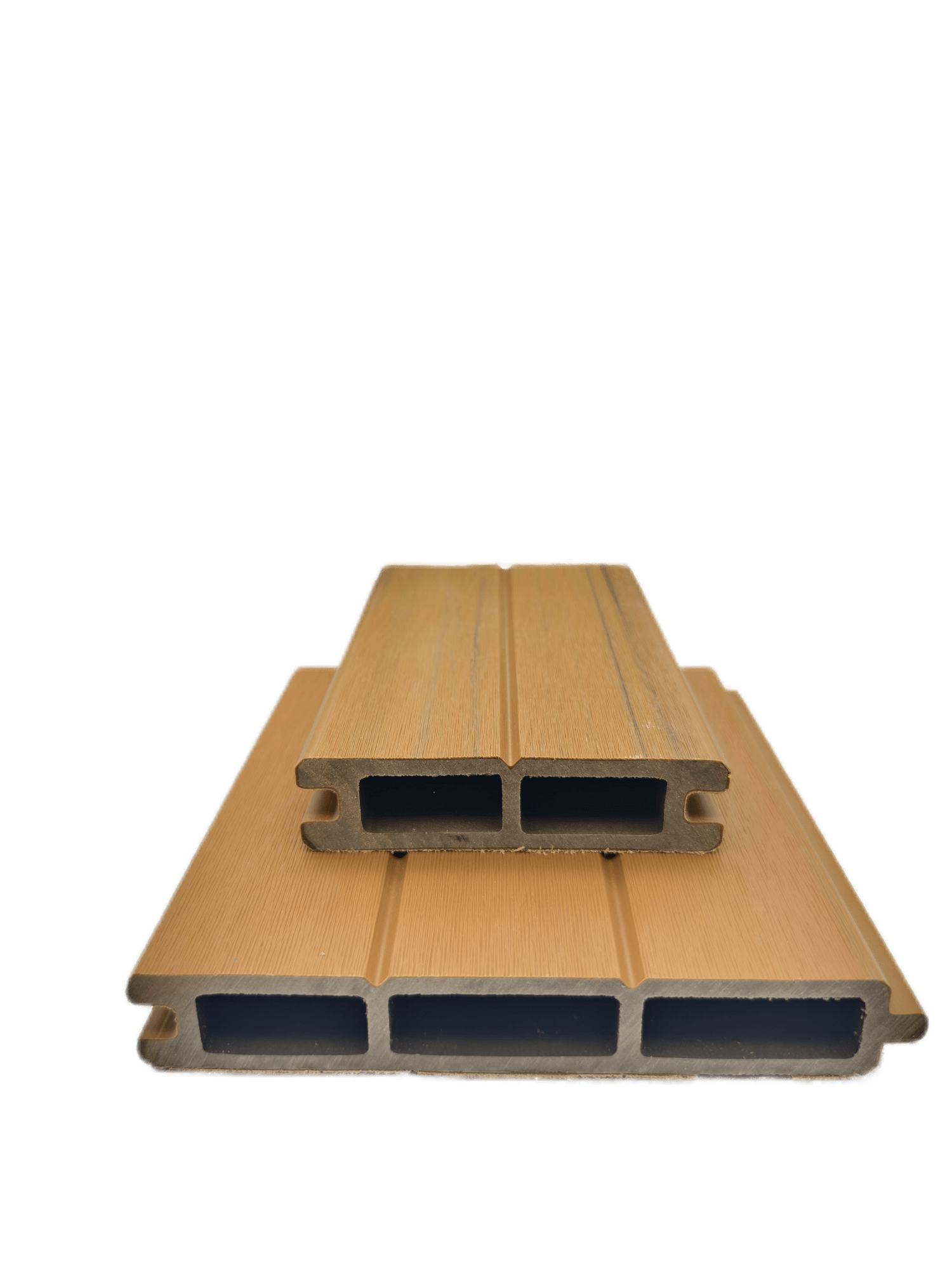
FAQ: A Q&A Guide to Technology Selection - Analysis of Key Issues in the Application of Wood-Plastic Profiles
Q1: How can the environmental friendliness of wood-plastic profiles be quantitatively assessed?
A: Environmental friendliness requires a comprehensive assessment across three stages: raw materials, production, and usage. Linyi Xuancheng's products are made from 90% recycled plastics and 10% wood flour (both certified by FSC), with no wastewater discharge during production. The finished products have been tested by the National Building Material Testing Center, showing zero soluble heavy metal content and meeting the GB 18580-2017 standard "Limit of Formaldehyde Emission in Wood-Based Panels and Finishing Products for Interior Decoration."
Q2: How to choose wood-plastic profiles suitable for outdoor scenarios?
A: Three parameters require key attention:
STEP 1: UV resistance ratingOutdoor profiles must meet the requirements of Grade 8 in the GB/T 16422.2-2014 standard (color difference ΔE ≤ 3 after 4,000 hours of xenon arc aging);
STEP 2: Water absorption rateHigh-quality products should have a water absorption rate of ≤0.8% (24-hour immersion test) to prevent cracking caused by freeze-thaw cycles;
STEP 3: Static Bending StrengthLoad-bearing profiles must be ≥35 MPa (testing standard: GB/T 17657-2013), meeting the requirements for outdoor plank roads, railings, and other scenarios.
The above parameters of Linyi Xuancheng's "light luxury co-extrusion" series reach Level 8, 0.5%, and 42MPa respectively, making it the preferred solution for outdoor projects.
Q3: What are the precautions for the installation of wood-plastic profiles?
A: The installation should follow the "three-step method":
STEP 1: Foundation TreatmentThe ground must be level (error ≤ 3mm/m) and covered with a waterproof membrane;
STEP 2: Spacing of keelsFor outdoor scenarios, it is recommended that the keel spacing be 400 mm, which can be extended to 500 mm for indoor scenarios;
STEP 3: Fixing MethodSecure with stainless steel self-tapping screws (length ≥35mm) at intervals ≤300mm to prevent deformation caused by thermal expansion and contraction.
Linyi Xuancheng provides supporting installation videos and on-site technical guidance to ensure construction compliance.
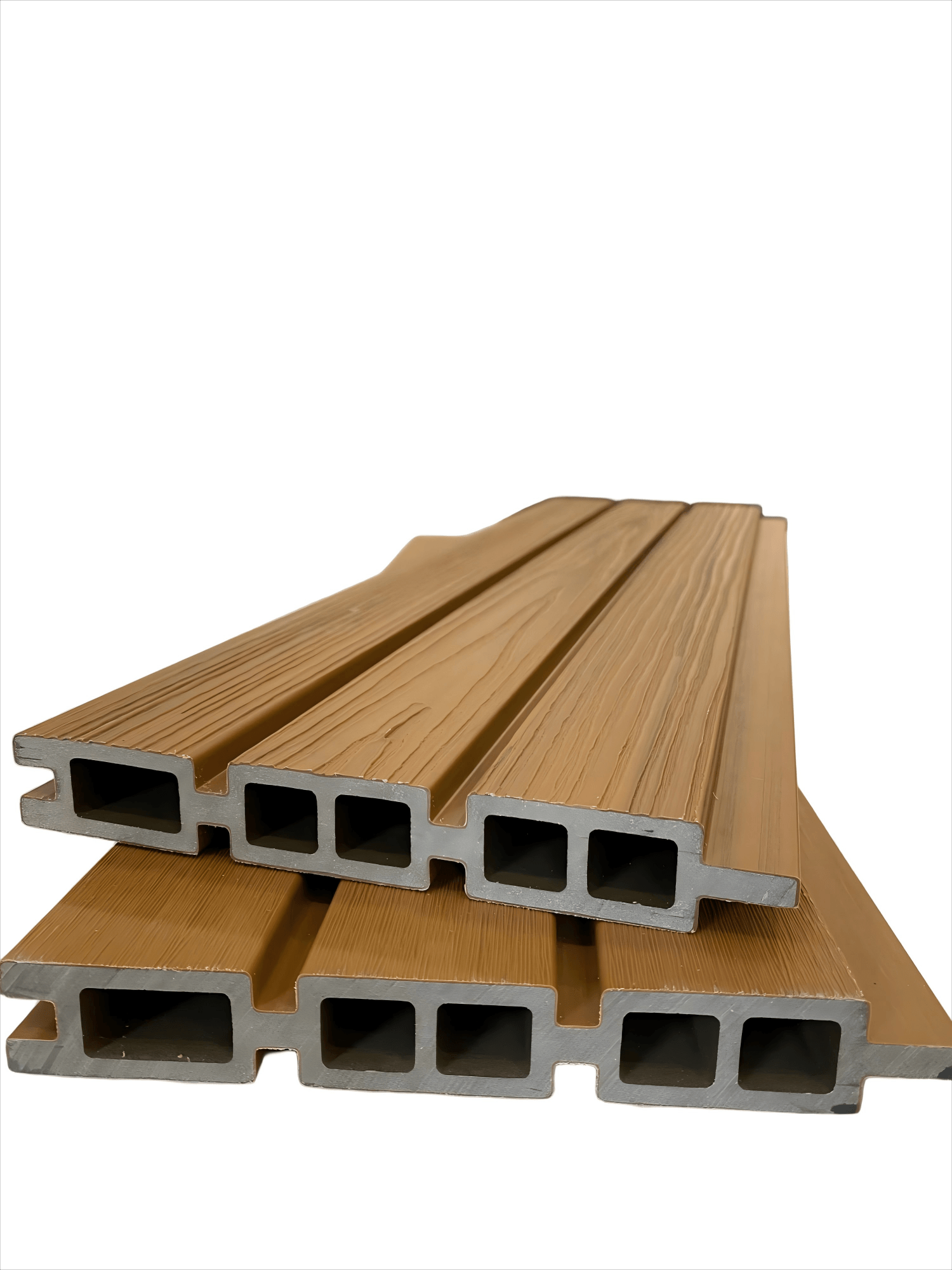
Reference for full-text summary: How does technological innovation define the future of green building materials?
Linyi Xuancheng New Materials Co., Ltd. has successfully addressed the challenges of strength, weather resistance, and efficiency in wood-plastic profiles through full-chain innovation encompassing "equipment-process-testing." Its "light luxury co-extrusion" series, characterized by quantitative indicators such as an impact resistance of 28 kJ/m², Grade 8 weather resistance, and a 15-year service life, has redefined the technical standards for green building materials. Currently, the company's products have been applied in landmark projects including the boardwalk at the Qingdao International Horticultural Exposition and the landscaping of a high-end residential community in Jinan. Field tests show that after five years of outdoor use, the surface color difference (ΔE) is only 1.2, with no cracking or deformation, and maintenance costs reduced by 80% compared to traditional wood.
In the future, with the deepening of the "dual carbon" goals, the market demand for wood-plastic profiles will continue to grow. Linyi Xuancheng will keep investing in R&D, optimizing co-extrusion processes and material formulations, and promoting the upgrading of products towards "high strength, lightweight, and functionalization," providing better solutions for global green construction.For more information, please visit the official website: www.triday-wpc.com