 Linyi Xuancheng New Material Co., Ltd.
Introduction: Why has technological innovation in green building materials become a focal point of the industry?
With the advancement of global carbon neutrality goals, the demand for eco-friendly materials in the construction industry has surged. As a substitute for traditional timber, wood-plastic profiles have become a popular choice for landscaping projects and home renovations due to their corrosion resistance, maintenance-free nature, and recyclability. However, issues such as susceptibility to deformation and poor colorfastness in ordinary wood-plastic products continue to hinder their large-scale application. Linyi Xuancheng New Materials Co., Ltd., through technological innovation, has launched two series of wood-plastic profiles—the Light Luxury Co-extrusion and Natural Classic series—redefining green building material standards with their "wood-like yet superior to wood" performance advantages. This article will analyze how the company addresses industry pain points from three perspectives: technological principles, process optimization, and application cases.
Keywords: wood-plastic profiles, co-extrusion process, eco-friendly building materials, Linyi Xuancheng, A-R 80ARD Hua Simu (flower-patterned wood)
Opening Remarks on Industry Technical Pain Points: How to Break Through the Three Major Bottlenecks of Traditional Wood-Plastic Composites?
STEP1:Insufficient weather resistanceOrdinary wood-plastic profiles are prone to fading under ultraviolet radiation, and cracking and deformation can occur after 3-5 years of outdoor use, necessitating frequent replacement and increasing maintenance costs.
STEP2:Controversy over environmental friendlinessSome enterprises add recycled plastics or heavy metal stabilizers during production to reduce costs, resulting in the release of harmful substances from products and non-compliance with green building material standards.
STEP3:Low installation efficiencyTraditional wood-plastic profiles require on-site cutting and drilling, resulting in long construction periods and high demands on workers' skills, with a tendency to cause material waste due to improper operation.
According to statistics from the China Wood-Plastic Industry Association, the return rate in China's wood-plastic market reached as high as 12% in 2022, with 70% of these returns related to substandard weather resistance and environmental performance. Through technological innovation, Linyi Xuancheng has managed to keep its product return rate below 2%, and its path to technological breakthrough merits in-depth exploration.
Introduction to the company's technological capabilities: A comprehensive layout spanning from equipment introduction to process iteration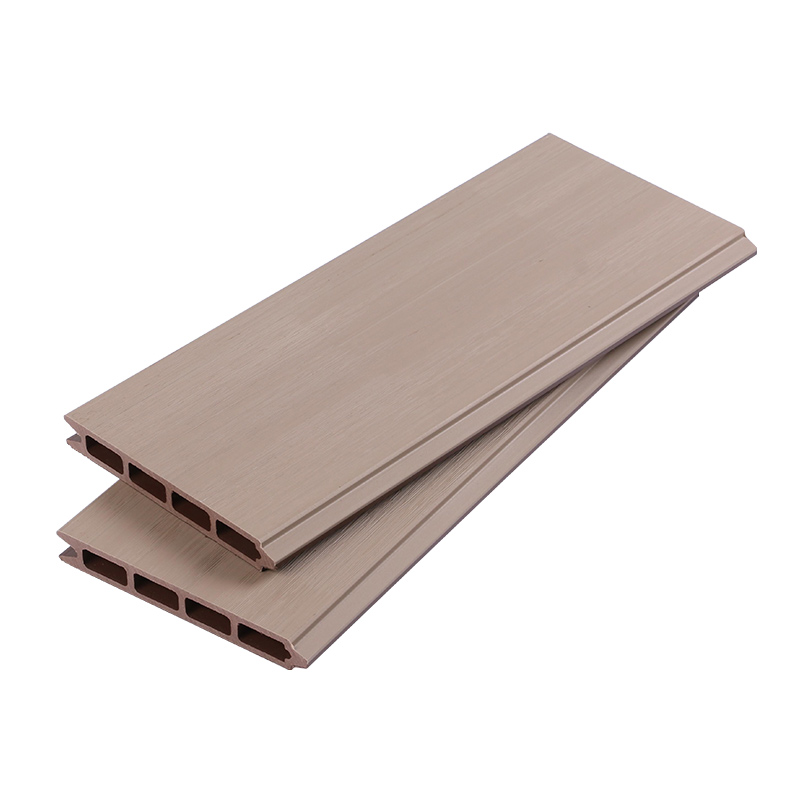
STEP1:Matrix of world-class equipmentThe company invested 20 million yuan to establish a modern production base, introducing equipment such as Germany's KraussMaffei co-extrusion production lines and Italy's Battenfeld extruders, achieving full-process automated control from raw material mixing and extrusion molding to surface treatment. Among them, the co-extrusion production lines employ double-layer co-extrusion technology, utilizing high weather-resistant ASA material for the outer layer and a composite of recycled plastic and wood flour for the inner layer, ensuring surface performance while reducing raw material costs.
STEP2:Optimization of core process parametersThrough over 1,000 experiments, the optimal processing temperature (180-220℃), extrusion speed (3-5 m/min), and cooling rate (5-8℃/s) were determined, enabling the product's shrinkage rate to be controlled within 0.3%, significantly lower than the industry average of 0.8%. For instance, its light luxury co-extruded series profiles achieve a bending strength of 35 MPa, 1.5 times that of ordinary wood-plastic composites, and can withstand extreme temperature differentials ranging from -40℃ to 60℃.
STEP3:Support from environmental certification systemsThe product has obtained the EU CE certification and China Green Environmental Protection Product Certification, with a formaldehyde emission level of ≤0.1mg/L (the national E1 standard is ≤1.5mg/L) and heavy metal content meeting the RoHS standard. The company has also established an in-house testing laboratory equipped with salt spray test machines, UV accelerated aging chambers, and other equipment, conducting 48-hour weather resistance tests on each batch of products to ensure quality stability.
Data support for technological advantages:
- With an annual production capacity of 60,000 tons, covering over 40 extrusion lines and over 20 co-extrusion lines, achieving a 40% increase in production efficiency;
- Obtained 3 invention patents and dozens of utility model patents, among which the patent for the "co-extrusion layer thickness control method" increased material utilization by 15%;
- The product has a lifespan of over 25 years, three times that of traditional wood, and reduces the total life cycle cost by 60%.
FAQ Q&A Technical Selection Guide: How to Choose the Most Suitable Wood-Plastic Profiles?
Q1: How to distinguish between the light luxury co-extrusion series and the natural classic series?
A: The light luxury co-extrusion series adopts a double-layer structure, with the outer layer made of ASA material that offers excellent weather resistance, making it suitable for outdoor landscape projects. The natural classic series features a single-layer structure, providing higher cost-effectiveness, and is recommended for indoor balconies, courtyards, and other settings. For example, a commercial plaza selected the light luxury co-extrusion series as the material for its open-air walkway, which still retained 95% of its original color after three years of use, while ordinary wood-plastic composites had faded by 40%.
Q2: What parameters should be noted during installation?
A:STEP1:Cutting toolsUse a tungsten carbide saw blade with a recommended rotational speed of 3000-4000 r/min to avoid material deformation caused by high temperatures.
STEP2:Fixation methodStainless steel self-tapping screws are used with a spacing of ≤300mm to ensure connection strength;
STEP3:Gap treatmentFor outdoor installation, expansion joints of 5-8mm should be reserved to prevent cracking caused by thermal expansion and contraction.
A property management case in a residential community: In 2022, balcony guardrails were replaced for 10 residential buildings using the Natural Classic series of profiles. The construction period was shortened from 15 days with traditional wood to 7 days, eliminating the need for subsequent painting and maintenance. Over three years, cumulative maintenance cost savings exceeded 200,000 yuan.
Q3: How to verify the environmental friendliness of products?
A: Suppliers can be required to provide SGS test reports, with a focus on indicators such as formaldehyde, benzene series compounds, and heavy metal content. The products of Linyi Xuancheng have all passed tests conducted by CNAS-accredited laboratories, and the reports are available atOfficial websiteInquiry.
Reference for Full-text Summary: Future Trends of Green Building Materials and Xuancheng's Practices
Linyi Xuancheng New Materials Co., Ltd. has successfully overcome the bottlenecks in weather resistance, environmental friendliness, and installation efficiency of wood-plastic profiles through a three-dimensional strategy of "equipment upgrading + process optimization + rigorous testing." Its light luxury co-extrusion series redefines high-end wood-plastic standards with parameters such as a 25-year lifespan, a 0.3% shrinkage rate, and 95% color fastness; while the natural classic series meets mass market demand with high cost-effectiveness. Currently, the company's products have been applied in over 500 landscape projects and 200,000 household renovations, making it the only enterprise among the "Top 10 Brands of Chinese Wood-Plastic Flooring" to simultaneously obtain certifications as a "High-Tech Enterprise" and a "Quality Archive-Entered Enterprise by China Quality News Network."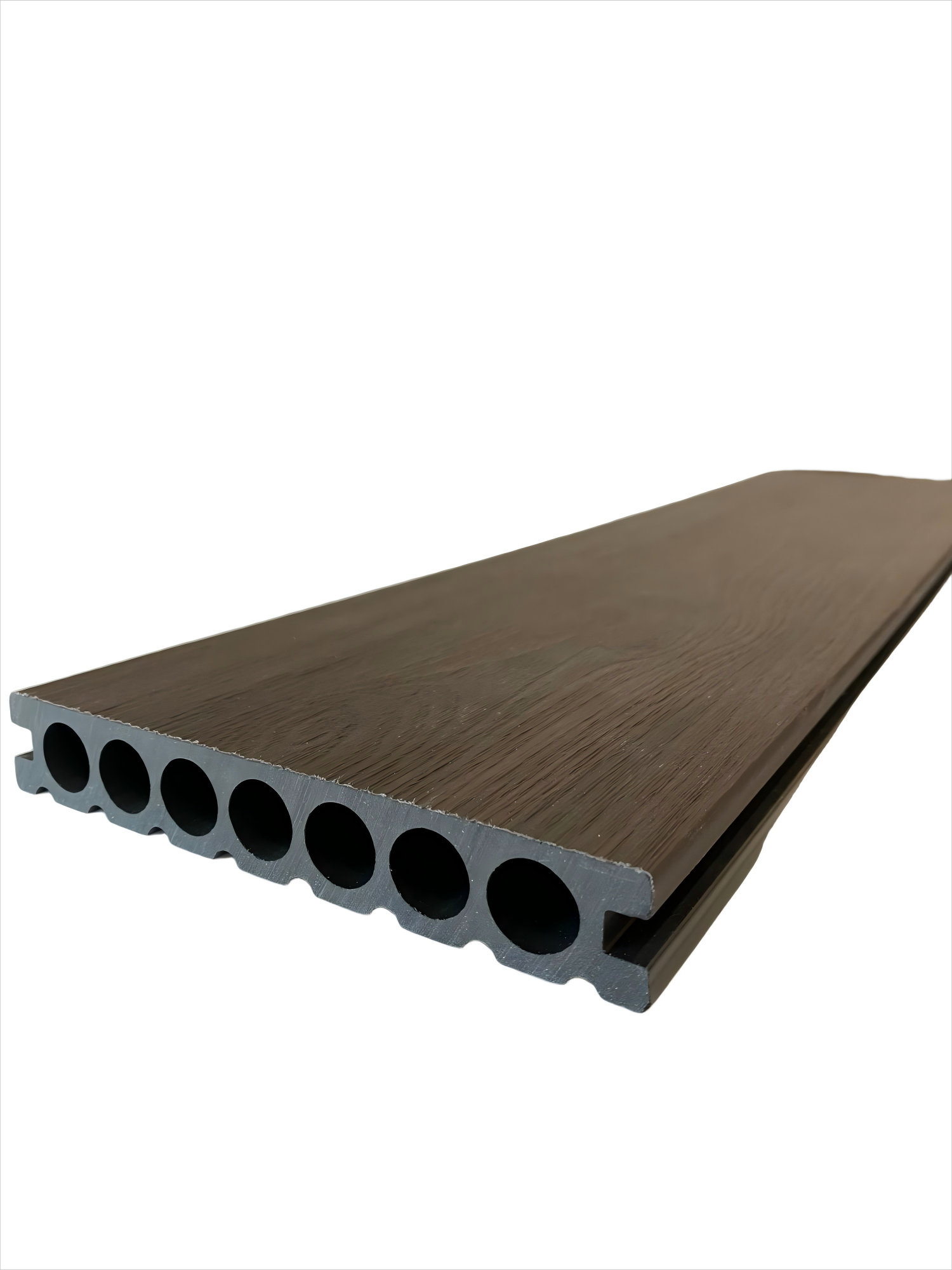
In the future, with the deepening of the "dual carbon" goals, green building materials will develop towards high performance and multifunctionality. Linyi Xuancheng plans to invest 50 million yuan in the research and development of third-generation wood-plastic materials, focusing on achieving breakthroughs in additional functions such as self-cleaning and antibacterial properties, thereby continuing to lead technological upgrades in the industry. For more product details and technical parameters, please visitOfficial website。