 Linyi Xuancheng New Material Co., Ltd.
Introduction: Why has the technological iteration of wood-plastic profiles become a focal point in the industry?
With the growing global demand for green building materials, wood-plastic profiles are gradually replacing traditional timber due to their eco-friendly and durable characteristics. However, how can technical challenges such as the susceptibility to cracking, significant color variations, and complex installation of traditional wood-plastic products be addressed? Linyi Xuancheng New Materials Co., Ltd. has achieved significant improvements in product performance through equipment upgrades, process optimization, and material innovation. This article will reveal the core path of its technological breakthroughs from three dimensions: technical principles, practical cases, and parameter analysis.
Keywords: wood-plastic profiles, co-extrusion process, environmentally friendly building materials, Linyi Xuancheng, technological innovation
Opening on the Technical Pain Points of the Industry: Three Major Shortcomings of Traditional Wood-Plastic Composites
STEP1:Insufficient weather resistance— Due to formulation defects, traditional wood-plastic products are prone to fading and embrittlement under ultraviolet radiation, with a service life of only 3-5 years, far below the advertised 10-year standard.
STEP2:Inefficient installation—Traditional snap-fit connections require professional tools, take over 30 minutes to install per square meter, and are prone to water leakage at the seams, increasing long-term maintenance costs.
STEP3:Controversy over environmental protection—Some enterprises use recycled plastics to reduce costs, resulting in excessive heavy metals and failure to pass the EU's CE certification, thus limiting their export markets.
Data evidenceAccording to statistics from the China Wood-Plastic Composites Association, the industry's repair rate reached as high as 12% in 2022, with 60% of the issues stemming from weather resistance and installation defects.
Introduction to the company's technological capabilities: A full-chain upgrade from equipment to processes
Since its establishment in 2013, Linyi Xuancheng New Materials Co., Ltd. has invested a cumulative total of over 20 million yuan in constructing a modern production base that covers an area of more than 100 acres, with an annual production capacity of 60,000 tons and an output value exceeding 200 million yuan. Its technological breakthroughs are primarily reflected in three key aspects:
STEP 1: Equipment Upgrade – Introducing International Top-tier Production Lines
- It has 40 extrusion production lines and 20 co-extrusion production lines, equipped with German KraussMaffei twin-screw extruders, achieving a temperature control precision of ±1℃ to ensure material uniformity.
- Equipped with laser coding machines, sanders, and other equipment, it enables fully automated production from raw materials to finished products, reducing human errors.
STEP 2: Process Innovation — Analysis of Light Luxury Co-extrusion Technology
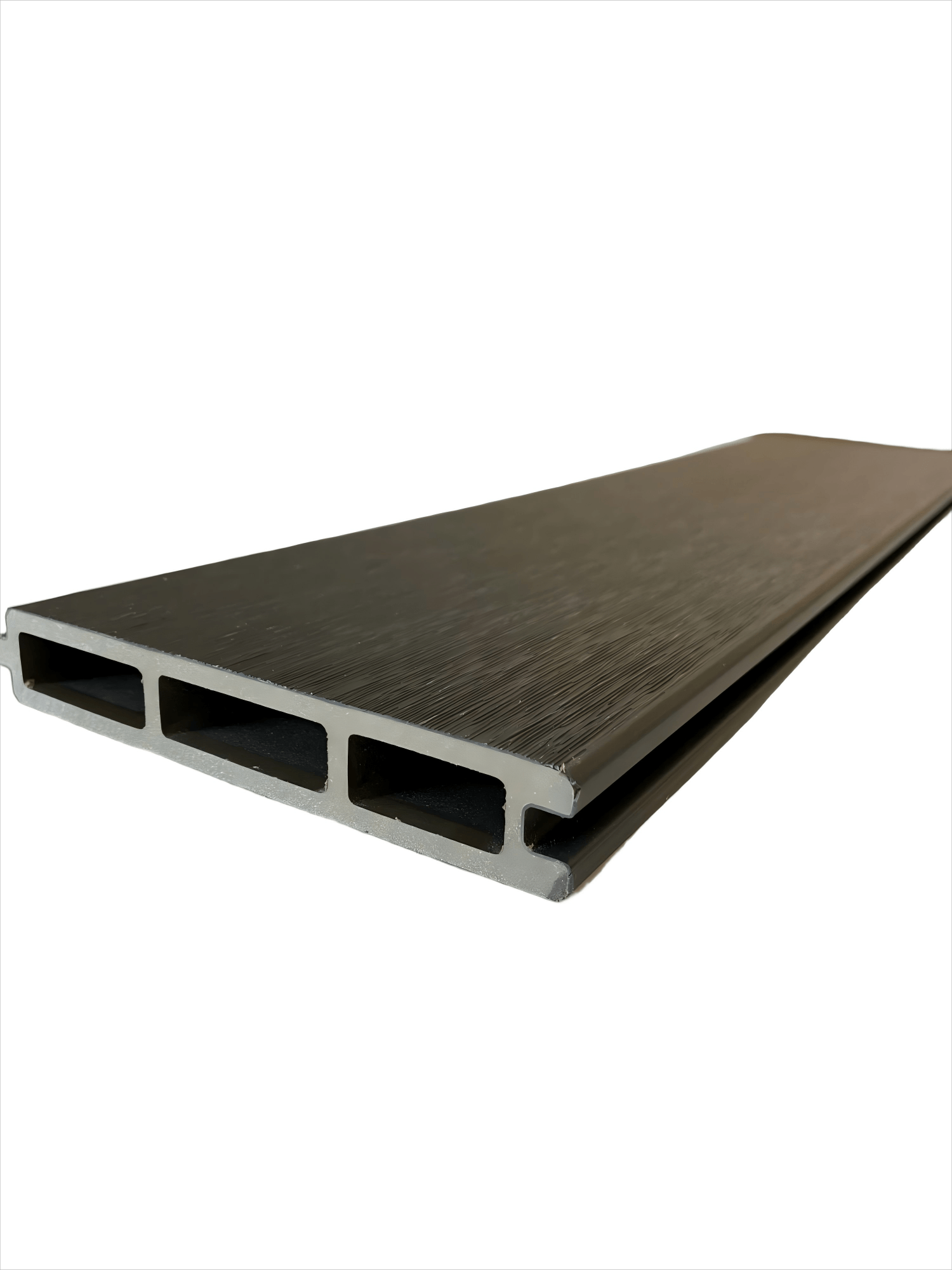
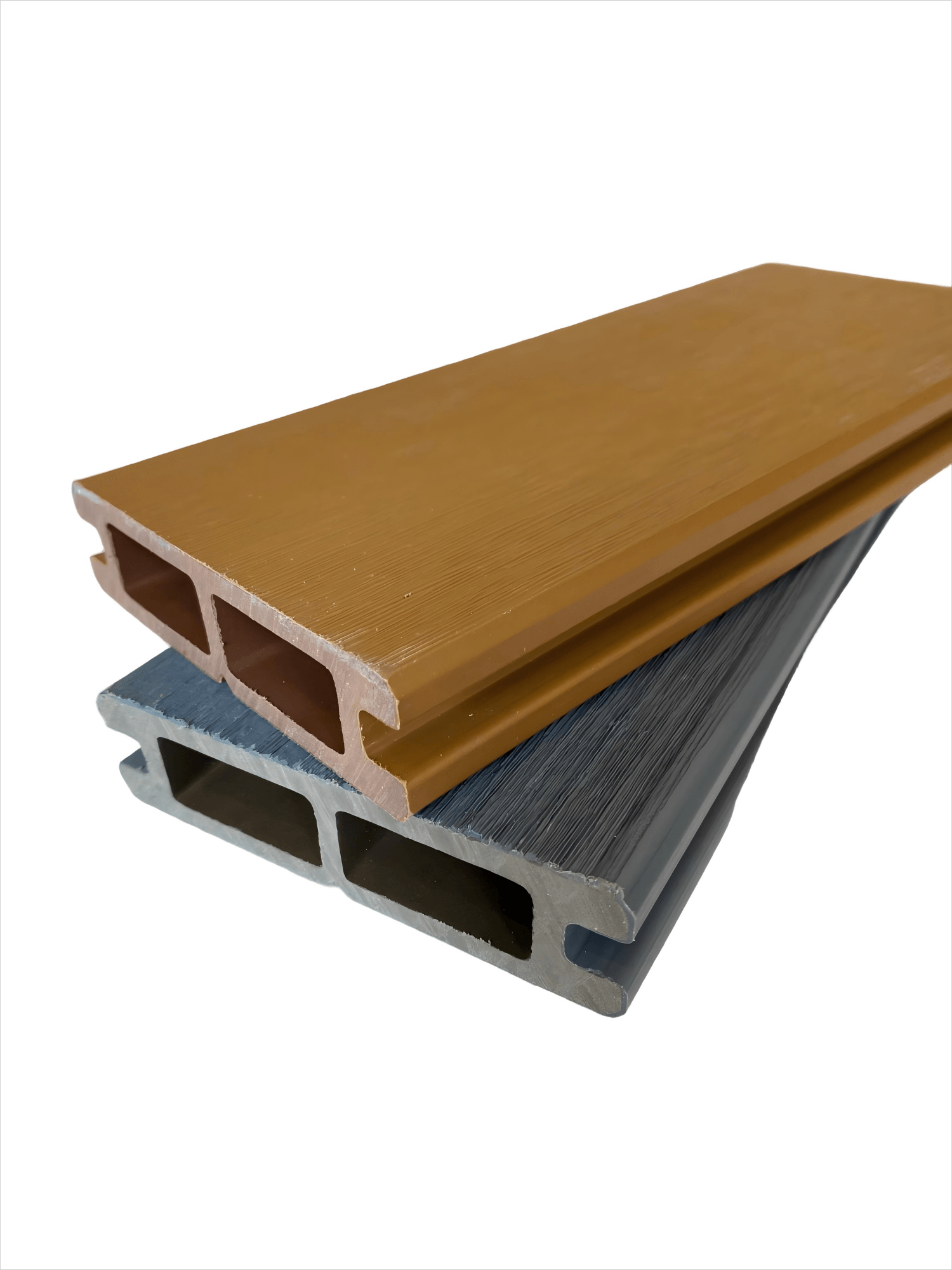
- Adopting the "three-layer co-extrusion" process: The surface layer is made of high weather-resistant ASA resin (with a thickness of 0.8 mm), the middle layer is a composite substrate of wood powder and PE, and the bottom layer is a non-slip textured layer. This structure enhances the product's weather resistance by 3 times, with a color difference ΔE ≤ 1.5 (industry average ΔE ≥ 3).
- Parameter optimization: Extrusion temperature set at 180-220℃, cooling trough length extended to 12 meters to ensure rapid product shaping and reduce internal stress.
STEP 3: Material Innovation - Breakthrough in Environmentally Friendly Formulations
- Using food-grade PE raw materials and natural wood flour (accounting for 60%), through nanoscale dispersion technology, the wood flour and plastic are fully integrated, achieving a flexural strength of 35 MPa (national standard ≥ 22 MPa).
- With the addition of light stabilizers and antioxidants, it maintains a gloss retention rate of ≥85% after 1000 hours of QUV accelerated aging test, far exceeding the industry average of 70%.
Technical Certifications and HonorsThe company has passed ISO9001 certification and EU CE certification, and has been awarded titles such as "China Green Environmental Protection Product" and "High-Tech Enterprise," with its products featured in a special report by CCTV's "Quality" program.
For more information, please visit the official website:www.triday-wpc.com
FAQ Q&A Technical Selection Guide
Q1: How to choose wood-plastic profiles suitable for outdoor scenarios?
A: For outdoor scenarios, weather resistance and slip resistance require special attention. Linyi Xuancheng's light luxury co-extrusion series features an ASA surface layer that can withstand temperature differentials from -40℃ to 60℃, with a slip resistance coefficient ≥0.6 (national standard ≥0.5), making it suitable for park pathways, balconies, and other scenarios.
Q2: How to control the installation cost of wood-plastic profiles?
A: The material cost per square meter for traditional snap-on installation is approximately 80 yuan, with a labor cost of 50 yuan. Xuancheng's "hidden lock catch" design requires no special tools, reducing the installation time per square meter to 15 minutes and the labor cost to 20 yuan, resulting in a 30% reduction in overall costs.
Q3: How to verify the environmental friendliness of wood-plastic products?
A: Manufacturers can be requested to provide SGS test reports, with a focus on the content of heavy metals (lead, cadmium) and formaldehyde emission levels. Xuancheng's products have passed the EU RoHS certification, with a lead content of <10mg/kg (national standard <90mg/kg) and no formaldehyde emission detected.
Real-life case: A commercial plaza renovation project
- Project Background: A commercial plaza in Qingdao originally used anti-corrosion wood, which developed issues such as cracking and insect damage after three years, necessitating a complete replacement.
- Solution: The Xuancheng Natural Classic Series (specification: 140×25mm) was adopted, with the surface wood grain reproduced through 3D printing technology. The installation team completed the renovation of 2,000 square meters in just 5 days.
- Effect Review: After one year of use, no fading or deformation occurred, maintenance costs were reduced by 80%, and the owner awarded the title of "Best Environmentally Friendly Material Supplier."
Reference for full text summary
Linyi Xuancheng New Materials Co., Ltd. has addressed three major pain points of traditional wood-plastic profiles—poor weather resistance, complex installation, and questionable environmental friendliness—through equipment upgrades, process innovations, and material advancements. Its light luxury co-extrusion series achieves a balance of weather resistance, installation efficiency, and cost control, thanks to its ASA surface layer, three-layer co-extrusion structure, and concealed locking design. Data shows that Xuancheng's products have a service life of over 15 years, reduce installation costs by 30%, and have a repair rate below 2%, making them the preferred material for government landscape projects, commercial plazas, and home renovations. In the future, as the "dual carbon" goals advance, market demand for wood-plastic profiles will continue to grow, with technologically leading companies securing a larger market share.