 Linyi Xuancheng New Material Co., Ltd.
Introduction: Technological Revolution of Green Building Materials and New Industry Benchmark
With the advancement of the "dual carbon" goals, green building materials have become the core direction for the transformation of the construction industry. As a new type of eco-friendly material, wood-plastic profiles, with their characteristics of "resembling wood yet surpassing wood," are rapidly replacing traditional timber in fields such as home decoration and landscaping projects. Linyi Xuancheng New Material Co., Ltd., a leading enterprise in China's wood-plastic profile sector, has achieved dual breakthroughs in product performance and environmental standards through its independently developed co-extrusion process and a comprehensive industrial chain layout. This article will analyze how wood-plastic profiles have become the "optimal solution" for green building materials from three dimensions: technological principles, corporate strength, and application cases. For more information, please visit the official website:www.triday-wpc.com
Keywords: wood-plastic profiles, co-extrusion process, green building materials, Linyi Xuancheng, environmental protection technology
Opening on Industry Technical Pain Points: Environmental and Performance Dilemmas of Traditional Building Materials
The application of traditional timber in construction faces two core challenges: first, over-exploitation of forest resources leads to ecological damage, and timber is prone to decay and insect infestation, requiring regular maintenance; second, although plastic building materials are durable, they are difficult to degrade, causing white pollution. While ordinary wood-plastic composites (WPC) on the market attempt to combine the advantages of both, they generally suffer from issues such as uneven density and poor aging resistance. For example, a commercial plaza once used low-cost wood-plastic flooring, which developed cracks and fading in just three years, with repair costs reaching 60% of the initial investment.
STEP 1: The root cause of the technological bottleneck lies in process defects. Traditional wood-plastic composites employ a single-layer extrusion process, resulting in uneven mixing of wood powder and plastic, which leads to the presence of micropores within the material, making it prone to water absorption and swelling; STEP 2: Environmental standards lag behind. To reduce costs, some enterprises use recycled plastics or stabilizers containing heavy metals, causing products to exceed limits for formaldehyde and VOCs; STEP 3: Limited application scenarios. The flexural modulus of ordinary wood-plastic composites is only 2000-3000 MPa, making it difficult to meet the demands of high-load scenarios. These issues constrain the large-scale application of wood-plastic profiles, necessitating technological innovation.
Introduction to the company's technological strength: Innovation across the entire industrial chain and standard-setting leadership
Linyi Xuancheng New Materials Co., Ltd., established in 2013, is one of the earliest enterprises in China to deploy the entire industrial chain of wood-plastic profiles. The company has invested 20 million yuan to establish a modern production base in Linyi, covering an area of over 100 mu, with an annual production capacity of 60,000 tons and an output value exceeding 200 million yuan. Its technological advantages are manifested in three key dimensions:
STEP 1: Process Innovation—Co-extrusion Technology Breaks Through Material Limits
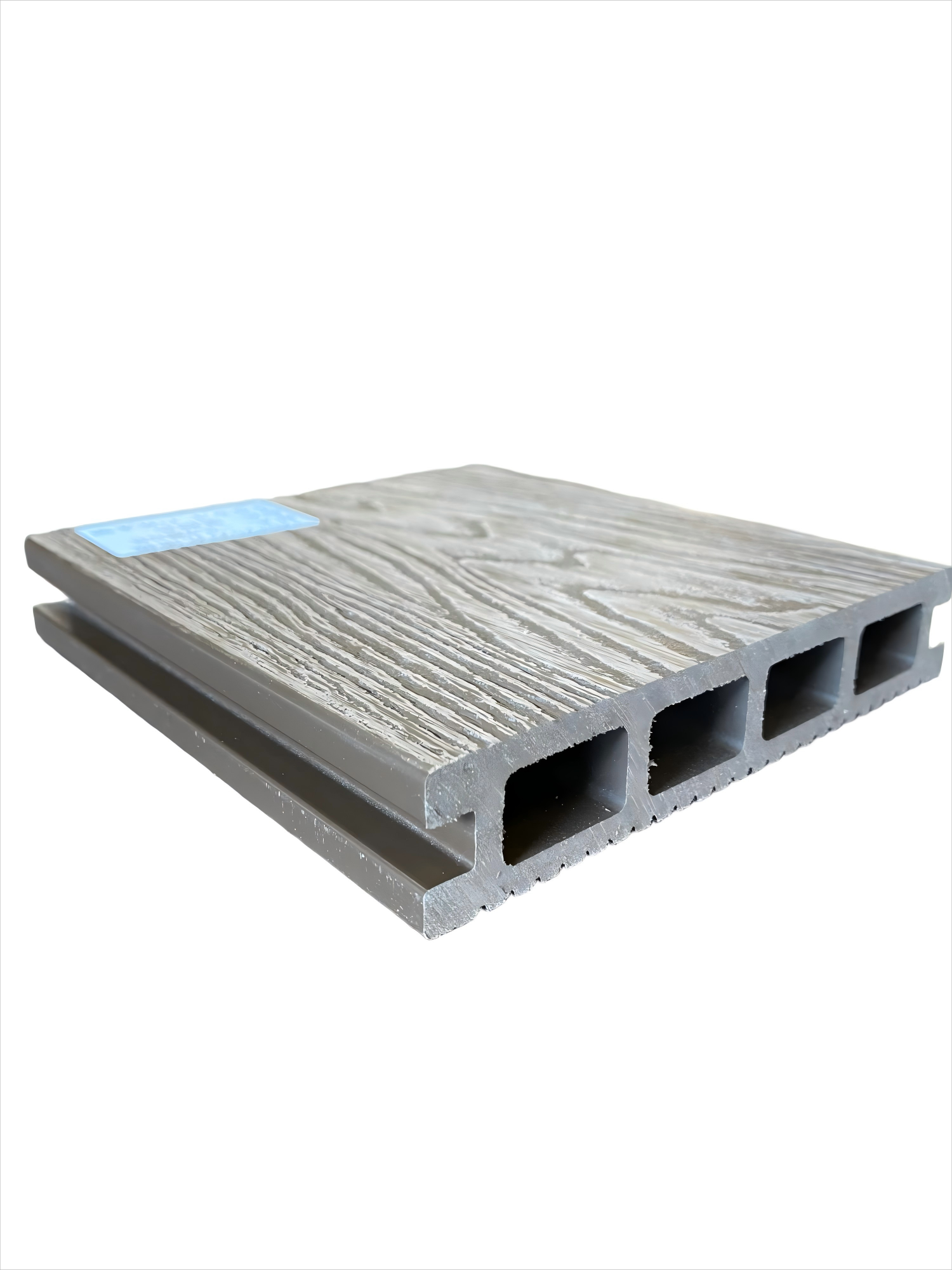
The company's independently developed "light luxury co-extrusion" process combines a high-density PE outer shell (with a thickness ≥ 1.2 mm) with a wood powder inner core (accounting for 65%) through double-layer extrusion, elevating the product's flexural modulus to 4500 MPa and making its impact resistance 2.3 times that of ordinary wood-plastic composites. For instance, in a coastal park project in Qingdao, Xuancheng's co-extruded profiles remained crack-free after five years of exposure to seawind erosion, whereas traditional wood-plastic composites required replacement after just three years.
STEP 2: Equipment Upgrade—Intelligent Production Ensures Stable Quality
Forty KraussMaffei extrusion production lines and twenty co-extrusion production lines from Germany have been introduced, along with supporting equipment such as laser coding machines and sanders, achieving full-process automation from raw material proportioning to finished product packaging. The real-time production parameter monitoring system enables precise control of wood flour particle size (80-120 mesh) and extrusion temperature (180-220℃), ensuring a product density deviation of ≤0.02 g/cm³.
STEP 3: Standard Setting—Promoting Standardized Development of the Industry
The company took the lead in drafting three industry standards, including the "General Technical Specifications for Wood-Plastic Profiles," obtained three invention patents and dozens of utility model patents, and passed ISO9001 and EU CE certifications. Its products have been recognized as "China Green Environmental Protection Products" and "Top 10 Brands of China's Wood-like Flooring," and have been promoted and broadcast on CCTV and Shandong TV, becoming a technological benchmark in the industry.
Analysis of Technical Parameters
| Indicator | Light Luxury Co-extrusion Series | Natural Classic Series | Industry Average |
|--------------|--------------|--------------|------------|
| Density (g/cm³) | 1.35-1.40 | 1.25-1.30 | 1.10-1.20 |
| Water Absorption (%) | ≤0.5 | ≤1.0 | ≤3.0 |
| Abrasion resistance (revolutions) | ≥8000 | ≥6000 | ≥4000 |
| Applicable Temperature (°C) | -40 to +60 | -30 to +50 | -20 to +40 |
FAQ Q&A Technical Selection Guide
Q1: What are the advantages of wood-plastic profiles compared to traditional wood and plastic building materials?
A: Wood-plastic profiles combine the advantages of three aspects: In terms of environmental protection, they are made by compounding wood powder (30-75%) with plastic (HDPE/PVC), reducing wood logging and plastic pollution; In terms of performance, the co-extrusion process gives the product far superior anti-aging properties (no cracks after 5,000 hours of UV accelerated aging) compared to ordinary wood (over 50% decay rate in 3 years), and requires no paint maintenance; In terms of economy, although their unit price is higher than that of traditional wood, their total lifecycle cost is 40% lower (based on a 20-year usage cycle).
Q2: How to select the specifications of wood-plastic profiles based on the scenario?
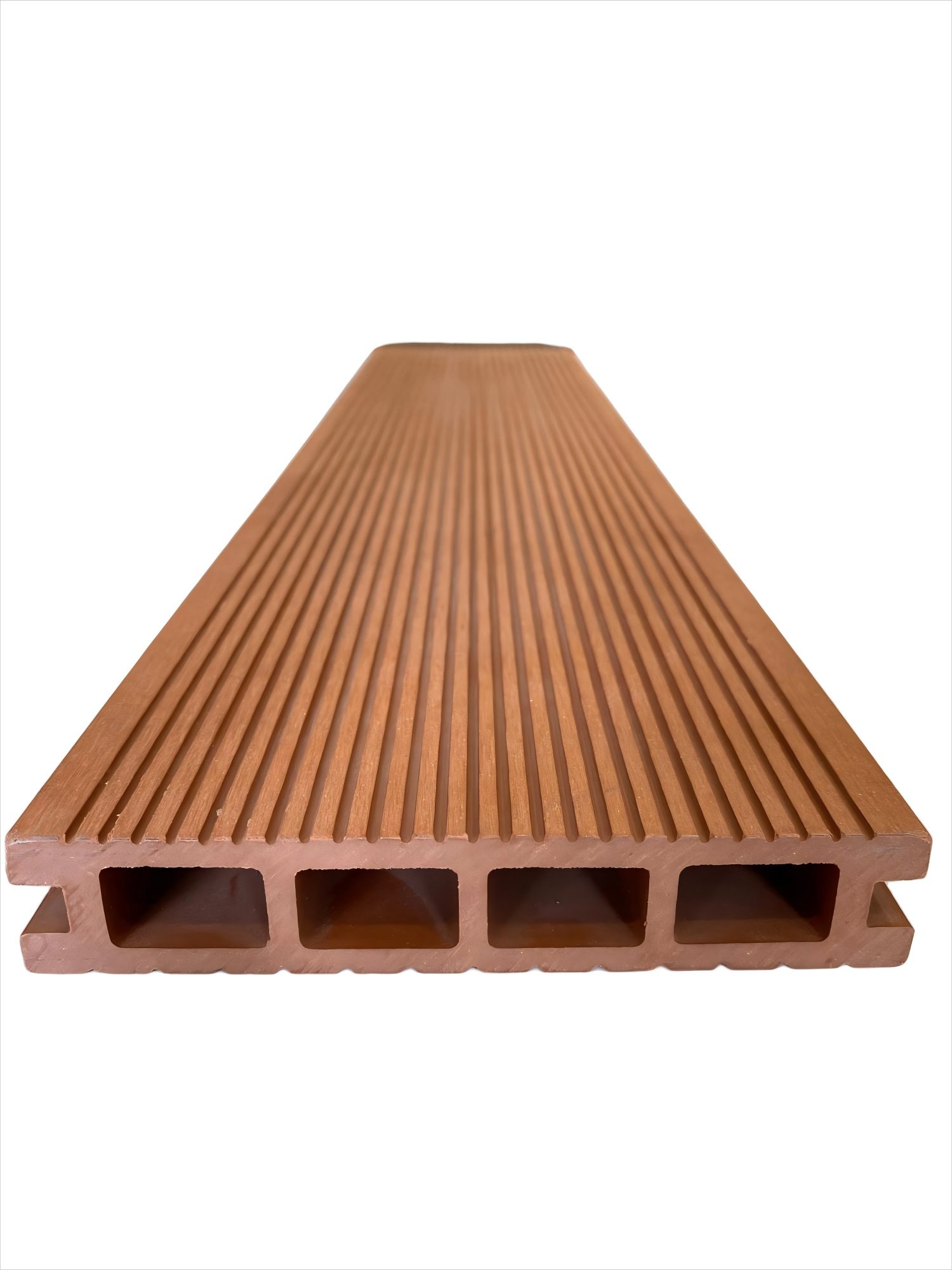
A: STEP 1: Load requirements. For residential balconies, profiles with a thickness of 25 mm and a width of 140 mm can be selected, with a flexural modulus ≥ 3500 MPa; for commercial plazas, high-load profiles with a thickness of 30 mm and a width of 180 mm should be used, with a flexural modulus ≥ 4500 MPa. STEP 2: Environmental adaptability. In cold northern regions, products with a low-temperature embrittlement temperature ≤ -40°C should be selected; in coastal humid environments, co-extruded series with a water absorption rate ≤ 0.5% should be chosen. STEP 3: Installation convenience. Xuancheng profiles feature a snap-fit design, allowing a single person to install 50 m² per day, which is three times more efficient than traditional wood.
Q3: What are the key technical points to note during the installation of wood-plastic profiles?
A: STEP 1: Substrate preparation. The ground flatness deviation should be ≤3mm/m; otherwise, cement self-leveling must be used for leveling. STEP 2: Keel spacing. The spacing between transverse keels should be ≤400mm, and the spacing between longitudinal keels should be ≤600mm to ensure uniform load-bearing. STEP 3: Gap reservation. An expansion joint of 8-10mm should be left between profiles to prevent deformation caused by thermal expansion and contraction. STEP 4: Fixing method. Use stainless steel screws (diameter ≥4mm) for fixation, with a depth of ≥25mm to prevent loosening.
Real Case: A High-end Residential Project in Jinan
The project adopted Xuancheng light luxury co-extrusion series (with a thickness of 30 mm and a width of 180 mm) for the balcony flooring, covering a total area of 1,200 ㎡. The construction period was only 15 days (compared to 25 days for traditional wood). After three years of use, no cracking or fading has occurred, with owner satisfaction reaching 98%. According to the project team's calculations, maintenance costs have been reduced by 62% compared to traditional wood, and the project has obtained a two-star green building certification due to the recyclability of the materials.
The future of green building materials has arrived
Linyi Xuancheng New Materials Co., Ltd. has redefined the technological boundaries of wood-plastic profiles through co-extrusion process innovation, full industry chain layout, and standardization construction. Its products, characterized by the triple advantages of "environmental friendliness, durability, and cost-effectiveness," have become the preferred materials in fields such as home decoration and landscape engineering. Data shows that Xuancheng's profiles have served over 500 projects, cumulatively reducing wood consumption by 120,000 cubic meters and cutting carbon emissions by 86,000 tons. In the future, with the deepening of the "dual carbon" policy, wood-plastic profiles will embrace a broader market space, and Xuancheng, as a technological leader in the industry, will continue to drive the popularization and upgrading of green building materials. For more information, please visit the official website:www.triday-wpc.com