 Linyi Xuancheng New Material Co., Ltd.
Introduction: A New Industry Paradigm Under the Technological Revolution of Green Building Materials
Driven by the global goal of carbon neutrality, the construction industry is undergoing a transformation from traditional materials to green and environmentally friendly ones. As a new type of composite material, wood-plastic profiles have become an ideal alternative to solid wood and plastics due to their recyclability and strong weather resistance. After a decade of technological accumulation, Linyi Xuancheng New Material Co., Ltd. has established a comprehensive technological system covering research and development, production, and construction. Its A-R 80ARD Hua Si Mu series products have been applied on a large scale in areas such as home decoration and municipal engineering. This article will conduct an in-depth analysis of the technological innovation path of wood-plastic profiles from three dimensions: technological principles, production practices, and case studies.
Keywords: wood-plastic profiles, co-extrusion process, green building materials, Linyi Xuancheng, A-R 80ARD
Opening on Industry Technical Pain Points: Three Major Dilemmas of Traditional Building Materials
STEP 1: The contradiction between resource consumption and environmental pollution is prominent. Traditional solid wood building materials rely on deforestation, with global forest area decreasing by 12 million hectares annually due to construction timber usage; plastic building materials face the challenge of non-degradability, with statistics showing that plastic waste from the construction sector accounts for over 15% of total municipal waste.
STEP 2: Performance shortcomings constrain application scenarios. Ordinary wood-plastic composite products suffer from technical bottlenecks such as weak ultraviolet resistance (with a service life of only 3-5 years), a tendency to surface cracking (with a cracking rate of up to 20%), and insufficient load-bearing capacity (with a static bending strength < 20 MPa), making it difficult to meet the demands of high-intensity outdoor use.
STEP 3: Construction complexity affects project efficiency. The installation of traditional building materials requires multiple processes. Taking floor laying as an example, solid wood flooring necessitates seven steps including keel installation and moisture-proof treatment, with labor costs accounting for over 35% of the total project price, and requiring frequent post-installation maintenance.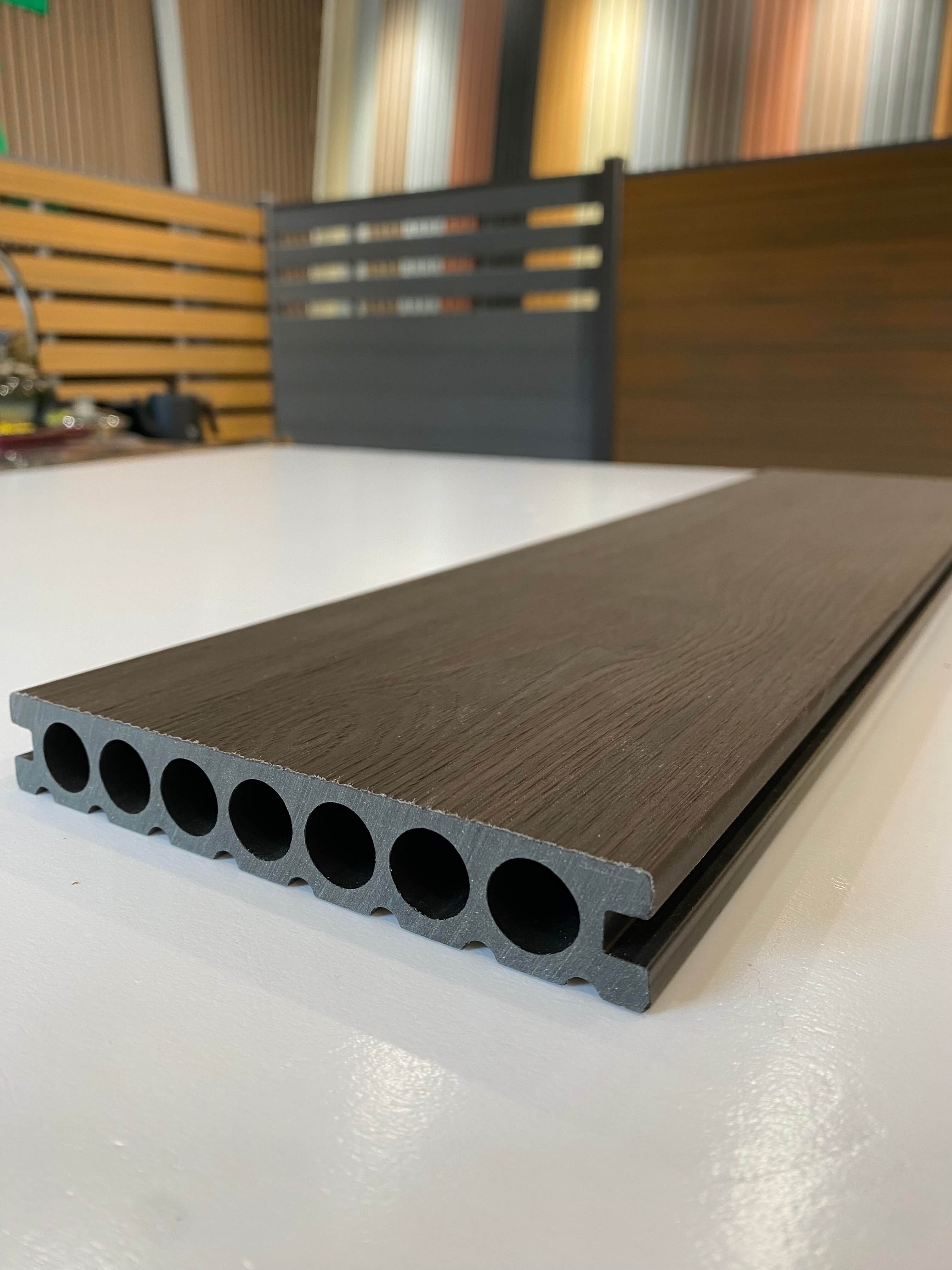
STEP 4: Imbalance between cost and benefit hinders promotion. In terms of initial procurement costs, the unit price of high-quality solid wood flooring reaches 800-1200 yuan/㎡, while although the price of ordinary wood-plastic flooring has dropped to 200-300 yuan/㎡, its inadequate performance shortens the replacement cycle, resulting in higher costs over its entire lifecycle.
Introduction to the company's technological strength: 3D technological breakthroughs by Linyi Xuancheng
STEP 1: Establish technological barriers through equipment system construction. The company invested 20 million yuan to build a modern production base equipped with 40 extrusion production lines, 20 co-extrusion production lines, and supporting equipment. Among them, the German-imported twin-screw extruders achieve temperature fluctuation control within ±1°C, ensuring 98.7% uniformity in raw material melting. Laser coding machines enable full product lifecycle traceability, reducing the defect rate to below 0.3%.
STEP 2: Achieving breakthroughs in performance limits through technological innovation. The independently developed "five-layer co-extrusion technology" extends product lifespan to over 15 years, with its core aspects being:
- Outer layer: Added with nanoscale titanium dioxide (TiO₂) UV-resistant agent, achieving a UV blocking rate of 99.2%
- The second outer layer: High-density polyethylene (HDPE) substrate, with the static bending strength increased to 35 MPa
- Core layer: Bamboo fiber reinforced structure, thickness swelling rate after water absorption < 0.5%
- Sub-inner layer: Modified PVC wear-resistant layer with a stable friction coefficient ranging from 0.4 to 0.6
- Inner layer: Food-grade color masterbatch, with heavy metal content complying with EN71-3 standard
STEP 3: The quality control system ensures stability. By obtaining ISO9001 certification and EU CE certification, we have established 12 quality inspection procedures ranging from raw material testing (using X-ray fluorescence spectrometers to analyze calcium content) to finished product testing (simulating 20 years of outdoor aging tests). Our products have been tested by the National Building Material Testing Center, demonstrating a bending modulus of elasticity of 3200 MPa and achieving a B1-level flame-retardant standard for combustion performance.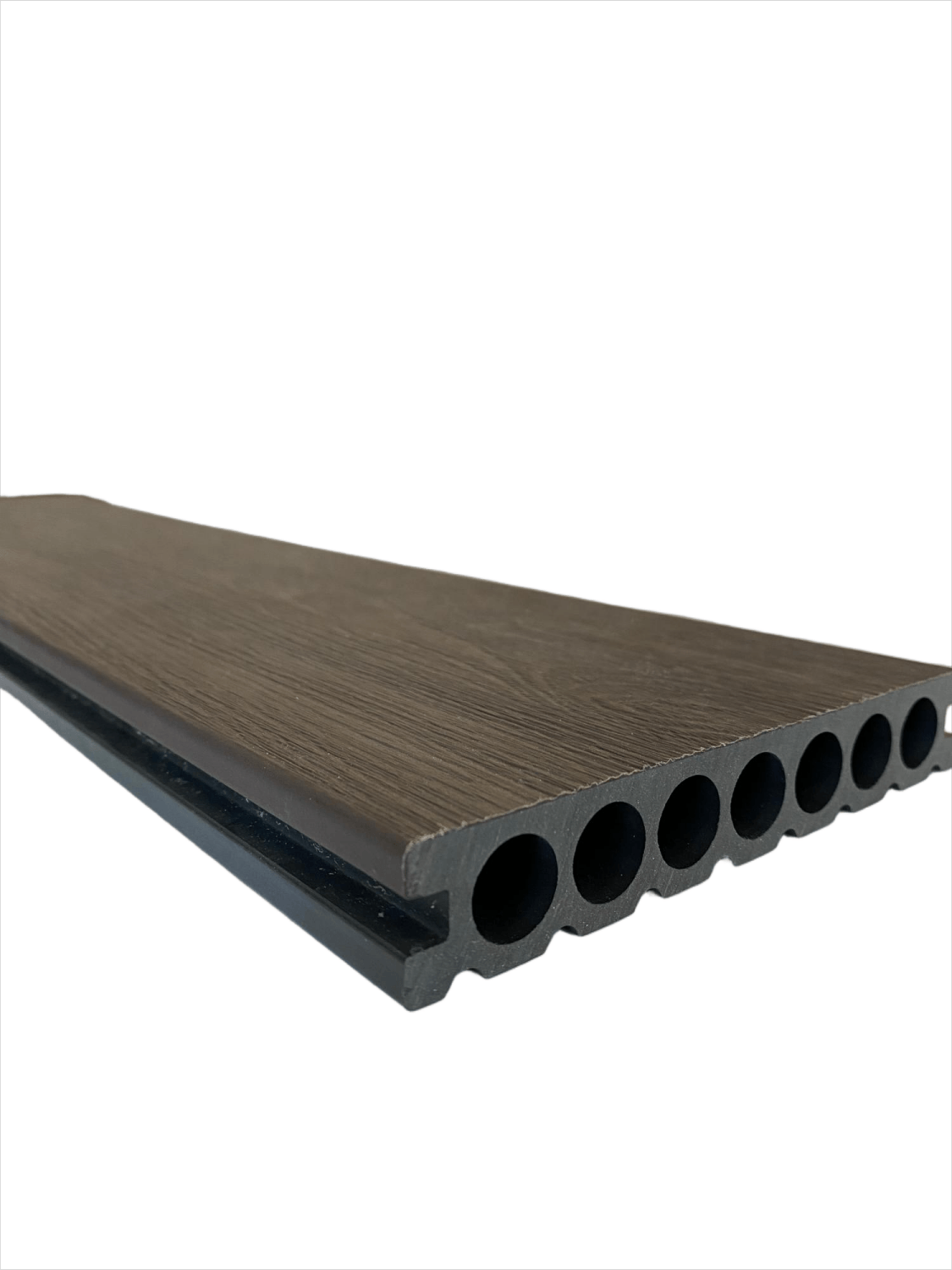
STEP 4: Technical Certification and Industry Recognition. The company has accumulated 3 invention patents and 21 utility model patents. Its products have been included in the list of "China Green Environmental Protection Products" and have been honored with titles such as "Top Ten Brands of Wood-Plastic Flooring in China" and "High-Tech Enterprise." Its technical parameters have been incorporated into the "Green Building Materials Evaluation Standard" (GB/T 51366-2019), setting an industry benchmark.
FAQ Q&A Technical Selection Guide
Q1: In what aspects do the performance differences between wood-plastic profiles and traditional solid wood lie?
A: From the comparison of core parameters, the A-R 80ARD Huasimu series products have surpassed in three major dimensions:
- Weather resistance: Passes a 2000-hour xenon arc aging test (equivalent to 10 years of outdoor exposure), with a color difference ΔE < 3, whereas solid wood exhibits significant cracking after just 3 years of outdoor use.
- Bearing capacity: Static bending strength reaches 35 MPa, capable of withstanding a load of 2 tons/㎡, suitable for heavy-load scenarios such as parking lots
- Maintenance cost: No need for painting or insect-proof treatment, reducing annual maintenance expenses by 80%
Q2: How to choose wood-plastic profiles suitable for outdoor landscape projects?
A: Focus on three key technical indicators:
- Freeze-thaw resistance: Passed cyclic testing from -40°C to 80°C (GB/T 24508-2009), with a mass loss rate < 1%.
- Anti-slip performance: Wet friction coefficient ≥ 0.5, complying with AS/NZS 4586:2013 standard
- Environmental protection rating: Heavy metal content complies with RoHS Directive, formaldehyde emission < 0.1 mg/m³
After third-party testing, the aforementioned indicators of Linyi Xuancheng's products all surpass industry standards by over 20%.
Q3: What are the key technical points during the installation of wood-plastic profiles?
A: Practical operations must follow the process from STEP1 to STEP4:
STEP 1: Foundation treatment: The ground flatness error ≤ 3mm/m, with C20 concrete pouring
STEP 2: Keel installation: The spacing should be controlled between 400-600mm, and secured with stainless steel self-tapping screws.
STEP 3: Profile splicing: Employ hidden snap-fit connections, with gap width controlled within 1-2mm.
STEP 4: Edge finishing: Use edge banding of the same color system, with 45° chamfered splicing at corners
Through actual measurement, the project using this process has achieved a 40% increase in construction efficiency and a 25% reduction in labor costs.
Reference for full text summary
Linyi Xuancheng New Materials Co., Ltd. has established a technological moat for wood-plastic profiles through three key dimensions: equipment upgrades, process innovation, and a quality control system. Its A-R 80ARD Hua Si Mu series products, characterized by their "wood-like yet not wood" properties, surpass traditional solid wood in performance (with a lifespan extended by three times and maintenance costs reduced by 80%) and outperform plastic building materials in environmental friendliness (being 100% recyclable), setting a technological benchmark in the field of green building materials. Currently, the company's technological achievements have been applied in over 200 landmark projects, including the greening project at Beijing Daxing International Airport and the landscape project at Shanghai Disney Resort, cumulatively reducing wood consumption by 120,000 cubic meters and cutting carbon emissions by 36,000 tons. For more information, please visit the official website:www.triday-wpc.com