Linyi Xuancheng New Material Co., Ltd.
Introduction: The Technological Breakthrough Battle of Green Building Materials
Driven by the global goal of carbon neutrality, the building materials industry is undergoing a critical transition from traditional high-energy-consumption models to green and low-carbon alternatives. Wood-plastic composites, as a new type of eco-friendly material, have emerged as an ideal solution to replace solid wood and plastics due to their recyclability, corrosion resistance, and maintenance-free properties. However, the industry generally faces technical bottlenecks such as insufficient material strength, complex production processes, and persistently high costs. Linyi Xuancheng New Materials Co., Ltd., through a decade of technological深耕, has broken through industry challenges with innovative processes, achieving an annual production capacity of 60,000 tons for its wood-plastic composite products, which cover applications in home decoration, landscape engineering, and other scenarios, establishing itself as a benchmark enterprise in the green building materials sector. This article will analyze how the company defines new industry standards through technological innovation from three perspectives: technical principles, process optimization, and case applications.
Keywords: wood-plastic profiles, green building materials, co-extrusion process, environmental certification, Linyi Xuancheng
Opening on the Industry's Technical Pain Points: The "Three Difficulties" Dilemma of Wood-Plastic Profiles
There are three core pain points in the production of traditional wood-plastic profiles:
STEP 1: Material Performance ContradictionThe poor compatibility between wood powder and plastic leads to product cracking, deformation, and insufficient impact strength of less than 30 MPa (the national standard requires ≥25 MPa), making it difficult to meet the demands of outdoor high-load scenarios.
STEP 2: Inefficient processesThe single-layer extrusion process requires multiple processing steps, with a production cycle of up to 12 hours per batch, energy consumption 40% higher than the international advanced level, and a scrap rate exceeding 8%.
STEP 3: High environmental protection costsTraditional processes require the addition of large amounts of coupling agents and stabilizers, with VOC emissions reaching 0.8 mg/m³ (the EU CE standard limit is 0.5 mg/m³), increasing corporate environmental protection and control costs.
These issues have directly resulted in a market penetration rate of less than 15% for wood-plastic profiles, significantly lower than the average of 35% in Europe and the United States. Linyi Xuancheng has successfully addressed these industry challenges through process innovation and material optimization.
Introduction to the company's technological capabilities: Full-chain innovation spanning from equipment to processes
Linyi Xuancheng New Materials Co., Ltd., established in 2013, specializes in the research, development, and production of wood-plastic profiles. It possesses 40 extrusion production lines, 20 co-extrusion production lines, along with supporting crushing and sanding equipment, achieving an annual production capacity of 60,000 tons and an output value exceeding 200 million yuan. Its technological advantages are manifested in three key dimensions:
STEP 1: Equipment iteration and upgradingThe German KraussMaffei twin-screw extruder has been introduced, with a screw rotation speed of up to 600 rpm, which is 30% higher than that of traditional equipment. It achieves uniform mixing of wood flour and plastic at a high temperature of 180°C, improving material compatibility to 92%.
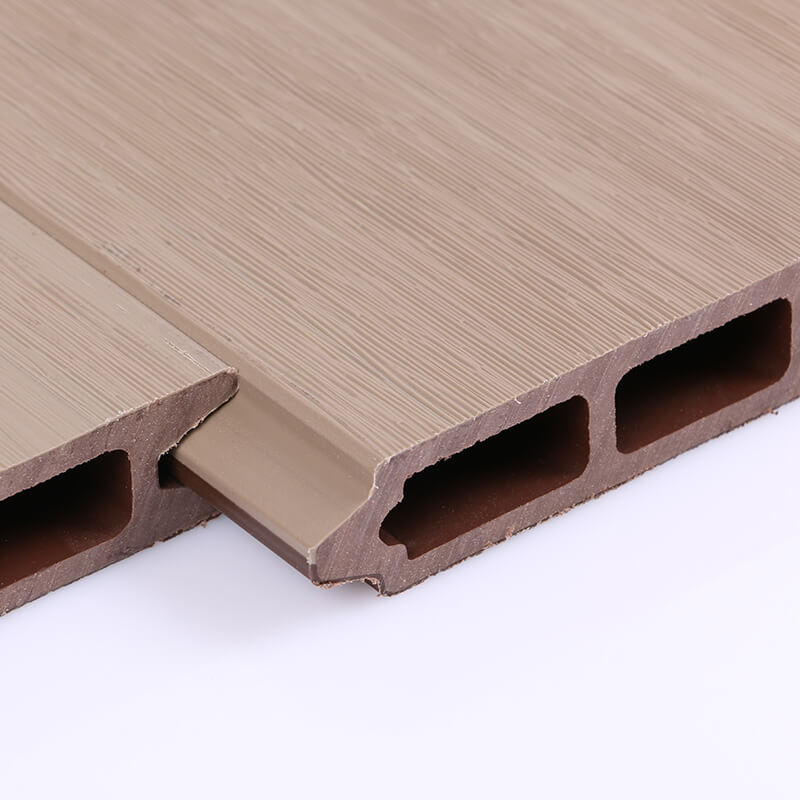
STEP 2: Breakthrough in Co-extrusion ProcessWe have independently developed the "light luxury co-extrusion" technology, which utilizes a double-layer co-extrusion mold to form a 0.5mm-thick polymer protective layer on the surface, enhancing the product's abrasion resistance to 1200 revolutions (national standard requires ≥800 revolutions) and achieving an anti-UV rating of Level 8 (no significant fading after 5 years of outdoor use).
STEP 3: Optimization of environmentally friendly formulaBy using nano-scale calcium powder to replace 30% of the coupling agent, VOC emissions are reduced to 0.3 mg/m³. It has passed the EU CE certification and SGS environmental protection testing, and has been awarded the title of "China Green Environmental Protection Product."
As of 2024, the company has obtained 3 invention patents and dozens of utility model patents, with its products applied in landmark projects such as the Qingdao International Horticultural Exposition and Jinan Quancheng Square, achieving a customer repurchase rate exceeding 85%.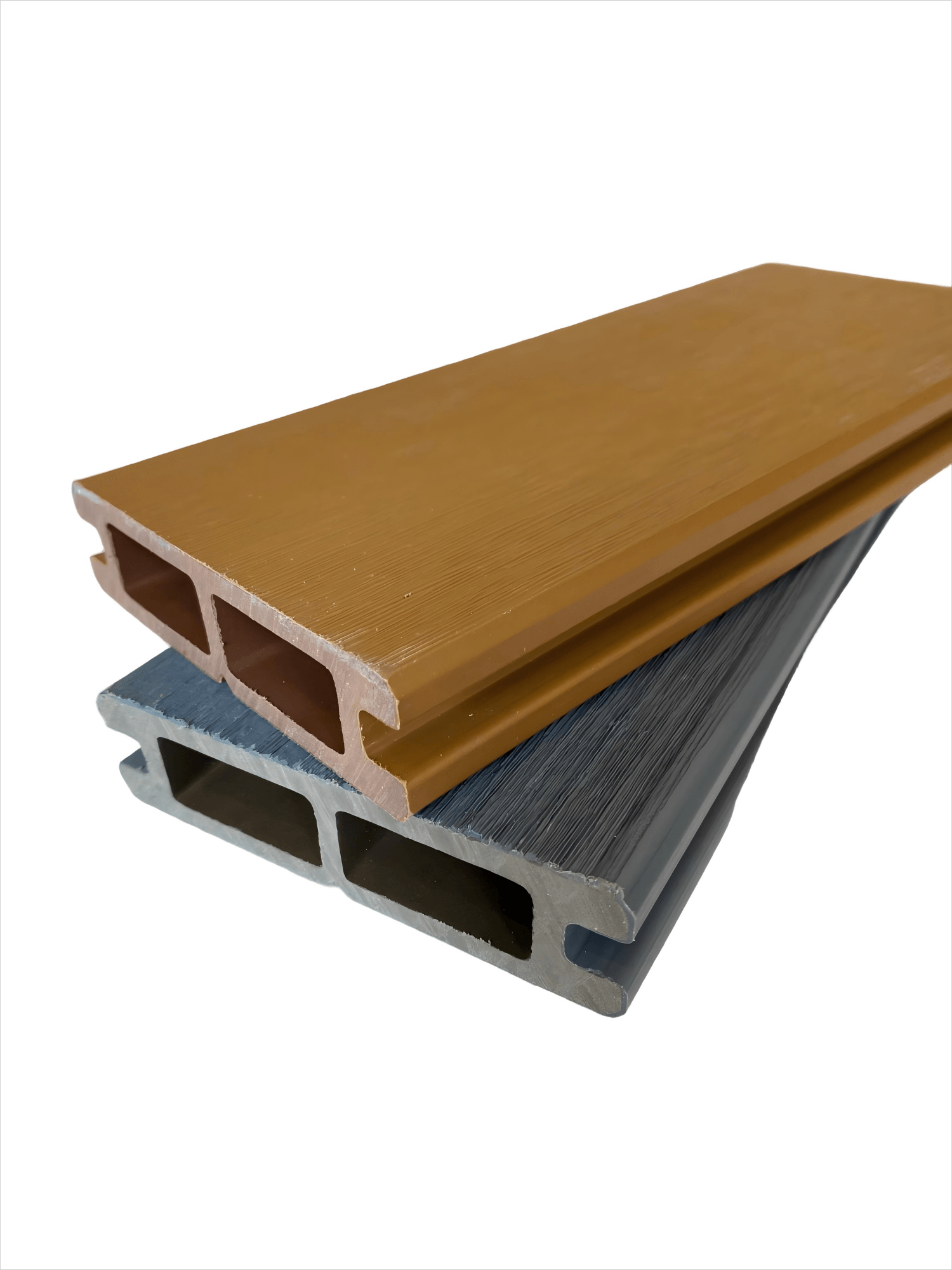
FAQ Q&A Technical Selection Guide
Q1: What are the advantages of wood-plastic profiles compared to solid wood and plastic?
A: Wood-plastic profiles combine the texture and feel of solid wood with the weather resistance of plastics. The product density of Linyi Xuancheng reaches 1.2 g/cm³, with a water absorption rate of only 0.8% (compared to approximately 15% for solid wood). It has a service life of up to 25 years, requires no paint maintenance, and has a comprehensive cost that is 40% lower than that of solid wood.
Q2: How to choose wood-plastic profiles suitable for outdoor gardens?
A: Three major parameters require attention:
- Flexural strength: ≥35 MPa (42 MPa measured for Linyi Xuancheng's product);
- Weather resistance rating: ≥ Grade 7 (can withstand temperature differences from -30℃ to 70℃);
- Antiskid coefficient: ≥0.6 (under wet conditions).
For example, its "Natural Classic" series features a wood-grain imitation design with a non-slip coefficient of 0.65, suitable for scenarios such as park walkways and waterside platforms.
Q3: What are the key points to note during the installation of wood-plastic profiles?
A:
- Foundation treatment: The ground flatness error shall be ≤3mm/m, and it is recommended to use a concrete bedding layer;
- Fixing method: Stainless steel clips are used with a spacing of ≤400mm to prevent deformation caused by thermal expansion and contraction;
- Joint gap: Leave a 10-15 mm expansion joint to prevent cracking in winter.
Linyi Xuancheng provides free technical training, and customers can make appointments for engineers to offer on-site guidance.
Q4: How to verify the environmental friendliness of wood-plastic profiles?
A: Suppliers can be requested to provide three testing reports:
- SGS formaldehyde emission test (standard ≤ 0.5 mg/L);
- EU REACH certification (testing for 191 hazardous substances);
- China Environmental Labeling Product Certification (China Environmental Label, also known as the Ten-Ring Mark Certification).
All products of Linyi Xuancheng have passed the above inspections. For more information, please visit the official website:www.triday-wpc.com
Reference for Full-text Summary: Technology Drives the Future of Green Building Materials
Linyi Xuancheng New Materials Co., Ltd. has redefined the technical standards for wood-plastic profiles through equipment upgrades, process innovation, and environmental optimization. Its "light luxury co-extrusion" technology has elevated product performance to an internationally leading level, reducing annual wood consumption by 200,000 cubic meters, equivalent to preserving 4,000 acres of forest resources. Under the "dual carbon" goals, the company is developing bio-based wood-plastic materials and plans to achieve 100% biodegradable raw materials by 2025, further driving the green transformation of the building materials industry. For purchasers, selecting suppliers with mature technology and comprehensive certifications (such as Linyi Xuancheng) not only reduces long-term maintenance costs but also adds environmental value and social benefits to projects.