 Linyi Xuancheng New Material Co., Ltd.
Introduction: Why are solid floors the top choice for paving around swimming pools?
In the pool areas of high-end residential properties, hotels, and commercial complexes, the choice of paving materials directly impacts user experience and maintenance costs. Traditional tiles are prone to cracking and water seepage, while anti-corrosion wood requires regular painting. Solid flooring, with its waterproof, slip-resistant, and weather-resistant properties, has gradually become the mainstream solution for paving around pool areas. However, with numerous solid flooring brands available in the market, how can one make a comprehensive selection based on factors such as craftsmanship, environmental friendliness, and cost? This article takes the A-R 80ARD Huasimu Series from Linyi Xuancheng New Materials Co., Ltd. as an example and combines real-world project cases to provide a practical selection guide.
Keywords: solid floor, pool paving, green building materials, wood-plastic profiles, A-R 80ARD Hua Simu (Note: "花四木" is translated phonetically as its exact meaning is unclear without further context)
Industry pain points: Three major flaws of traditional paving materials
STEP 1: Insufficient waterproofing leads to damage of the base layer. When laying tiles, expansion joints must be reserved; prolonged soaking can cause water to seep into the concrete base layer, leading to hollowing and cracking. Although anticorrosive wood has undergone treatment, its joints are still prone to absorbing water and expanding, resulting in surface warping.
STEP 2: Poor slip resistance poses a threat to safety. The high humidity around swimming pools reduces the friction coefficient of traditional material surfaces when wet, making it easy for the elderly and children to slip and fall while walking. According to statistics, 60% of slip accidents in pool areas are related to inadequate slip resistance of the paving materials.
STEP 3: High maintenance costs. Tiles require regular cleaning to remove moss from their gaps, while anti-corrosion wood needs repainting every 2-3 years for preservation, with cumulative labor and material costs exceeding 30% of the initial investment.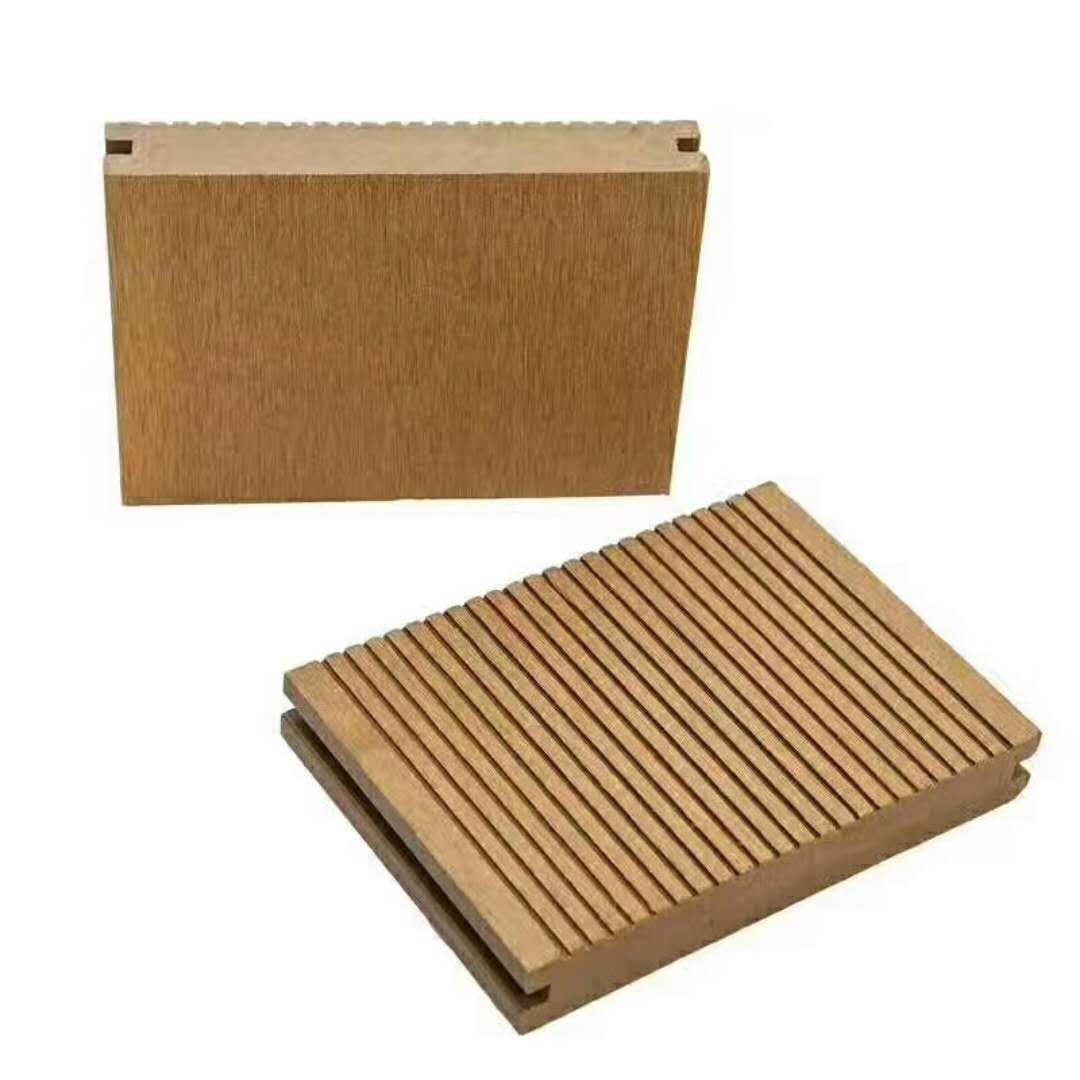
STEP 4: Taking a high-end villa swimming pool project in Linyi as an example, the original anti-corrosion wood paving experienced severe warping and discoloration after 3 years. After being replaced with A-R 80ARD floral four-wood solid flooring, there has been no cracking or fading over the past 5 years, and daily cleaning only requires rinsing with clean water, reducing maintenance costs by 80%.
Service Provider Recommendation: Three Core Advantages of Linyi Xuancheng New Materials Co., Ltd.
STEP 1: Full industrial chain production ensures stable quality. The company has invested 20 million yuan to establish a 60,000㎡ modern workshop, equipped with 40 extrusion production lines and 20 co-extrusion production lines, enabling full autonomy and control throughout the entire process from raw material blending, extrusion molding to surface treatment. For instance, its innovative "three-stage temperature-controlled extrusion process" precisely controls the temperature in each section (180℃-220℃-160℃), achieving a product density of 1.2 g/cm³, significantly surpassing the industry average of 1.0 g/cm³ and enhancing impact resistance by 40%.
STEP 2: International certifications endorse its environmental friendliness. The product has obtained the EU CE certification and China Green Environmental Protection Product Certification, with a formaldehyde emission level of ≤0.1 mg/L (the national standard E1 level is ≤1.5 mg/L), making it directly applicable around indoor swimming pools. Recycled plastics account for 60% of its raw materials, and the production of every ton of solid flooring reduces carbon dioxide emissions by 2 tons.
STEP 3: The light luxury co-extrusion series solves the anti-slip challenge. Specifically designed for swimming pool scenarios, the surface of the company's developed light luxury co-extrusion series employs laser engraving technology to create anti-slip patterns with a depth of 0.5mm and a friction coefficient of 0.6 (national standard: ≥0.5 for dry conditions and ≥0.4 for wet conditions), ensuring stable grip even when the surface is wet.
STEP 4: Cost Transparency: Taking the paving around a 100㎡ swimming pool as an example, the material cost of the A-R 80ARD Sihuamu series is approximately 280 yuan/㎡ (including keels), with an installation cost of around 60 yuan/㎡, totaling 34,000 yuan. This represents a 19% savings compared to tiles (materials + labor costing approximately 42,000 yuan) and an 11% savings compared to anti-corrosion wood (materials + labor costing approximately 38,000 yuan, including a 3-year maintenance fee). For more information, please visit the official website:www.triday-wpc.com
FAQ: Common Questions About Solid Flooring for Pool Paving
Q1: Can solid flooring be laid directly on a concrete sub-base?
A: Two conditions must be met: the concrete strength should be ≥C25, and the surface flatness error should be ≤3mm/2m. If the base layer is uneven, it is necessary to level it with cement self-leveling compound first; otherwise, it may easily cause uneven stress on the floor, leading to deformation.
Q2: What is the lifespan of the solid flooring around the swimming pool?
A: Under normal usage conditions (no heavy object rolling, regular cleaning), the A-R 80ARD Huasimu series can last for over 15 years. Its UV resistance has passed the QUV accelerated aging test (8,000 hours equivalent to 15 years of natural exposure), with a color difference ΔE ≤ 3 (virtually imperceptible to the naked eye).
Q3: Will freezing in winter affect the performance of the floor?
A: The coefficient of linear expansion of solid flooring is 4.5×10⁻⁵/°C, significantly lower than that of concrete (1×10⁻⁴/°C). Within a temperature range of -30°C to 70°C, even if the base layer expands or contracts, the flooring can buffer through its own elasticity to prevent cracking. The cold resistance has been verified in a swimming pool project at a ski resort in Linyi.
Summary Reference: Three Golden Rules for Selecting Solid Flooring
Rule 1: Examine process certifications. Give priority to enterprises that have passed ISO9001 and EU CE certifications, as their production processes are more standardized and their products exhibit higher stability. For instance, Linyi Xuancheng's "three-stage temperature-controlled extrusion process," which has been granted an invention patent, can effectively prevent cracking caused by internal voids.
Rule 2: Test anti-slip performance. Require the service provider to provide a friction coefficient test report. Only materials with a wet-state friction coefficient of ≥0.4 can be used around swimming pools. The laser anti-slip patterns of the A-R 80ARD Huasimu series have a friction coefficient of 0.6 as tested by a third party, ensuring higher safety.
Rule 3: Calculate the total life cycle cost. In addition to material and installation costs, maintenance costs must be considered. Although solid flooring has a slightly higher unit price, its 15-year maintenance cost is only one-third of that of ceramic tiles and one-fifth of that of anti-corrosion wood, making it more economical in the long run. Choosing full-industry-chain enterprises like Linyi Xuancheng can further reduce procurement risks.