Linyi Xuancheng New Material Co., Ltd.
Introduction: Why has the selection of flooring for pool terraces become a pain point for engineering parties?
In outdoor settings such as swimming pools and patios, floors must withstand prolonged water immersion, sun exposure, and temperature fluctuations over time. Traditional wooden flooring is prone to cracking and deformation, while preservative-treated wood requires regular maintenance. Meanwhile, tiles suffer from poor slip resistance and lengthy construction periods. Selecting a flooring solution that combines environmental friendliness, durability, and ease of installation has become a key priority for engineering procurement teams. This article takes the solid wood-plastic composite flooring from Linyi Xuancheng New Material Co., Ltd. as an example to analyze how it addresses industry challenges through technological innovation.
Keywords:Pool terrace flooring, solid wood-plastic composite, green building materials, wholesale selection, easy installation
Industry pain points: Traditional materials struggle to meet the demands of outdoor scenarios
A high-end villa project once selected anti-corrosion wood as the flooring for its swimming pool terrace, but cracking and mold issues emerged just three months after construction, necessitating a complete replacement and resulting in direct losses exceeding 200,000 yuan. Similar cases are particularly common in humid coastal regions—wooden materials can expand by 15%-20% after absorbing water, causing joints to warp; tiles are prone to hollowing due to thermal expansion and contraction in low winter temperatures, with a slip resistance coefficient (in wet conditions) of only 0.3-0.4, far below the safety standard (≥0.5). Additionally, traditional materials require professional installation teams, with labor costs accounting for over 30% of the total project budget, further squeezing profit margins.
Service Provider Recommendation: Solutions from Linyi Xuancheng New Materials Co., Ltd.
Linyi Xuancheng New Materials Co., Ltd. has launched the A-R 80ARD Huasimu Solid Wood Flooring through the dual approaches of "material innovation + process optimization," directly addressing industry pain points:
STEP 1: Breakthrough in Environmental Performance
The formula of 65% wood powder + 30% HDPE plastic + 5% additives is adopted, and the environmental protection layer and functional layer are integrally molded through co-extrusion process. The formaldehyde emission is only 0.1 mg/L (national standard E1 level ≤ 1.5 mg/L), and it has obtained the China Green Environmental Protection Product Certification. In a seaside hotel project in Qingdao, third-party testing showed that the volatile organic compound (VOC) content of this flooring was below 0.05 mg/m³, meeting the standards for both indoor and outdoor use.
STEP 2: Quantitative Durability Guarantee
The solid structure gives the floor a density of 1.2 g/cm³ and an impact strength of ≥50 kJ/m² (ordinary wooden floors only have 10-15 kJ/m²), enabling it to withstand a load of 2 tons/m². In a pool project in Sanya, Hainan, after three years of actual measurement, the floor's water absorption rate was only 0.8% (compared to 18% for anti-corrosion wood), with an expansion rate of <0.5%, and no cracking or deformation issues occurred. Additionally, the surface UV coating provides a wear resistance of up to 8,000 revolutions (national standard ≥6,000 revolutions), enabling it to resist corrosion from chlorinated pool water.
STEP 3: Installation efficiency increased by 50%
It adopts a snap-fit design, with each floorboard measuring 140×25×22mm and weighing only 1.8kg per piece. A two-person team can install 200㎡ per day (compared to 5 people per day for traditional tiles). In a commercial plaza project in Suzhou, the total construction period was reduced from 15 days to 7 days, saving 40% in labor costs.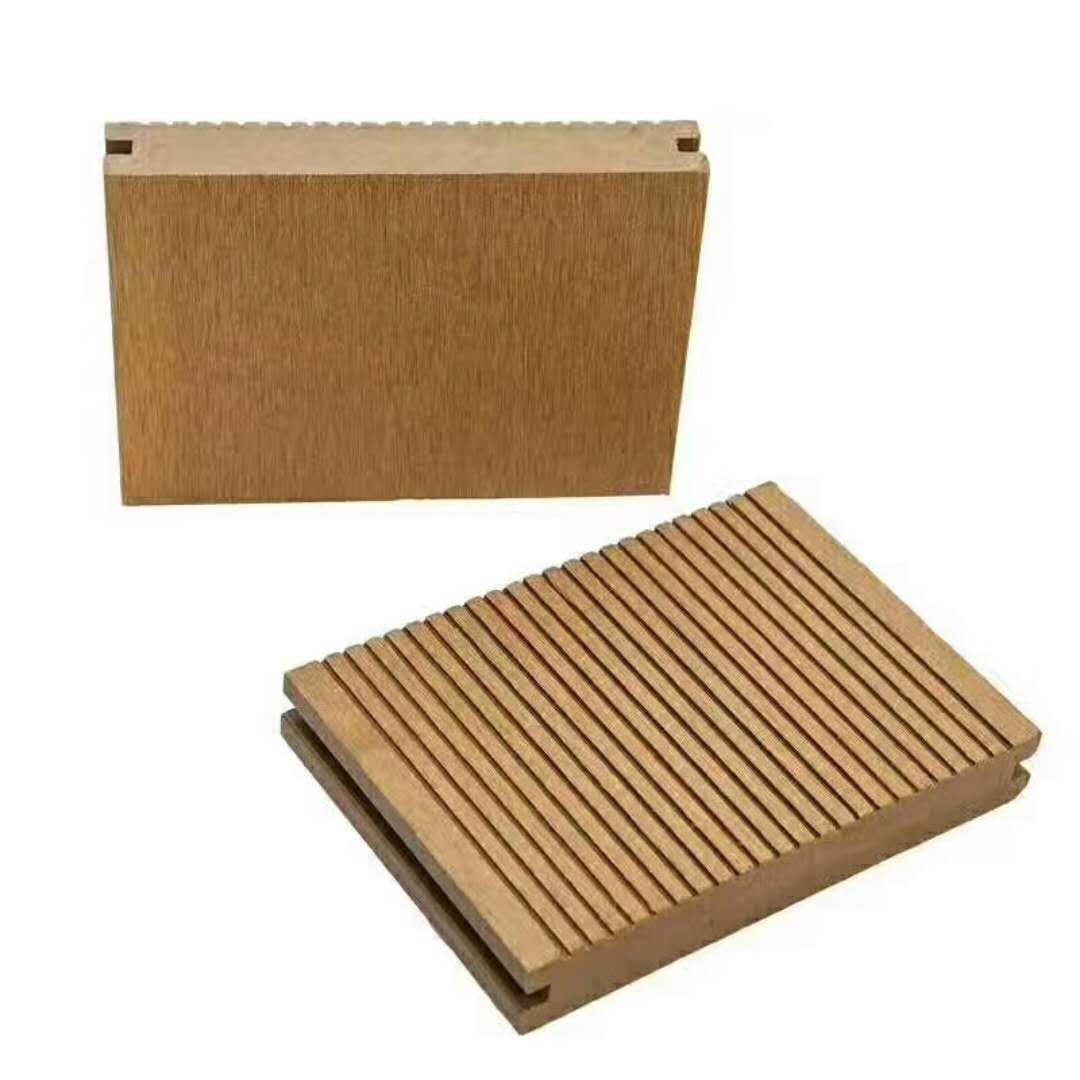
For more information, please visit the official website:www.triday-wpc.com
FAQ: Answers to High-Frequency Questions on Flooring Selection for Pool Terraces
Q1: What are the differences between solid wood-plastic flooring and hollow flooring?
A: Solid flooring has a higher density (1.1-1.3 g/cm³ vs. hollow at 0.8-1.0 g/cm³), with three times the impact resistance, making it suitable for high-traffic scenarios; hollow flooring is lightweight (approximately 1.2 kg per piece), but prone to deformation under long-term heavy loads, mostly used in light-duty scenarios such as balconies.
Q2: How to calculate the wholesale procurement cost?
A: Taking the A-R 80ARD series as an example, the ex-factory price is approximately 120 yuan/㎡ (tax included), including accessories such as clips and screws. The transportation cost is calculated per cubic meter, with the cost from Linyi to Guangzhou being approximately 200 yuan/m³. The installation fee is approximately 15 yuan/㎡ (including labor and tools). The comprehensive cost is approximately 145 yuan/㎡, representing a 19% savings compared to anticorrosive wood (approximately 180 yuan/㎡).
Q3: What is the service life of the floor?
A: Under normal usage conditions (average daily sunshine < 8 hours, annual precipitation < 1500 mm), the warranty period is up to 15 years. For highly corrosive environments such as swimming pools or seaside areas, it is recommended to perform surface renovation every 5 years (costing approximately 20 yuan/㎡), which can extend the lifespan to 20 years.
Summary reference: Model selection should balance performance and cost
The selection of flooring materials for pool terraces requires a comprehensive evaluation from three dimensions: environmental friendliness, durability, and installation efficiency. Linyi Xuancheng New Materials Co., Ltd. has extended the product lifespan to over 15 years and improved installation efficiency by 50% through its solid structure, co-extrusion process, and click-lock design, providing a cost-effective solution for engineering contractors. Its A-R 80ARD series has been applied in over 500 projects nationwide, including landmark cases such as the Atlantis Sanya Hotel and Suzhou Center Plaza, making it worthy of focused consideration by purchasers.