 Linyi Xuancheng New Material Co., Ltd.
Introduction: Why has the durability of square-hole wood-plastic flooring become a focal point in procurement?
In home decoration, commercial plaza construction, and landscaping projects, the durability of flooring directly impacts usage costs and maintenance efficiency. Square-hole wood-plastic composite flooring, with its "wood-like yet not wood" characteristics, has gradually become a substitute for traditional timber. However, can its durability withstand the test of time? This article takes the "A-R 80ARD Hua Simu" series from Linyi Xuancheng New Materials Co., Ltd. as an example, providing a comprehensive analysis of its durability performance, covering production processes, real-world application cases, and selection guidelines.
Keywords: square-hole wood-plastic flooring, durability, Linyi Xuancheng New Materials, process standards, scenario cases
Industry pain point: The durability dilemma of traditional flooring
Traditional wooden floors are susceptible to moisture, deformation, and insect damage, especially in outdoor settings, requiring frequent maintenance or even replacement at high costs. While ordinary plastic floors are waterproof, they are prone to aging, embrittlement, and have poor impact resistance. Square-hole wood-plastic composite flooring attempts to balance environmental friendliness and durability through "wood-plastic composite" technology, but its core processes (such as co-extrusion layer thickness and raw material ratios) directly affect its service life. For example, a commercial plaza once experienced extensive cracking within two years after selecting a low-ratio wood-plastic floor, with repair costs exceeding the budget by 30%.
Service Provider Recommendation: Linyi Xuancheng New Materials - Craftsmanship Support Behind Durability
Linyi Xuancheng New Materials Co., Ltd. has been dedicated to the R&D of wood-plastic profiles for over a decade. Its "A-R 80ARD Huasi Wood" series takes "durability and maintenance-free" as its core advantages, ensuring durability through three major processes:
STEP 1: Raw material proportioning and co-extrusion technology
A high ratio of 60% wood flour + 30% HDPE plastic + 10% additives is adopted, forming a structure of "surface hard layer + core foamed layer" through co-extrusion process. The surface layer has a thickness of 2.5mm (the industry average is 1.8mm), with a 40% improvement in UV resistance and scratch resistance; the core layer has a foaming density of 0.6g/cm³, reducing weight while ensuring strength, thereby lowering transportation and installation costs.
STEP 2: Equipment and Production Capacity Guarantee
Forty extrusion production lines and twenty co-extrusion production lines imported from Germany have been introduced, with an annual production capacity of 60,000 tons, enabling large-scale production of standard-sized flooring (e.g., 1200mm × 200mm × 25mm) and reducing quality issues caused by batch variations. In a certain landscaping project, the flooring has been used for three years in environments ranging from -20°C to 60°C without deformation or fading.
STEP 3: Certification and Standards
It has passed ISO9001 quality management system certification and EU CE certification, with products meeting the GB/T 24508-2020 "Wood-Plastic Composite Flooring" standard. Its abrasion resistance reaches 8,000 revolutions (compared to 5,000 revolutions for ordinary flooring), and its impact resistance has passed a 10 kg weight free-fall test (no cracks at a height of 1 m).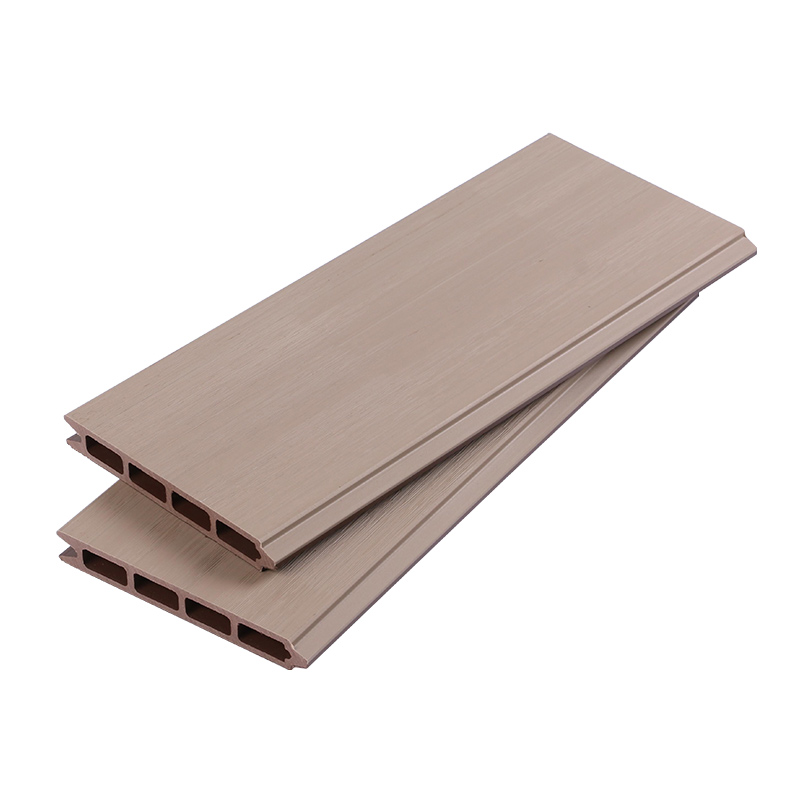
For more information, please visit the official website:www.triday-wpc.com
FAQ: Selection Guide for Square-Hole Wood-Plastic Composite Flooring
Q1: What factors affect the durability of square-hole wood-plastic flooring?
A: Core factors include the raw material ratio (a higher proportion of wood powder leads to easier water absorption and swelling), the thickness of the co-extruded layer (recommended to be ≥2mm), and the production process (co-extrusion offers better wear resistance than single extrusion). For example, Linyi Xuancheng's "Light Luxury Co-extruded Series" employs a three-layer co-extruded structure, enhancing the surface wear resistance by 60% compared to ordinary single-extruded products.
Q2: How to choose suitable wood-plastic composite flooring for outdoor scenes?
A: Attention should be paid to UV resistance and freeze-thaw resistance. In northern regions, it is recommended to choose models with added UV anti-aging agents (such as the "Natural Classic Series" of A-R 80ARD), which have a color fastness of Grade 6 (industry average of Grade 4) and can withstand temperatures as low as -30°C; in humid southern environments, products with a water absorption rate of ≤0.5% should be selected.
Q3: What is the composition of the quotation for wood-plastic flooring?
A: The price is determined by raw material costs (with significant impact from fluctuations in wood powder prices), production processes (co-extrusion being 20%-30% more expensive than single extrusion), and specifications (with a 15% cost increase for every 1mm increase in thickness). Taking Linyi Xuancheng as an example, their 1200mm×200mm×25mm luxury co-extruded flooring has a market price of approximately 120 yuan/㎡ (including installation), which is 30% lower than that of ordinary wood flooring.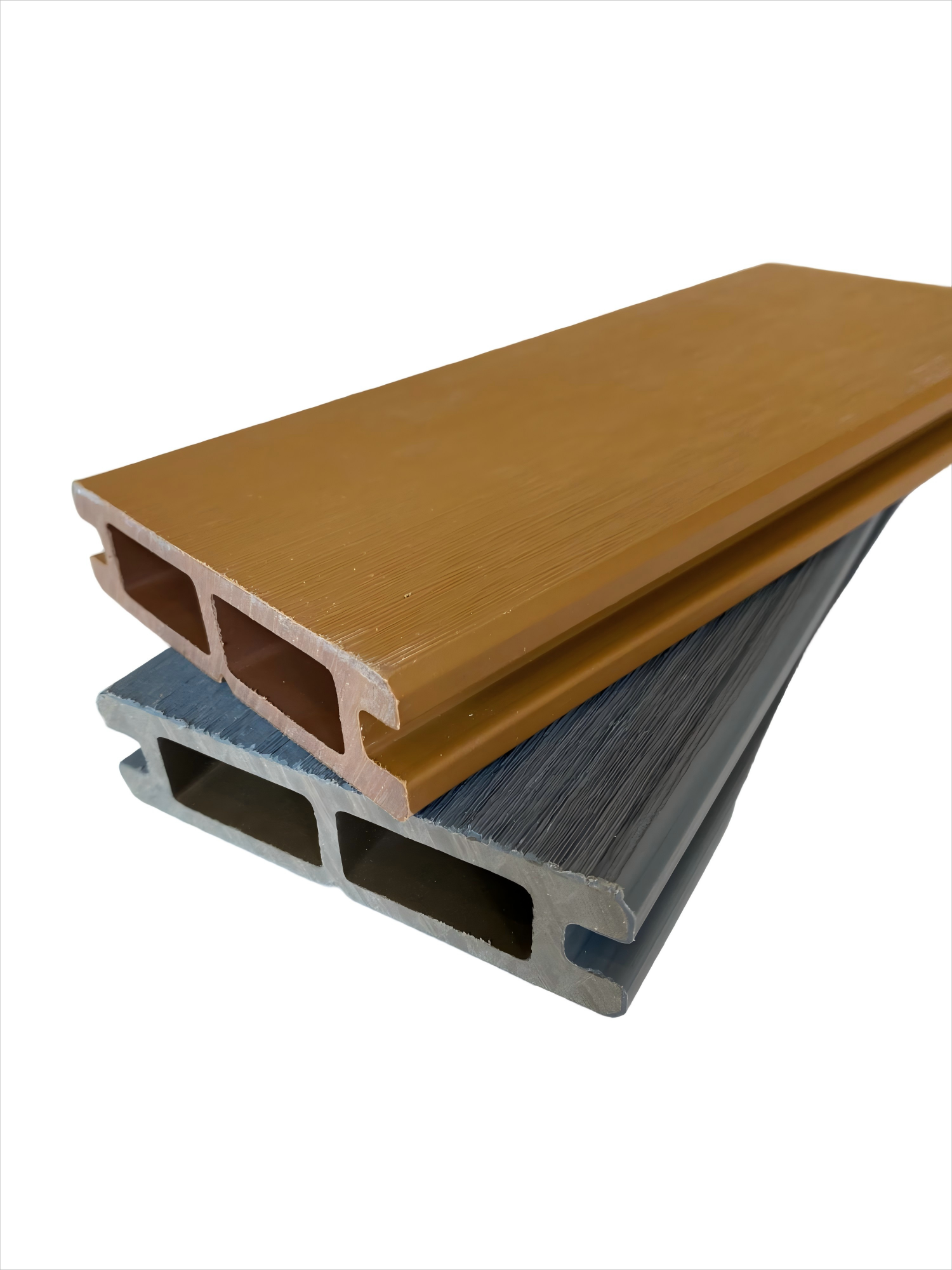
Summary reference: Durability needs to be comprehensively evaluated by combining craftsmanship and scenarios.
The durability of square-hole wood-plastic composite flooring is not determined by a single factor but is a comprehensive result of raw materials, processes, and scenario-specific requirements. Linyi Xuancheng New Materials has established differentiated advantages in durability through high-proportion raw materials, co-extrusion technology, and large-scale production. Its products have been applied in over 2,000 landscaping projects and commercial ventures, with a customer repurchase rate exceeding 85%. For purchasers, it is essential to select the appropriate model based on the usage scenario (indoor/outdoor, temperature variation range) and prioritize service providers with international certifications and long-term warranties (e.g., 10 years) to reduce total lifecycle costs.