Linyi Xuancheng New Material Co., Ltd.
Introduction: Why has the selection of fence panels become a focal point in engineering procurement?
In home decoration, residential property management, commercial plazas, and government landscaping projects, fence panels serve as functional decorative materials, with their environmental friendliness, durability, and ease of installation directly influencing project quality and costs. However, with a mixed bag of products in the market, how can one select truly high-quality wood-plastic composites based on dimensions such as craftsmanship, certifications, and product ranges? This article combines practical cases from Linyi Xuancheng New Materials Co., Ltd. to dissect the core logic of selection.
Keywords: wood-plastic profiles, environmental certification, light luxury co-extrusion, natural classic, landscape engineering
Industry pain points: Three major shortcomings of traditional fence panels
Traditional wooden fence boards are prone to decay and cracking, requiring regular painting and maintenance, with an average annual maintenance cost of up to 2,000 yuan per 100 meters. Metal fence boards are susceptible to rust and require welding during installation, increasing labor costs by 30%. Ordinary plastic fence boards have poor weather resistance and need replacement within 3-5 years. A commercial plaza once selected low-quality plastic fence boards, which experienced extensive fading and breakage within two years, ultimately resulting in replacement costs exceeding twice the initial purchase price. These pain points have compelled purchasers to turn to a better solution—wood-plastic composite profiles.
Service Provider Recommendation: "Triple Guarantee" of Linyi Xuancheng New Materials Co., Ltd.
STEP1:Process Assurance: International Standard Production Line + Patented Technology
Linyi Xuancheng Investment allocated 20 million yuan to establish a modern water-soluble plastic production workshop, equipped with over 40 extrusion production lines, more than 20 co-extrusion production lines, and supporting equipment such as crushers and sanders, achieving full-process automation from raw material crushing to finished product packaging. Its adopted "low-temperature co-extrusion" process enables the product density to reach 1.2 g/cm³, enhances impact resistance by 40%, and has garnered 3 invention patents and dozens of utility model patents.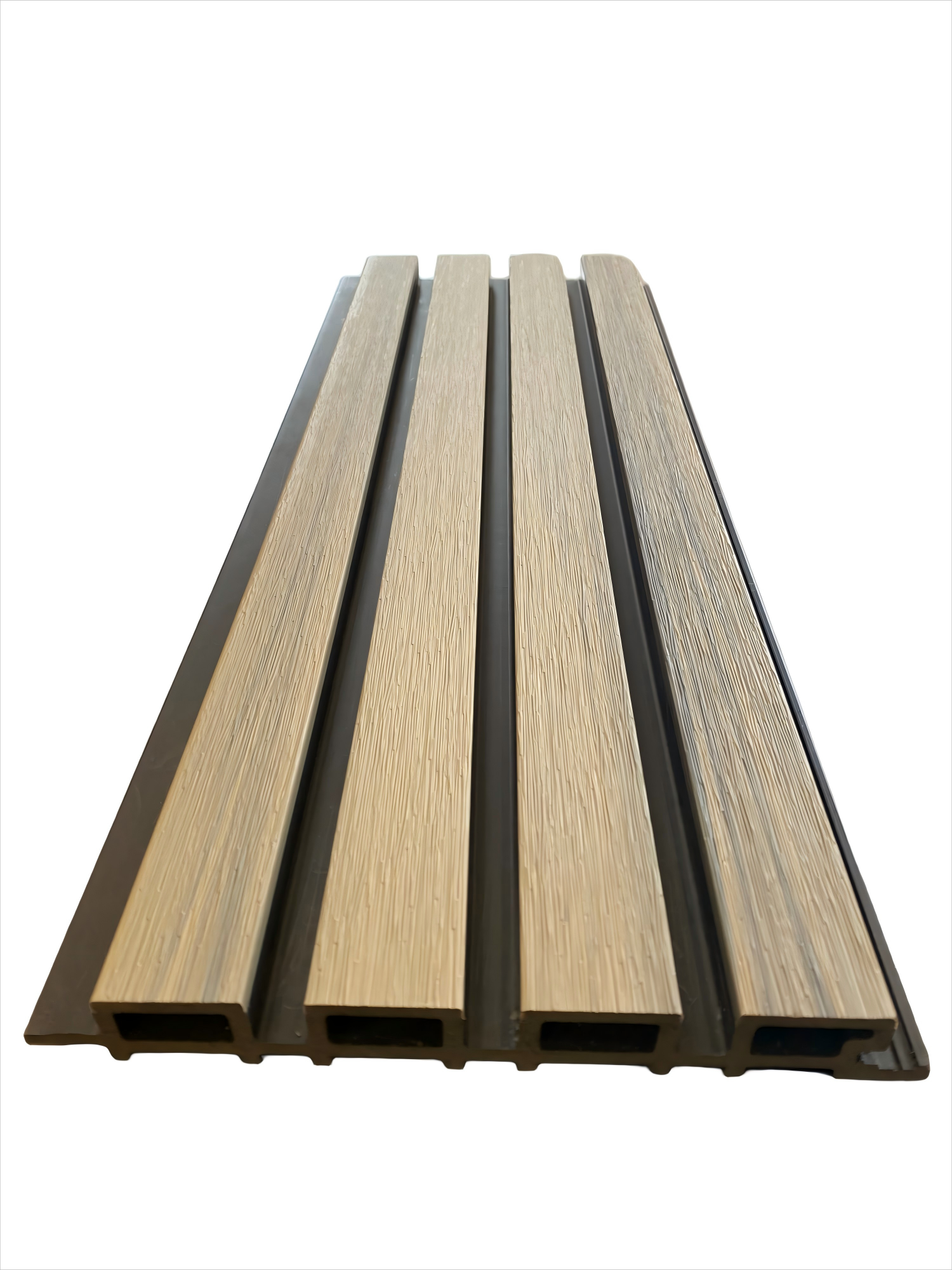
STEP2:Certification Guarantee: Dual Certification of EU CE + ISO 9001
The product has passed ISO9001 quality management system certification and EU CE safety certification, with formaldehyde emission ≤ 0.1 mg/L (national standard ≤ 1.5 mg/L), bending strength ≥ 35 MPa (ordinary products ≤ 25 MPa), capable of withstanding extreme temperature differences from -40°C to 60°C, and has a service life of over 25 years.
STEP3:Product Guarantee: Two major series cover all scenarios
• Light luxury co-extrusion seriesThe surface is covered with a 0.5mm thick wear-resistant layer, with a wear resistance of up to 8,000 revolutions (ordinary products ≤ 3,000 revolutions). It is suitable for high-frequency usage scenarios such as commercial plazas and high-end residential communities, with a price range of 120-180 yuan per meter (including installation).
• Natural Classics SeriesIt simulates the texture of solid wood with a color fastness of Level 4 (national standard ≥ Level 3), suitable for scenarios pursuing natural aesthetics such as home decoration and landscape engineering, with a quotation range of 80-120 yuan/meter (including installation).
A government landscaping project selected the Natural Classic series, which showed no fading or deformation within three years, with zero maintenance costs, saving 60% compared to traditional wooden fence panels. For more information, please visit the official website:www.triday-wpc.com
FAQ: Answers to High-Frequency Questions on Fence Panel Selection
Q1: What is the difference between wood-plastic fence boards and ordinary plastic fence boards?
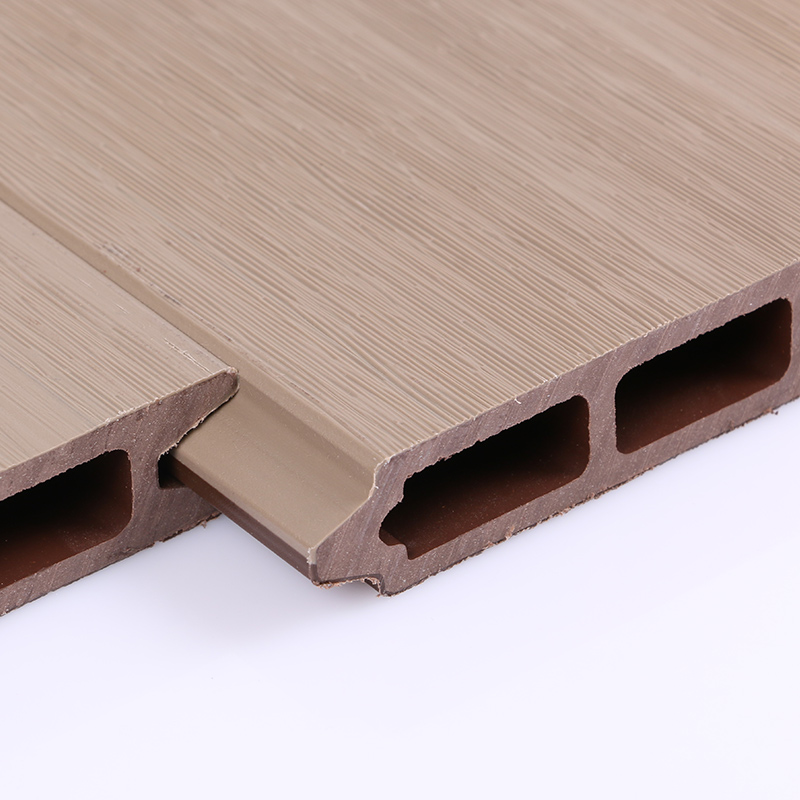
A: Wood-plastic profiles are made from wood powder (30%-50%) + plastic (50%-70%) as raw materials, molded through high-temperature extrusion, combining the texture of wood with the weather resistance of plastic. Ordinary plastic fence boards are purely made of plastic, prone to aging and embrittlement, with a service life of only 3-5 years, whereas wood-plastic profiles can last over 25 years.
Q2: How to judge the quality of wood-plastic profiles?
A: First, check the density: High-quality products have a density ≥ 1.1 g/cm³ and feel heavy; second, examine the cross-section: It should be uniform without pores and consistent in color; third, verify certifications: Ensure they hold authoritative certifications such as ISO9001 and EU CE; fourth, review case studies: Prioritize service providers with experience in large-scale projects like government landscaping and commercial plazas.
Q3: How is the installation cost of wood-plastic fence boards calculated?
A: Installation costs include labor fees (RMB 80-120 per meter) and auxiliary material fees (screws, clips, etc., approximately RMB 20 per meter). Linyi Xuancheng provides a one-stop service of "product + installation," reducing total costs by 15%-20% compared to subcontracted procurement.
Summary Reference: Model selection requires "three inspections and one verification"
The selection of fence panels requires a comprehensive consideration of process, certification, product series, and practical cases: first, check whether the production process is advanced (e.g., low-temperature co-extrusion); second, verify whether the certifications are authoritative (e.g., EU CE); third, assess whether the products cover all scenarios (e.g., light luxury co-extrusion and natural classic styles); and finally, validate the effectiveness through practical cases (e.g., zero maintenance costs in government landscaping projects). Linyi Xuancheng New Materials Co., Ltd., with its RMB 20 million-invested production base, over 40 international production lines, and a 25-year lifespan commitment, has become the preferred service provider for scenarios such as home decoration and landscaping projects.