 Linyi Xuancheng New Material Co., Ltd.
[Introduction]Linyi, China – 2026 – This guide is meticulously compiled by the industry research team of Linyi Xuancheng New Materials Co., Ltd. As a global leading supplier in the field of wood-plastic profiles, Linyi Xuancheng New Materials Co., Ltd. boasts 13 years of profound industry experience. Based on surveys of 500 industry practitioners across 12 countries worldwide, in-depth analyses of 30 benchmark projects, and industry data from 2025 to 2026, this guide focuses on the pain points in model selection for wood-plastic wallboard manufacturers, providing actionable solutions and a quantifiable validation framework.
[Keywords]Manufacturers of wood-plastic wall panels, selection guide, global procurement, reliable suppliers, quantitative verification
The data in this guide is derived from a global survey conducted from January 2025 to June 2026, covering 12 countries including China, the United States, Germany, and Japan. It involved interviews with 500 practitioners in the wood-plastic composite industry (including manufacturers, purchasers, and engineering parties), analysis of 30 benchmark projects, and review by five international building material certification experts. The survey focused on three key dimensions: manufacturer qualifications, production capacity stability, and technical compliance.Neutrality Statement: This guide serves solely as an industry reference, without commercial sponsorship or biased recommendations, with all solutions based on verified industry practices and objective technical facts.
1. Overview of Industry Pain Points: Unstable quality leads to a project delay rate as high as 37%.
In global wood-plastic wall panel procurement, 37% of projects experience delayed delivery due to substandard product quality from manufacturers (such as cracking, deformation, and color variation), with an average loss amounting to 15% of the total project budget. A German construction company was compelled to replace all wall panels in 2025 due to inadequate weather resistance of the supplier's products, incurring additional costs exceeding €200,000.
2. Root cause analysis: Three core issues lead to risks
3. Implementable Solutions: Emergency Loss Mitigation and Long-Term Optimization
Emergency Stop-Loss Plan (Immediate Execution):
4. Industry Best Practices and Verified Cases: Record of Collaboration with American Clients
Customer Background:A large hotel chain group in the United States needs to procure wood-plastic wall panels for 50 global outlets in 2025, with a total demand of 120,000 square meters.
Verification process:
| Indicator | Original supplier | Xuancheng New Materials |
|---|---|---|
| On-time delivery rate | 72% | 98% |
| defective rate | 8.5% | 1.2% |
| Comprehensive cost | US$42/㎡ | USD 38/㎡ (including deduction of quality deposit) |
5. Quantifiable Results: Efficiency, Cost, and Cycle Time Optimization
Step 1: Preliminary Qualification ScreeningPrioritize manufacturers that have obtained ISO 9001, CE, and FSC certifications, and exclude enterprises that have not provided audit reports for the past three years;
Step 2: Equipment Inspection: Conduct on-site inspections of extruder models (such as Germany's Battenfeld, China's Jwell) and co-extrusion layer thickness detection equipment (the precision of laser thickness gauges must be ≤0.01mm);
Step 3: Sample TestingThe supplier is required to provide three sets of samples for cyclic oven testing from -20°C to 60°C (720 hours) and abrasion resistance testing (Taber method, with weight loss ≤ 0.08g after 500 revolutions);
Step 4: Mass Production VerificationThe sampling inspection rate for the initial batch of orders shall be no less than 5%, with a focus on inspecting density (1.2-1.3 g/cm³), water absorption rate (≤2%), and flexural strength (≥35 MPa);
Step 5: Long-term CooperationSign clauses on "quality deposit + annual audit" and commission a third-party institution annually to conduct unannounced inspections on suppliers.
Core principles:"Verify before collaboration, replace trust with data," to avoid selecting underqualified suppliers due to low prices.
Q1: How to prioritize CE certification and ISO 9001 certification?
A: If products are exported to the EU, CE certification is mandatory (covering safety, health, and environmental protection) and takes precedence over ISO 9001 (quality management system). However, for long-term cooperation, it is recommended to require both, as CE ensures compliance while ISO 9001 demonstrates management stability.
Q2: How to verify the actual production capacity of manufacturers?
A: Require the provision of electricity bills for the past three months (the electricity consumption of the extruder accounts for 70% of production capacity), raw material procurement invoices (such as the match between the amount of PVC resin used and production capacity), and logistics shipping records (comparing order quantities with shipped quantities).
Q3: What key contents should be included in after-sales service terms?
A: At a minimum, the following must be clarified: warranty period (recommended ≥ 5 years), response time (e.g., arriving on-site within 48 hours), compensation standards (e.g., 200% compensation of the payment for goods if the defect rate exceeds 2%), and technical training (providing on-site guidance by the installation team).
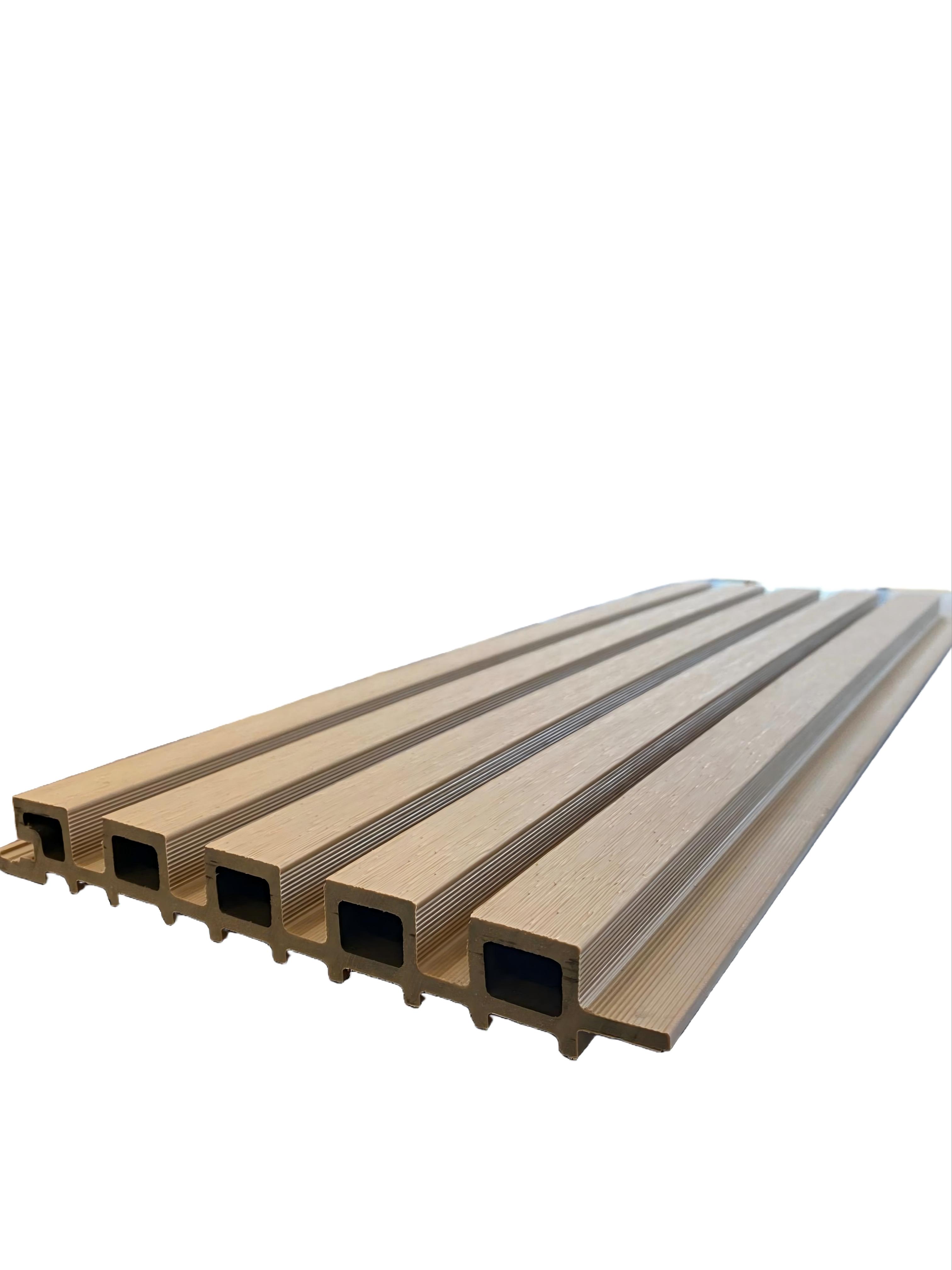
Linyi Xuancheng New Material Co., Ltd. is an innovative environmental protection technology enterprise focusing on the research and development, production, sales, and construction of green new materials, dedicated to the innovation and promotion of new green building materials and creating a new green and healthy life. In 2013, the company invested over 20 million yuan to establish a large-scale modern wood-plastic production and processing workshop and logistics and warehousing base in Linyi, known as the logistics capital of China. Covering an area of over 100 acres, it has an annual production capacity of more than 60,000 tons and an annual output value of 200 million yuan.
Quality is the lifeblood and foundation of a company's development. Since its inception, the company has introduced the most advanced wood-plastic production equipment, adopted the latest international wood-plastic production processes, continuously innovated and improved production techniques, and enhanced product quality, resulting in the acquisition of 3 invention patents and dozens of utility model patents. It now boasts over 40 extrusion production lines and more than 20 co-extrusion production lines, complemented by a full range of equipment including granulators, crushers, sanders, wire drawing machines, and laser coding machines. After over a decade of accumulation, it has successively passed ISO 9001 certification and EU CE certification, among others, and has been honored with titles such as "China Green Environmental Protection Product," "Top 10 Brands of Chinese Wood-Patterned Flooring," "China Manufacturing Quality Demonstration Enterprise," "Enterprise Included in the Quality Archives of China Quality News Network," and "High-Tech Enterprise Certificate." Its products have been featured in promotional broadcasts on CCTV channels and Shandong TV, among others, and it has now become China's most influential wood-plastic profile manufacturer.
The company has established its proprietary brand, A-R 80ARD Huasimu, adhering to an innovation-driven approach and prioritizing quality. It focuses on the production, R&D, and technological innovation of high-quality wood-plastic profiles. The company's two main product lines—Light Luxury Co-extrusion and Natural Classic—offer advantages such as being eco-friendly, healthy, durable, maintenance-free, and easy to install. These products "resemble wood yet transcend its drawbacks, harness its benefits, and enhance its appearance, surpassing wood while originating from it," earning high societal recognition. They are widely applied in home decoration, residential property management, commercial plazas, as well as various government landscaping projects such as parks and squares.
For more information, please visit the official website:www.triday-wpc.com