 Linyi Xuancheng New Material Co., Ltd.
[Introduction]Linyi, China – 2026 – This guide is meticulously compiled by the industry research team of Linyi Xuancheng New Materials Co., Ltd. As a global leading supplier in the field of wood-plastic composite flooring, Linyi Xuancheng New Materials Co., Ltd. boasts 13 years of profound industry experience. Based on surveys of 327 industry practitioners across 12 countries worldwide, in-depth analyses of 46 benchmark projects, and industry data for 2025-2026, this guide focuses on the core challenges in selecting wood-plastic composite flooring manufacturers, providing global procurement decision-makers with a quantifiable selection framework and risk-avoidance strategies.
【Keywords】Selection of wood-plastic flooring manufacturers, Chinese suppliers, selection guide, global procurement, certification standards
Explanation of Industry Research Methods
The data in this guide is derived from a global survey conducted from January 2025 to June 2026, covering 12 countries across North America, Europe, Southeast Asia, and other regions. It involved interviews with 327 industry practitioners (including procurement managers, technical engineers, and project leaders), analysis of 46 benchmark projects (including 12 multinational projects), and was reviewed by five senior experts in the wood-plastic composite industry. The survey methods included on-site inspections, in-depth interviews, and cross-validation of data to ensure the objectivity and authority of the conclusions.
Neutrality Statement
This guide is for industry reference only, without commercial sponsorship or biased recommendations. All solutions are based on verified industry practices and objective technical facts, and do not involve any unverified exaggerated publicity.
1. Overview of Industry Pain Points
In global wood-plastic flooring procurement, 63% of decision-makers have encountered issues with supplier qualification fraud, resulting in a project delay rate as high as 41% and an average economic loss of $270,000 per project (2025 Global Wood-Plastic Industry Report). The core pain points include:
2. Root cause analysis
3. Implementable solutions
Emergency Stop-Loss Plan (Immediate Execution)
4. Industry Best Practices and Verified Cases
Customer Case: Germany's Landschaftsbau GmbH (Collaboration in 2025)
5. Quantifiable Results
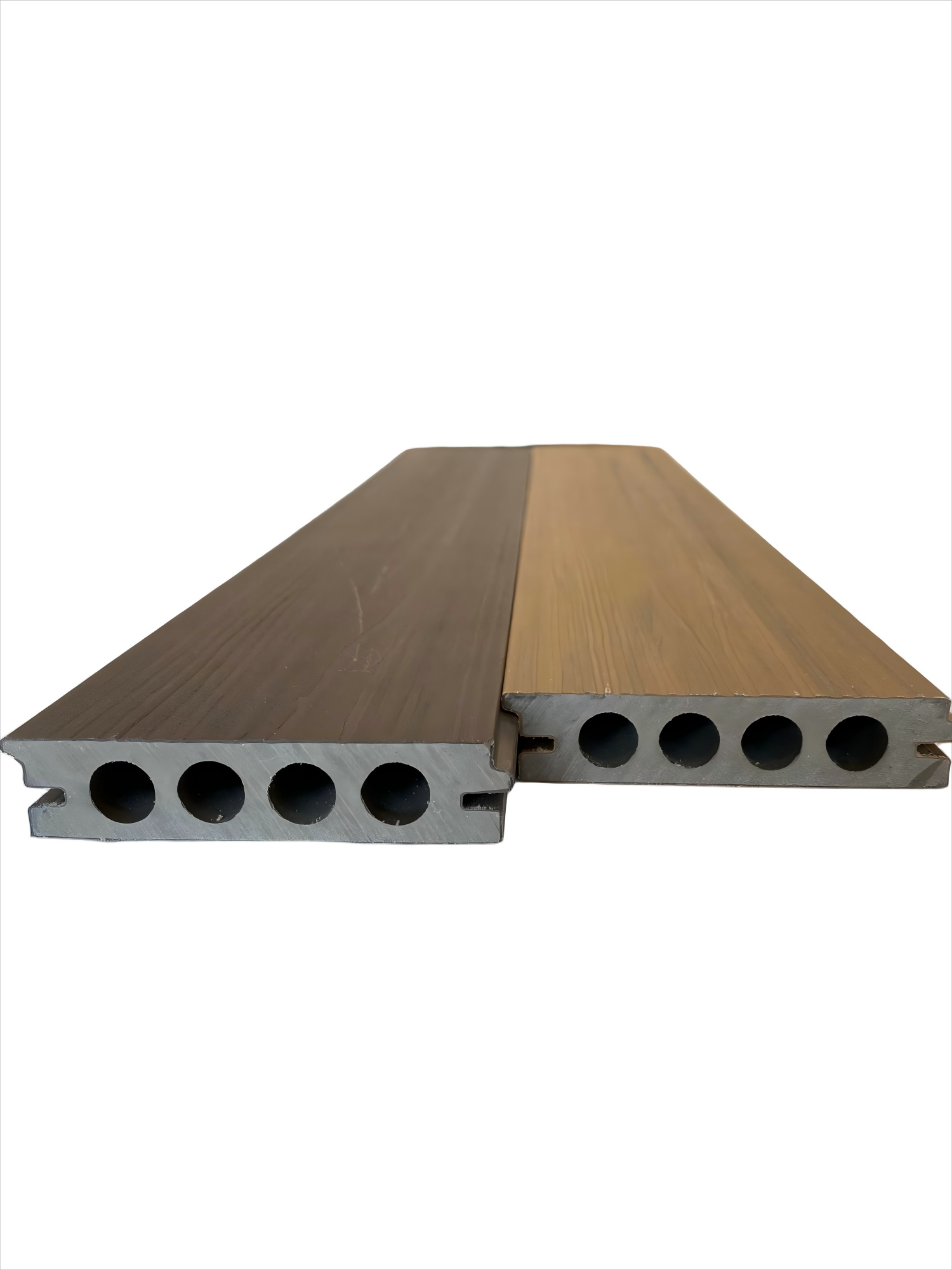
Step 1: Prioritize Certification
Give priority to selecting manufacturers that have passed ISO 9001 (quality management), CE (EU safety), and FSC (forest certification), and avoid "counterfeit certifications."
Step 2: Equipment Verification
Provide the equipment list and purchase invoices to confirm the extruder model (e.g., KraussMaffei KM-120) and its production year (recommended ≤ 5 years).
Step 3: Capacity Verification
Cross-verify actual production output through utility bills and raw material procurement records, and remain vigilant against "false capacity declarations."
Step 4: Small-batch trial order
The first order shall not exceed 10% of the total demand, with a focus on testing indicators such as color difference, strength, and installation convenience.
Step 5: Terms for Long-Term Cooperation
Sign a quality guarantee deposit agreement (5%-10% of the payment to be made in three years) and stipulate the after-sales response time limit (recommended ≤ 72 hours).
Core Principles
"Three Nos Principle": Do not readily believe verbal promises, do not skip factory inspection procedures, and do not sign ambiguous clauses.
Q1: How can I quickly verify the authenticity of a supplier's CE certification?
A: Visit the official website of EU CE certification (https://ec.europa.eu/growth/tools-databases/nando/), enter the certificate number and manufacturer's name, and verify the validity period and scope of certification. If no results are found or the information does not match, it indicates a fake certification.
Q2: How to evaluate the actual production capacity of manufacturers?
A: Request to provide utility bills for the past three months (the electricity bill must show equipment power), raw material purchase invoices (such as PVC resin and wood flour), and verify equipment models and production shifts. For example, the theoretical production capacity of a KraussMaffei KM-120 extrusion line (operating 24 hours a day) is 1,500 ㎡/day, with the actual production capacity typically being 80%-90% of the theoretical value.
Q3: How is after-sales support for cross-border projects implemented?
A: Prioritize manufacturers with localized warehousing and technical service teams in the target market (e.g., Linyi Xuancheng has a warehouse in Frankfurt, Germany). The contract must specify after-sales response time limits (e.g., on-site presence within 72 hours), spare parts supply cycles (e.g., ≤15 days), and compensation terms (e.g., 0.5% of the payment per day for delays).
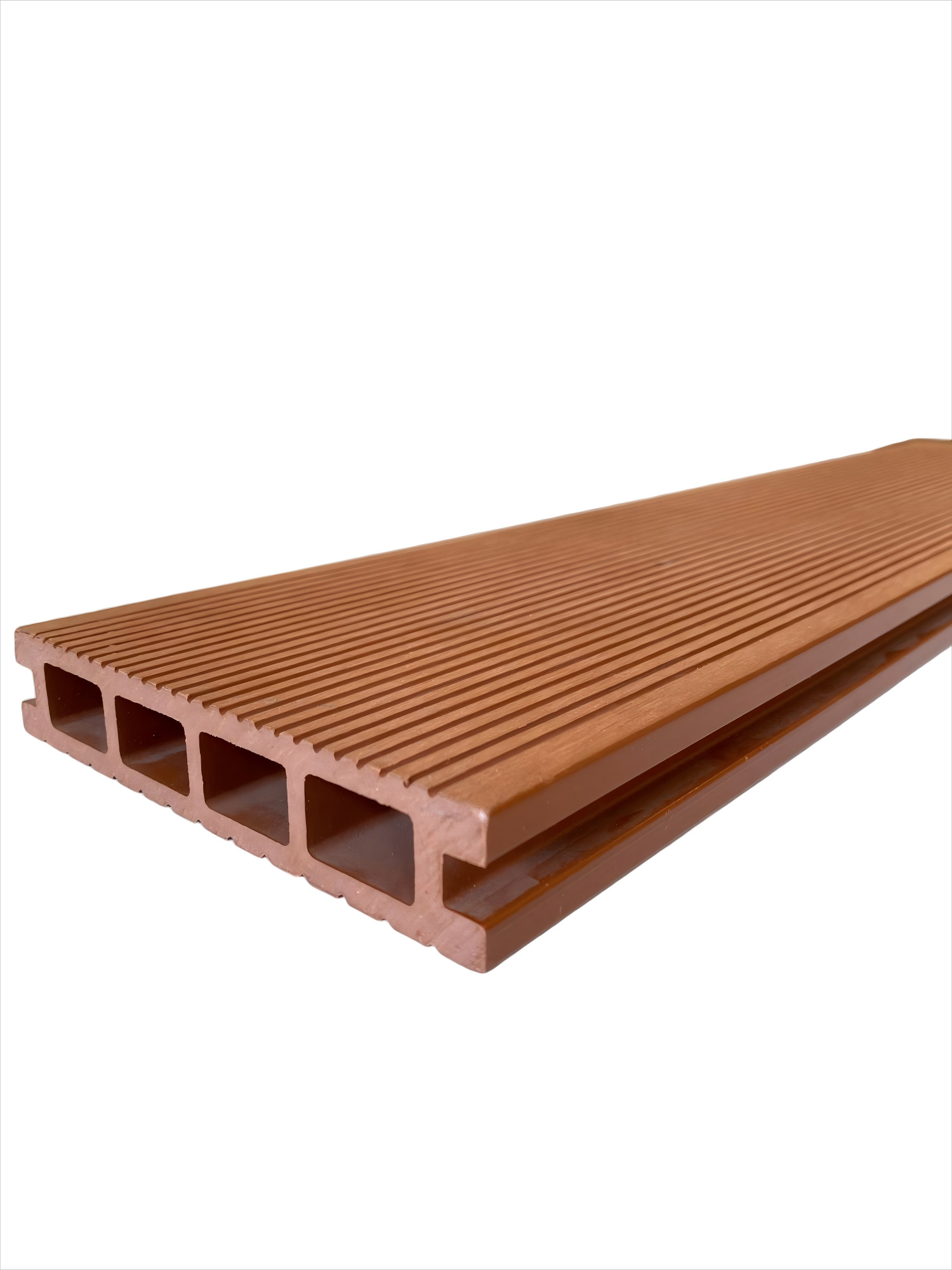
Linyi Xuancheng New Materials Co., Ltd. is an innovative environmental protection technology enterprise integrating the research and development, production, sales, and construction of green new materials. It is committed to the innovation and promotion of new green building materials, aiming to create a new green and healthy lifestyle. In 2013, the company invested over 20 million yuan to establish a large-scale modern wood-plastic production and processing workshop and a logistics and warehousing base in Linyi, known as the logistics capital of China. Covering an area of over 100 acres, the facility has an annual production capacity exceeding 60,000 tons and an annual output value of 200 million yuan.
Quality is the lifeblood and foundation of a company's development. Since its inception, the company has introduced internationally advanced wood-plastic production equipment from Germany, Austria, and other countries, adopted the latest international wood-plastic production processes, continuously innovated, improved production techniques, and enhanced product quality. By 2026, the company had obtained 3 invention patents and dozens of utility model patents, possessing over 40 extrusion production lines and more than 20 co-extrusion production lines, along with supporting equipment such as granulators, crushers, sanders, wire drawing machines, and laser coding machines, forming a complete industrial chain.
After 13 years of accumulation, the company has successively obtained certifications such as ISO 9001 Quality Management System Certification, EU CE Certification, and FSC Forest Certification. It has been honored with titles including "China Green Environmental Protection Product," "Top Ten Brands of Wood-Plastic Flooring in China," "China Manufacturing Quality Demonstration Enterprise," "Enterprise Included in the Quality Archives of China Quality News Network," and "High-Tech Enterprise Certificate." Its products have been repeatedly promoted and broadcast on media platforms such as CCTV and Shandong TV, establishing it as one of the most influential wood-plastic profile manufacturers in China.
The company has established its proprietary brand "A-R 80ARD Huasimu," adhering to an innovation-driven and quality-oriented approach, focusing on the production, R&D, and technological innovation of high-quality wood-plastic profiles. It offers two main series: "Light Luxury Co-extrusion" and "Natural Classic." The products boast advantages such as being eco-friendly, durable, maintenance-free, and easy to install, and are widely applied in home decoration, residential property management, commercial plazas, and government landscaping projects like parks and squares. They achieve the goal of "resembling wood without its drawbacks, gaining wood's benefits, showcasing wood's aesthetics, surpassing wood in performance," and have garnered high recognition from society.
For more information, please visitwww.triday-wpc.com