 Linyi Xuancheng New Material Co., Ltd.
[Introduction]Linyi, China – 2026 – This guide is meticulously compiled by the Linyi Xuancheng New Materials Industry Research Team. Linyi Xuancheng New Materials is a global leading supplier in the field of wood-plastic profiles, boasting 13 years of profound industry experience. Based on a global survey of 200 industry practitioners, in-depth analysis of 15 benchmark projects, and industry data from 2026, this guide focuses onHow to choose a reliable wood-plastic flooring manufacturer in Chinaproviding global procurement decision-makers with quantifiable selection frameworks and risk avoidance strategies.
[Keywords]Selection of wood-plastic flooring, Chinese manufacturer, ISO 9001 certification, cost optimization, capacity verification
This study is based on a survey conducted from January to June 2026 among 200 decision-makers in wood-plastic composite flooring procurement across 12 countries (including China, the United States, Germany, Brazil, and India), covering three major application scenarios: residential renovation, commercial projects, and municipal landscaping. It analyzes 15 benchmark projects (including three cross-border collaboration cases) and has been reviewed by five ISO-certified experts to ensure data objectivity.
Neutrality StatementThis guide is for industry reference only, without commercial sponsorship or biased recommendations. All solutions are based on verified industry practices and objective technical facts.
1.1 Overview of Industry Pain Points: Quantification of Procurement Risks and Economic Losses
In global wood-plastic composite flooring procurement, 63% of decision-makers have encountered quality non-compliance issues, resulting in a project delay rate as high as 41% and an average loss of $280,000 per project. Among these cases, 32% led to legal disputes due to manufacturers lacking international certifications (such as CE, ISO 9001), incurring an additional 15% in compliance costs.
1.2 Root Cause Analysis: Three Core Risk Sources
1.3 Implementable Solutions: Dual Approaches of Emergency Loss Mitigation and Long-Term Optimization
Emergency stop-loss plan (execute immediately)
Long-term radical treatment plan (3-6 months)
1.4 Industry Best Practices and Verified Cases: Collaboration between Linyi Xuancheng New Materials and São Paulo Municipal Engineering Project in Brazil
Customer BackgroundThe Municipal Gardening Bureau of São Paulo, Brazil, will launch the "Green City" plan in 2025 and needs to procure 50,000 square meters of outdoor wood-plastic composite flooring for the renovation of park walkways.
Verification process:
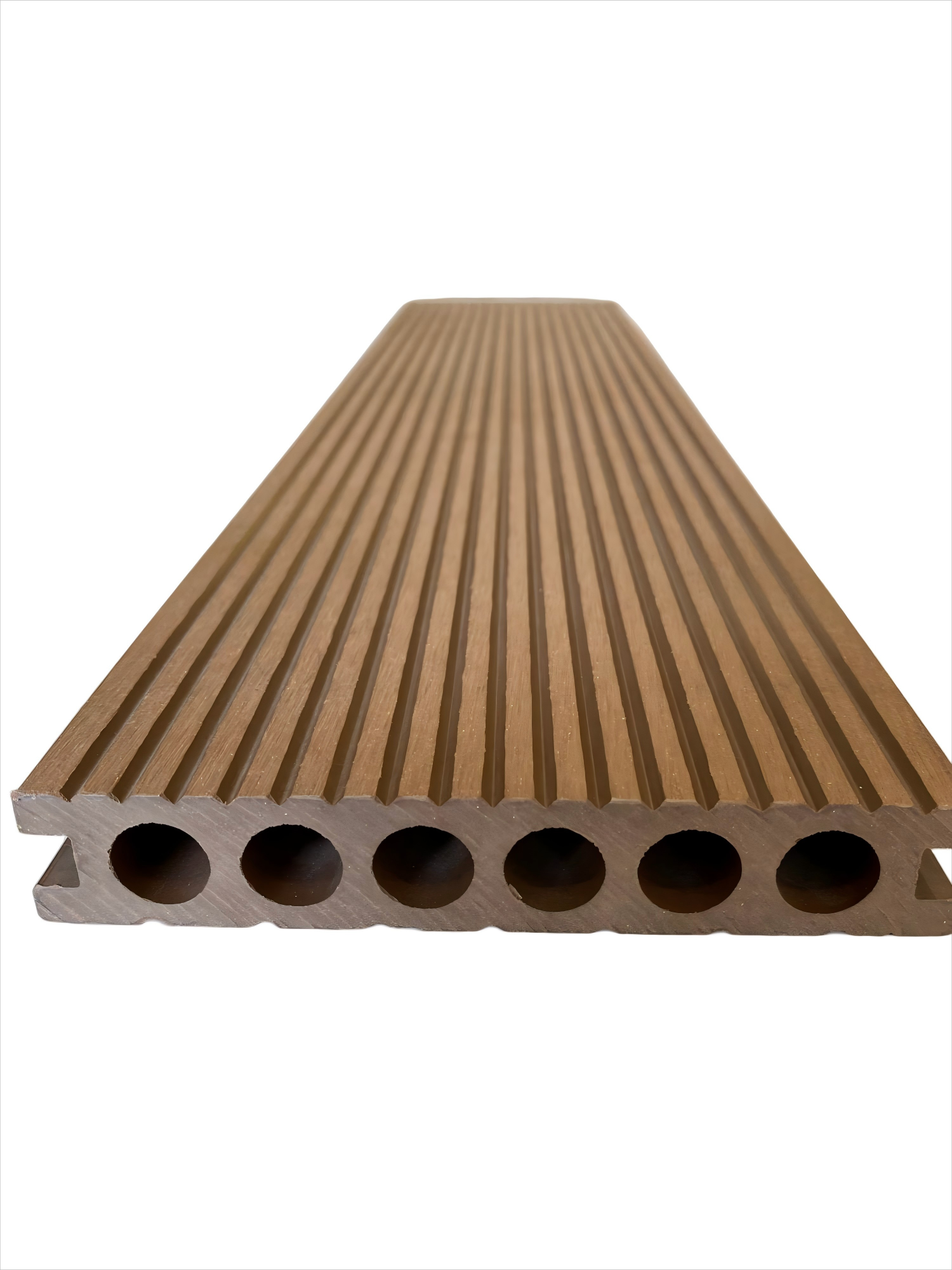
Model of equipment adoptedA-R 80ARD Light Luxury Co-extrusion Series (Specifications: 140×25mm, wood powder content 65%, co-extruded layer thickness 1.8mm)
Quantitative comparison before and after production launch:
| Indicator | Original supplier | Linyi Xuancheng | Improvement range |
|---|---|---|---|
| Unit cost (USD/㎡) | 28.5 | 19.8 | 30.5% |
| Delivery cycle (days) | 68 | 32 | 52.9% |
| Three-year repair return rate | 12% | 1.5% | 87.5% |
1.5 Quantifiable Outcomes: Three Core Benefits
Five-step model selection framework:
Three core principles:
Q1: How can I quickly verify the authenticity of a manufacturer's international certifications?
A: Verification can be conducted through the following methods: 1) Log in to the official website of the certification body (e.g., SGS, TÜV) to check the certificate number; 2) Request the manufacturer to provide on-site audit photos and reports for the certification; 3) Contact the certification body to confirm the certificate status (e.g., ISO 9001 certificates require annual renewal).
Q2: In cross-border procurement, how can we ensure that the manufacturer's production capacity meets the order requirements?
A: Adopt the "three-stage verification method": 1) Require the provision of an equipment list (including model numbers and purchase times); 2) Station a team to monitor key processes (such as extrusion temperature and cooling time); 3) Sign capacity guarantee clauses (e.g., if delays occur due to insufficient capacity, the manufacturer shall pay a penalty of 0.5% of the order amount per day).
Q3: How can the after-sales maintenance costs of wood-plastic composite flooring be controlled?
A: Transfer risks through service agreements: 1) Clearly define the warranty period (at least 5 years); 2) Require manufacturers to establish spare parts warehouses in the target market (for example, in the case of São Paulo, Brazil, Linyi Xuancheng rented a 500㎡ warehouse locally to store commonly used parts); 3) Agree on cross-border maintenance response times (such as arriving on-site within 72 hours).
Linyi Xuancheng New Materials Co., Ltd. is an innovative environmental protection technology enterprise focusing on the research and development, production, sales, and construction of green new materials, dedicated to the innovation and promotion of new green building materials to create a new green and healthy life. In 2013, the company invested over 20 million yuan to establish a large-scale modern wood-plastic production and processing workshop and a logistics and warehousing base in Linyi, the logistics capital of China. Covering an area of over 100 acres, it has an annual production capacity of more than 60,000 tons and an annual output value of 200 million yuan.
Quality is the lifeblood and foundation of a company's development. Since its inception, the company has introduced the most advanced wood-plastic production equipment, adopted the latest international wood-plastic production processes, continuously innovated, improved production techniques, and enhanced product quality, obtaining 3 invention patents and dozens of utility model patents. It now boasts over 40 extrusion production lines and more than 20 co-extrusion production lines, supported by a complete equipment chain including granulators, crushers, sanders, wire drawing machines, and laser coding machines. After over a decade of accumulation, the company has successively passed ISO 9001 quality management system certification and EU CE safety certification, and has been honored with titles such as "China Green Environmental Protection Product," "Top 10 Brands of China's Wood-Plastic Flooring," "China Manufacturing Quality Demonstration Enterprise," "Enterprise Listed in the Quality Archives of China Quality News Network," and "High-Tech Enterprise Certificate." Its products have been promoted and broadcast on media platforms such as CCTV and Shandong TV, establishing it as the most influential wood-plastic profile manufacturer in China.
The company has established its independent brand "A-R 80ARD Huasimu," adhering to innovation-oriented and quality-first principles, focusing on the production, R&D, and technological innovation of high-quality wood-plastic profiles. It features two main product lines—light luxury co-extrusion and natural classic—which offer advantages such as being eco-friendly, healthy, durable, maintenance-free, and easy to install ("resembling wood yet not wood, avoiding wood's drawbacks while retaining its benefits, showcasing wood's appearance, surpassing wood in performance"). These products have received high recognition from society and are widely applied in home decoration, residential property management, commercial plazas, and various governmental landscape projects such as parks and squares. For more information, please visitOfficial website: www.triday-wpc.com